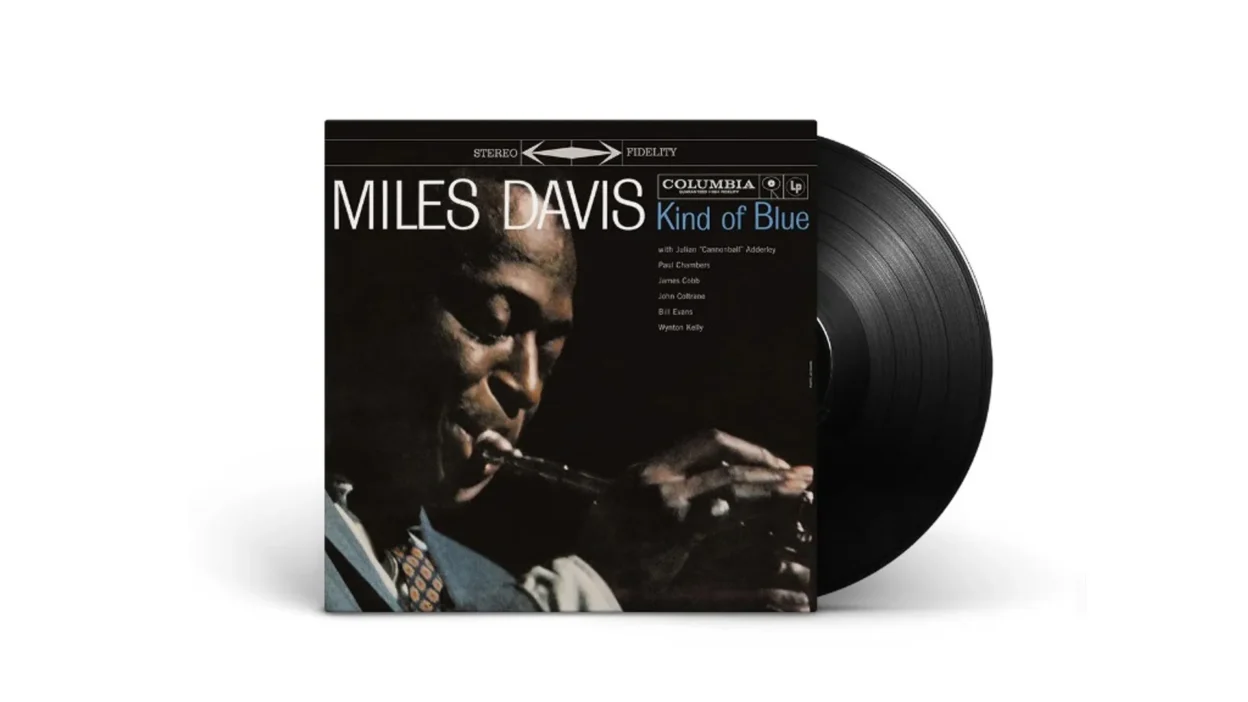
Miles Davis- Kind of Blue (1959) is the sort of record people mean when they say “jazz on vinyl” without thinking too hard: a landmark modal session from Columbia’s old 30th Street room with Davis, John Coltrane, Cannonball Adderley, Bill Evans (and Wynton Kelly on one track), Paul Chambers, and Jimmy Cobb. It is not a flex piece you explain with a spreadsheet- it is a shared language. Guests recognize the cover; late nights forgive it when you do not know what to play; it still rewards you when you know every solo by heart. A serious collection can hold rare pressings and deep cuts, but almost every shelf has room for this title the way a bookcase has room for a dictionary: not because it is obscure, because it is foundational. When you are ready to put a copy in the rotation, you can browse Kind of Blue and pick the pressing that looks and feels right for you- the music is the constant.
In one breath: five pieces- So What, Freddie Freeloader, Blue in Green, All Blues, Flamenco Sketches- mostly first takes, breathing room, melodies that stay with you after the side ends. That is the collection argument: not a chase list, a home base. New to how LPs work? Our vinyl record explainer sits well next to your first jazz cornerstone.
The album in one paragraph
Kind of Blue is often called the best-selling jazz album of all time, and the cliché holds because the music refuses to be difficult for difficulty’s sake. Modes open the harmony so the band can stretch without losing the listener; the engineering lets the room breathe. That combination is why the record keeps reappearing in new jackets and new cycles of discovery — not because the world needs another SKU, because generations keep needing a front door into this sound.
Why it earns a place in the collection
A collection tells a story about who listens in that house. Kind of Blue anchors the jazz chapter: it signals you are not only collecting novelty or nostalgia, you are keeping a consensus masterpiece within reach. It pairs with dinner, with reading, with cleaning the apartment; it also survives intent listening when you want to follow Paul Chambers’ line and Jimmy Cobb’s brushwork like a slow conversation. You do not keep it to impress the Discogs crowd- you keep it because life keeps asking for this mood, and the LP is a handsome object that answers.
What you get when the needle drops
Put the record on and you get space: between phrases, between instruments, between you and the week you are trying to leave behind. The cover’s cool blue has become visual shorthand for that feeling. Vinyl adds the small ritual of flipping the side- a pause that suits an album recorded with patience. Whether your system is modest or refined, the emotional offer is the same: calm authority, not spectacle.
Choosing a copy you will actually play
Purists can spend a lifetime comparing pressings; a healthy collection also needs records you touch without anxiety. Pick a copy from a seller you trust, keep the jacket somewhere you will see it, and let the disc earn ring wear honestly. If you later fall down the rabbit hole of first labels and alternate lacquers, this title will still be the one you reach for when someone says, “I want to hear what you mean by jazz.” For a wider read on why vinyl keeps mattering as a format, our RIAA wholesale vinyl milestone piece sits alongside the personal shelf, not instead of it.
FAQ
Is Kind of Blue a cliché to own?
Only if you never play it. Masterpieces become clichés when they are treated as trophies. In a living collection, Kind of Blue is closer to a well-loved novel: familiar spine, fresh sentences each time you return.
Is it a good “first jazz” record on vinyl?
Yes — melodically clear, emotionally direct, and short enough to finish in one sitting. It opens the door without demanding you already speak the dialect.
Do I need more than one pressing?
Not to have a credible shelf. Some collectors enjoy comparing eras; one honest copy you play beats three sealed copies you fear scratching.
Does the standard LP include alternate takes?
The classic album is the five-track sequence most people mean when they say Kind of Blue. Box sets and CDs sometimes add extras- if you want alternates, read the track list on the edition you buy.
Note: Popular titles attract knockoffs; when buying online, prefer listings and sellers that make returns straightforward so the record in your collection is one you trust.