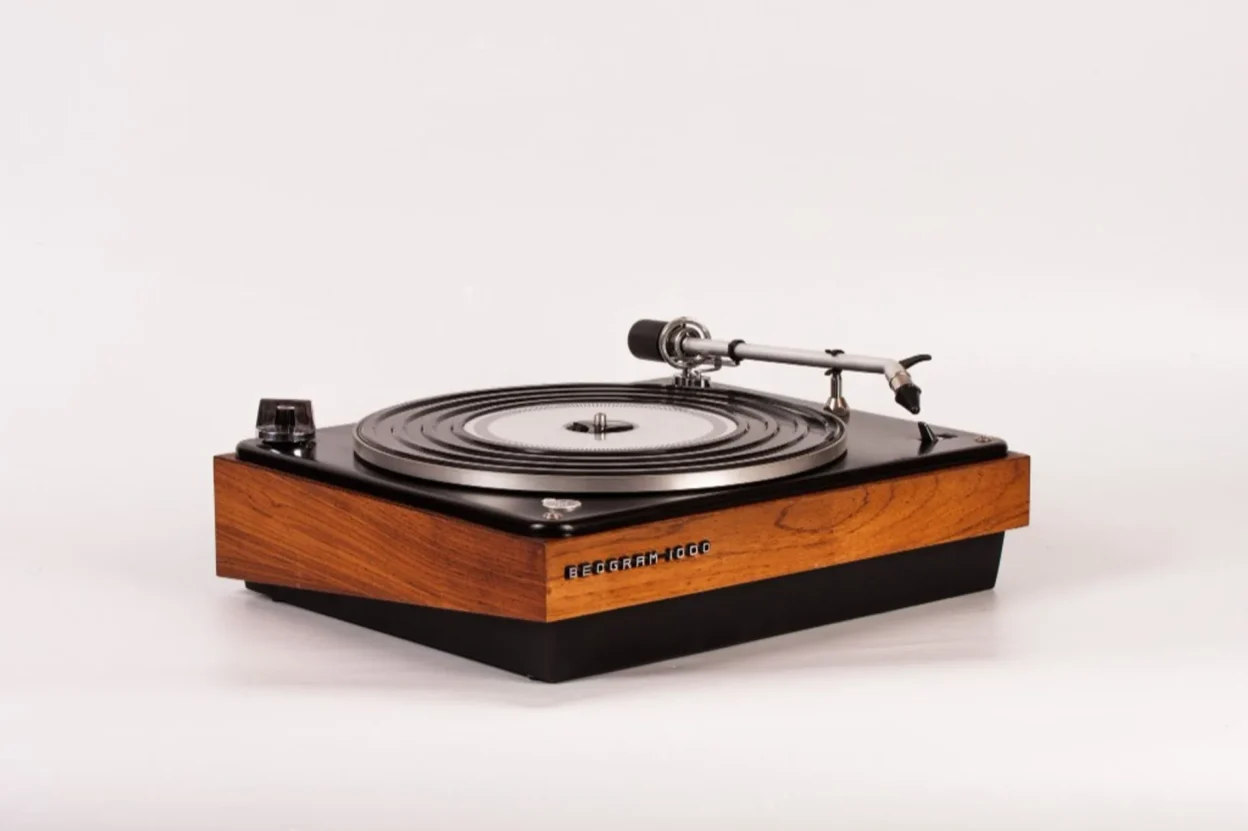
Beogram 1000 is the name people still reach for when they mean “old Bang & Olufsen turntable with the furniture manners.” It is not the same conversation as Beogram 4000c reissues or today’s Bluetooth decks: this is vintage system hi-fi wood, lamps, push-buttons, and a lid you actually want on the credenza. On its own turntable heritage page, Bang & Olufsen still positions Beogram 1000 as the point where innovations such as belt drive and the stereo pickup story come together, and calls it one of the company’s “most popular and best-selling turntables on record.” I am not offering a listening review of your specific auction find; I am giving you a shelf-stability frame so you do not mistake a pretty object for a plug-and-play weekend project.
Think belt-drive Beogram, often discussed alongside the ST/L 15° arm family, 33⅓ / 45 / 78 speed intent, and DIN system wiring into a period Beomaster rather than a random Chi-Fi phono box. If you want a modern first deck, shop B&O’s current catalogue. If you want design history you can service, keep reading and budget for a tech who already knows B&O idiosyncrasies.
Where Beogram 1000 sits in B&O’s story
Bang & Olufsen narrates turntable history as a ladder: early integrated music furniture, then stereo cartridges, then belt drive as a way to keep platters light and mechanically kinder than some idler-heavy layouts. In that same narrative they fold in Beogram 1000 as the model where those threads meet, and they still lean on it as proof that catalogue depth matters more than novelty cycles. That is why the name keeps surfacing in design retrospectives and used listings even though the factory line moved on decades ago.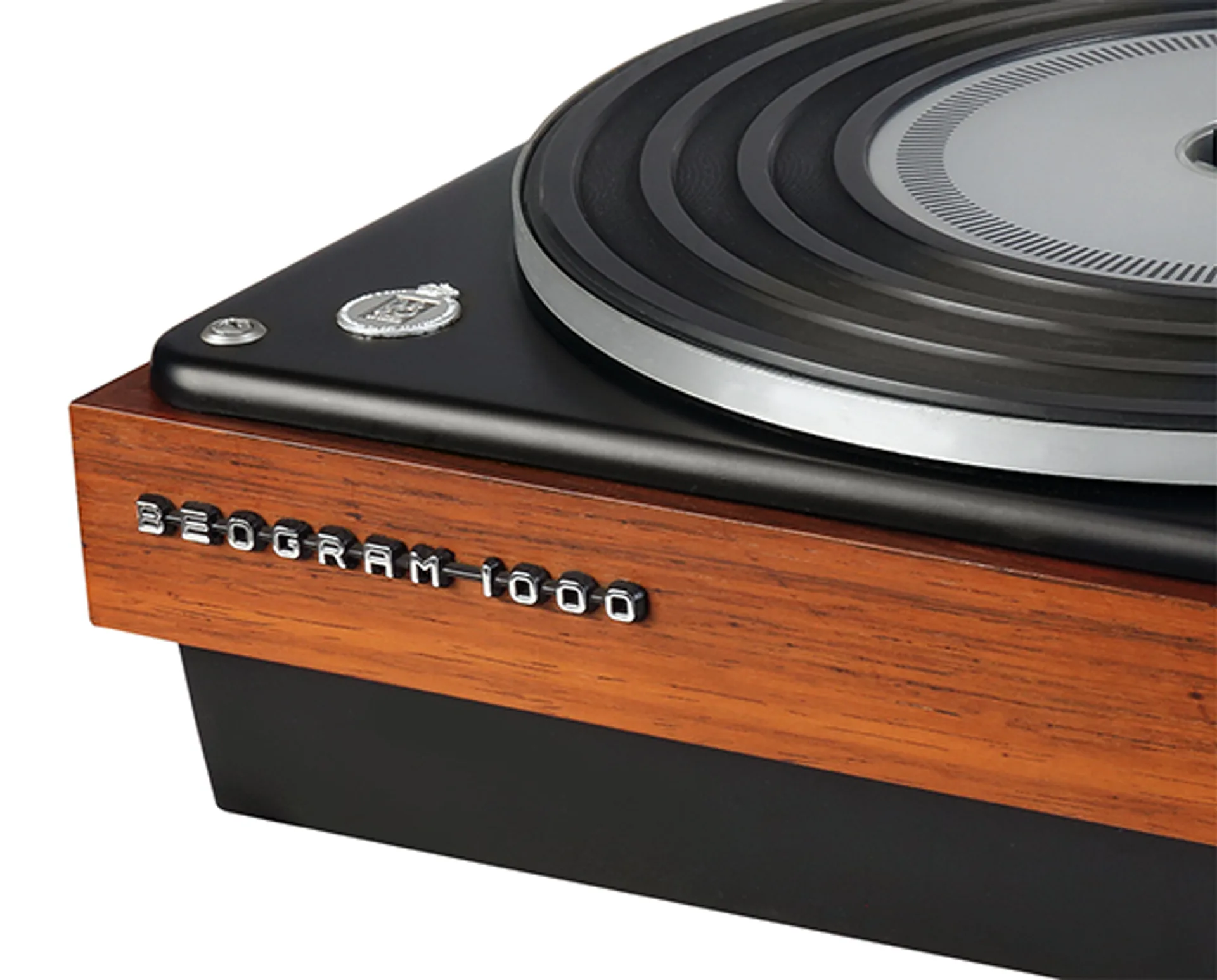
What you are buying today is condition plus documentation, not a warranty story. Value tracks how little someone hacked the suspension, whether the dust cover survived, and whether the seller can show sane speed under load — not how glossy the hero shot is.
If you want a different branch of the same brand obsession — where B&O pushes room-dominating sculpture instead of mid-century wood — our Beolab 90 Monarch & Zenith piece is the other extreme of the same object-first instinct.
Era, credits, and the numbering game
B&O’s public storytelling sometimes compresses decades; one version of the turntable page ties Beogram 1000 to the 1950s and a different designer credit than you will see on many chassis discussions. Collector-side registers for individual units often land in the mid-to-late 1960s examples with Jacob Jensen credited for industrial design and Erik Rørbæk Madsen tied to tonearm / MMC thinking. I do not care which marketing paragraph wins the footnote war; I care whether your serial matches the service literature the tech will actually open on the bench.
Practically, Beogram 1000 lived in the same mental shelf as Beomaster receivers: matching wood, matching lamp language, and the idea that the turntable is a module, not a lone wolf component. People still float Wikimedia shots of Beomaster 1000 hardware when they talk about “the thousand-series wall”; that is an amplifier, not the platter, but it explains the display fantasy buyers chase.
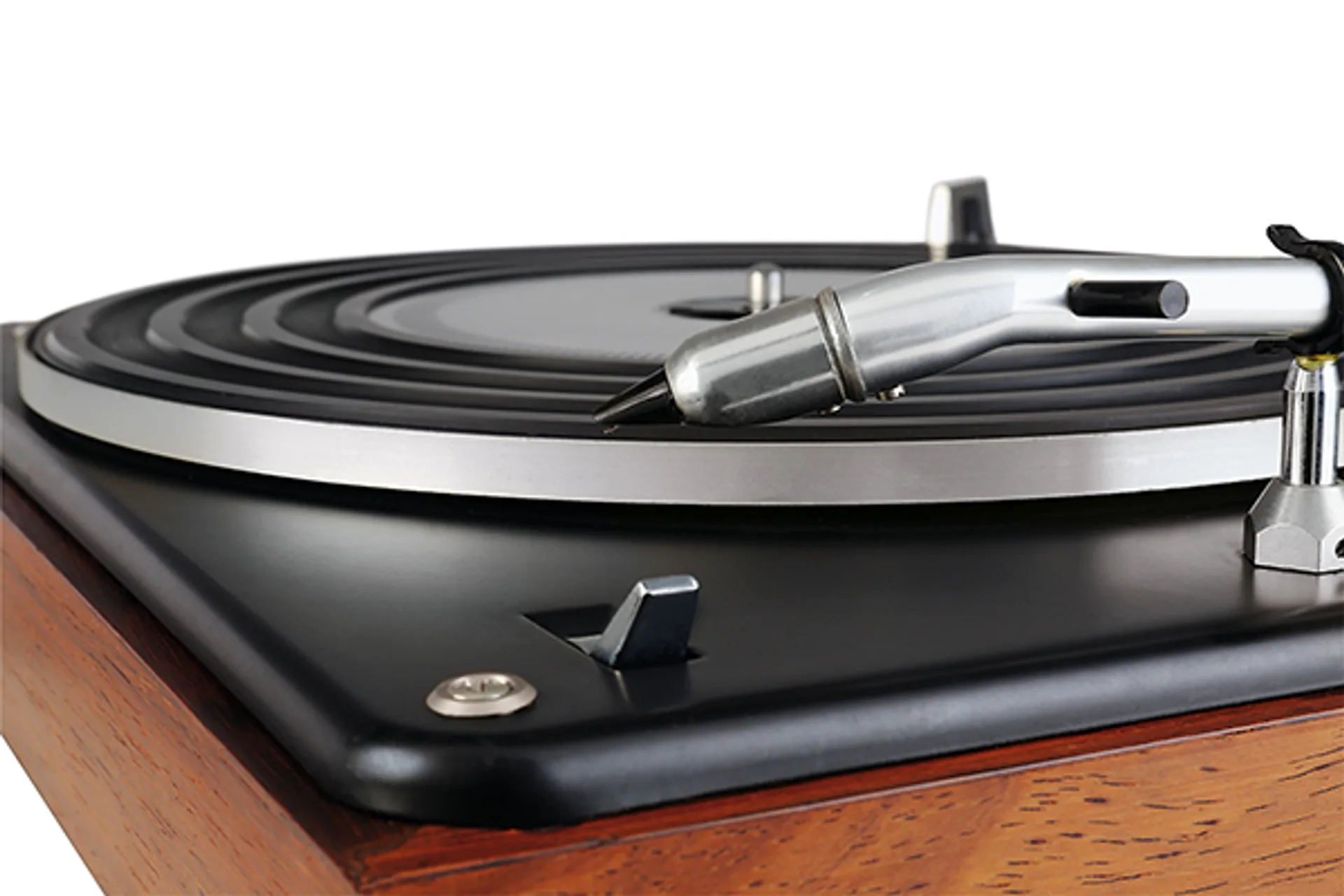
Design: living-room object first
Beogram 1000 refuses to cosplay as a studio rack mount. The timber plinth, clear dust lid when intact, and front-panel lamp logic read from across the room- which is exactly why collectors tolerate fussy mechanics. This is hi-fi meant to sit where guests can see it, not where you hide cables behind a server rack.
If you are building a modern powered-speaker vinyl corner with the same “furniture audio” vibe, the Kanto TUK / YU 2026 refresh write-up is a useful counterweight: DSP and Bluetooth instead of tubes, but the same bet that one cohesive stack on a credenza sells the system.
Mechanics buyers actually argue about
Bang & Olufsen’s heritage page gives you the why (belt drive, stereo pickup arc, cultural staying power). It does not replace a rating plate. For shopping discipline, I keep a scratch block of numbers that show up repeatedly on serviced listings and chassis labels; treat every line as “prove it on my sample” until a tech agrees.
| Topic | Figures often quoted |
|---|---|
| Footprint (WHD) | Roughly 350 × 110 × 310 mm |
| Weight | About 6 kg |
| Speeds | 33⅓, 45, 78 rpm (78 needs stylus discipline and groove-care judgement) |
| Wow/flutter (claimed) | ±0.15 % peak in many write-ups |
| Rumble (claimed) | “Better than 55 dB (DIN B)” language repeats often |
| Arm | ST/L 15°, built-in cueing, manual lift on many builds |
| Tracking force (quoted) | 1.5–2.5 grams in typical notes — not kilograms of downforce |
| Drive / isolation | Round belt plus suspended subchassis language shows up constantly |
| Mains | 110 / 220 V variants exist- read the rating plate before you plug anything in |
A dried belt, tired idler rubber, or sagging suspension turns those pretty numbers into pitch wander you can hear on solo piano inside thirty seconds. I would rather walk away from a cosmetically perfect plinth with unknown drive health than reverse a bad purchase across international shipping.
DIN, grounding, and phono gain
Period Beogram builds often expect DIN interconnect logic into a matching era amplifier, not a random RCA loom with a floating ground cheat. Adapters exist; incompetent adapters are how you get hum, buzz, or a tweeter kiss goodbye. If your downstream phono stage is modern, budget time for someone who can map signal ground vs chassis ground without treating the arm as a science-fair mod platform.
Some catalogue variants talked about optional RIAA integration; never assume the listing in front of you still has the same board until it is measured. For a different “heritage stack” tangent on modern centre-channel matching, see Wharfedale Heritage Centre — same collector headspace, different connector war.
Used-market checklist
- Mains identity: photograph the rating plate; do not “step-down guess” your way into a fire.
- Belt and idler path: ask if the belt was replaced; if the answer is vague, assume Year One service cost.
- Speed under load: strobe or frequency check with a record you know- not idle platter spin only.
- Arm bearings and lift: wobble, sticky lift, or bent hardware on ST/L is a specialist job, not an Amazon cart fix.
- Plinth and lid: cracks in acrylic or split veneer hit both resale and isolation behaviour.
- Provenance: dry indoor storage beats damp garage archaeology; ask plainly.
I do not publish price anchors here; used markets move weekly. Pull three completed sales in the same condition tier you are chasing, then ignore the outlier with perfect photos and zero provenance.
Maintenance reality
You will live inside belt kits, suspension shipping locks, and gentle cueing practice. This is not a DJ scratch platform; treating it like one is how you write off a cartridge ecosystem that does not map cleanly to modern headshell standards.
B&O’s own turntable story ends with a modern through-line about restoring pre-loved hardware and retailer-led refurbishment paths. That is useful philosophy even when your local shop is not in Struer: it tells you the brand still thinks in long product lifetimes, which is exactly why spare-demand for these decks exists.
FAQ
Is Beogram 1000 a current Bang & Olufsen product?
This guide covers the classic Beogram 1000 as a used-market object and as part of B&O’s heritage storytelling. For new SKUs, use bang-olufsen.com and do not confuse vintage model numbers with Recreate Classics marketing unless the product page states it explicitly.
Is Beogram 1000 a good first turntable?
Only if you accept a learning curve on DIN wiring, phono gain, and service access. If you want fewer friction surfaces, start with a modern deck that speaks plain RCA and a known phono stage, then graduate once you have a trusted tech.
Who designed it?
Public heritage copy and many surviving units line up around Jacob Jensen industrial design with Erik Rørbæk Madsen credited for arm / MMC thinking in collector documentation. For insurance or provenance disputes, lean on factory-era paperwork tied to your serial, not forum confidence.
Did you review a specific Beogram 1000 for sound?
No. This is a guide frame: heritage context, system fit, and buying discipline. Sound claims belong to a review written after real listening time on a known sample.
Note: Vintage markets move per unit. Anchor money decisions on in-person inspection or slow, well-lit video that shows arm motion, speed stability, and bearing noise not retouched stills.