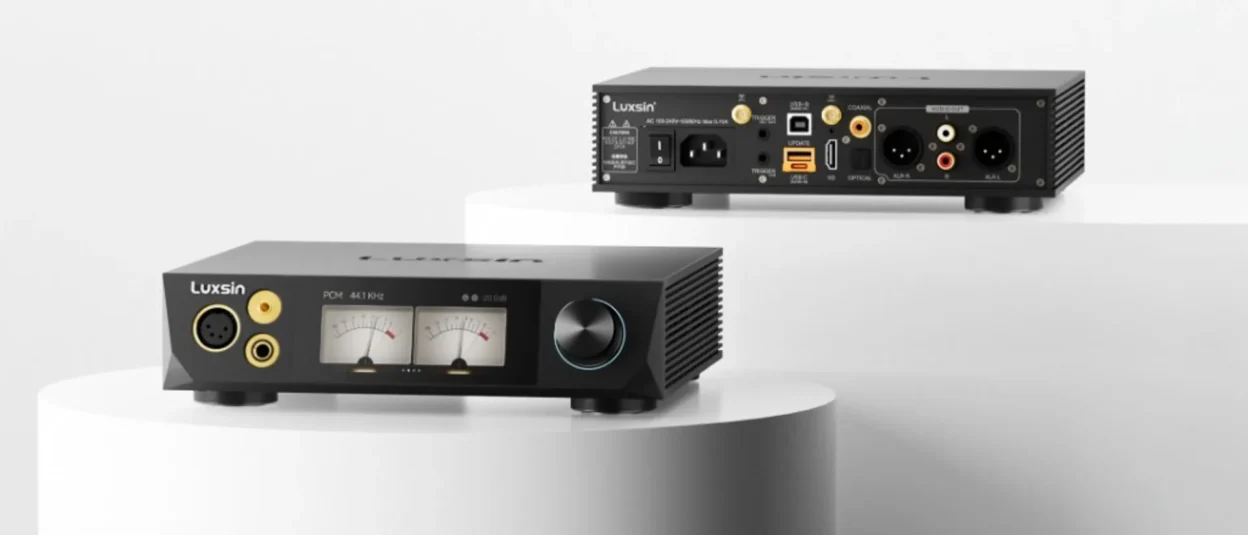
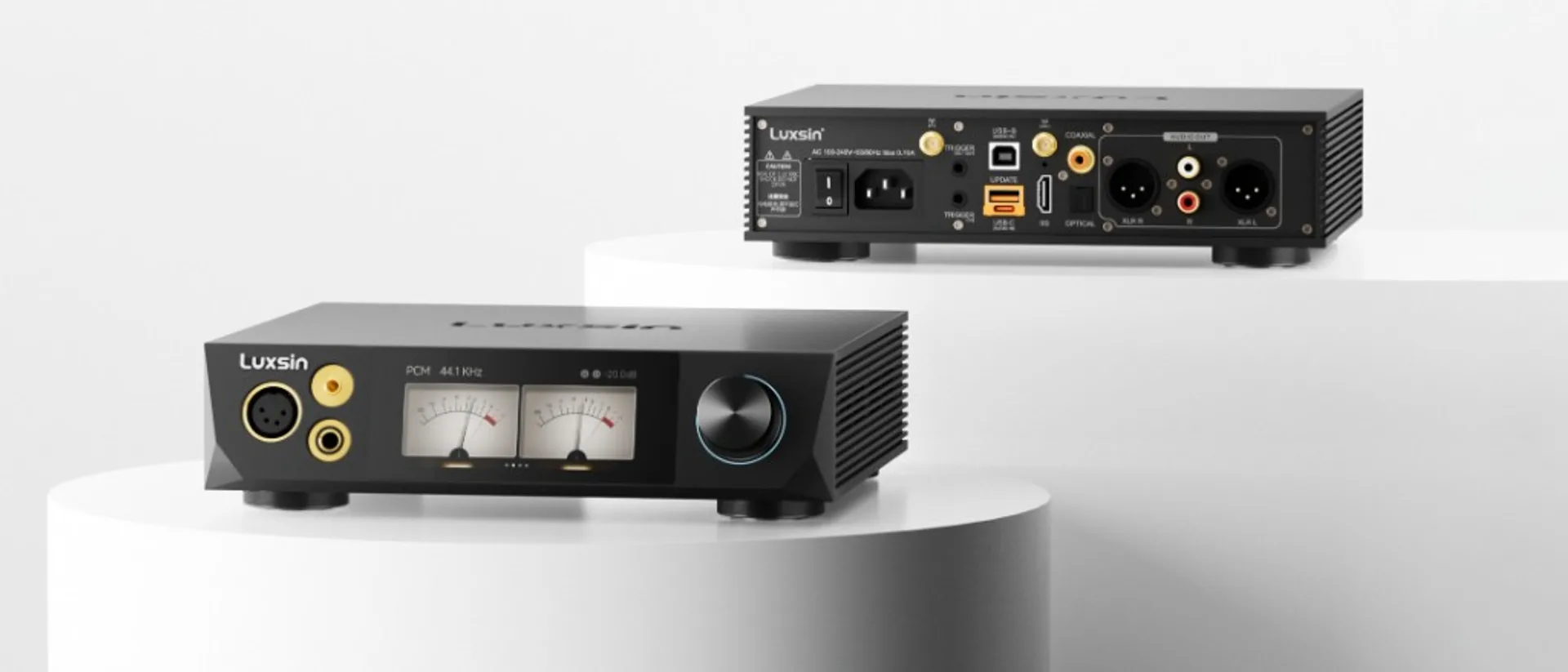
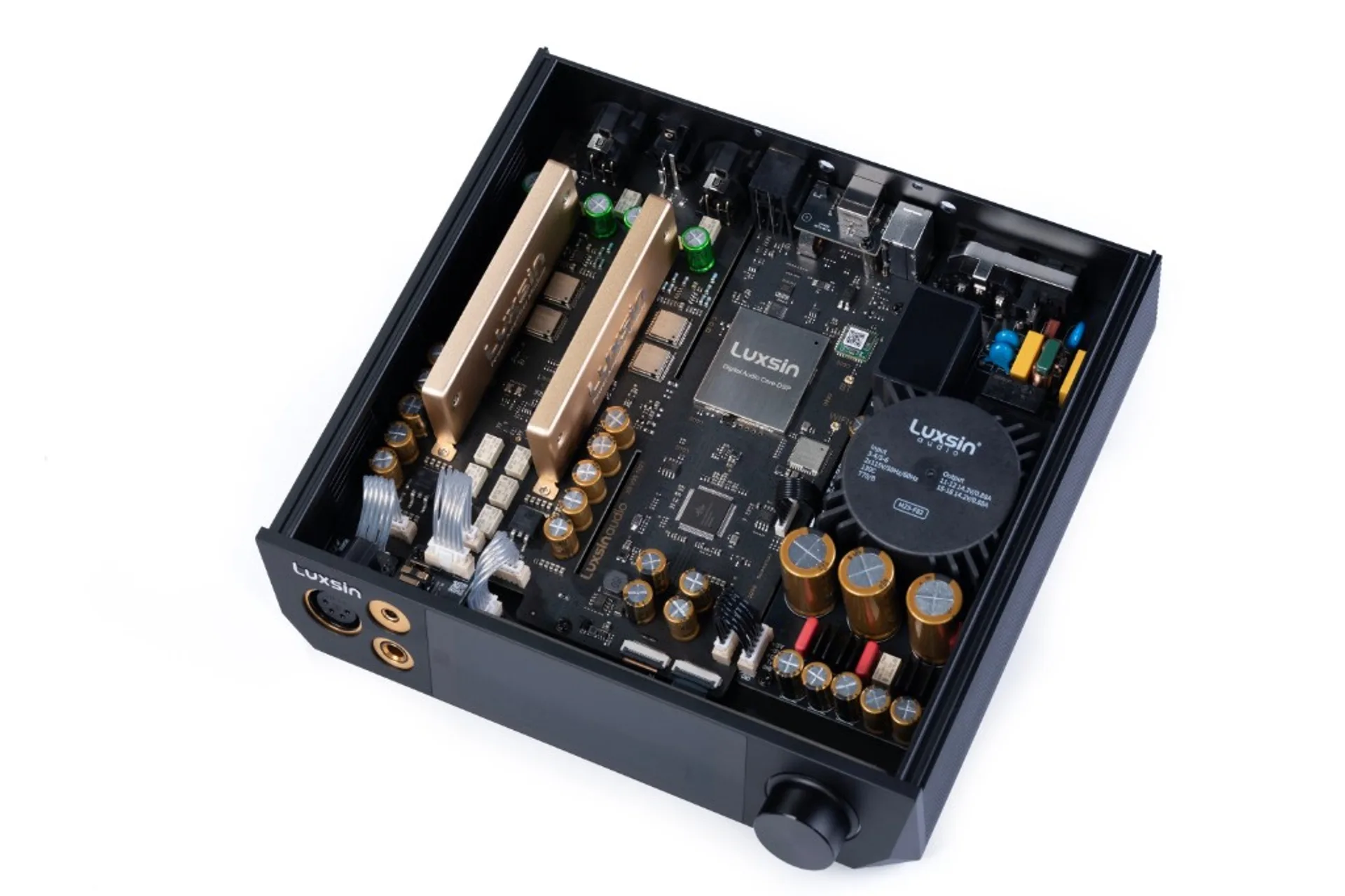
Luxsin X8 enters the crowded desktop DAC/amp segment with an unusually ambitious hardware story for its price tier: eight CS43198 DAC chips in parallel dual-mono topology, a dedicated DSP/ARM digital core, and genuinely high output power for difficult headphone loads. This is not positioned as a minimal “USB dongle in a box” product.
What Luxsin X8 is trying to solve
X8 targets listeners who are tired of stack sprawl: separate DAC, separate amp, and separate control layer for EQ or gain handling. The product pitch is one-box control with enough flexibility for desktop headphone chains that rotate through multiple headphones and output types.
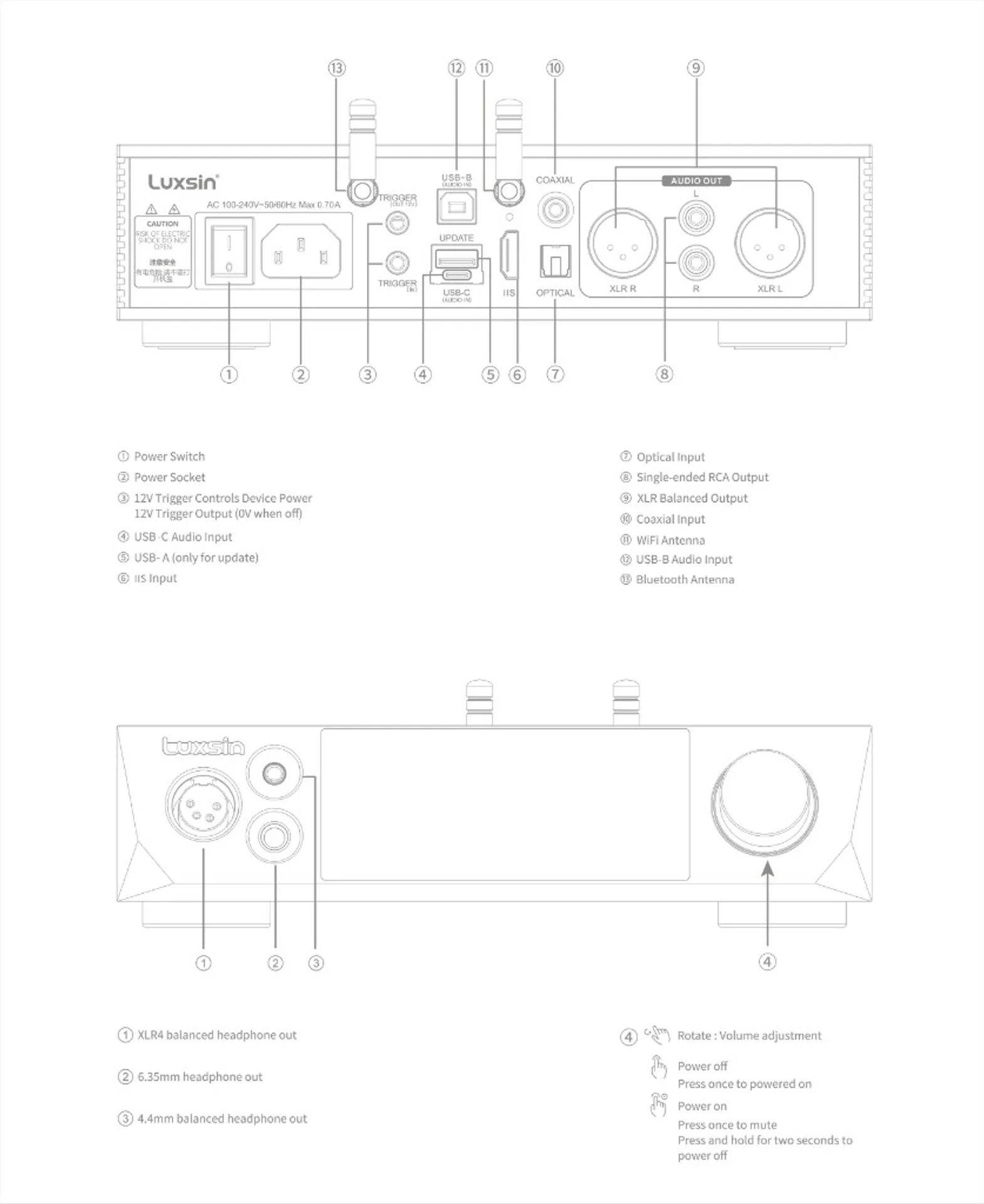
- Inputs: USB-B/C, optical, coaxial, IIS, plus trigger integration.
- Headphone outputs: 6.35mm (SE), 4.4mm balanced, and 4-pin XLR balanced.
- Control: touchscreen, app/web control, firmware updates, per-output memory.
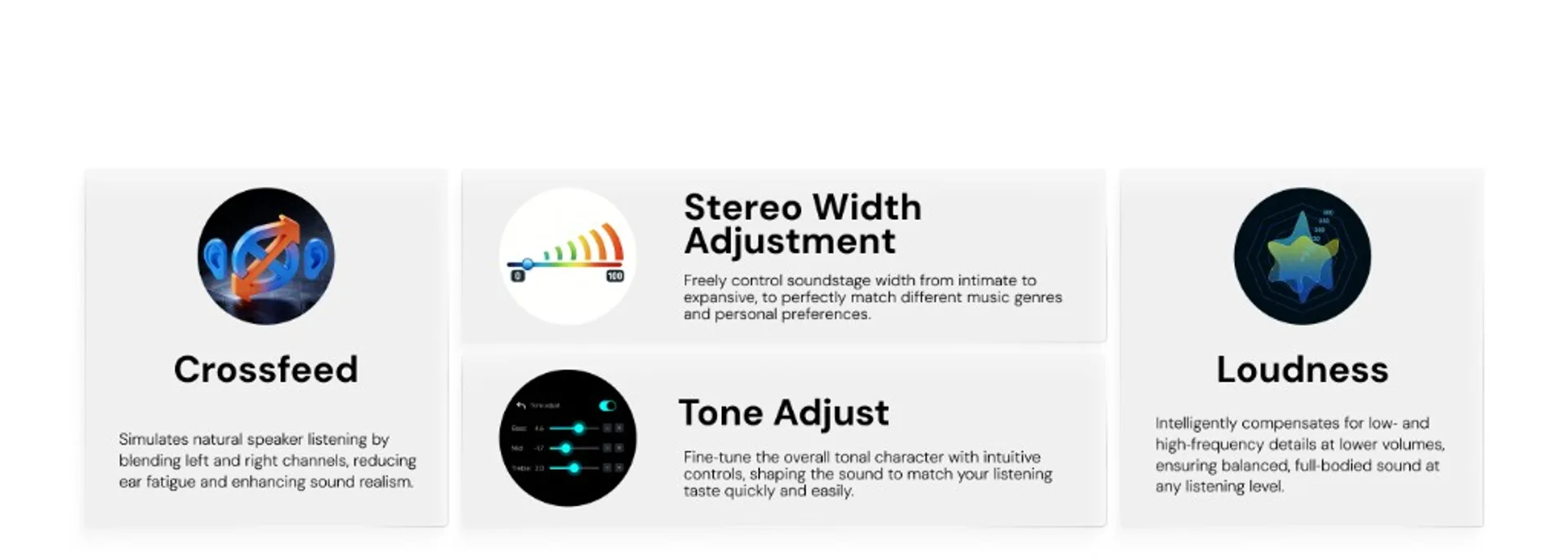
- Tuning angle: built-in DSP and AI-assisted PEQ workflow as a headline differentiator.
In category terms, it competes with other “do-more” desktop hubs rather than pure, stripped-down DAC boxes. A nearby reference in our own coverage is Topping DX9 Discrete, which aims higher in price and positioning.
Hardware architecture and measurable claims
Official Luxsin documentation highlights several technical pillars:
| Area | Claimed implementation | Practical meaning |
|---|---|---|
| DAC stage | 8 × CS43198 in dual-mono parallel layout with shielding | Lower-noise target, stronger channel isolation, and detail stability under load. |
| Digital core | HiFi-5 DSP + ARM architecture, 500MHz+ DSP class | Headroom for real-time DSP and profile-driven tuning features. |
| Power architecture | Separated linear power domains, variable analog voltage rails | Cleaner analog floor and better behavior with dynamic transients. |
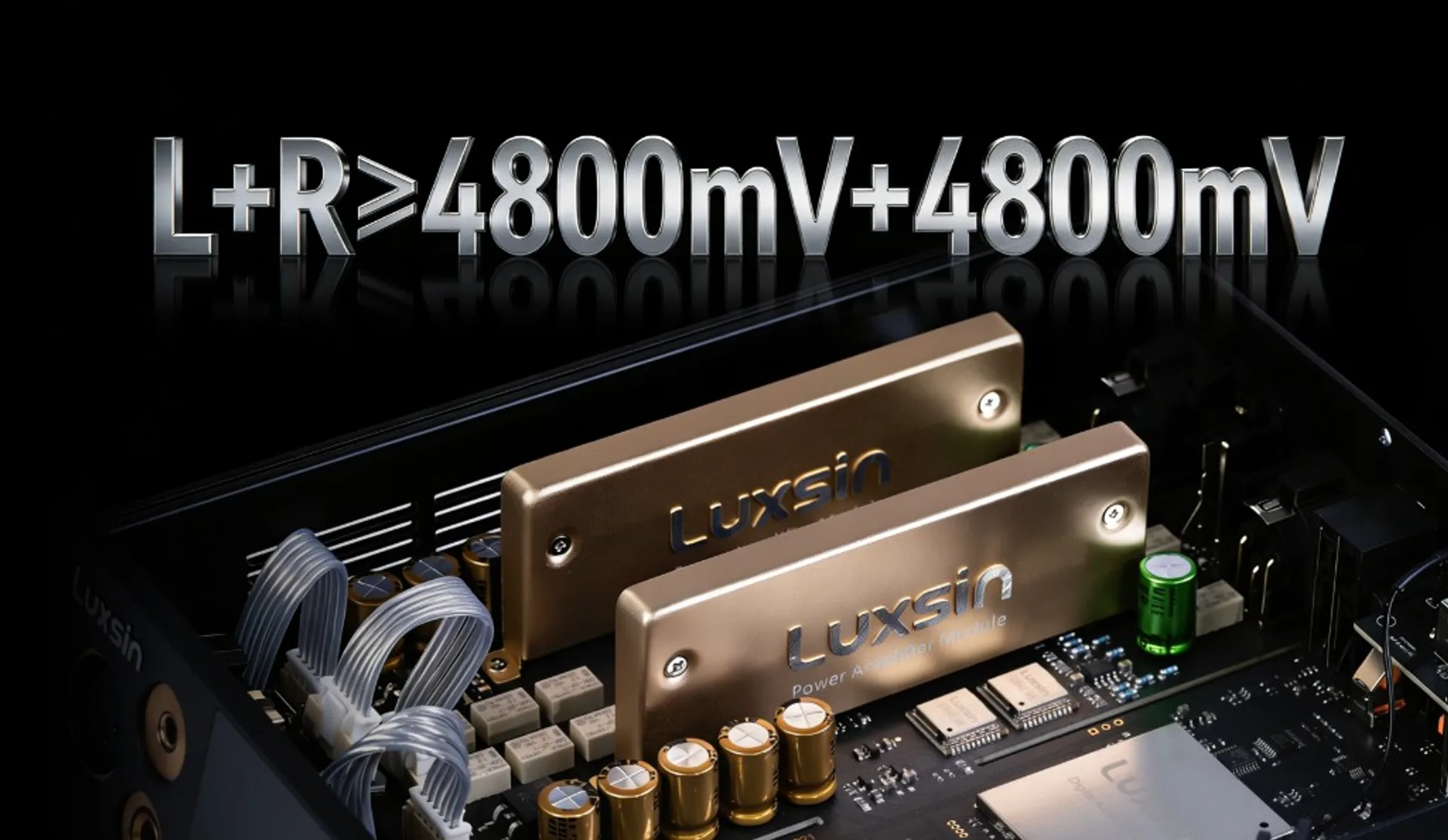
| Headphone output | Up to roughly 4.8W+4.8W balanced (16 ohms, high gain) | Enough current and voltage swing for many planars and tougher loads. |
The notable part is not one headline number; it is how many system pieces Luxsin tries to integrate in one desktop chassis without obvious compromises in routing flexibility.
Published sound character
Headfonia’s review describes the X8 as quiet, warm-leaning, and slightly vivid with DSP bypassed, which is an important point: the base tuning was considered engaging even before EQ features were used. The same review also highlights solid bass extension and macro-dynamic energy, while noting that stage depth is not class-leading compared with pricier, more specialized setups.
That profile makes sense for the intended audience: users who want a technically competent, enjoyable all-rounder that can drive many headphones confidently without forcing an “ultra-sterile studio” presentation.
DSP workflow and real-world usability
Where X8 appears to separate itself is daily workflow, not only sonic tuning. Auto impedance detection, gain matching, and per-output memory reduce friction when switching between headphone types and output ports.
The AI-assisted PEQ concept will not replace careful manual tuning for every advanced user, but it lowers entry cost for listeners who want actionable EQ without diving into measurement software on day one.
If you are new to this class, compare the concept with a simpler stack path like Fosi Audio S3 and then decide whether X8’s extra DSP/UX layer is worth it in your own setup.
Who should buy, who should skip
Buy if you:
- Need one desktop hub for multiple headphones and mixed source inputs.
- Value practical DSP tools and fast profile switching.
- Want serious output power without building a multi-box chain.
Skip if you:
- Prefer a minimalist, no-DSP, single-purpose DAC path.
- Mostly use very easy-to-drive headphones at low listening levels.
- Care more about ultimate stage depth refinement than feature completeness at this price.
FAQ
Is Luxsin X8 only about DSP gimmicks?
No. The review context describes a solid baseline sound even with DSP bypassed, which is critical for long-term usability.
Can X8 drive demanding planar headphones?
Official output specs suggest strong headroom for many difficult loads, especially from balanced outputs.
Who gets the most value from X8?
Users rotating multiple headphones and sources, who want power, routing flexibility, and easier EQ workflow in one chassis.