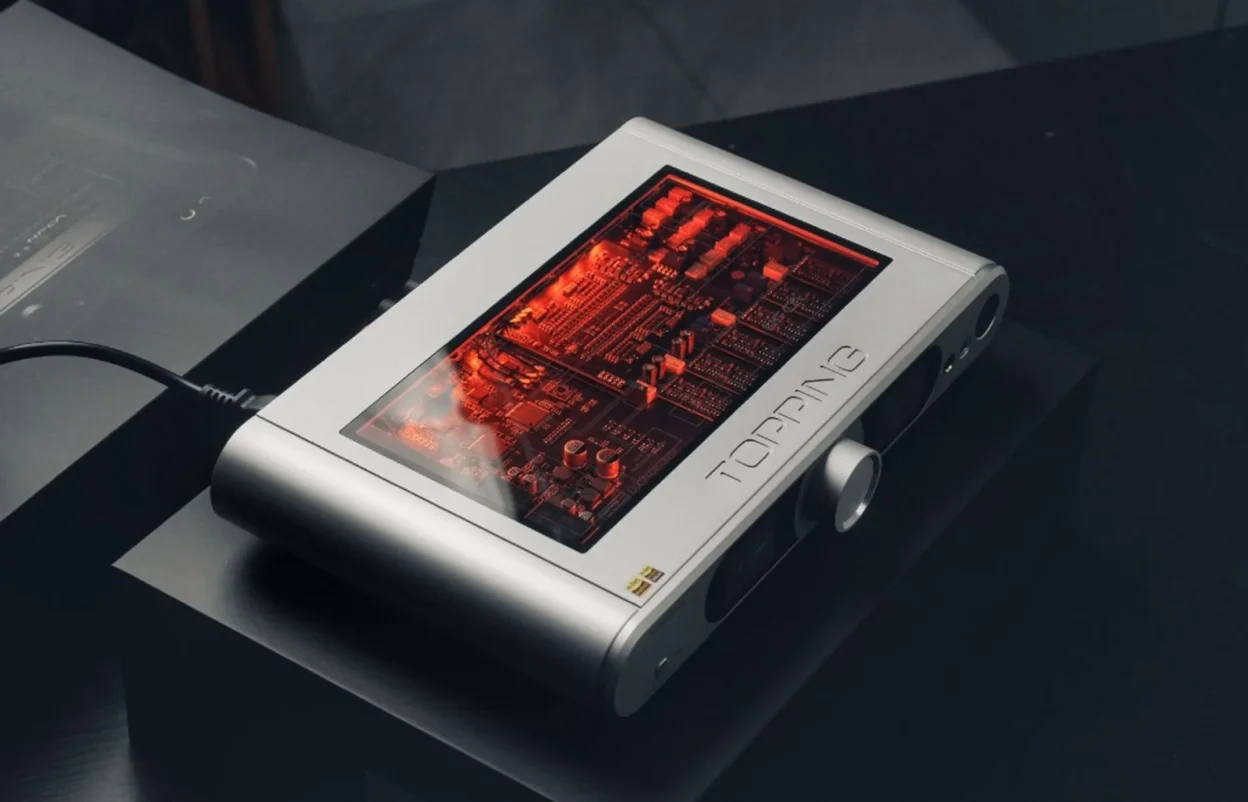
Topping’s DX9 Discrete is positioned as a full desktop front-end: DAC + headphone amplifier + preamp in one chassis. The pitch is straightforward: replace stack complexity with one flagship control center that can feed both headphones and speakers, while still keeping serious input flexibility. It is built as a high-spec all-rounder rather than a niche DAC for one setup style.
What DX9 Discrete is trying to replace
The DX9 Discrete targets listeners who usually end up with a three-box desktop chain: dedicated DAC, separate headphone amp, and preamp/volume control for powered monitors or a speaker amp. Topping’s message is that this can be collapsed into one box without giving up high-end connectivity or output power.
In practical terms, the product is not pitched as entry-level value. It is pitched as front-end consolidation for people already spending in the premium desktop category.
The DAC core: 1-bit PSRM and balanced topology
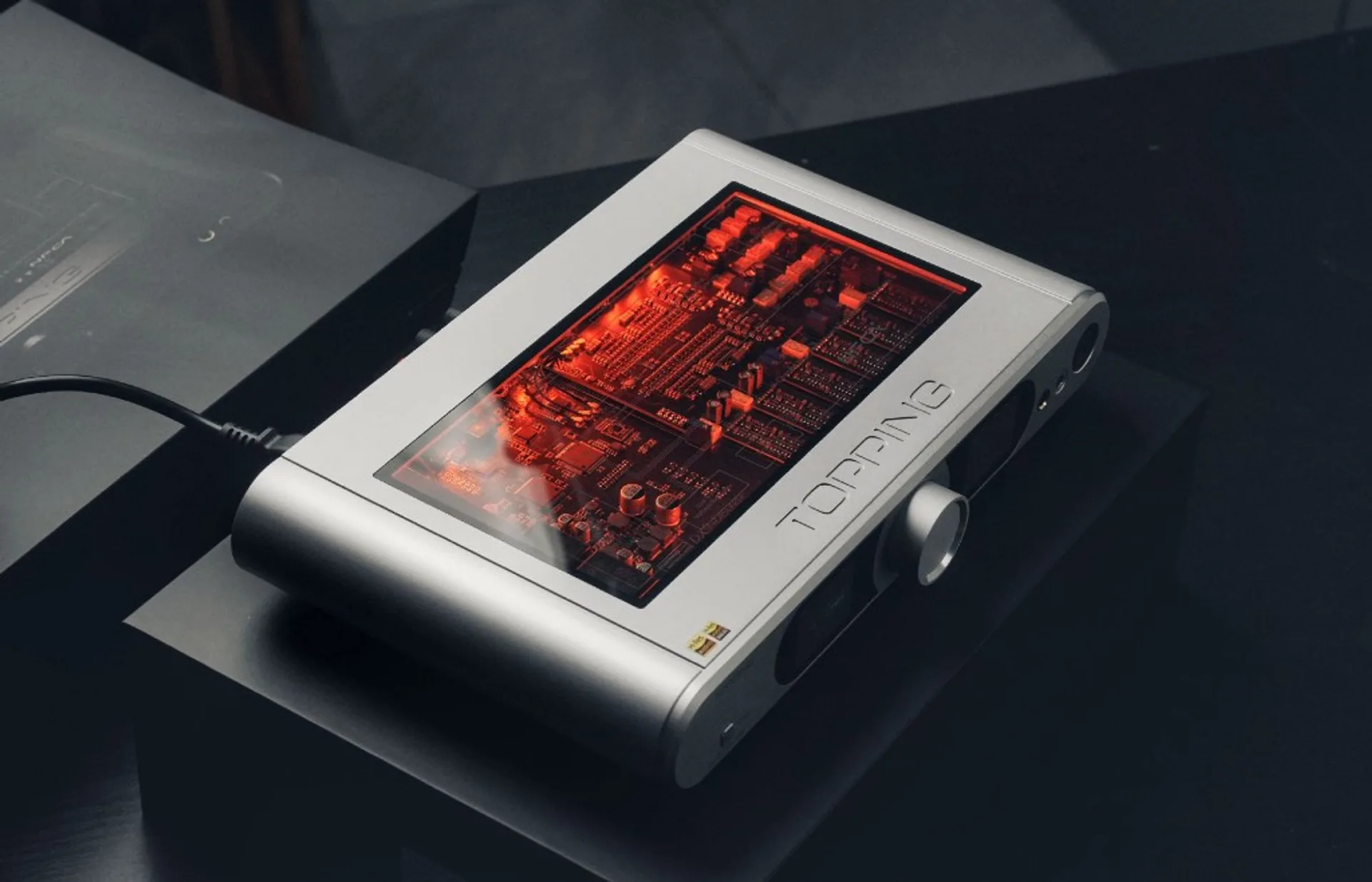
Coverage highlights Topping’s proprietary PSRM (Precision Stream Reconstruction Matrix) approach with a discrete 1-bit conversion architecture and fully balanced signal handling. The design intent is cleaner channel separation and lower noise through a more elaborate discrete implementation than typical integrated-chip-only paths.
Whether that translates into your preferred sound signature still depends on system matching, headphone load, and gain staging. But as a hardware proposition, DX9 Discrete clearly positions itself as a statement piece, not a refresh with minor cosmetic changes.
Inputs, outputs, and headphone drive
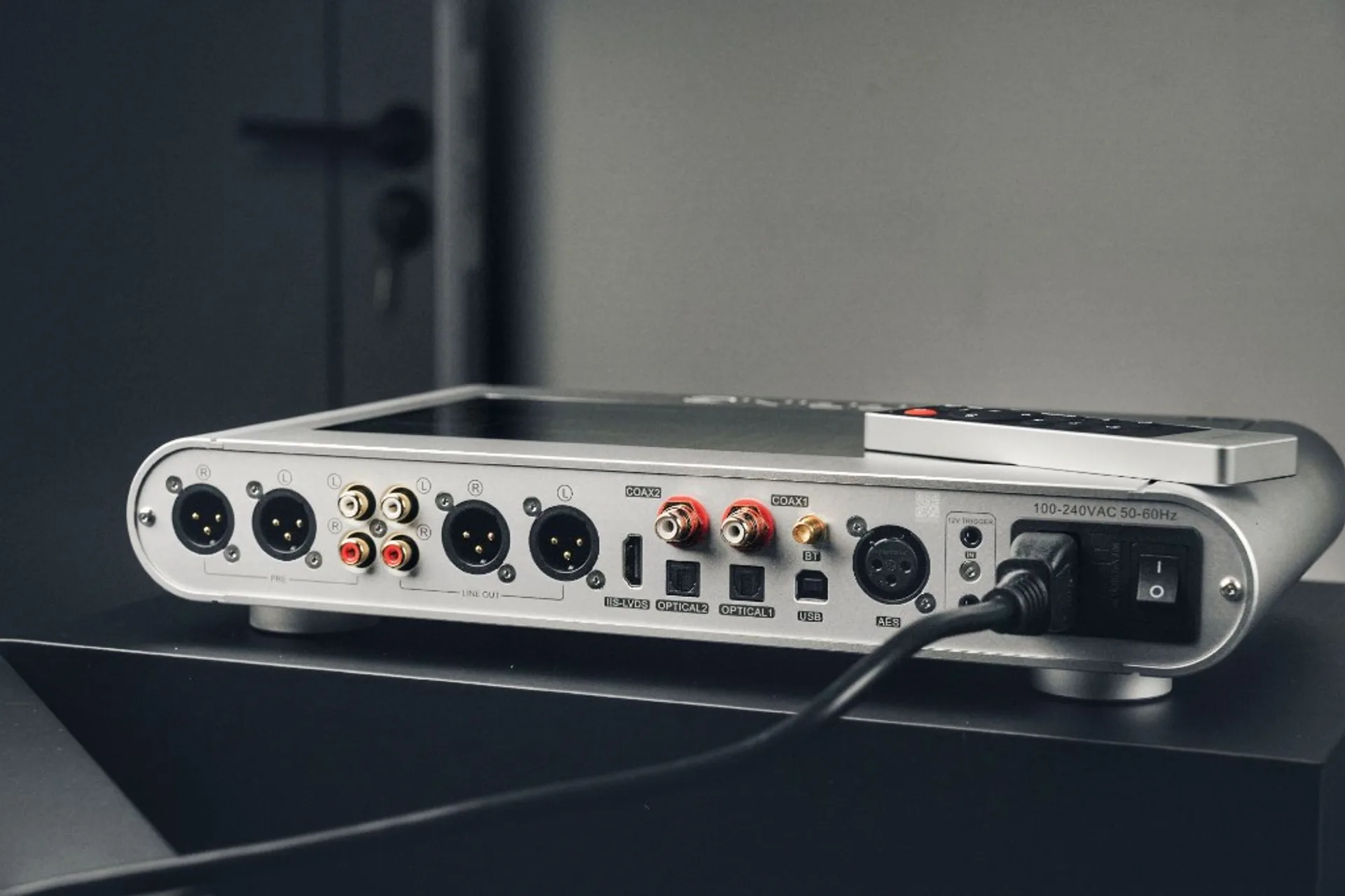
Published coverage and store listings describe a broad I/O set: asynchronous USB, dual optical, dual coaxial, AES, and I2S paths, plus Bluetooth with higher-quality codecs including LDAC. On the output side, the unit supports both headphone and line/preamp usage, including balanced connections.
For headphone users, the key headline is output capability: balanced output figures up to 10W-class territory into low-impedance loads are meant to cover both harder-to-drive planars and sensitive monitors (with low noise floor targets). For speakers, line and pre outputs let the DX9 Discrete act as the command hub for active speakers or a power amp chain.
Controls: PEQ, crossfeed, and dual-display UX
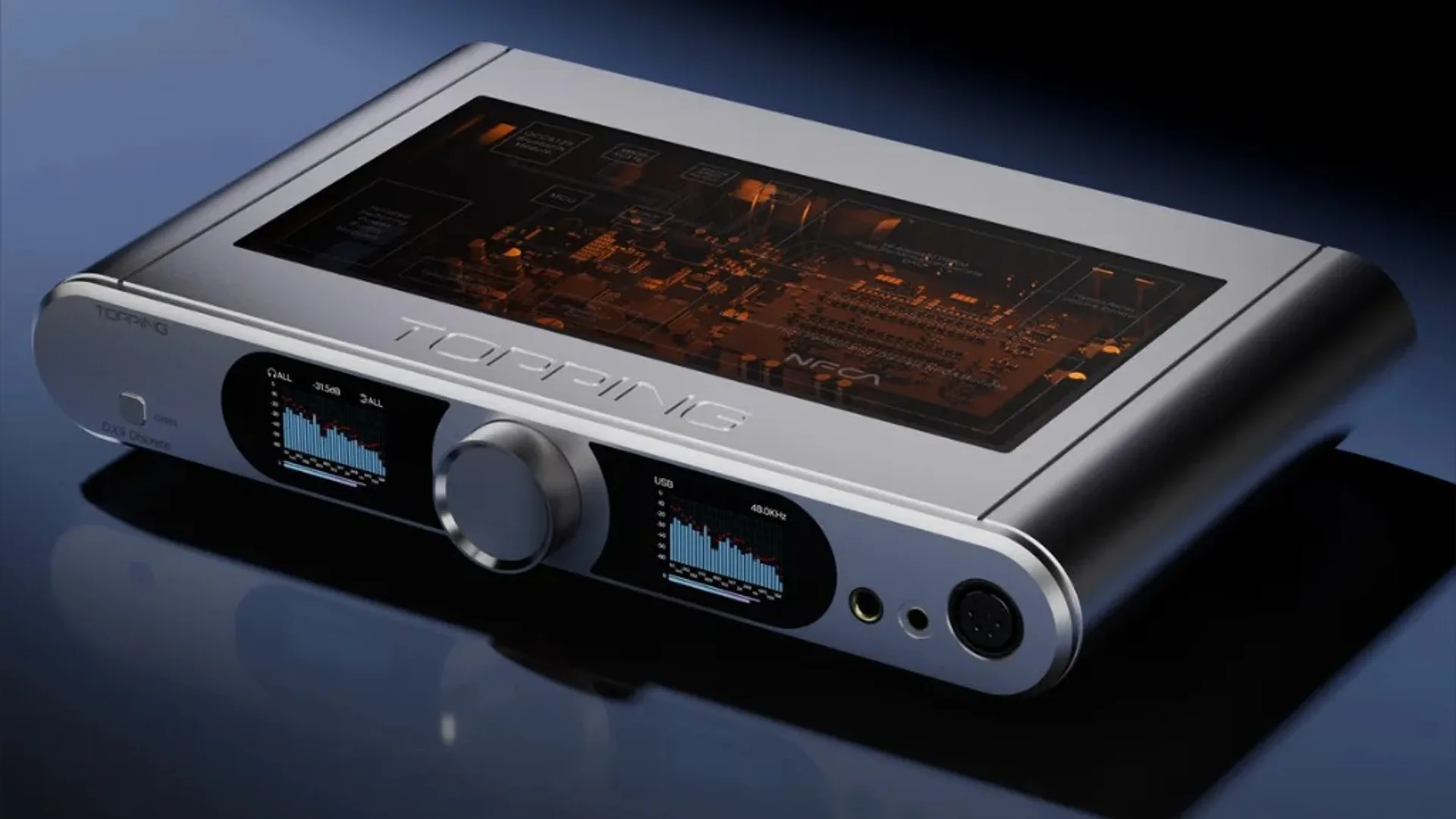
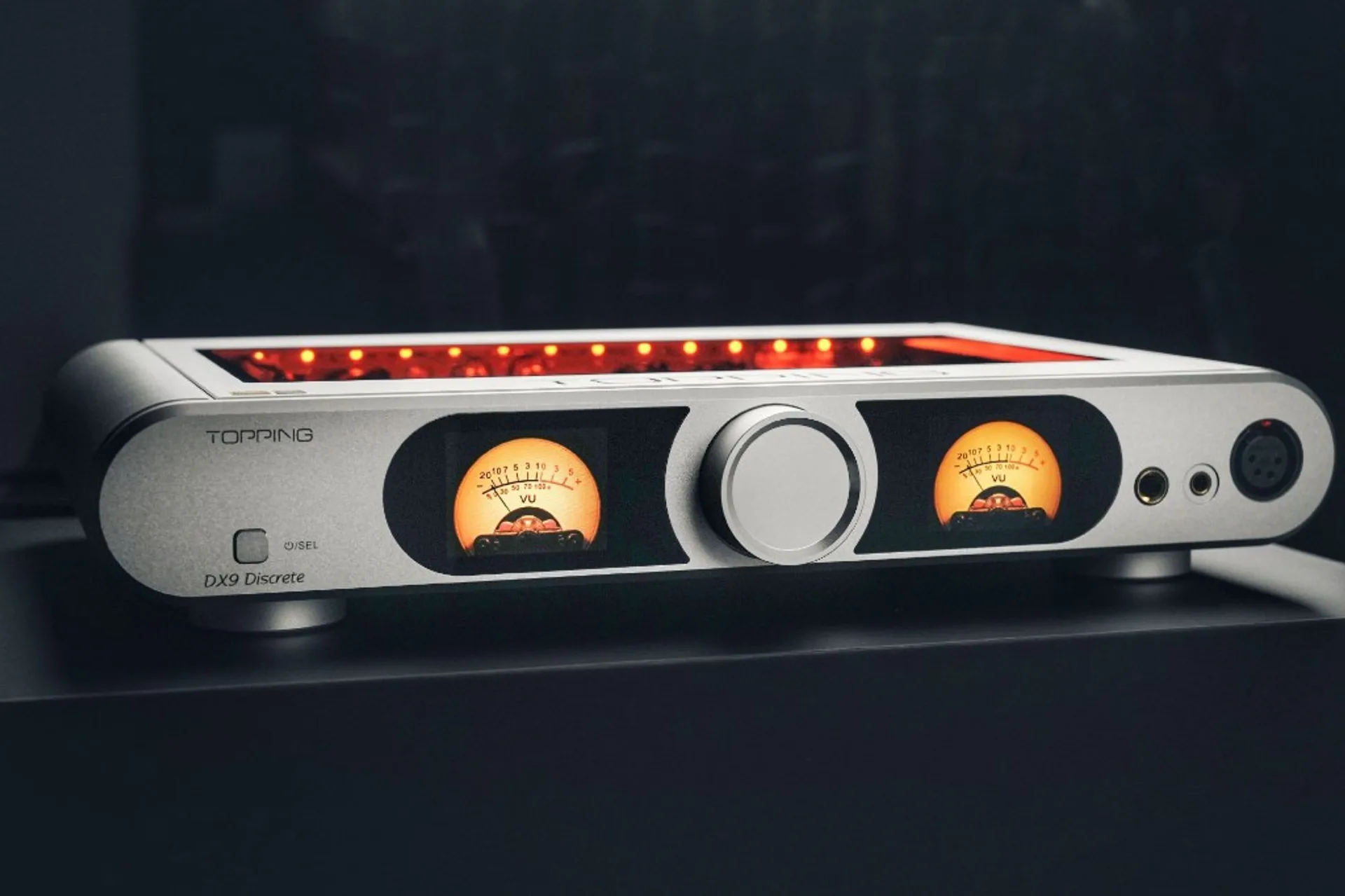
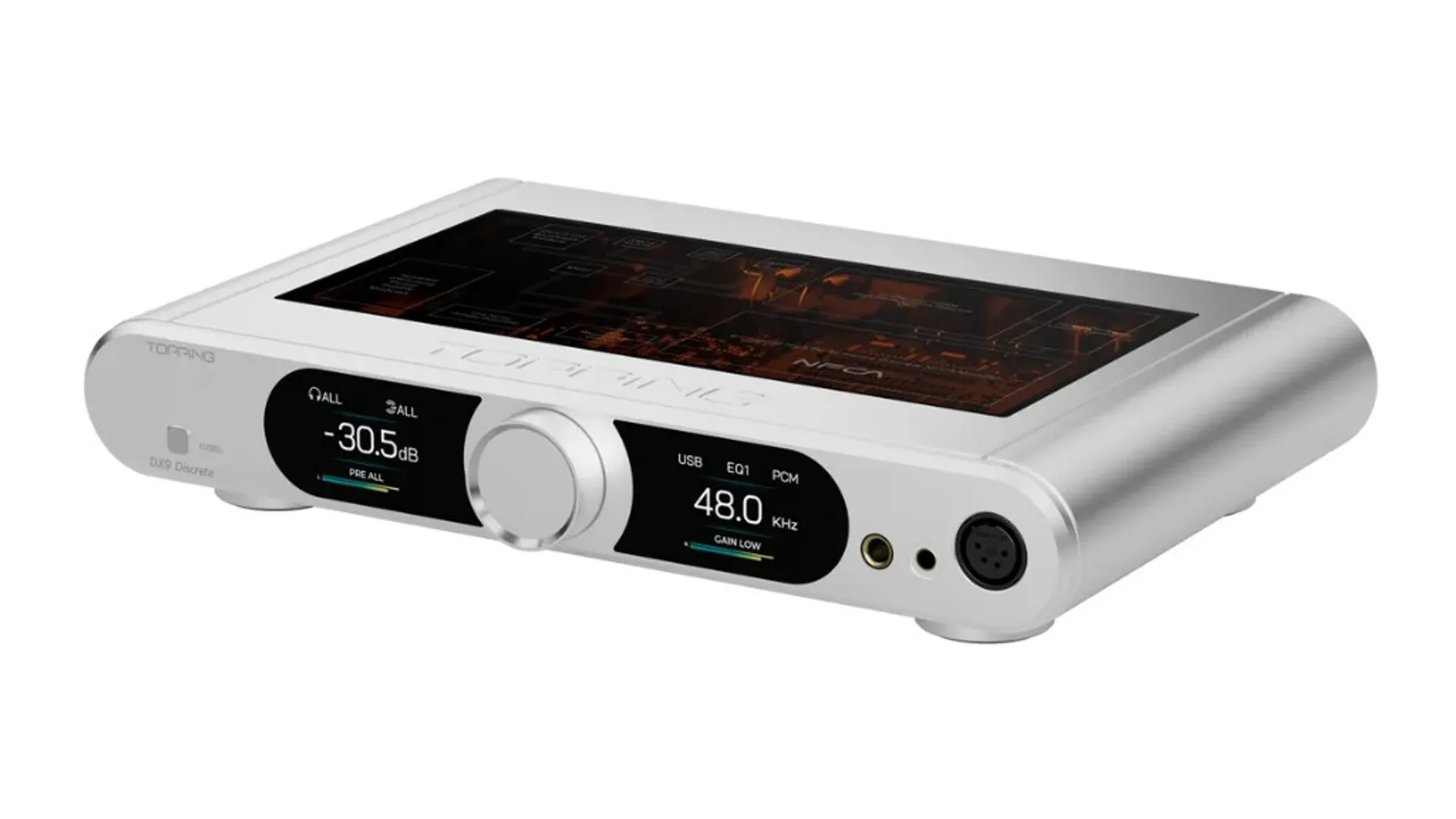
The DX9 Discrete includes Topping’s software-assisted control stack: 10-band PEQ, profile tuning, and crossfeed/HRTF-style processing aimed at making headphone imaging feel less hard-panned. The hardware interface adds a rotary control and dual-screen layout for quick source/status visibility from the desk.
If you want a simpler starting point before moving to this class, see our DAC primer: What is a DAC, and do you need one?. For another recent all-in-one digital front-end angle, see: Fosi Audio S3 overview.
Who this is for (and who should skip)
- Strong fit: You want one premium desktop hub for both headphones and speaker chain, and you actually use multiple digital sources.
- Also fit: You need high output headroom for planars but still want preamp duties in the same chassis.
- Skip for now: You only run easy-to-drive headphones from one source and do not need advanced routing, PEQ, or preamp control.
- Skip if budget-first: This sits in flagship territory; value-per-dollar is usually stronger in mid-tier DAC/amp stacks.
Sources
- Topping official product page: DX9 – Topping Audio
FAQ
Is DX9 Discrete only for headphones?
No. It is positioned as a DAC/headphone amp/preamp front-end, so it can sit in both headphone and speaker systems.
What is the reported launch price?
UK coverage has reported launch pricing around £1299. Regional pricing can vary by distributor and storefront.
Does it support high-quality Bluetooth codecs?
Published coverage and product listings indicate support for higher-quality codecs including LDAC and aptX-family options.
Should I buy this over a mid-tier DAC/amp stack?
Buy it if you value one-box integration and high output headroom. If you only need basic USB DAC duties, a lower-tier stack is usually better value.