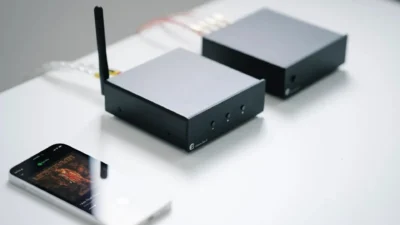
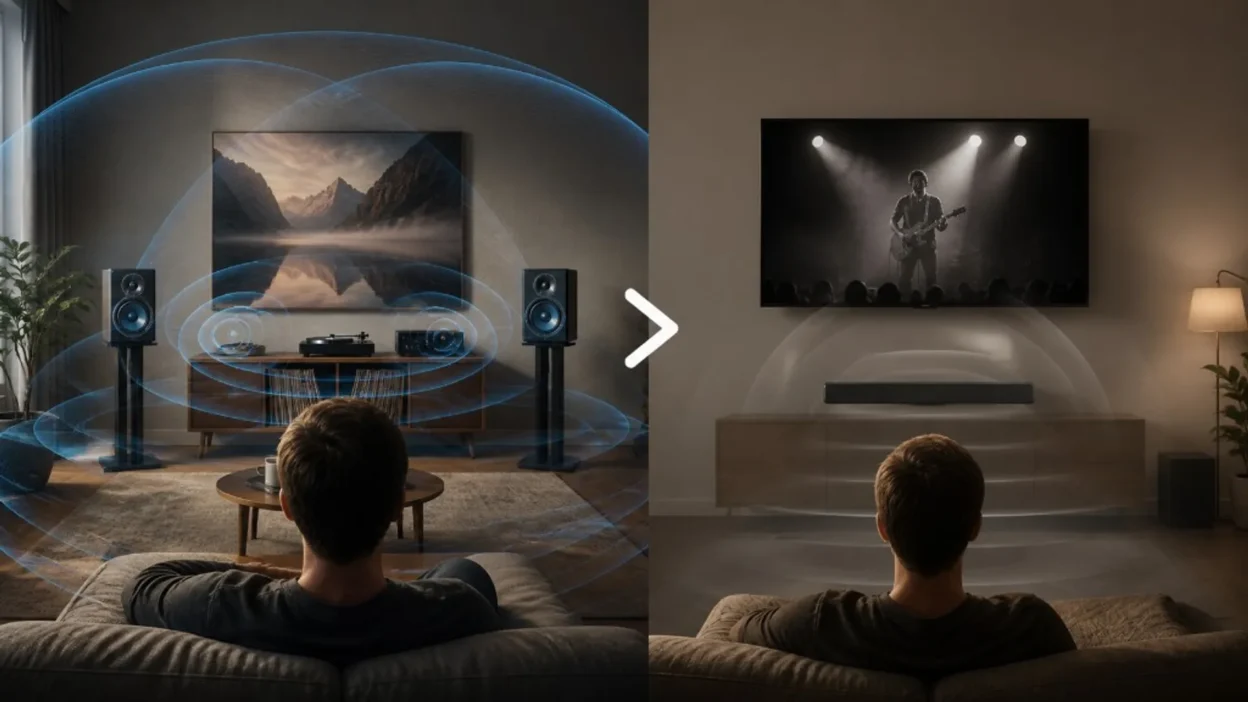
For music at home, Slow HiFi’s default answer is a real stereo pair- typically bookshelf or compact stand-mount speakers (passive or active) with correct placement- not a long soundbar under the TV. Soundbars are fair for thin TV sound and TV-first rooms; the problem is using the same bar as a serious music system while Spatial Audio and Dolby Atmos music are sold as a hi-fi upgrade. In practice, music playback stress-tests gapless handoffs, codec choices, and speaker geometry in ways most film mixes never touch. This guide states our bias openly, then explains why bookshelf-style stereo wins for listening, where a bar is still rational, and how to pick without overspending.
Music-first vs TV-first: why we default to bookshelf
Film mixes optimize dialogue and surround; music on a two-channel system optimizes continuous albums, stable imaging, and tonal truth. A soundbar that wins on the first job is still often a music compromise — not because it is “bad,” but because one box under the screen is the wrong shape for how stereo records are meant to be heard.
That is why, for anyone who listens to music on purpose (not only as background to the screen), we steer budget toward bookshelf or stand-mount pairs you can space and toe-in, with TV as a secondary input to that system when it fits. Casual TV with occasional music is the case where a bar can stay in the running.
Why hi-fi shops still push bookshelf for music
Walk into most specialist dealers and the pitch rhymes with ours: a soundbar is one long cabinet, DSP, and often a bundled sub; bookshelf speakers are two separate enclosures built for real left/right separation. That geometry usually buys more convincing stereo imaging and often cleaner bass scaling (especially when paired with a stand or proper stand height) than cramming multiple small drivers into a bar.
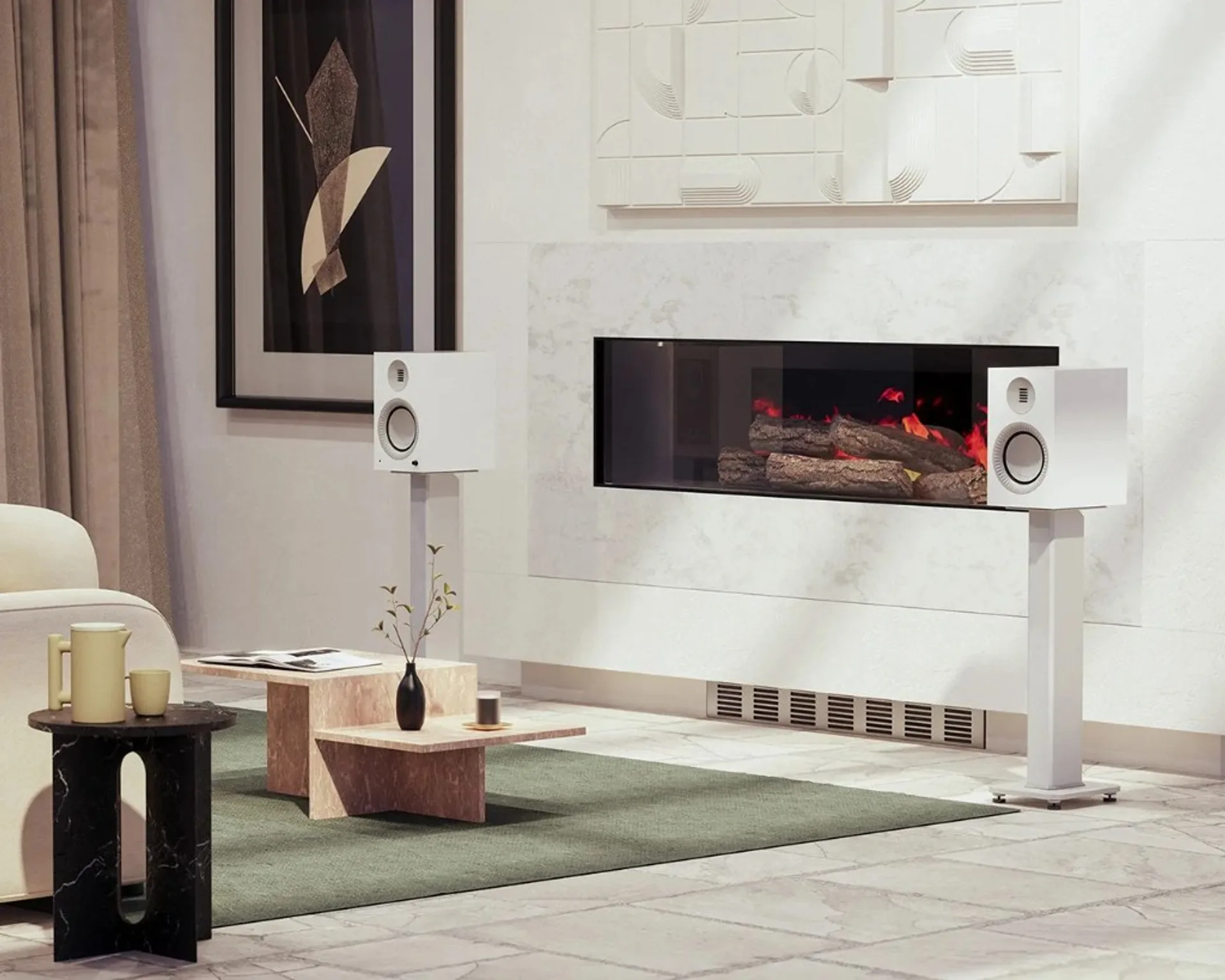
Bars earn their keep for dialogue boost and surround packaging on movies — something a plain stereo pair does not do unless you add center/sub or AV processing. For music hours, the same shops routinely say: if roughly half or more of your listening is albums and playlists, put the budget in bookshelf (or larger) stereo; if the TV remote sees ten times more action than the music app, a bar’s simplicity can win.
Our line is simpler: music-first means bookshelf-first. Game competitively? Check latency on any bar with heavy processing — stereo amps and direct speaker paths are often less mysterious.
Ecosystem reality: TV bar vs separate speakers
Whole-home audio brands often sell both bars and discrete speakers — and even they admit the split: a bar is a fast TV fix; serious listening still belongs on standalone speakers when cinema tricks are not the goal. That aligns with a bookshelf-first setup: stereo where you actually sit and listen, and a bar only where the screen dominates.
If you want to grow in stages (stereo now, expand later), modular lines such as Cambridge Audio’s MSX concept are one modern pattern — see our MSX modular minis intro.
Small living rooms: bookshelf still works
Tight spaces exaggerate reflections: bass piles in corners; hard walls smear detail. A soundbar’s virtual width can feel acceptable on TV — or it can blur vocals when surfaces fight the DSP. None of that is an argument against bookshelf speakers; it is an argument for placement discipline, sensible spl, and maybe a rug or absorption before buying more electronics.
In awkward layouts, a bar under the TV often wins WAF and cable count. If you care about music, we still prefer a compact stereo pair on stands or a deep console at ear height, with toe-in — even modest bookshelves image more like real stereo than a single long bar in the same room.
Small footprint does not mean “soundbar only.” It means you choose smaller bookshelves and accept fewer decibels before the room complains, not a different philosophy.
The Atmos gapless problem on soundbars
The recurring headache is gapless playback when soundbars decode Dolby Atmos music from services that advertise Spatial Audio. With ordinary stereo PCM, the next track is more of the same format, so players can often buffer across boundaries without resetting decoder state — like a continuous hose.
Atmos music, in contrast, is stateful: each track carries metadata mapping objects to the specific driver layout. When one Atmos session ends, the processor may need to tear down and restart decoding for the next track. Many flagship bars are said to use hardware that cannot pre-render the next track’s object map while the current one plays, so the decoder briefly mutes to avoid artifacts — audible as micro-gaps, dropped ambience, or a “bump” between songs.
Evidence boundary: this is an editorial explanation of observed behavior on consumer gear, not a lab measurement from Slow HiFi. Treat it as a hypothesis to listen for on your chain, especially on live and gapless-mastered material.
Where gaps hurt most: live, classical, concept records, DJ mixes
Why gaps break intent: continuous live crowd noise, classical attacca joins, prog/concept crossfades, and DJ mixes delivered as Spatial Audio with per-track markers. In each case, the art assumes uninterrupted flow; a decoder reset between markers reads as a technical glitch, not a creative choice.
There is also a cold-start risk: the first play after idle time may clip the opening moments of a track that begins with immediate energy — a music-first annoyance that TV browsing might never surface.
HDMI passthrough vs eARC: path-dependent behavior
Two connection styles matter. Some bars offer multiple HDMI inputs so a streamer can plug directly into the bar, decode audio locally, and pass video to the TV. Others rely on a single eARC return from the TV, adding an extra hop (source → TV → bar). The eARC path can add handshake latency during track transitions — a “valve speed” problem, not a raw bandwidth problem — and passthrough sometimes handles transitions more gracefully. Neither path reliably removes the core gapless limitation on Atmos music.
Software mitigation: Continuous Audio Connection (context)
Industry chatter has pointed at Apple’s tvOS direction: a Continuous Audio Connection-style behavior that keeps an Atmos session alive with silent carrier audio between tracks so handshakes do not drop. Treat early reports as helpful, not complete, and dependent on end-to-end support across source, TV, and bar firmware.
Buyer takeaway: if you are buying primarily for Atmos music on Apple TV, verify current firmware notes for your trio of devices before assuming the issue is gone.
Physics: one box vs two sources in the room
Even if gapless Atmos improved overnight, a soundbar still fights geometry. Drivers share one enclosure under the display; the apparent stereo width is tied to that chassis. Flagship bars widen perception with side-firing drivers and room reflections off walls and ceilings — the same surfaces acoustic treatment often tries to tame for critical listening.
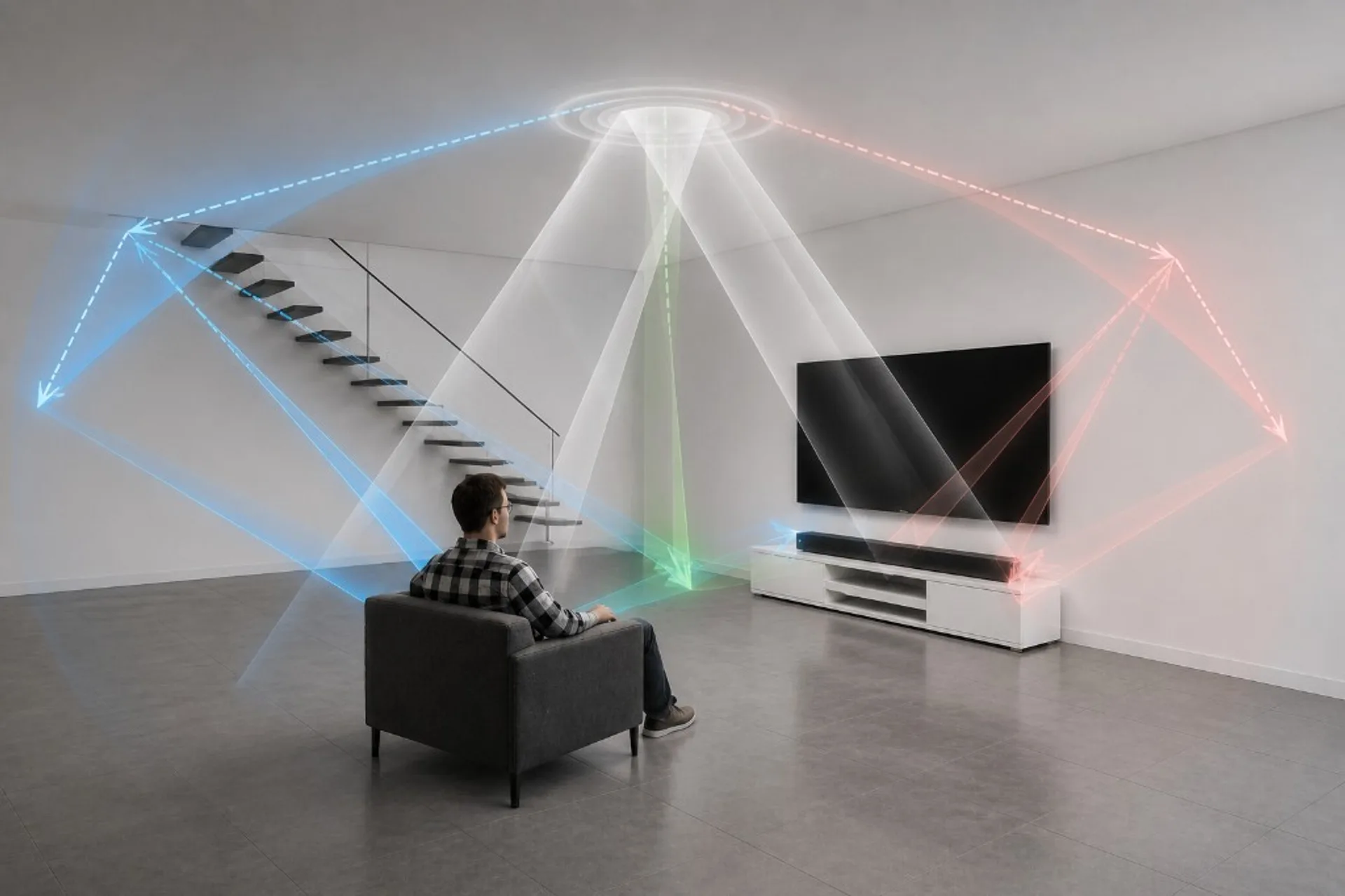
By contrast, a spaced pair of loudspeakers creates real inter-aural separation: a phantom centre image between cabinets rather than inside a single bar. That is less about exotic drivers and more about placement in the room — a reason we keep publishing architecture guides like active vs passive speakers instead of chasing one-box miracles.
In most bar-vs-bookshelf comparisons that actually play music, the gap that jumps out is not the bass number on the spec sheet but stage width and depth — instruments occupying space instead of a “wall of sound” glued to the bezel. A sub can help either layout; it cannot replace two spaced cabinets for stereo intent.
Streaming Atmos music and the lossy baseline
Codec reality: streamed Atmos music is commonly delivered in a lossy container (for example Dolby Digital Plus with Atmos metadata), not lossless TrueHD. TrueHD Atmos exists on disc and niche downloads but is a narrow slice of how people actually consume Atmos music day to day. For film, lossy spatial audio is often good enough; for music, stacking lossy Atmos on a reflective single-box renderer is a weaker value proposition than lossless two-channel playback on proper speakers — if music quality is the goal.
When we still recommend a soundbar
We are not anti-bar. A soundbar is better than TV speakers, tidy, and sensible when movies and shows dominate, the household vetoed visible speakers, or rental layout leaves no honest place for stands. Buy the bar for that job.
Where we push back is spending flagship money on a bar as your main music system because Spatial Audio says so — for listening, bookshelf stereo is still the better default.
Quick matrix (biased toward bookshelf for music)
Default assumption here: if music matters, start with a stereo pair. The table only lists exceptions and hybrids.
| Your situation | Lean toward | Why |
|---|---|---|
| Mostly TV; music is background | Soundbar (optionally + sub) | Dialogue boost, low box count, fast install; music is not the quality bottleneck. |
| Music ≥ 50% of hours; TV secondary | Stereo pair (passive or active) or music-first powered stack | Imaging, timbre, and long-session comfort usually track two-channel listening more predictably than a bar under a panel. |
| Spatial Audio / Atmos music on Apple TV is a must | Test your exact chain; keep stereo fallback | Atmos music behavior on bars is source- and firmware-dependent; if album flow glitches, stereo PCM is the reliable path. |
| Open floor plan, hard surfaces, high RT60 | Discrete speakers + basic room treatment first | Bar virtual-width tricks and ceiling bounces can add confusion in already live rooms; stereo plus absorption/diffusion often pays faster than more DSP. |
| WAF / rent / “no visible boxes” | Low-profile bar or architectural/compact active solutions | Real life wins; consider a two-box active pair the same width as a bar if the console allows. |
What we would buy: bookshelf-first paths
This is the lane we favor: two loudspeakers (bookshelf or compact floorstanders), sane spacing and toe-in, plus an integrated amp or active pair if you want fewer boxes. You trade a bit of lounge minimalism for imaging and long-session listening that a soundbar rarely matches on music.
- Passive + integrated: maximum rolling upgrades; start with our active vs passive framework and honest amp budgeting.
- Powered heritage towers: if you want TV-adjacent convenience without a bar, compare tiers in Klipsch The Fives II / Sevens II / Nines II explained — different industrial brief than compact Hi-Fi mini-monitors.
- Compact active 2.0 with HDMI eARC: for shallow consoles, see Edifier M90 as an example of stereo under the TV without a long bar.
- Premium active integration: if you want factory-tuned active engineering rather than separates, Dynaudio’s home-audio map shows how serious brands split the active path from passive ladders.
FAQ
Why does Slow HiFi favor bookshelf speakers over a soundbar for music?
Two spaced cabinets preserve stereo geometry, imaging, and reliable PCM / lossless playback in ways one long bar under the TV usually cannot. We still recommend a soundbar when TV-first use or room veto wins — but for serious listening, budget goes to bookshelf (or stand-mount) stereo first.
Is Dolby Atmos music always worse than stereo?
Not always. Some Atmos mixes are excellent. The issue is whether your playback chain preserves the musical intent (gapless flow, codec quality, imaging) on the hardware you own.
Will eARC sound worse than HDMI into the bar for music?
It can add another hop and handshake in the chain. The audible impact varies by TV, bar, and firmware. If you hear track-boundary glitches, try routing the source through the bar when inputs allow it, and keep everything updated.
What is the smallest stereo upgrade over a soundbar?
A compact powered stereo pair flanking the TV, plus a streamer or TV eARC into the speakers’ DAC, often beats a single bar for stereo imaging. Size and WAF still matter, so measure your console depth first.
Are bookshelf speakers impractical in a small room?
Not if you choose compact models, use stands or a solid console, and control reflections. A bar can win on cable count and WAF; for music quality, we still prefer small bookshelves properly placed over a single bar.
Can I mix a soundbar with bookshelf speakers in one ecosystem?
Many whole-home platforms allow TV on a bar and music on separate speakers. For listening sessions, route music to the stereo pair; use the bar where it shines (TV). Priority order: fix music playback first if that is what you care about.
If I care about Spatial Audio, should I ignore stereo?
Treat Spatial Audio as optional spice, not a guaranteed upgrade path. Keep a reliable stereo playback path for albums and playlists; evaluate Atmos music behavior on your specific TV, bar, and streamer firmware.