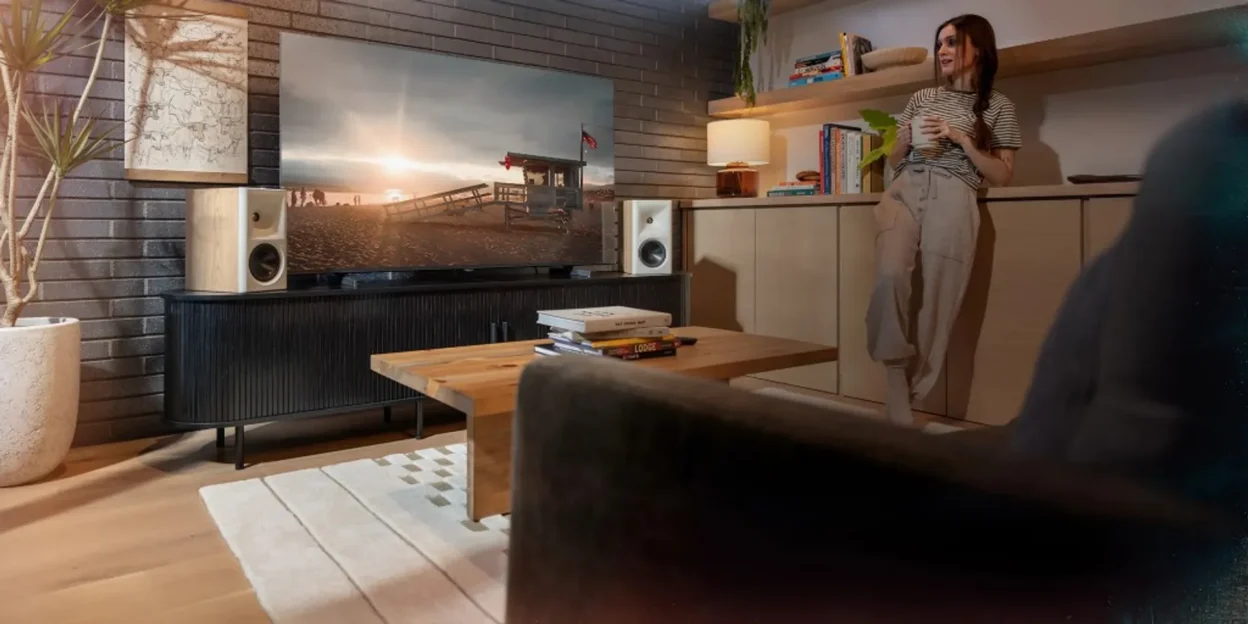
At CES 2026 (6 January 2026, Las Vegas), Klipsch used its 80th-anniversary year to reset its powered bookshelf line with three replacements at once: The Fives II, The Sevens II, and The Nines II. The headline change is not a new shade of grille cloth- it is electronics engineered by Onkyo in Osaka inside each cabinet, plus Dolby Atmos across the trio, HDMI 2.1 / eARC TV hookup, and built-in Wi‑Fi streaming to 24-bit / 96 kHz on-box playback per Klipsch’s announcement. The Sevens II and The Nines II add Dirac Live room correction (limited-bandwidth licence, microphone in the box) and an optional wireless link between left and right channels; The Nines II alone adds DTS:X and balanced XLR inputs. Klipsch lists Spring 2026 availability via Klipsch.com and authorised dealers. I have not auditioned production pairs yet.
Powered by Onkyo: what moved inside the box
Klipsch and Onkyo share common ownership under the wider Premium Audio / Gentex umbrella, but the marketing line here is specific: Onkyo engineers in Osaka designed the new AVR-class electronics package that lives inside each Gen II system. Klipsch describes it as a fully integrated receiver architecture- decoding, amplification, and switching intended to behave like a two-box home theatre stack compressed into a pair of speakers.
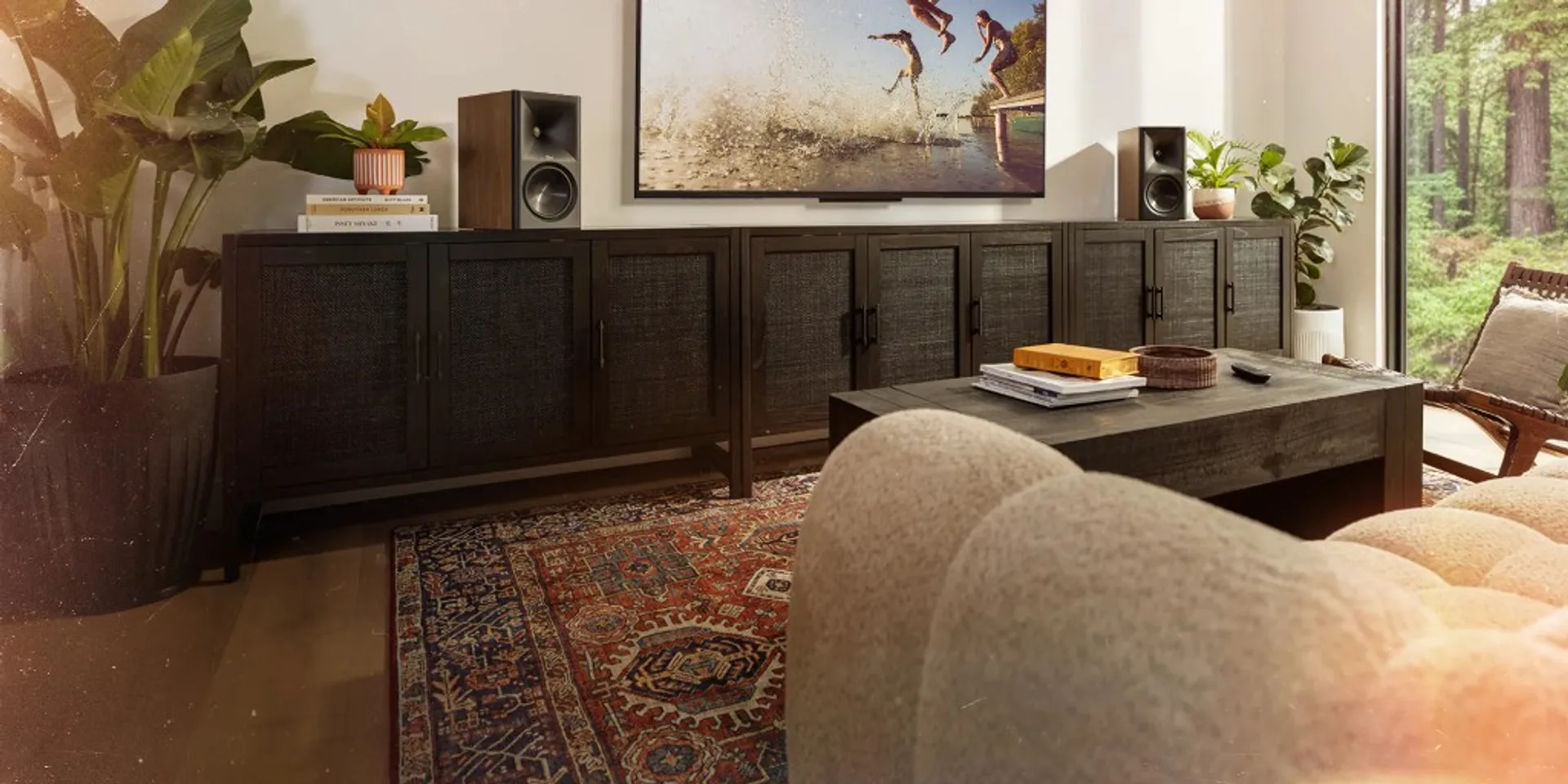
Chief Operating Officer Vinny Bonacorsi is quoted on Klipsch’s news page framing the jump as resetting what a simple two-speaker system is allowed to do- bigger headroom for movies and games, cleaner digital routing, and fewer excuses about cable count to the TV.
Drivers, horn, and the new BMC baffle
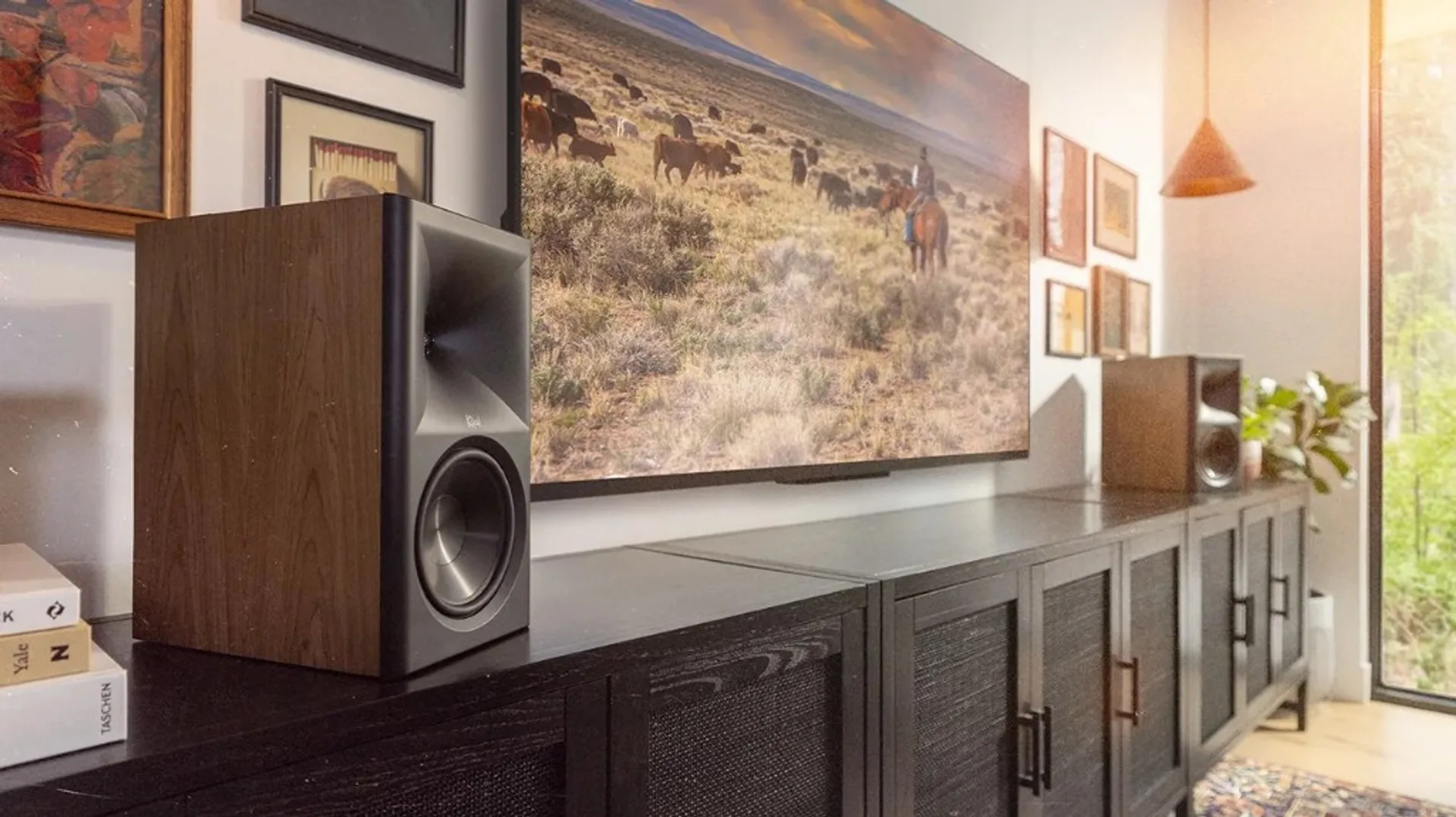
Acoustically, Klipsch is pushing a single-piece BMC baffle with an integrated Tractrix horn and the same 1 in titanium dome tweeter story across all three models, differing only by woofer diameter. Woofers use Klipsch’s Jet Cerametallic cones at 5.25 in (Fives II), 6.5 in (Sevens II), and 8 in (Nines II). The press copy claims lower resonance and wider dispersion versus the previous generation, with a curved baffle radius aimed at reducing diffraction- the sort of claim that still wants a listening room, not a trade-show floor, to verify.
Atmos, DTS:X, and HDMI 2.1
All three models advertise Dolby Atmos processing for immersive playback from a two-channel physical layout — height and surround information rendered through the same left/right cabinets, not discrete in-ceiling channels. The Nines II adds DTS:X for buyers who care about that second immersive codec.
Connectivity centres on HDMI 2.1 with eARC to the television, which Klipsch positions as one-cable control of volume from the TV remote and a path for high-bit-rate sound from consoles and streamers. The release also mentions gaming-friendly HDMI features such as 4K/120, VRR, ALLM, and HDR pass-through where the chain allows- treat that as check-your-TV-and-source territory before you assume every mode works end-to-end.
Dirac and the optional wireless stereo link
The Fives II ships without Dirac in Klipsch’s published matrix. The Sevens II and The Nines II ship with Dirac Live Room Correction (Limited Bandwidth) plus a measurement microphone; setup runs through Klipsch Connect Plus. That is the practical answer to room modes in real apartments- automated EQ within the limits of the bundled licence tier.
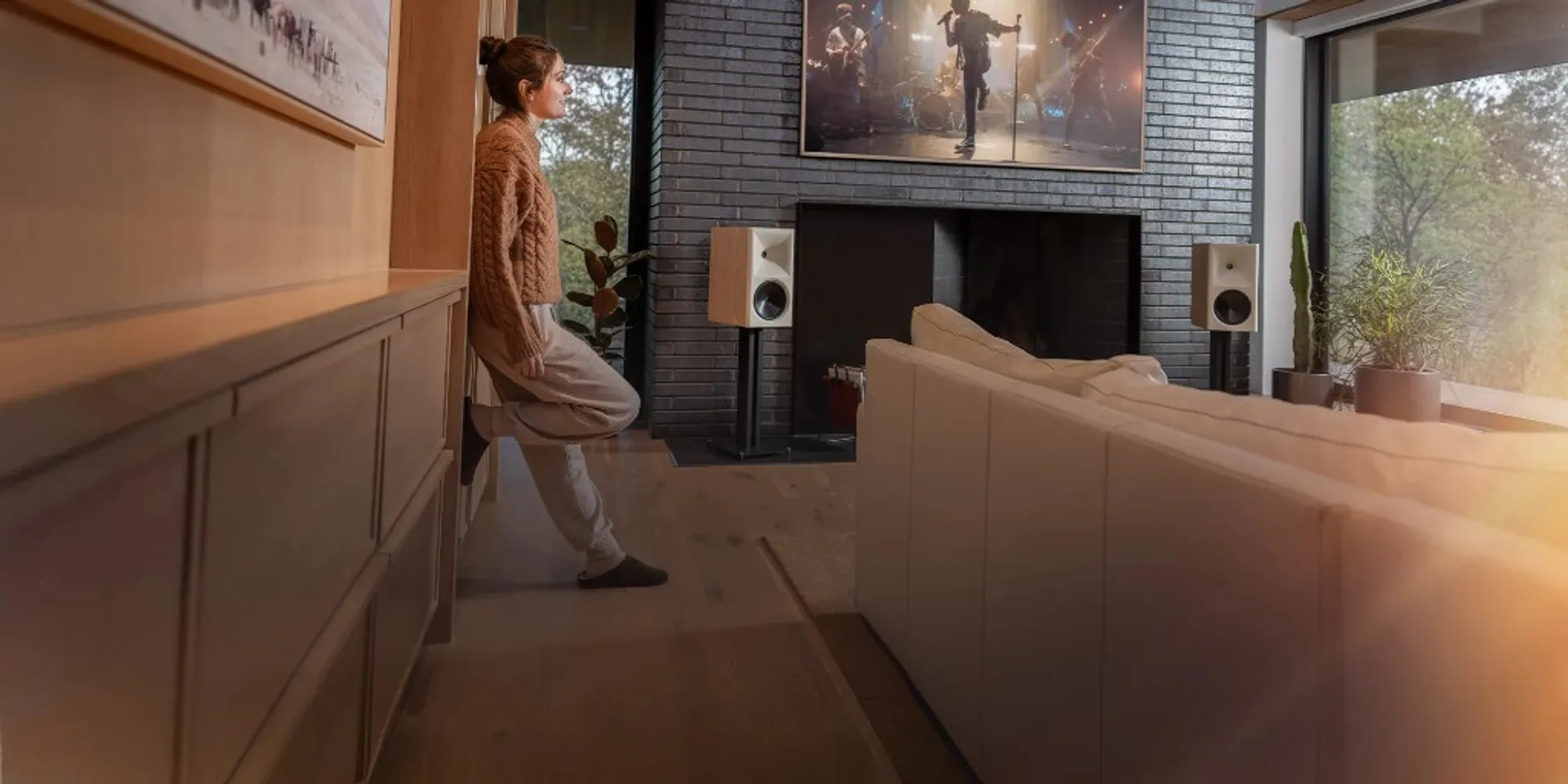
Those two larger models also support an optional wireless connection between left and right speakers, which matters if your sofa alignment fights where the TV forces the primary cabinet.
Streaming, app, and top-panel controls
Klipsch lists Google Cast, Apple AirPlay 2, Spotify Connect, Tidal Connect, Qobuz Connect, Roon Ready, and additional platforms under a generic “and more” umbrella. On-box high-resolution playback is quoted at up to 24-bit / 96 kHz.
Klipsch Connect Plus handles Dirac workflows, presets, input naming, and a My Input shortcut layer. Hardware controls move to a metal top plate with a volume wheel and source button; a backlit remote ships in the box.
Fives II vs Sevens II vs Nines II
| Model | Woofer | Dirac | Wireless L/R | DTS:X | XLR in | MSRP (pair) |
|---|---|---|---|---|---|---|
| The Fives II | 5.25 in | — | — | — | — | $1,399.99 |
| The Sevens II | 6.5 in | Yes | Optional | — | — | $1,999.99 |
| The Nines II | 8 in | Yes | Optional | Yes | Yes | $2,399.99 |
All three keep digital optical, coaxial, analogue line, USB‑C playback, and a subwoofer output. Turntables connect to a dedicated analogue input with a built-in phono stage so you do not have to steal a line input for RIAA duty.
Finishes and stands
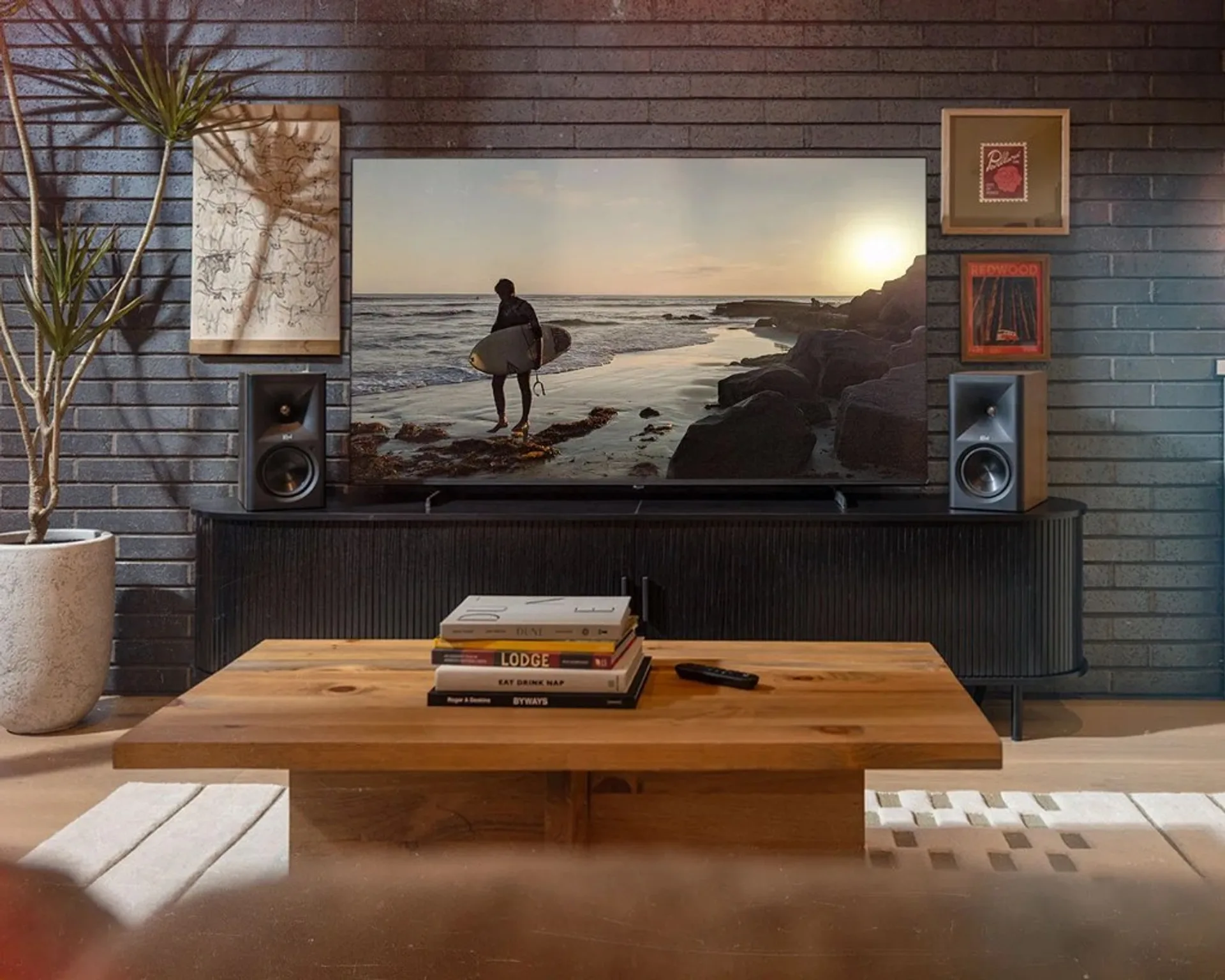
Klipsch adds a red oak veneer with a white baffle option alongside existing walnut and ebony veneers with black baffles. The company states compatibility with current KS series stands (24 in and 28 in heights), with stands listed at USD 474.99 in the same announcement block.
FAQ
When do they ship?
Klipsch’s official language is Spring 2026 through Klipsch.com and authorised retailers. Regional SKUs and warehouse dates vary.
Do I still need a receiver?
For many TV + vinyl + streaming living rooms, no — that is the product thesis. You still need power outlets, possibly a subwoofer, and realistic expectations about two-channel Atmos versus a full speaker array.
Is Gen II the same cabinets as Gen I?
Klipsch describes re-engineered cabinets and baffles; finish options expanded. For exact dimensions and weights, use each model’s live specification tab.
Note: Trademarks (Dolby Atmos, DTS:X, Dirac Live, Roon Ready, etc.) belong to their respective owners. Nothing here is sponsored by Klipsch.