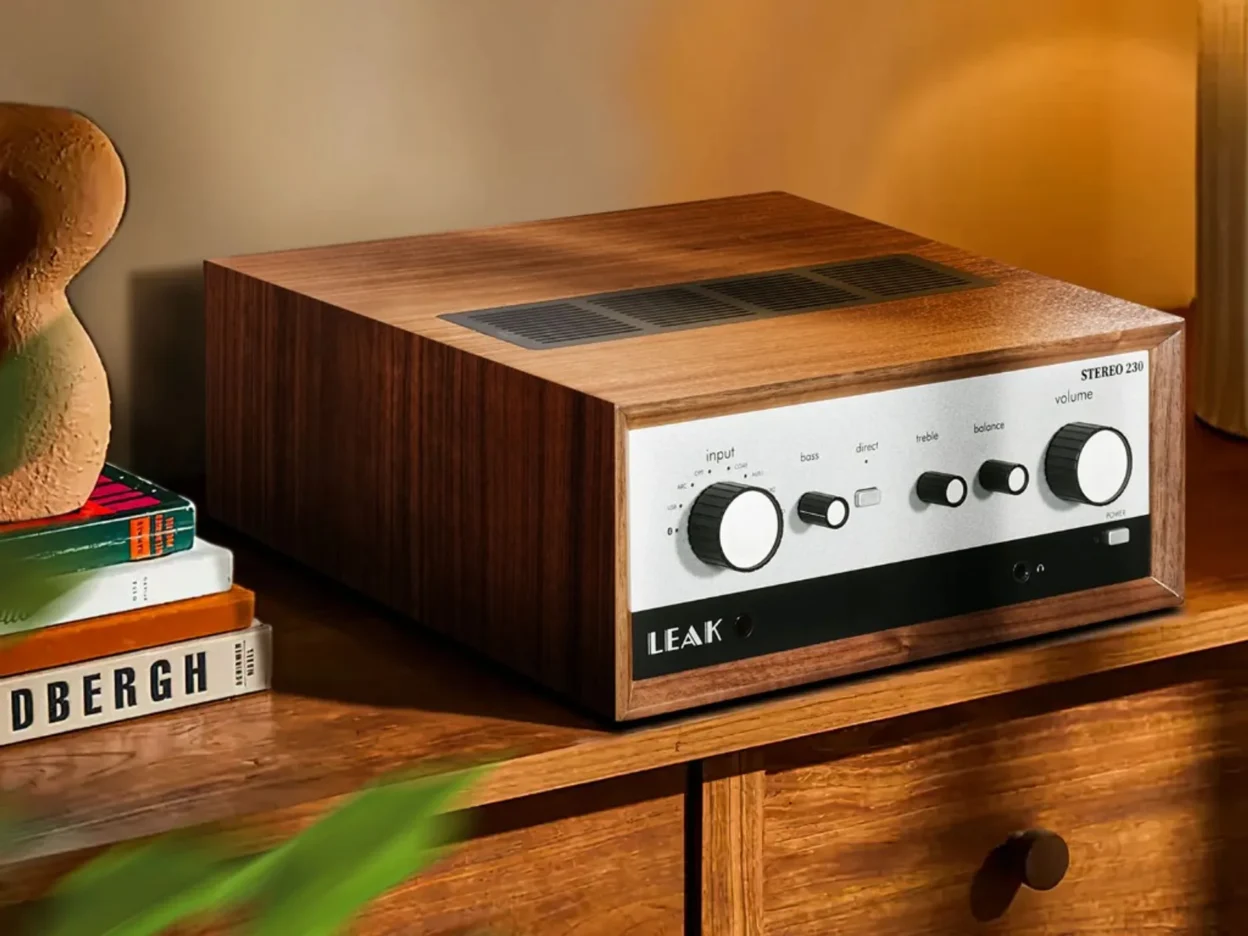
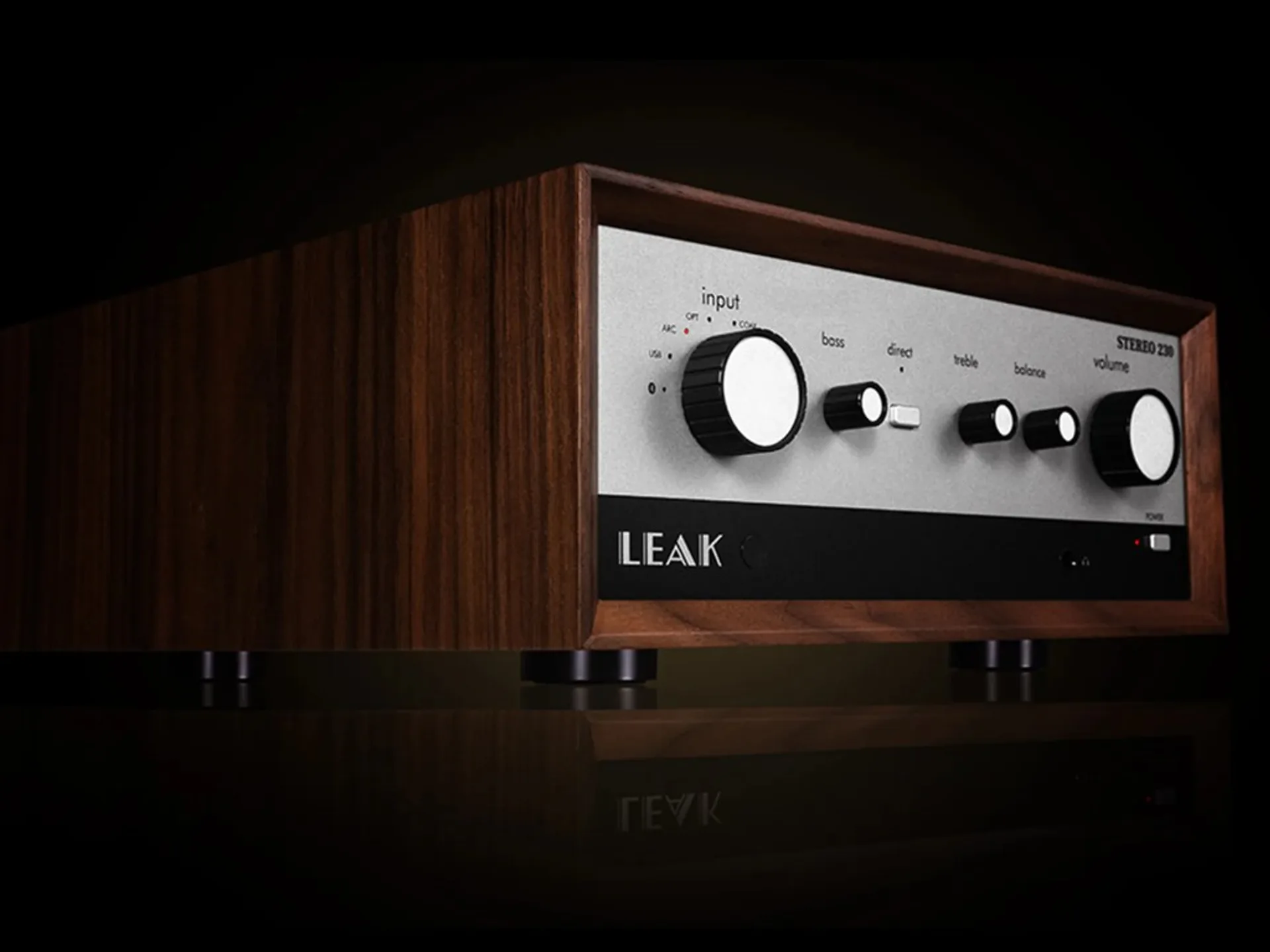
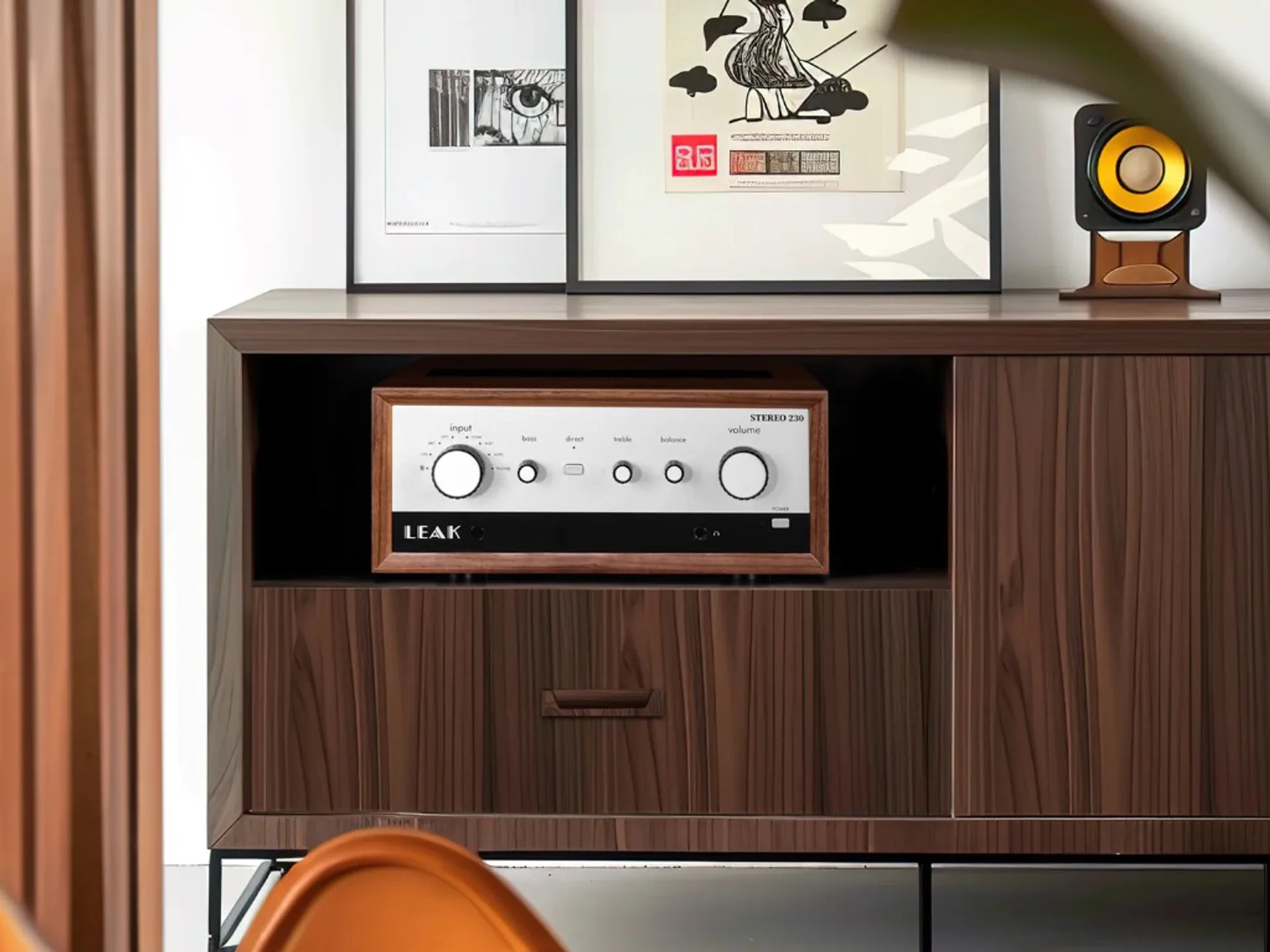
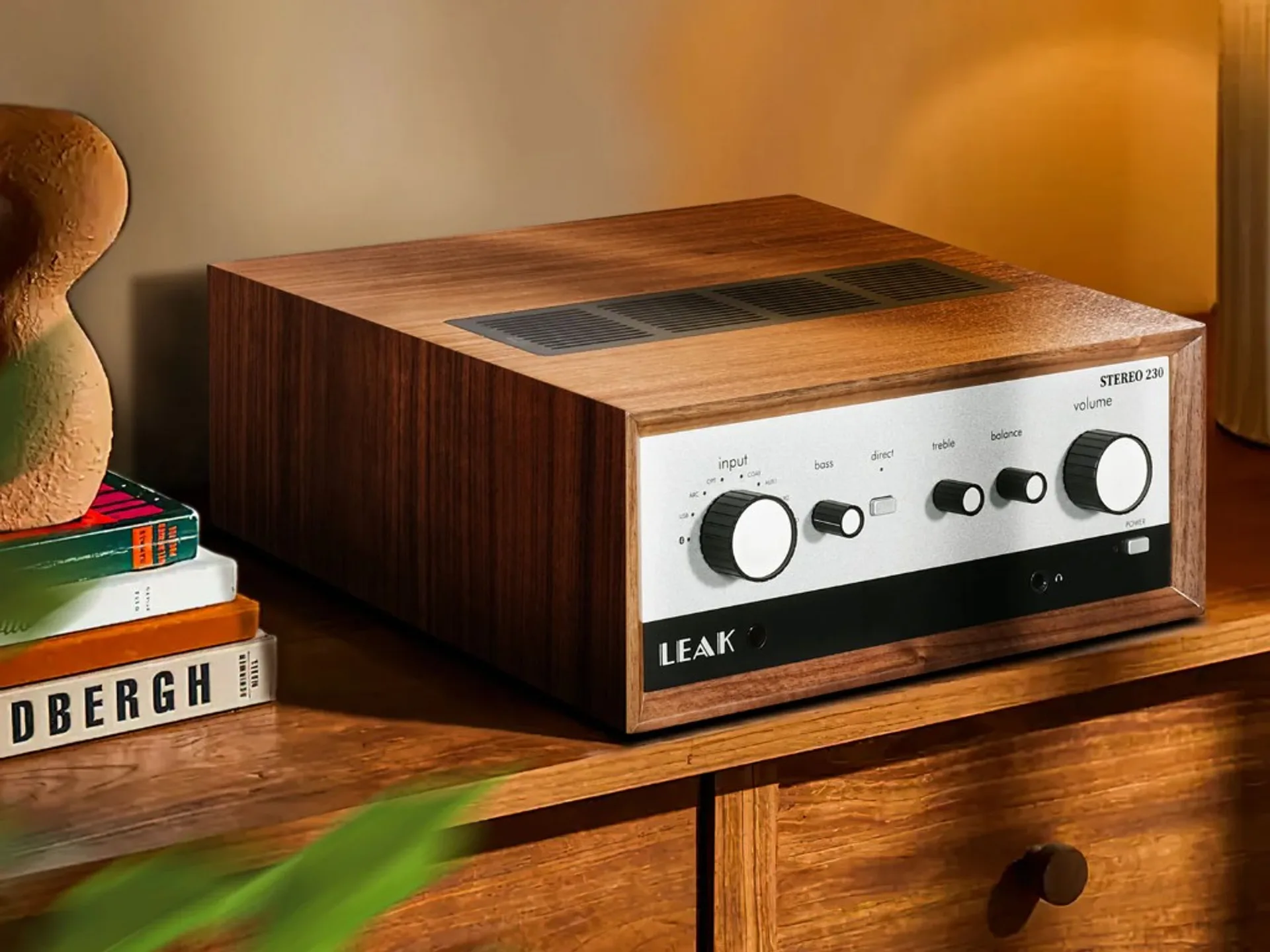
LEAK Stereo 230 is one of those integrated amps that makes sense before you even power it on: classic wood-clad form, modern digital connectivity, and enough Class AB power to drive real-world speakers without drama. The question is not whether it looks right in a living room. The question is whether it sounds convincing across different genres and speaker loads once the novelty wears off.
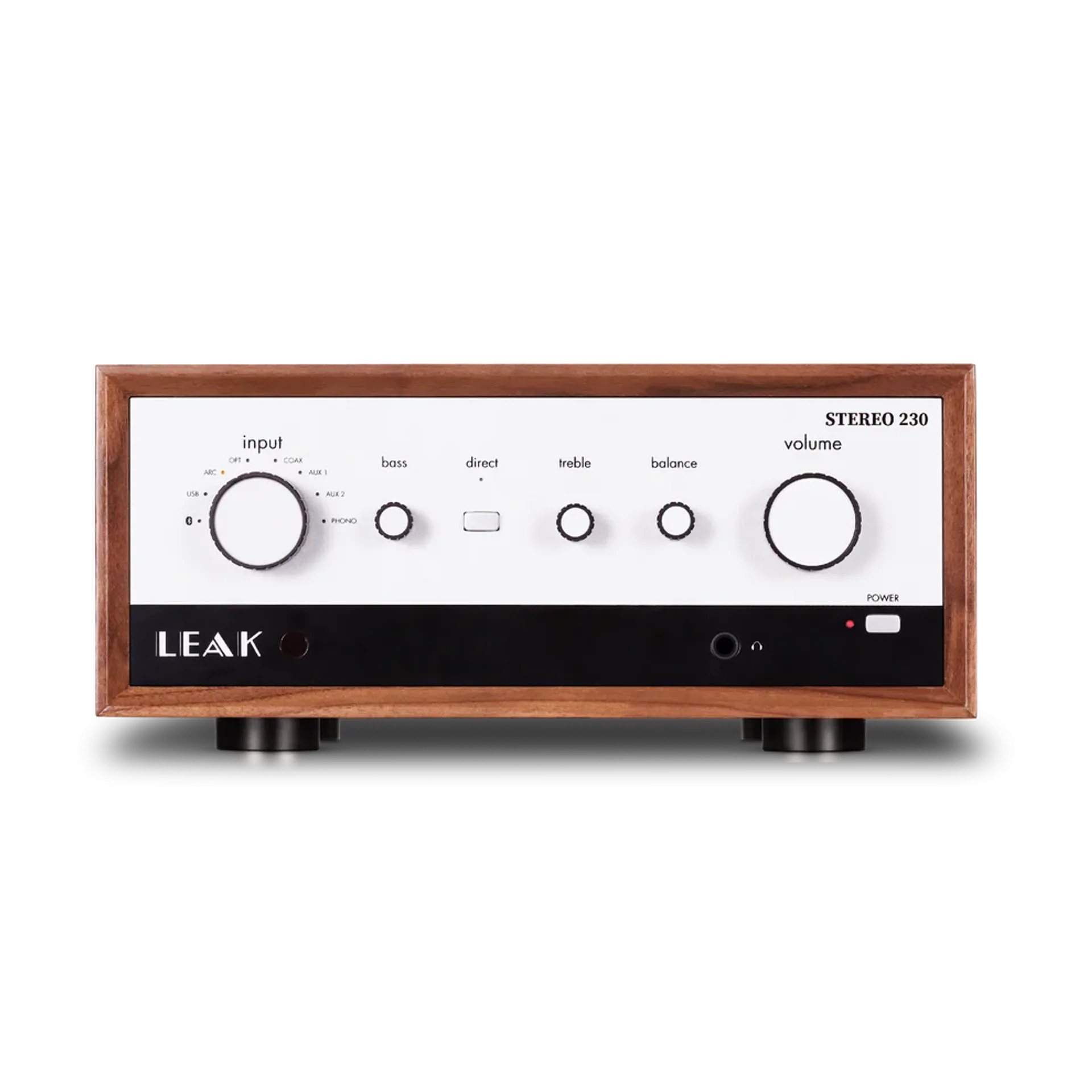
What LEAK Stereo 230 is on paper
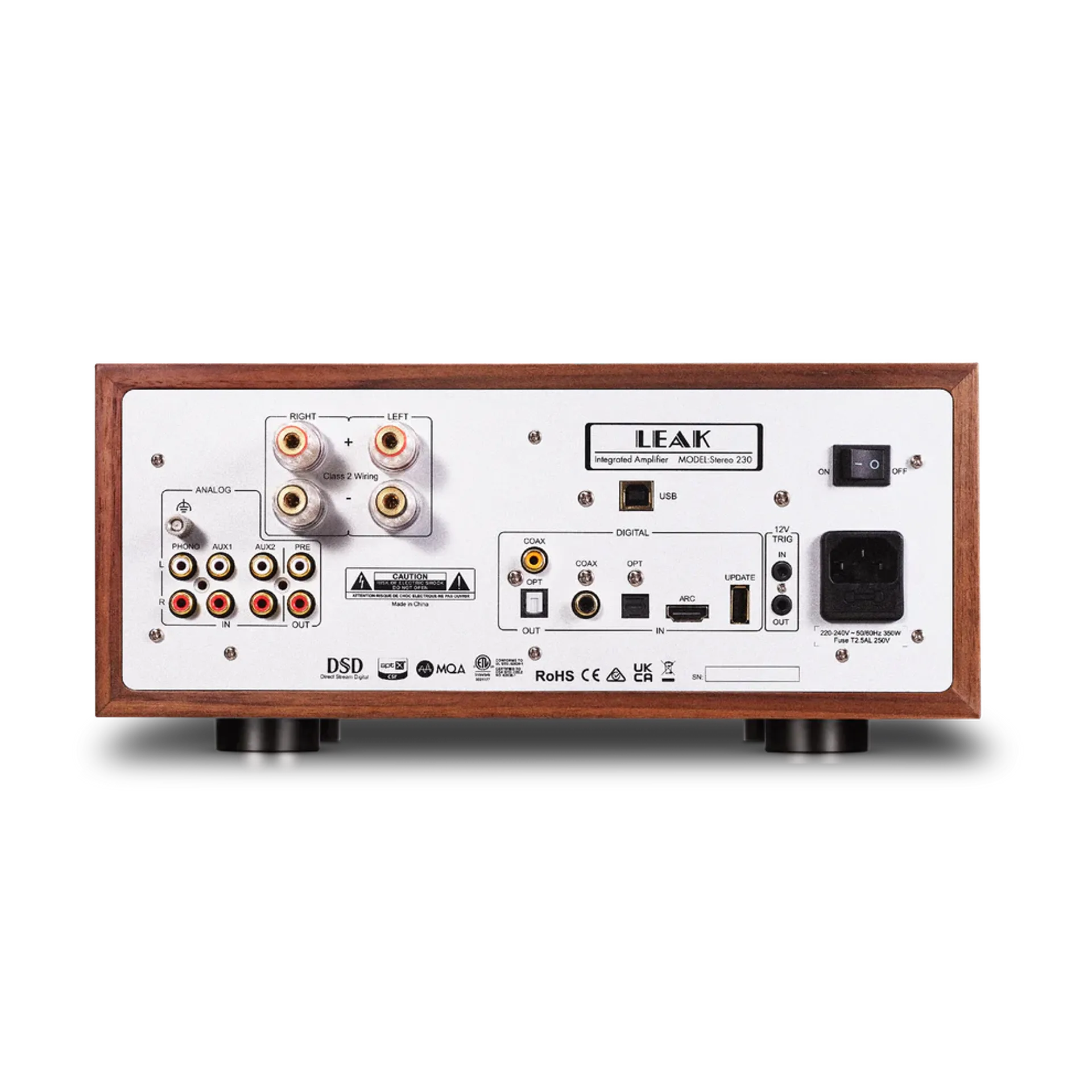
From LEAK and review context, Stereo 230 is positioned as the bigger sibling to Stereo 130: more power, updated digital stage, and broader system flexibility while retaining the brand’s heritage design language. The core amplifier architecture remains Class AB, with commonly cited output around 75W per channel into 8 ohms and 115W per channel into 4 ohms.
That power spec puts it in the practical sweet spot for medium-sensitivity bookshelf and many floorstanding models in normal domestic rooms.
How it sounds in published listening notes
In Stereophile’s long-form listening write-up, the Stereo 230 is described as notably coherent, with a well-formed soundstage, easy musical flow, and a tonal balance leaning more sweet than warm rather than bright or etched. Bass is presented as controlled yet lively enough to keep rhythm sections physically convincing.
The most useful takeaway for buyers: this is not framed as a sterile “measurement-first” sounding integrated. It is framed as one that keeps musical continuity intact and encourages long sessions.
Speaker pairing suggestions (practical)
Below are pairing directions that fit Stereo 230’s reported character and power envelope. Think of these as starting points, not absolute rules.
| Speaker direction | Why it fits Stereo 230 | Best for |
|---|---|---|
| LEAK Sandwich 100 | Same family voicing intent, compact standmount load, coherent midband focus. | Small-to-medium rooms, vocal and acoustic sessions. |
| Wharfedale Linton-type voicing | Plays into the amp’s smooth, full presentation and furniture-first aesthetic. | Classic rock, jazz, long listening at moderate volume. |
| Neutral standmounts (mid-80s dB sensitivity) | Stereo 230 power and Class AB grip can balance neutral/lean monitors. | Mixed libraries, desktop-to-lounge crossover setups. |
| Easy-to-medium floorstanders (4-8 ohm nominal) | 75W/115W class is enough for controlled dynamics in regular living rooms. | Pop, electronic, soundtrack listening with more room fill. |
In the LEAK ecosystem specifically, pairing with Sandwich 100 is the cleanest thematic and aesthetic match; adding TruStream gives you a fully coherent stack.
Best music genres for Stereo 230
- Jazz / acoustic / vocal: reported coherence and tonal smoothness favor timbre continuity.
- Classic rock / blues: Class AB weight and rhythmic stability suit guitar-driven material.
- Singer-songwriter / chamber pop: center image focus and harmonic flow are a good match.
- Electronic at sane levels: enough current delivery for punch without turning aggressive.
If your taste is mostly ultra-fast metal at very high SPL or super-clinical studio-style presentation, you may prefer a different amp character.
Who should buy, who should skip
Strong fit if you:
- Want one integrated that balances musicality, modern inputs, and living-room aesthetics.
- Listen for hours and care more about flow/cohesion than edge-detail fireworks.
- Need a realistic 75W/115W Class AB platform for medium-load speakers.
Skip if you:
- Prefer razor-sharp, ultra-analytical, forward treble signatures.
- Need extreme high-SPL power reserves for very large rooms or difficult speakers.
- Only stream from a minimalist desktop setup and do not need full integrated-amp features.
FAQ
Is Stereo 230 enough for 4-ohm speakers?
For many common 4-ohm nominal speakers in medium rooms, yes. It is commonly cited at 115W into 4 ohms, which is practical integrated-amp territory.
What type of sound should I expect?
Published impressions point to cohesive staging, smooth tonality, and strong musical flow rather than a bright, hyper-etched presentation.
What is the safest first pairing?
Start with medium-sensitivity standmounts or easy floorstanders in a medium room, then tune placement and toe-in before changing hardware.