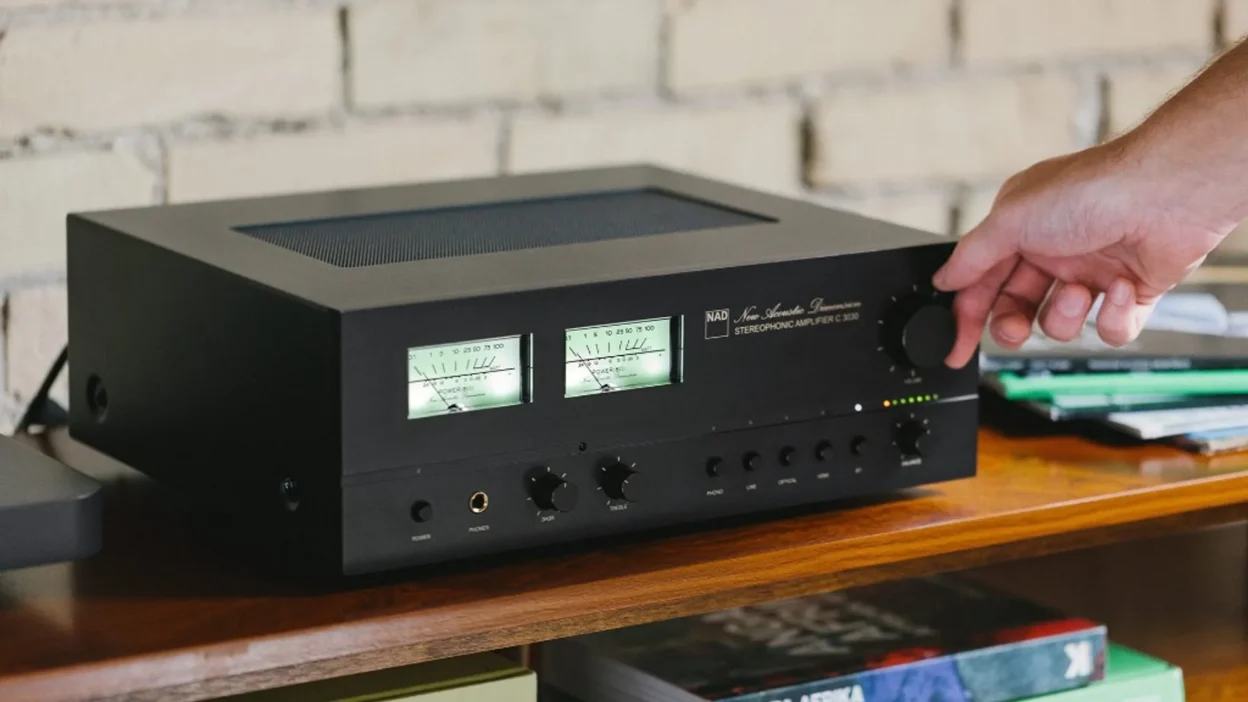
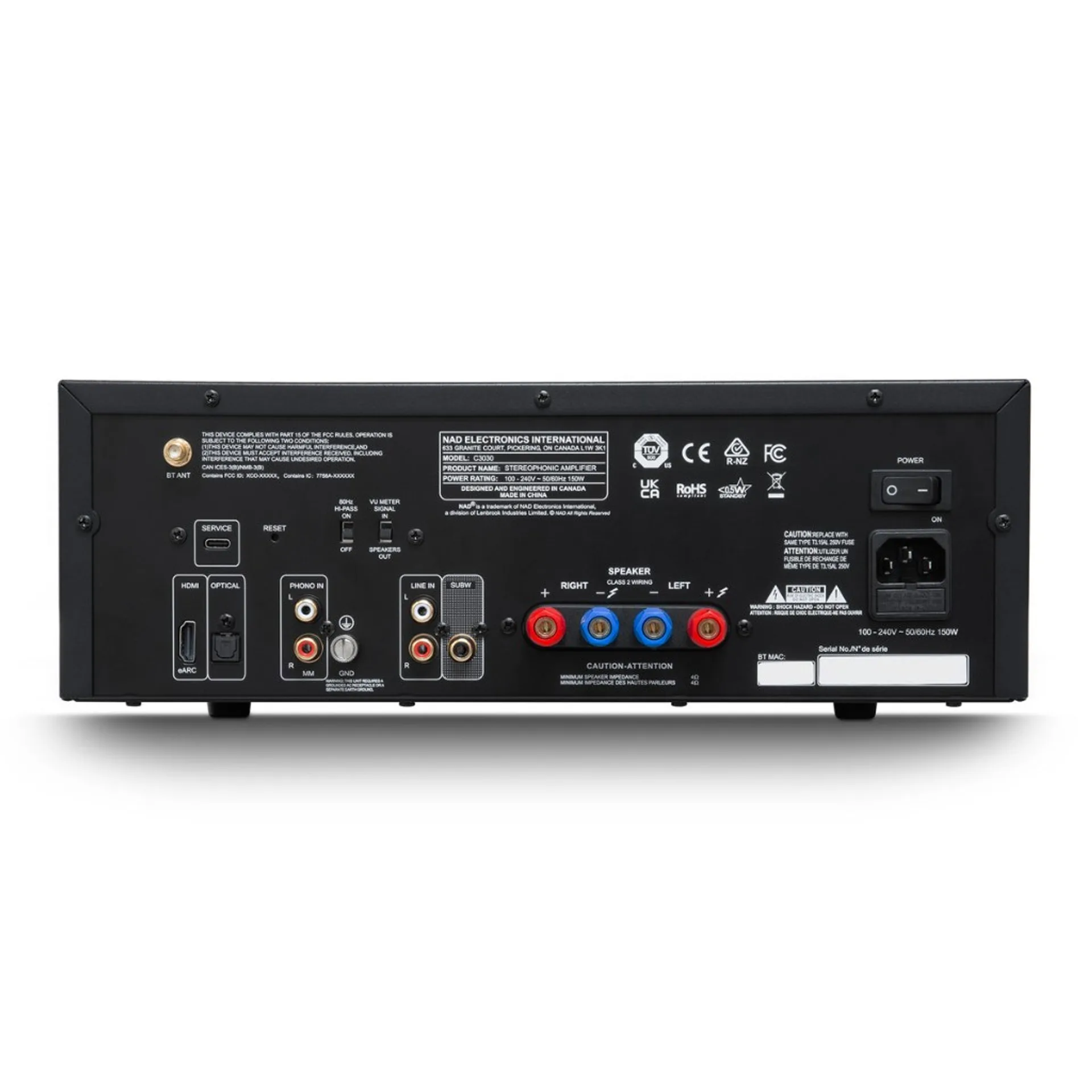
NAD C 3030 is the kind of amp that knows exactly who it is: a compact, neo-retro integrated with real-world features people use every day, not a feature checklist built for spec wars. You get classic VU-meter styling up front, but behind it sits a practical modern core: HDMI eARC, Bluetooth, MM phono, and a genuinely useful bass-managed sub out with optional 80Hz high-pass for easy 2.1 systems.
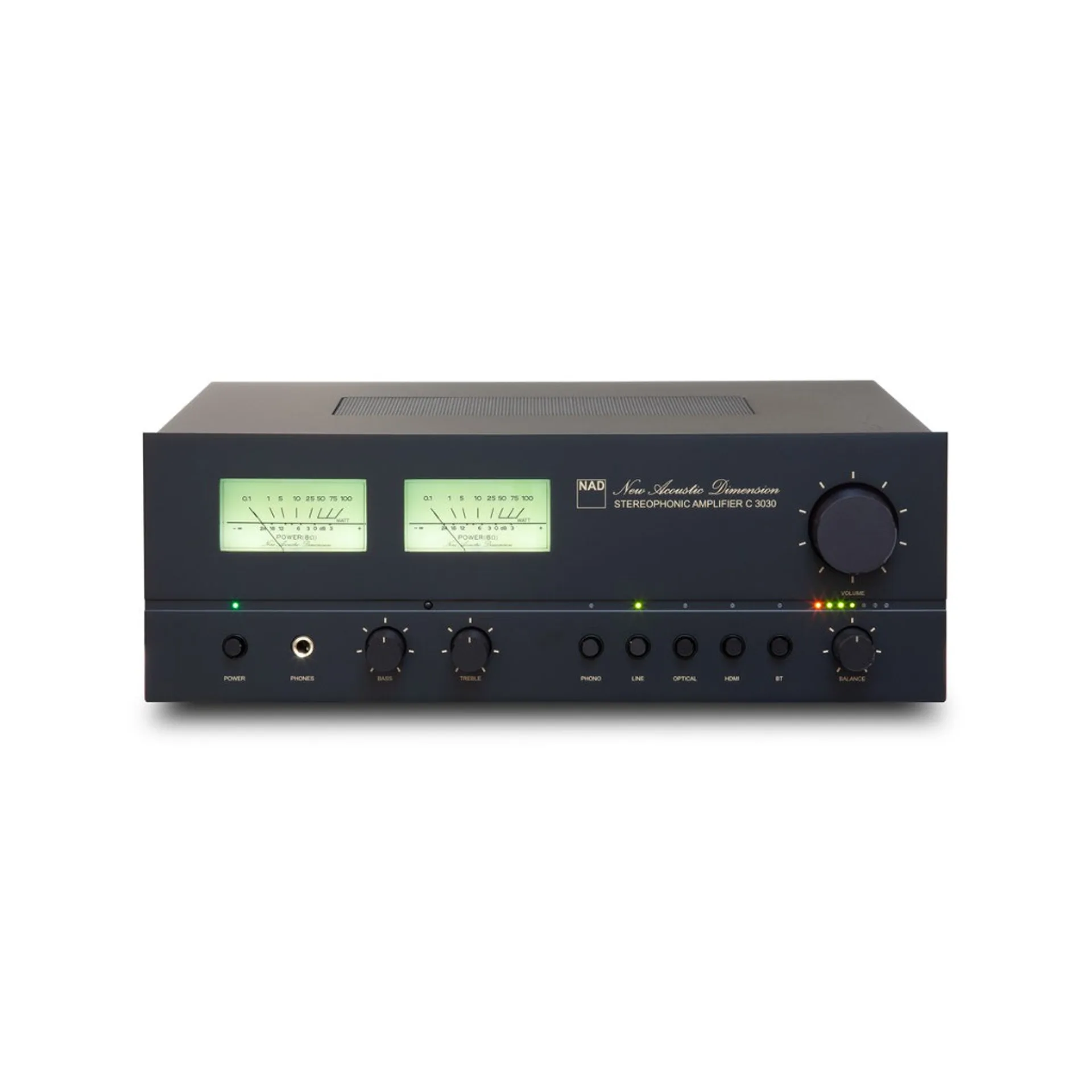
What you get from NAD C 3030
From the official NAD spec block, the headline is not just the 50W number. The meaningful part is how the amp behaves under load: published dynamic power and current figures suggest it is built to stay composed when music gets denser, not only at polite background levels.
- Power: 50W/ch (8/4 ohms, full-band, both channels driven)
- Dynamic reserve (IHF): up to 120W (8 ohms) / 250W (4 ohms) / 390W (2 ohms)
- Connectivity: HDMI eARC, optical in, phono in, Bluetooth, headphone out
- 2.1 usability: subwoofer output + optional fixed 80Hz high-pass filter
- Form factor: narrower 14-inch class chassis, easier shelf integration
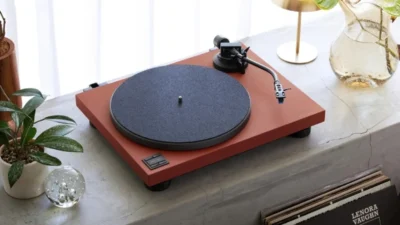
This is exactly the profile for listeners who want one integrated to run TV + streaming + vinyl without building a complex rack.
Published sound character (review synthesis)
Across long-form impressions, the C 3030 is repeatedly described as big-hearted, rhythmically engaging, and tonally forgiving without being dull. One useful summary from published listening notes: it tends to prioritize atmosphere and musical flow over hyper-analytic edge detail.
That makes it a strong fit for people who listen for hours and care about emotional continuity more than microscope-style dissection. It also explains why many reviewers report it sounding comfortable with different speaker types, as long as room size and sensitivity expectations stay realistic.
Recommended speaker pairings
Based on official power/current specs plus reported review pairings, these are safe and practical directions:
| Speaker class / examples | Why it works with C 3030 | Room & usage |
|---|---|---|
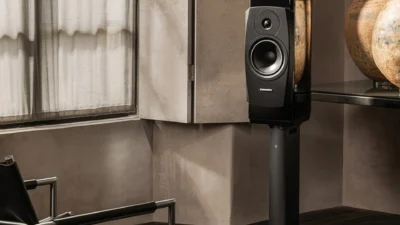
| Classic monitors (e.g. LS3/5a-type, AE1-class) | Reportedly keeps tone coherent and staging wide, with good musical flow. | Nearfield to medium rooms, focused listening. |
| Modern bookshelf 85-90dB (e.g. B&W 606 S3 class) | Power/current profile plus warm-leaning signature can balance neutral tweeter voicing. | Small-to-medium rooms, mixed genres. |
| Easy floorstanders (e.g. Q Acoustics 3050 / Lumina III class) | C 3030 has enough drive for normal living-room SPL without sounding strained. | Medium rooms, TV + music dual-use. |
| 2.1 systems with compact bookshelves + sub | 80Hz high-pass switch simplifies integration and can clean up midrange load. | Apartments / multi-purpose rooms. |
If you are comparing within current ecosystem choices, this amp also makes sense beside other lifestyle-forward hi-fi setups in our coverage, like LEAK Stereo 230 for a different Class AB flavor.
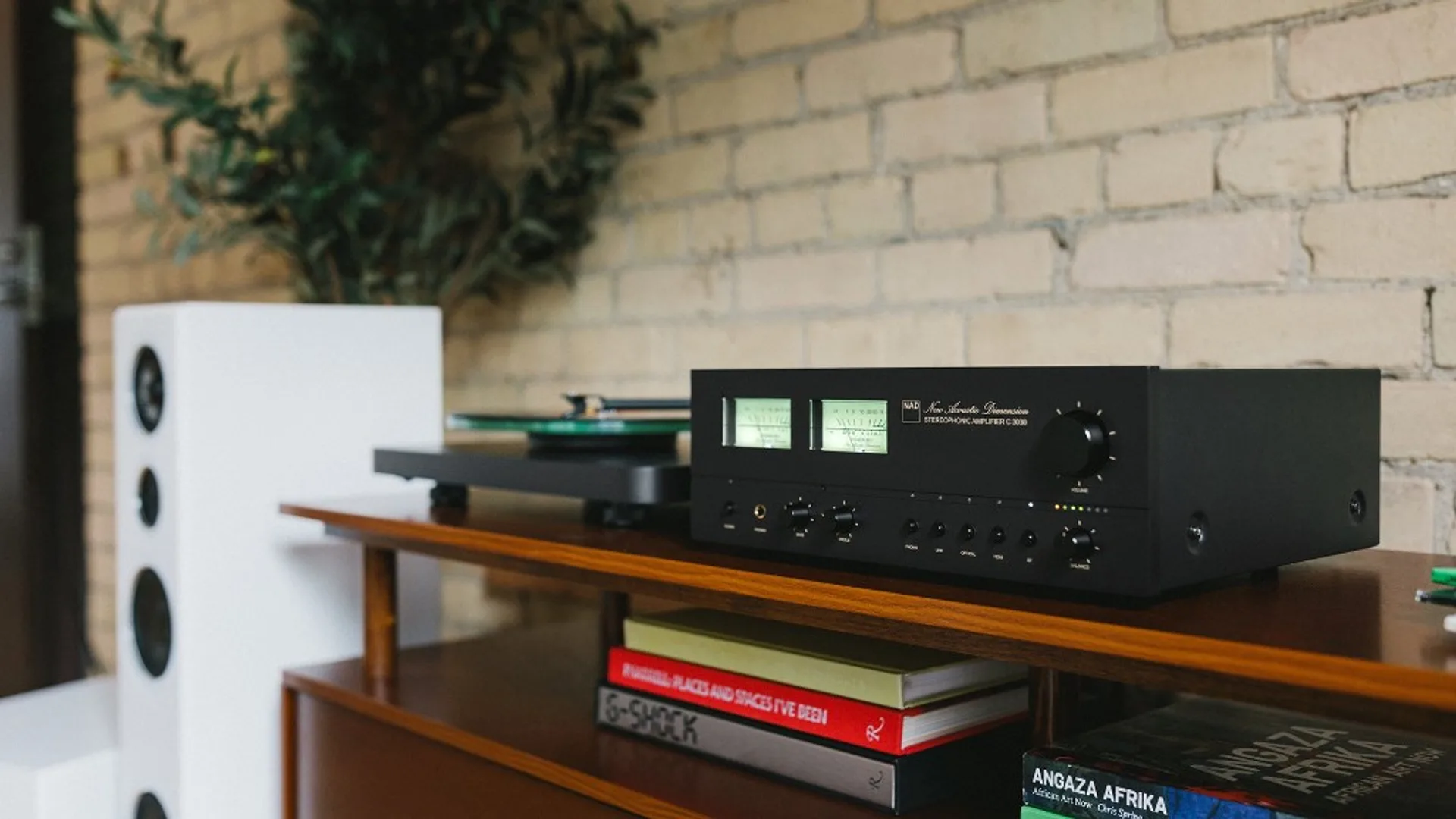
Best music genres for C 3030
- Soul / vocal / acoustic: warmth and body help voices feel natural and present.
- Indie / classic pop-rock: strong pace and broad staging suit layered mixes.
- Electronic with groove focus: good rhythmic drive and bass weight when paired well.
- Long-session listening: forgiving top-end tendency helps reduce fatigue.
If your priority is ultra-clinical detail extraction above everything else, you may prefer a leaner-sounding amplifier family.
Who should buy, who should skip
Buy if you:
- Want one compact integrated for TV, vinyl, and wireless everyday playback.
- Prefer engaging, slightly warm musicality over analytic sharpness.
- Need an easy 2.1 path without AVR-style setup complexity.
Skip if you:
- Need network streaming built in (look at C 3030S-type direction instead).
- Run very large rooms at high SPL with power-hungry low-sensitivity speakers.
- Prioritize maximum upgrade modularity over simple integrated ownership.
FAQ
Is 50W/ch enough in real life?
For many 85-90dB speakers in small-to-medium rooms, yes. The dynamic reserve and current behavior matter as much as the headline watt number.
Does C 3030 have built-in network streaming?
No. It has Bluetooth and wired digital/analog inputs, but not full network streaming stack on this base model.
What is the easiest upgrade path?
Add a well-integrated subwoofer using the bass-managed output, then optimize speaker placement before changing core electronics.