Passive bookshelf speakers do not care that your old receiver died in 2014. They still need watts, a volume knob, and a path from your phone or laptop. FiiO’s answer under the Jade Audio sub-brand is the LEVEL 1: a palm-sized desktop stereo amplifier built around Texas Instruments’ TPA3255 chip, with USB, coaxial, line-in, and Bluetooth 6.0 with LDAC, plus speaker, subwoofer, and pre-out jacks on the back. In the US it commonly lists around $139.99 at retail- roughly the price of a nice dinner, not a month of car payments.
What the LEVEL 1 actually is
Jade Audio is FiiO’s value line — the same corporate parent that ships portable DACs, DAPs, and the occasional turntable experiment (FiiO TT13 sits in a different category, but it shows how the company thinks about cheap entry points with real parts inside).
The LEVEL 1 is not a network streamer with a screen and Spotify Connect logos. It is closer to a self-contained stereo hub: amplification, basic digital inputs, and Bluetooth in one box so a pair of passive speakers can live on a desk, in a bedroom, or in a secondary room without a receiver stack.
That matters because a lot of “affordable desktop amp” listings stop at RCA and Bluetooth 5.0. This one adds coaxial digital, LDAC, sub-out, and pre-out — enough expansion hooks that you are not forced to replace the whole unit when you want a 2.1 layout or a separate power stage later.
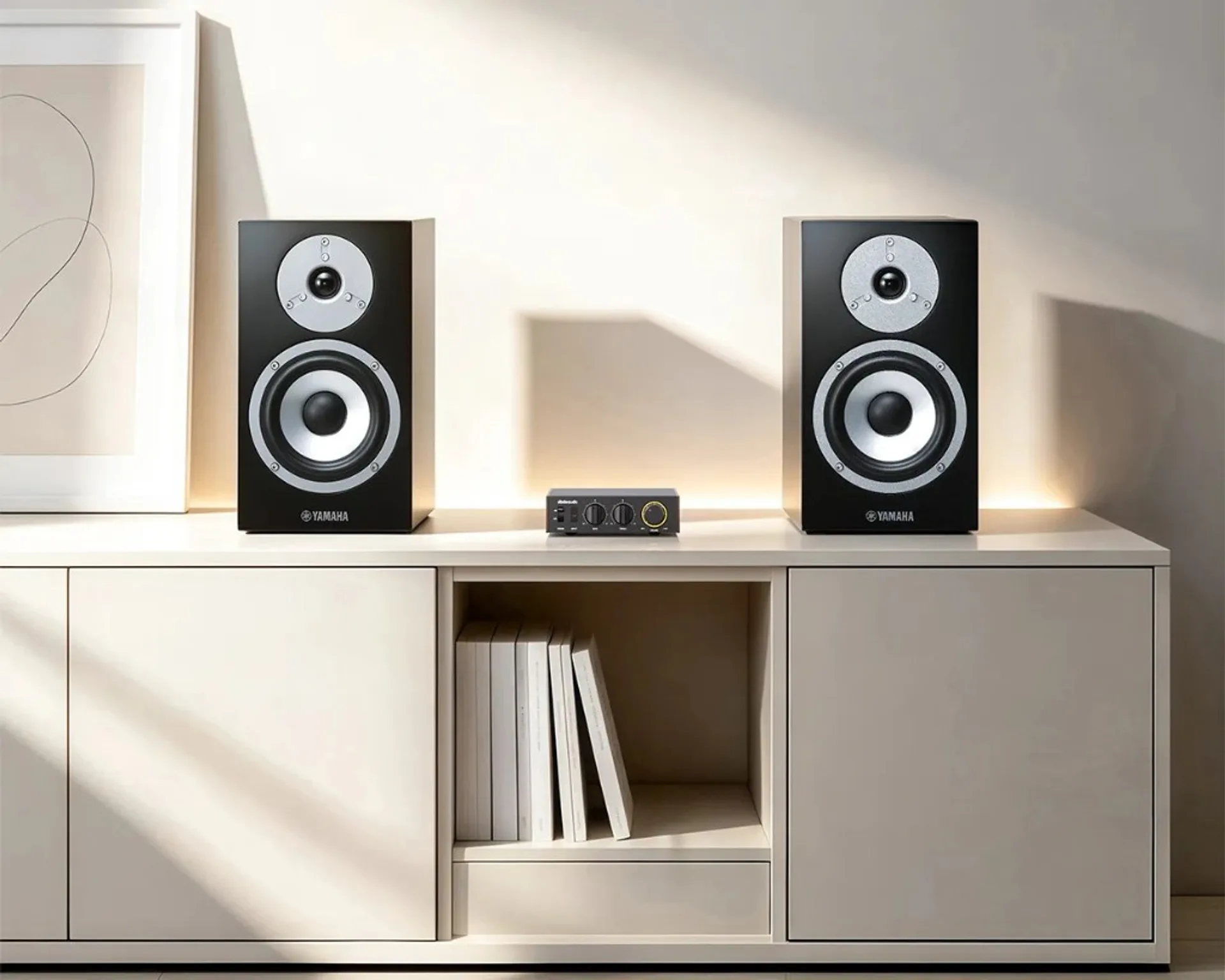
If you are still deciding whether passive speakers are worth the friction at all, our active vs passive speakers guide lays out the trade-offs in plain terms.
Power ratings without the marketing fog
Headline number first: 300 W per channel into 4 Ω, quoted at THD+N below 10 %. That is a Class-D spec-sheet convention, not a promise of clean 300 W for critical listening. Translation: the LEVEL 1 has real headroom for bookshelf speakers and many desktop monitors, and it can probably drive easier floorstanders in a small room — but it is not a substitute for a measured, low-distortion integrated amp at the same sticker price.
More useful supporting numbers from retailer documentation: ~105 dB signal-to-noise ratio, a six-layer PCB with thick copper traces, enclosed inductors, and name-brand capacitors called out in marketing copy (WIMA, Nichicon, ELNA). Those details do not guarantee great sound, but they signal that FiiO is not recycling the bare-minimum TPA3255 reference design and calling it a day.
The bundled 48 V / 5 A brick is sized for everyday listening. Some European FiiO distributor listings note that a higher-capacity external supply (up to 53 V / 12 A in those materials) can add additional dynamic headroom. Treat that as an optional upgrade path, not a requirement on day one.
Inputs, outputs, and system roles
Wired digital and analog
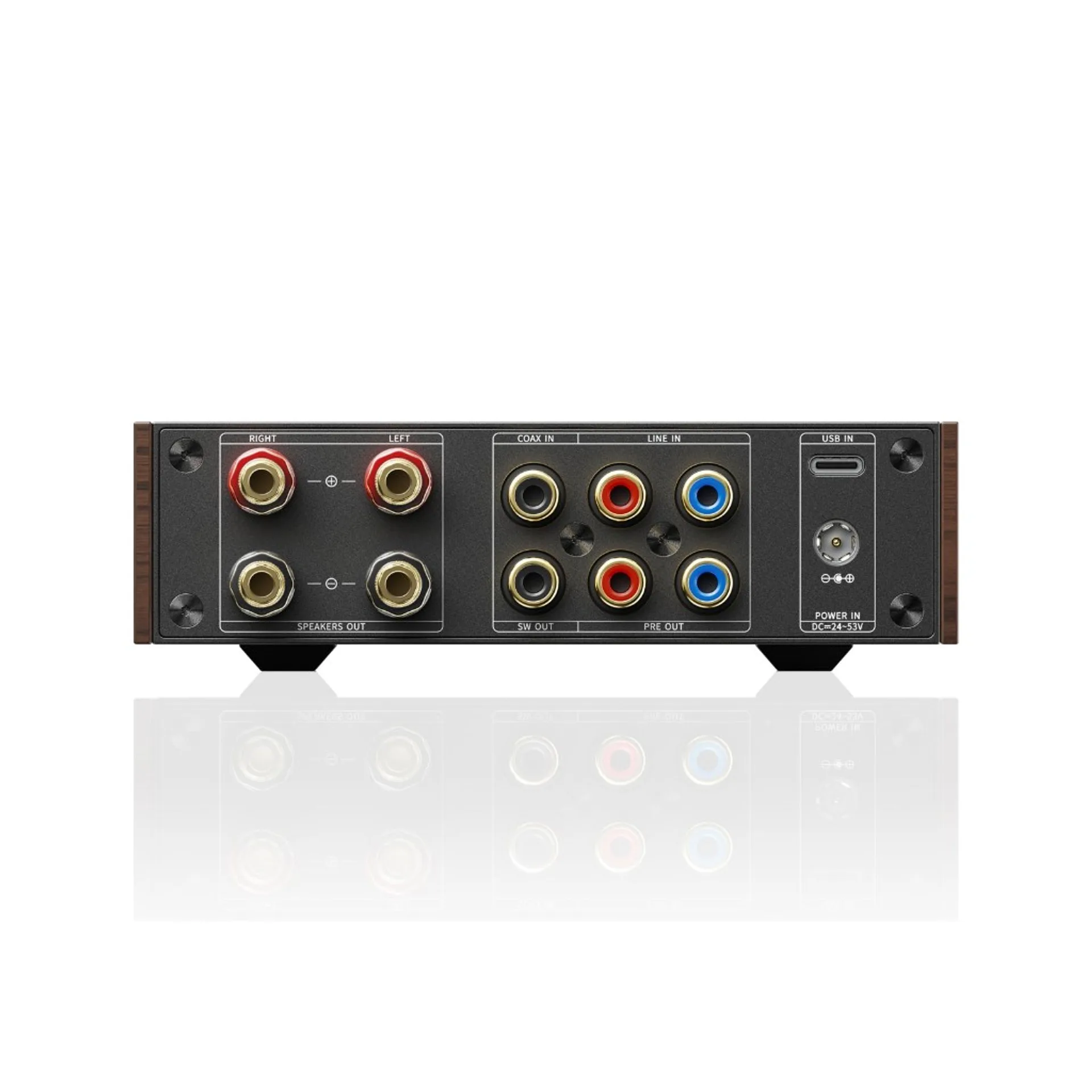
Published specs list USB (up to 24-bit / 96 kHz PCM), coaxial digital, and line-level RCA. For a minimal desk, USB from a laptop covers music and video calls; coax gives you a direct tie to a transport or streamer with S/PDIF out; RCA handles an older DAC or a turntable chain that already has a phono stage.
Wireless
Bluetooth 6.0 with SBC, AAC, and LDAC. LDAC at up to 990 kbps is the meaningful codec here — it is the difference between “phone as remote control for podcasts” and “phone as a serious source for evening listening.” Apple devices will land on AAC; Android flagships with LDAC get the wider pipe.
Outputs that change how you grow the system
- Speaker binding posts for a stereo pair
- Subwoofer output for a 2.1 desk or TV-corner setup without buying a new amp
- Pre-out if you later want to feed a bigger power amp while keeping the LEVEL 1 as control center
That output set is why the LEVEL 1 punches above typical “mini amp” boxes in the same price band. Most competitors give you speaker terminals and nothing else.
Controls and daily use
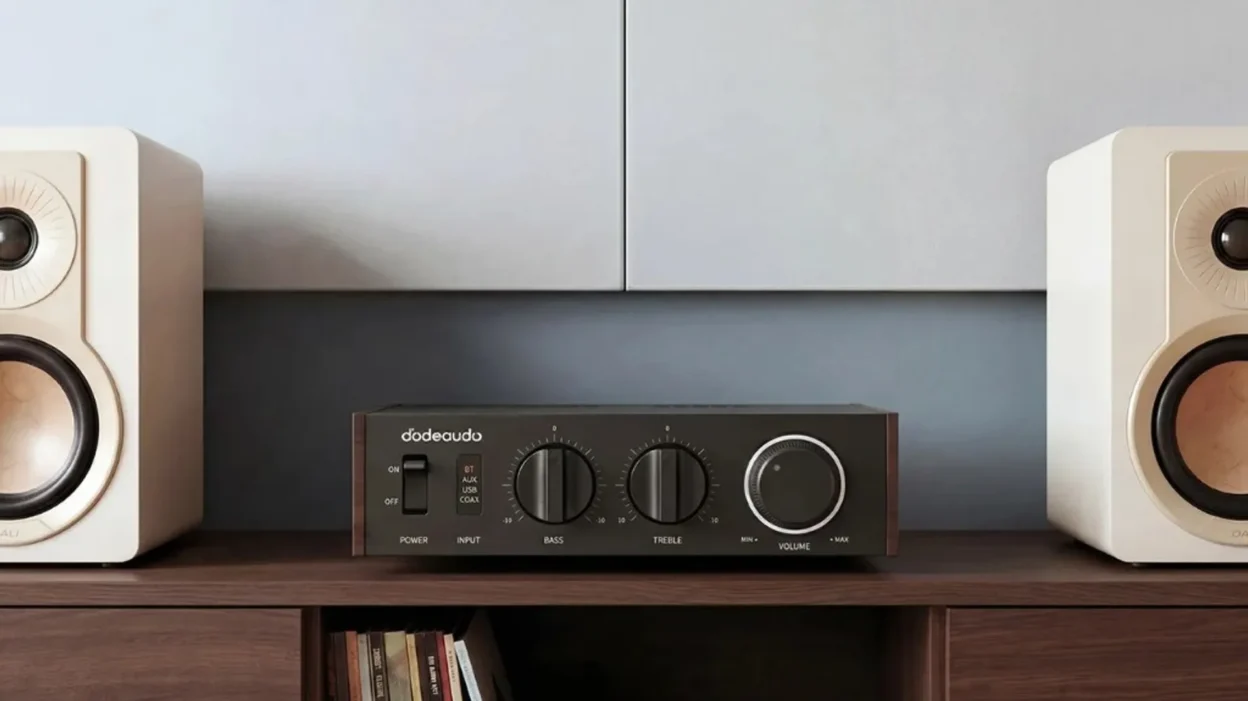
FiiO leaned analog on the front panel: a mechanical power switch, an input selector, a volume knob, and separate bass and treble pots. No touchscreen, no remote requirement, no digging through nested OS menus just to switch from USB to Bluetooth.
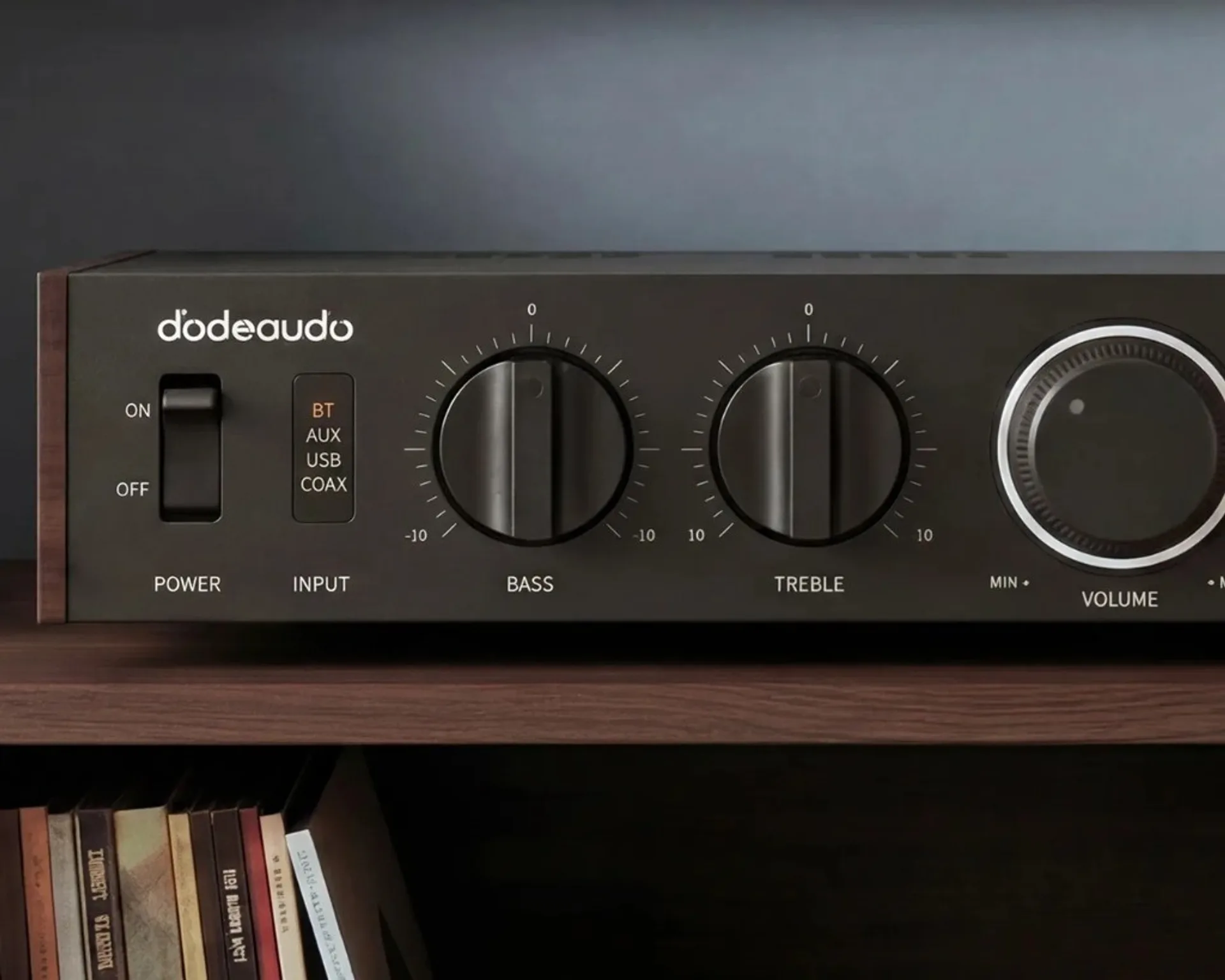
RGB lighting on the front indicates active input and Bluetooth codec — useful when you have three devices plugged in and cannot remember which source won last time. Tone controls are the honest kind: quick fixes for thin speakers or a bright room, not a substitute for room correction, but faster than opening an app mid-session.
One retailer product listing mentions input routing through a FiiO mobile app; official product materials and distributor listings emphasize front-panel operation. Before you buy, skim the quick-start guide in the box — that is the authoritative answer for your region’s firmware revision.
Build, finishes, and longevity
Two finishes ship: Black with walnut side panels and Silver with maple. The aluminium-and-wood combo is doing double duty — retro desk aesthetic and practical heat spreading for a Class-D board that will run warm if you crank inefficient speakers in a sealed cabinet.
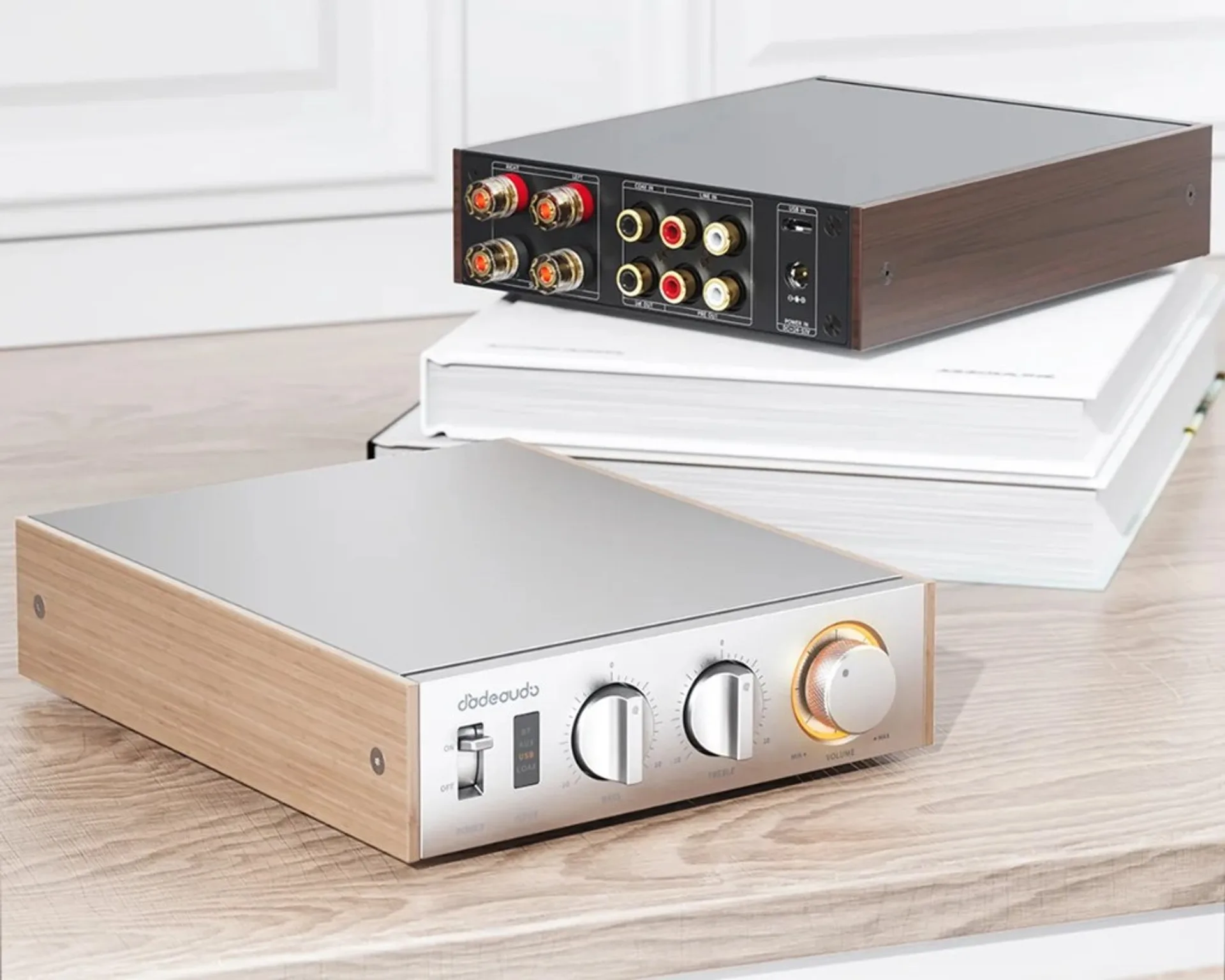
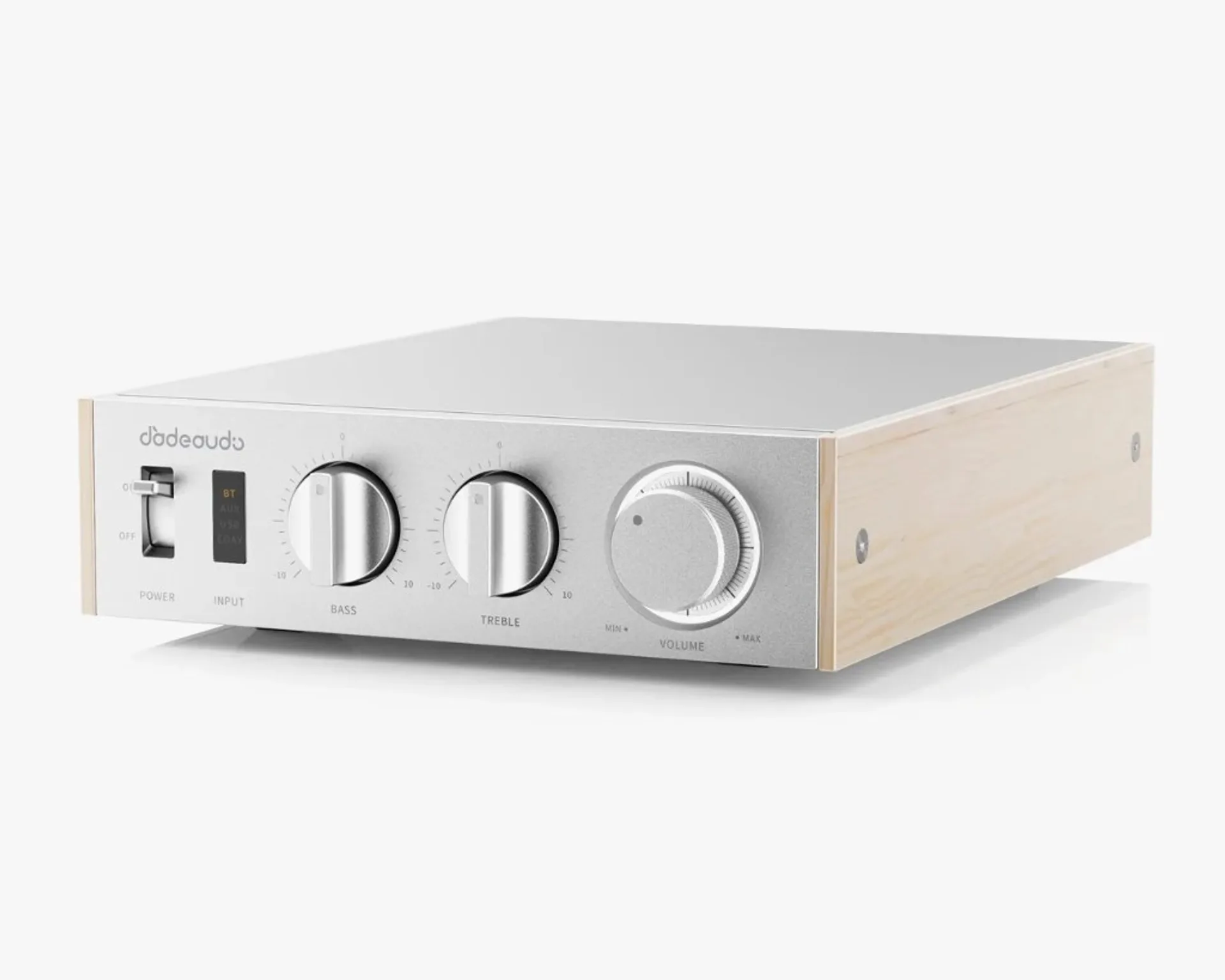
At 676 g, the main unit is lighter than most hardcover books. The external PSU adds bulk in the cable path but keeps the chassis small and avoids baking sensitive sections under a shared transformer lid.
Box contents listed by retailers: main unit, AC cord, 48 V / 5 A adapter, warranty card, quick-start guide. Spare-part and repair programs are not highlighted the way Marshall prints on headphone pages; plan on this being a replace-or-live-with-it product at this price, not a 20-year service contract.
Where it sits in the desktop amp map
Think in tiers:
- Ultra-budget Class-D (Fosi BT20A territory): smaller power, fewer inputs, lower build ambition — fine for a first passive setup. See what Fosi optimizes for if that is your baseline.
- LEVEL 1 band (~$140): TPA3255 platform, LDAC, digital inputs, sub/pre outputs, physical tone controls — a second-room or desk revival amp for speakers you already own.
- Streamer-first stacks (Fosi S3, separate DAC + amp): more flexibility, more boxes. Compare against Fosi S3 if you know you will add network streaming later and want balanced I/O today.
- Full integrated/streaming amps (Onkyo Icon, Eversolo Play, etc.): more money, more features, heavier chassis — the right call when this is your primary living-room system, not a desk experiment.
The LEVEL 1 wins when the problem is narrow: “I have good passive speakers and nothing to drive them.” It loses when you need HDMI ARC, multi-room, phono direct, or room correction without adding more boxes.
Who should buy, who should skip
Buy if…
- You have passive bookshelf or desktop monitors collecting dust and want a single box under $150 to put them back in service.
- Your sources are a computer (USB), a phone (LDAC), or a digital transport (coax) — no complex HDMI switching required.
- You might grow into a 2.1 system with a powered sub later.
- You prefer knobs and switches over app-only products.
Skip if…
- This is your only living-room system and you need TV audio over HDMI ARC, surround processing, or streaming apps built in.
- You want measured, low-distortion power for demanding floorstanders in a large room — the 10 % THD headline wattage is not that product.
- You already own a good DAC/streamer and just need a clean line-level amp; a simpler power stage may cost less and add less signal path.
- Appearance matters more than function and you hate visible external power bricks.
Price and availability
In the US, street pricing for the FiiO Jade Audio LEVEL 1 commonly lands around $139.99 in both finish options — confirm on the marketplace or retailer you use at checkout. European distributor materials quote roughly €139 in the DACH region through NT Global Distribution — confirm VAT and finish stock locally before you assume parity with US pricing.
Availability is current as of retailer listings checked for this piece; verify color and stock at checkout because Jade Audio SKUs sometimes ship in waves by region.
FAQ
Is the FiiO LEVEL 1 an integrated amplifier or just a power amp?
Functionally it behaves like a compact integrated amp: it amplifies, accepts USB and coaxial digital sources, and includes Bluetooth. It is not a full AV receiver — no HDMI, phono, or surround decoding.
What does 2×300 W at 4 Ω actually mean in a desk setup?
Retailer specs quote 300 W per channel at 4 Ω with THD+N < 10 %. That is high headroom for typical bookshelf speakers, not a lab-clean 300 W. For nearfield desktop use, you will rarely approach the limit; the rating matters more for inefficient speakers in a small room.
Does LEVEL 1 support high-res Bluetooth?
Yes — LDAC up to 990 kbps, plus SBC and AAC. You need an LDAC-capable source (most recent Android phones) to use the highest tier.
Can I add a subwoofer later?
Published materials list a dedicated subwoofer output alongside the main speaker terminals, so you can run a 2.1 setup with a powered sub without replacing the amp.
How does it compare to Fosi Audio amps near the same price?
Fosi’s entry amps optimize for minimum cost and size. The LEVEL 1 adds LDAC, digital inputs, sub/pre outputs, and a higher-power TPA3255 stage at roughly double the budget-amp entry price. If you only need RCA + Bluetooth for small speakers, Fosi may still be enough; if you are reviving better bookshelf pairs, the LEVEL 1 is the more complete box.