
The HD 480 PRO wears its job in plain sight: matte black cups and headband, a coiled lead that belongs over a fader strip, and quiet silver on the sliders- no lifestyle gloss, no streetwear flex. The silhouette is booth-first Sennheiser: circumaural shells that read as tool rather than accessory, the same restrained pro-line handwriting the brand has used for years when the brief is tracking and editing, not commute catwalk.
The Sennheiser HD 480 PRO (Article No. 700499) is a closed-back, circumaural dynamic headphone pitched at studio monitoring and mobile production rather than everyday carry chic. On the official HD 480 PRO product page, Sennheiser stacks several engineering stories at once: multiple stages of passive sound shielding, a Vibration Attenuation System (VAS) aimed at reflected energy and low-end clarity, geometrically angled earcups to lock transducer aim relative to the ear, a patented cable coil structure marketed as blocking cable-borne noise, and an ultralight voice coil plus neodymium motor package for efficiency. The headline promise is blunt uncoloured full-spectrum response, minimal leakage, and enough comfort detail (replaceable pads, braille-guided cups, glasses-friendly pad grooves) that long sessions stay plausible.
Impedance: 130 Ω (1 kHz). Sensitivity: 107 dB SPL (1 kHz / 1 Vrms) and 98 dB SPL (1 kHz / 1 mW). THD: <0.5 % (1 kHz, 100 dB SPL). Frequency range: 3 Hz–28,700 Hz (−10 dB). Max SPL: 130 dB SPL (1 kHz @ 5 % THD). Weight: 272 g. Connectors: wired 3.5 mm and 6.3 mm adapters in the cable story. Power consumption (amp-side listing): 300 mW in the same table Sennheiser ties to IEC 60268 noise conditions.
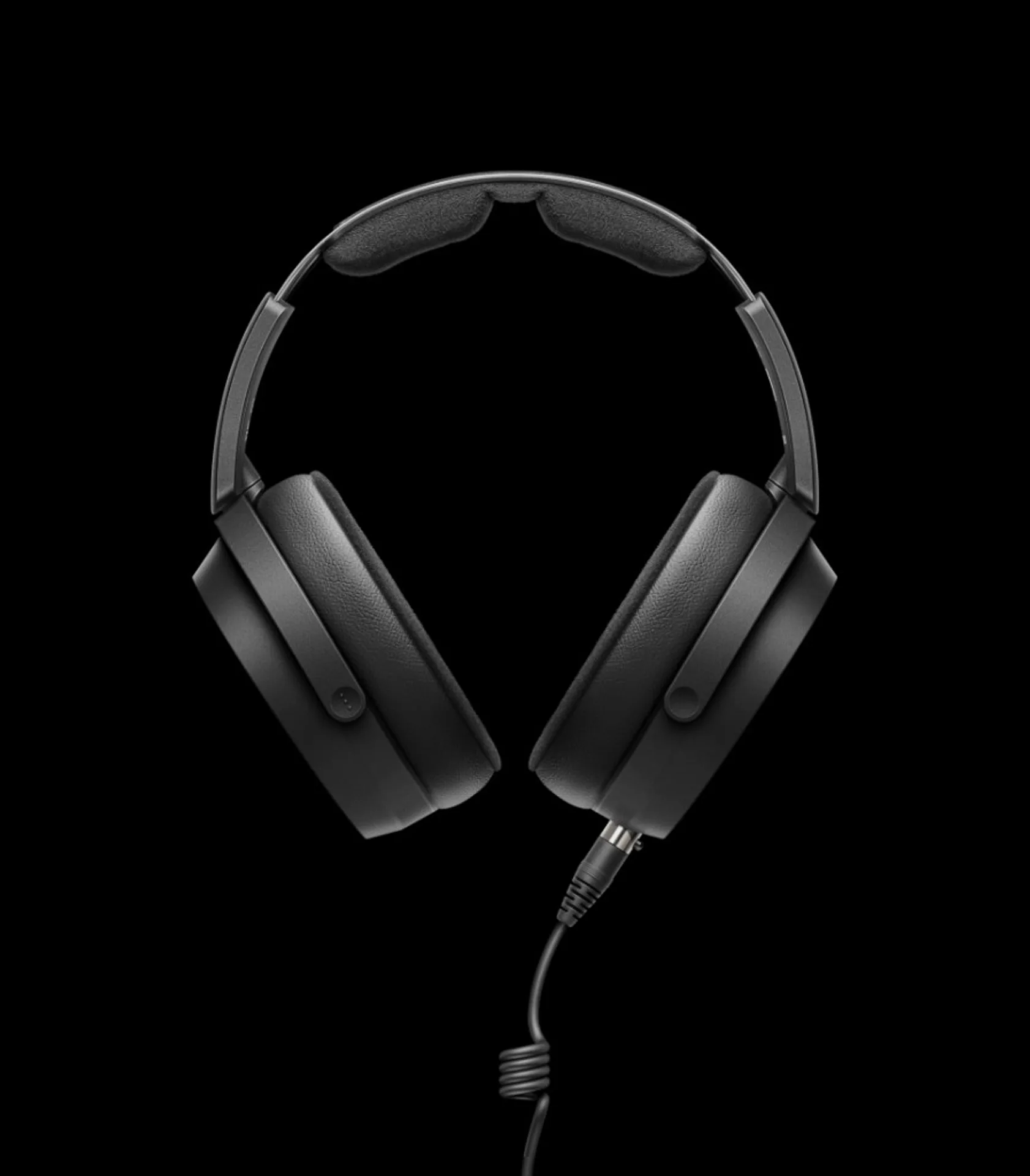
Closed-back acoustic stack
Sennheiser treats the HD 480 PRO as a signal-integrity problem first. The marketing stack names several passive shielding stages inside the cup path to keep outside bleed from colouring what you hear and to stop your click track from walking into a live mic next door. On top of isolation, VAS targets reflected sound and THD artefacts that often muddy low-frequency detail on closed designs when earcup volumes ring like small speaker boxes.
Angled transducer geometry is the other half of the spatial story: by tilting the driver relative to the ear canal axis, manufacturers chase a more head-related arrival pattern than flush parallel mounting — the goal is a stable image when you rotate the cups slightly on your head, which happens constantly in real sessions.
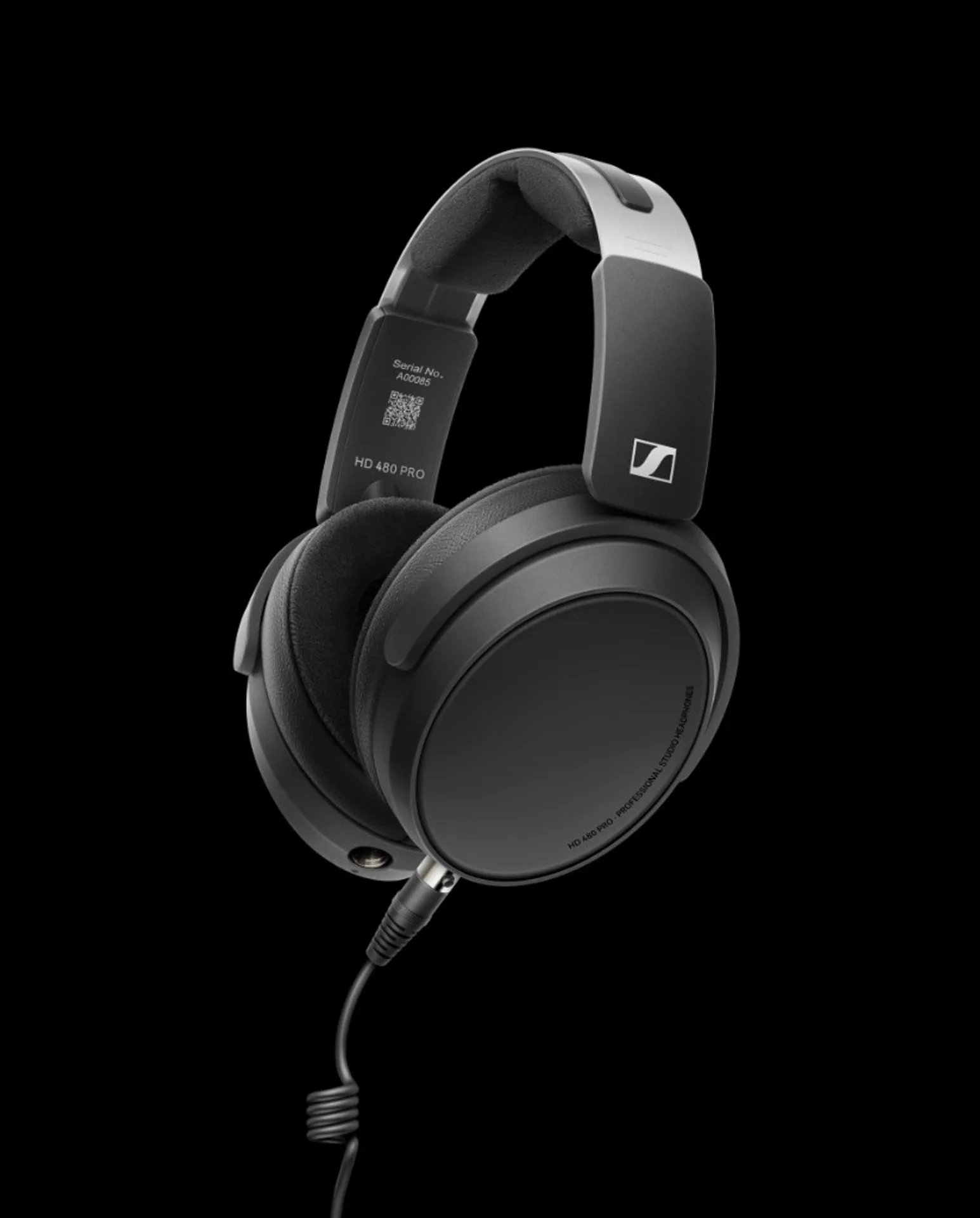
Driver, magnet, and voice coil
The motor is textbook dynamic pro fare: neodymium magnets for flux density in a light package, plus an ultralight voice coil that Sennheiser ties to transient behaviour and macro-dynamics. None of that removes the laws of physics for 130 Ω loads — you still want a headphone amp or interface output that is comfortable delivering voltage into that impedance — but the dual sensitivity ratings (per 1 Vrms and per 1 mW) help you sanity-check whether your current interface headphone tap will get loud enough before distortion rises.
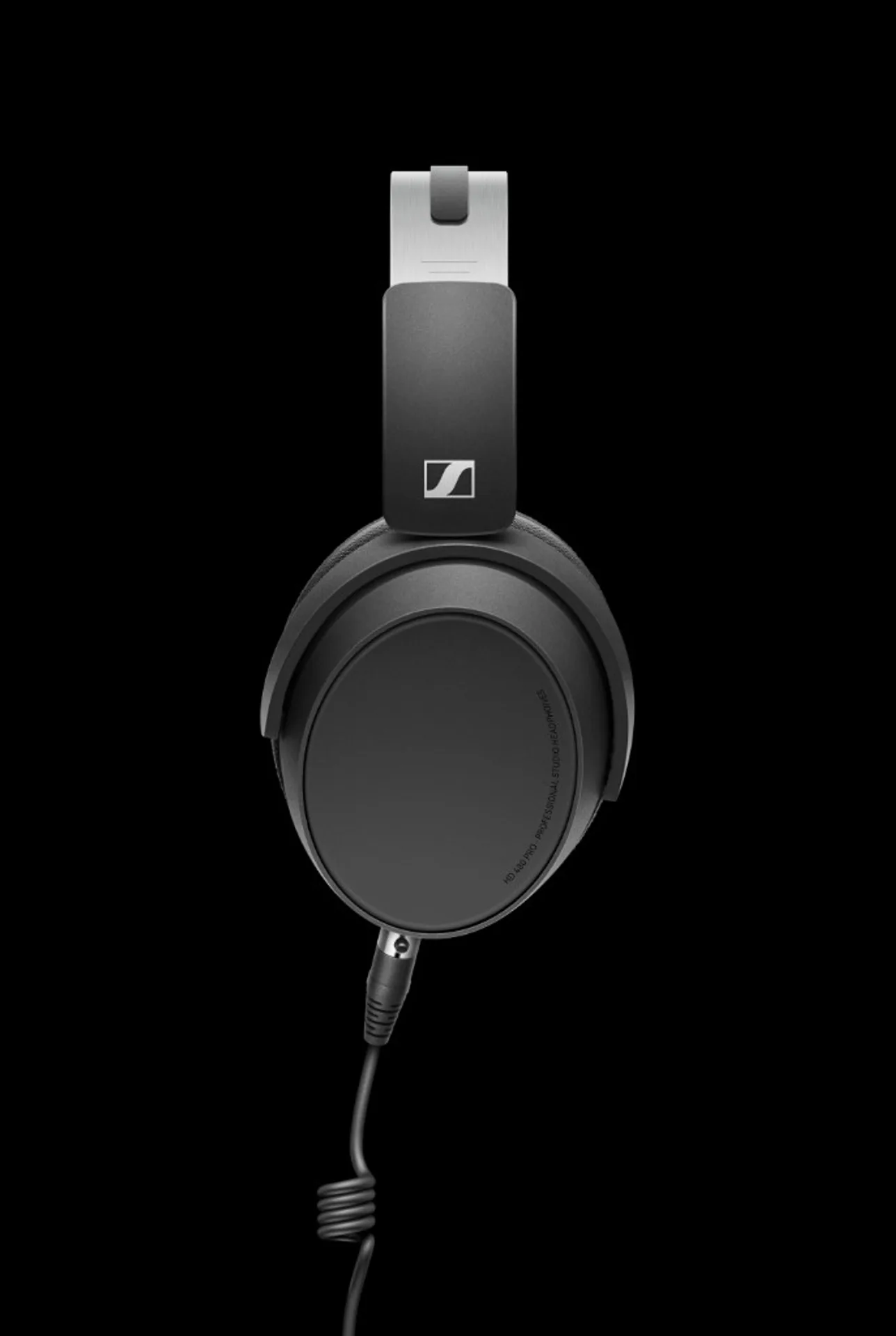
Cable path and detachable routing
Sennheiser highlights a patented cable coil structure as a mechanical low-pass against microphony — handling noise riding up the shield into the voice coil gap. For session hygiene, the HD 480 PRO uses detachable leads with left and right earcup jacks so you can route cable over either shoulder or mirror a console patch bay without fighting a fixed exit side. Sennheiser also offers an optional balanced cable accessory for the shared HD 480 / HD 490 PRO accessory family if your converter or amp presents a 4-pin pro output.
Comfort, accessibility, and serviceability
The comfort story mixes precision-fit headband geometry with pads Sennheiser calls washable and replaceable — a practical admission that studio foam sees sweat, hair product, and smoke machine residue. Braille L/R cues on the cups and grooved ear pads for eyeglasses are rare in consumer-facing copy; here they read as deliberate accessibility engineering rather than a sticker checklist.
Manufacturing copy stresses design in Germany and hand assembly in Romania, bundled with forest-friendly packaging and a fully serviceable lifecycle pitch — useful if you plan to keep a pair in rotation for years rather than chasing annual colourways.

Electrical behaviour and SPL headroom
The published 130 dB SPL ceiling (1 kHz at 5 % THD) tells you where the driver stops being linear under torture-tone conditions; it is not a listening level recommendation. Pair that with the <0.5 % THD note at 100 dB SPL to understand how Sennheiser wants bench readers to interpret distortion behaviour under serious level.
The 3 Hz–28.7 kHz bandwidth figure is quoted at −10 dB, which is wider than the usual −3 dB marketing line — compare apples to apples when stacking this sheet against older Sennheiser models or competitors that only publish wider single-point curves.
| Specification | Value (per Sennheiser) |
|---|---|
| Transducer | Dynamic, circumaural, closed-back |
| Impedance | 130 Ω (1 kHz) |
| Sensitivity | 107 dB SPL (1 kHz / 1 Vrms); 98 dB SPL (1 kHz / 1 mW) |
| THD | <0.5 % (1 kHz, 100 dB SPL) |
| Frequency response | 3 Hz–28,700 Hz (−10 dB) |
| Max SPL | 130 dB SPL (1 kHz @ 5 % THD) |
| Weight | 272 g |
| Power (listed) | 300 mW (IEC 60268-related table entry) |
HD 480 PRO vs PRO Plus
Sennheiser mirrors the same acoustic story on two retail trims. The base HD 480 PRO ships with a 3 m coiled cable, PRO headphone bag, and the usual quick and safety guides. The HD 480 PRO Plus variant swaps the soft bag for a travel case in the feature matrix — the electronics pitch stays parallel; the buy decision is mostly road case vs pouch economics.
Sennheiser HD 480 PRO
Available at Amazon — confirm seller, SKU, and warranty region on the listing.
View on AmazonFAQ
Will my laptop headphone jack drive 130 Ω cleanly?
Maybe for moderate SPL, but the 130 Ω load and studio-level peaks reward a dedicated headphone amp or a strong interface output. Use the 1 Vrms sensitivity line when estimating voltage headroom from consumer gear.
Is a balanced cable included?
The base box list on Sennheiser’s page includes the coiled cable and bag, not a balanced lead. A balanced accessory cable appears in Sennheiser’s accessories list for the shared HD 480 / HD 490 PRO ecosystem — budget it separately if your chain needs it.
Where do manuals and conformity PDFs live?
Sennheiser’s product hub includes a Downloads block with quick guides, safety PDFs, and specification sheets for HD 480 PRO and HD 480 PRO Plus — pull the revision that matches your carton before you reprint a tech rider.
How does this relate to open-back HD 490 PRO?
Same accessory family and overlapping pro positioning, but the HD 480 PRO is the closed-back isolation play. Choose it when bleed laws the session; choose open models when the room and mic layout reward it.
Cross-shop: If you are weighing closed-back studio gear against Bluetooth lifestyle lines, our Marshall headphones (2026) guide maps a different buyer matrix — useful for gift-context comparisons, not for matching isolation specs.