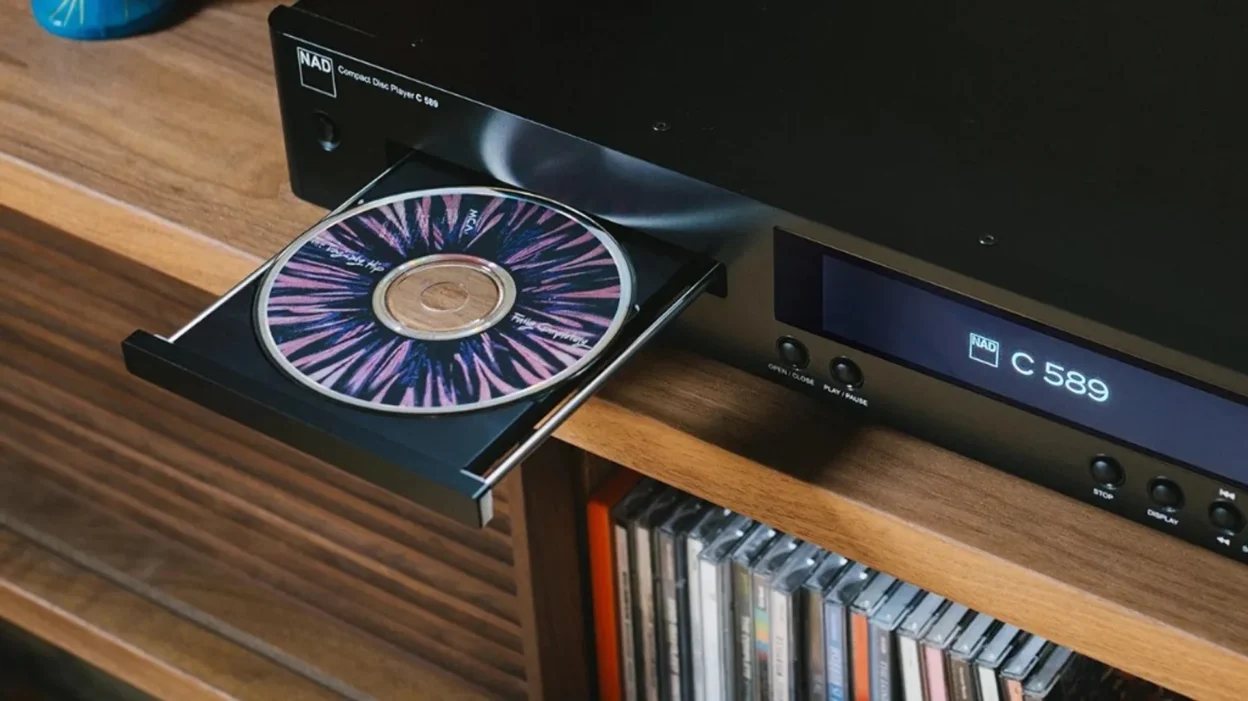
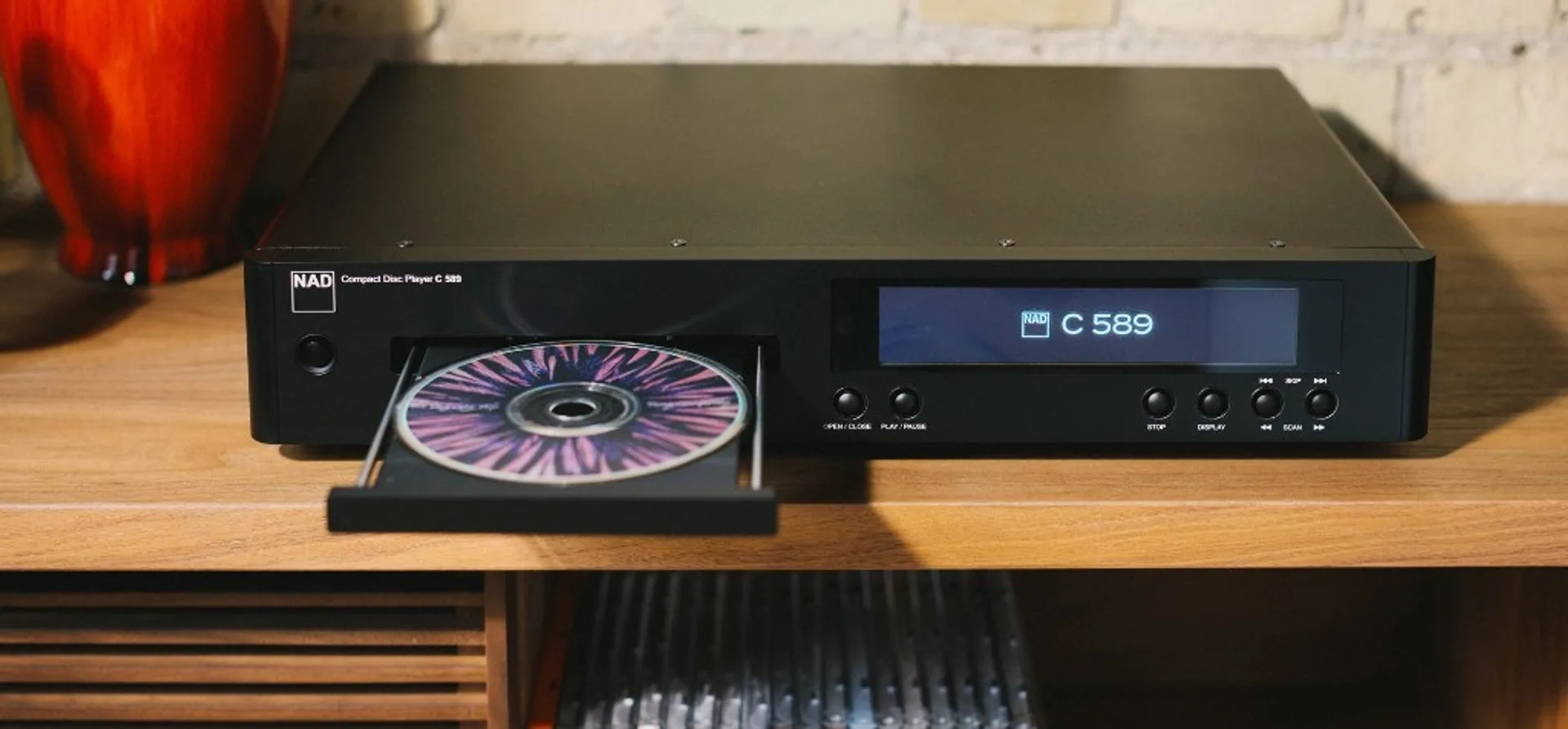
The NAD C 589 is the brand’s latest Classic Series pitch for people who still want a dedicated CD spinner in a serious two-channel stack. On NAD’s C 589 product page, the chassis is described as pairing Dynamic Digital Headroom (DDH) with QRONO d2a time-domain filtering technology from MQA Labs, implemented around a fully balanced ESS DAC for low noise and strong dynamic range. Outputs are deliberately system-flexible: stereo RCA and balanced XLR analogue, plus coaxial, optical, and AES/EBU digital taps so the box can anchor a system as player or transport. NAD marks the SKU coming soon on the same listing, with storefront price shown as a placeholder until retail goes live.
Signal processing: DDH to limit inter-sample clipping and QRONO d2a filtering (MQA Labs) for timing-focused reconstruction. DAC: Fully balanced ESS implementation per NAD copy. Analogue out: RCA + XLR. Digital out: Coax, optical, AES/EBU. Mechanical: high-precision loader and laser pickup, quiet handling story. Status: Coming soon on NAD’s site at draft time; confirm dealer stock and regional SKU before budgeting.

Digital architecture
NAD frames DDH as a way to keep digital filters from overloading on hot modern masters, preserving transient headroom and avoiding the brittle edge that inter-sample clipping can add. QRONO d2a is described as replacing conventional reconstruction filters with a time-domain-centric approach that MQA Labs developed and NAD implements here marketing language centres on timing accuracy, imaging, and spatial nuance rather than raw sample-rate bragging.
The ESS converter is called out as a fully balanced DAC implementation, which in system terms usually implies a differential analogue stage aimed at lower noise pickup on long cable runs, especially when you use the XLR outputs into a balanced preamp or integrated.
Analogue and digital outputs
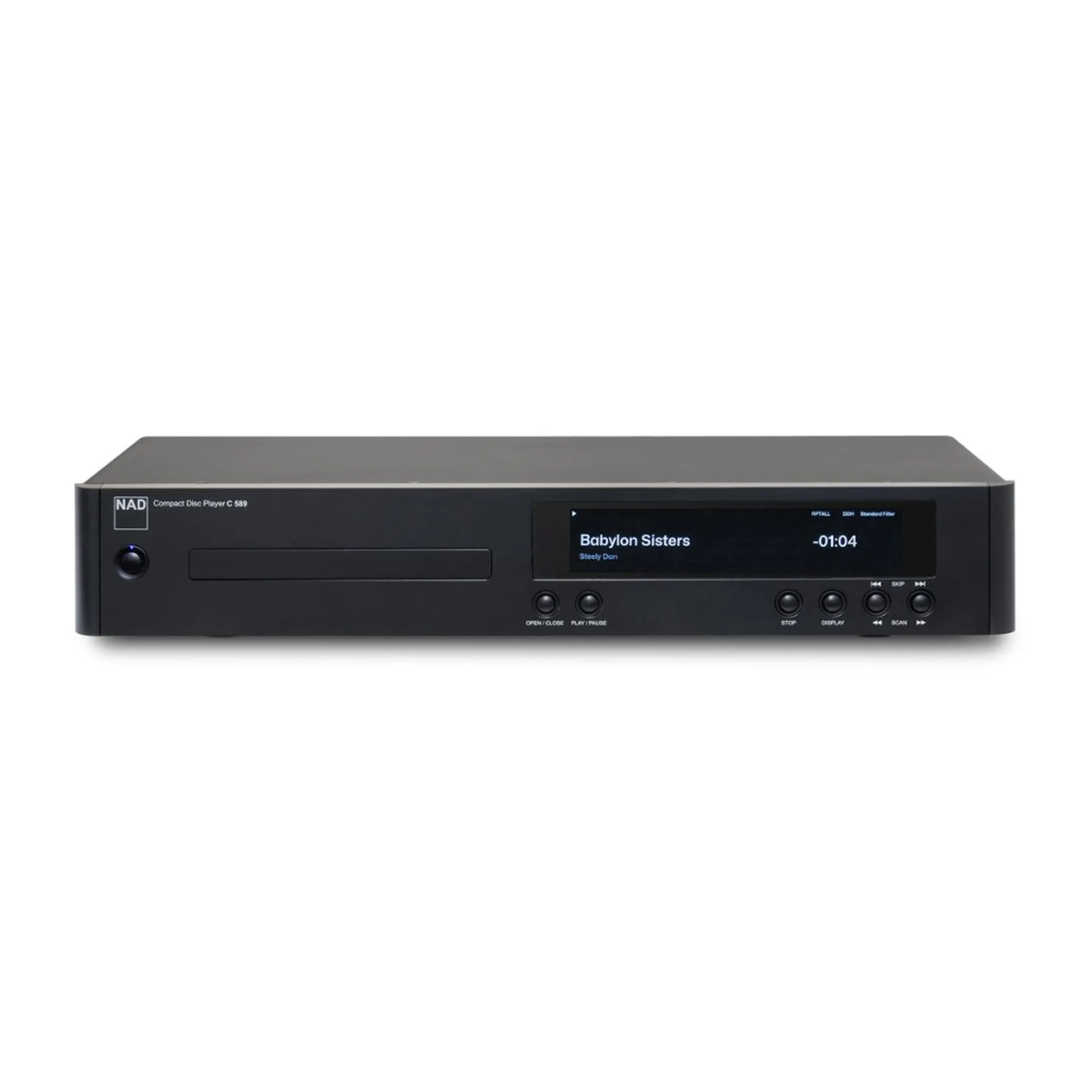
NAD lists a full analogue pair (RCA single-ended and XLR balanced) alongside three S/PDIF-class digital routes (coaxial and optical) plus AES/EBU on XLR for pro-audio-style DACs. That combination is what makes the C 589 credible as a transport into an external upsampler or DAC you already trust, while still allowing a one-box path into an amp if the internal converter matches your taste.
Transport and integration
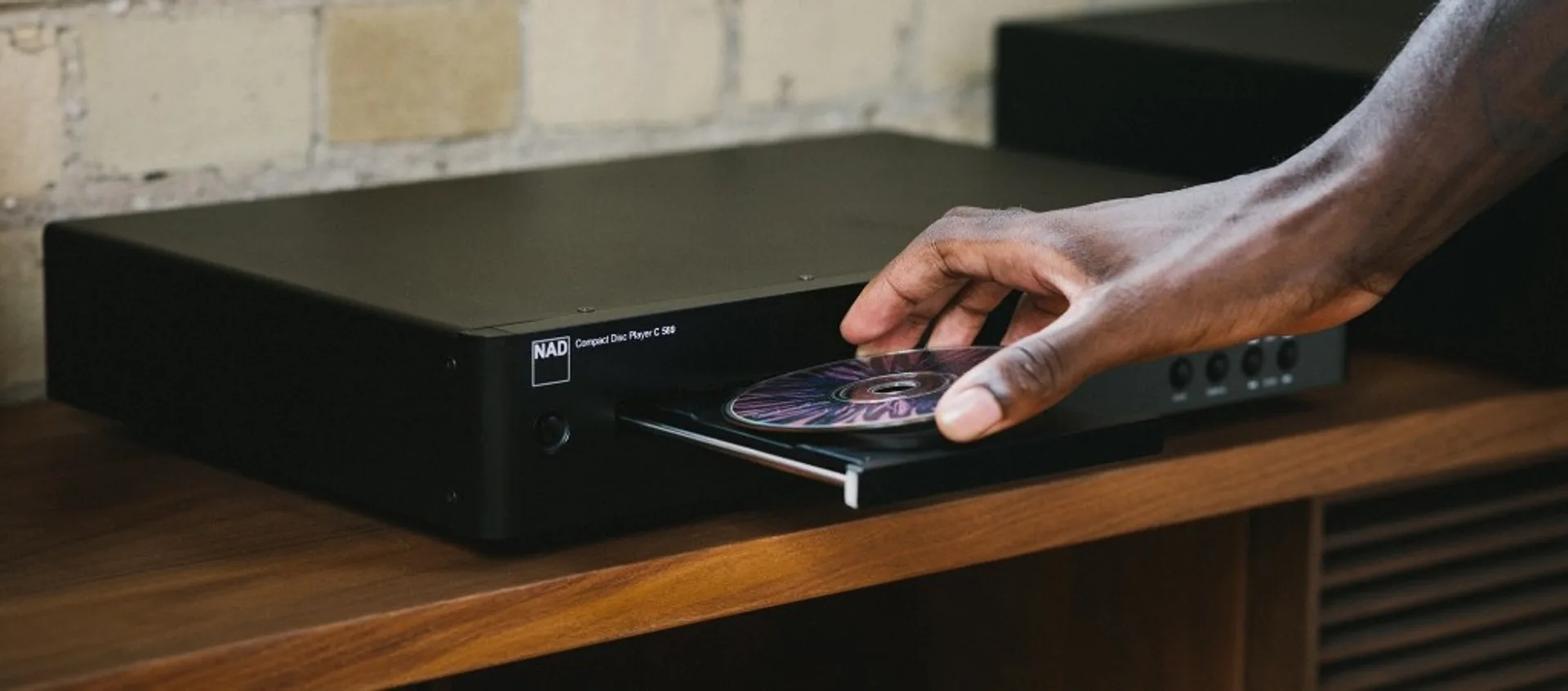
Copy on the product page stresses a premium loader, responsive tray behaviour, and tracking stability across a wide range of pressings- the sort of promise you want when your library mixes jewel-case classics with thrift-shop discs. Front-panel display and CD Text support are part of the everyday-use story; NAD also mentions an included remote control in the feature stack.
Where it fits in the catalogue
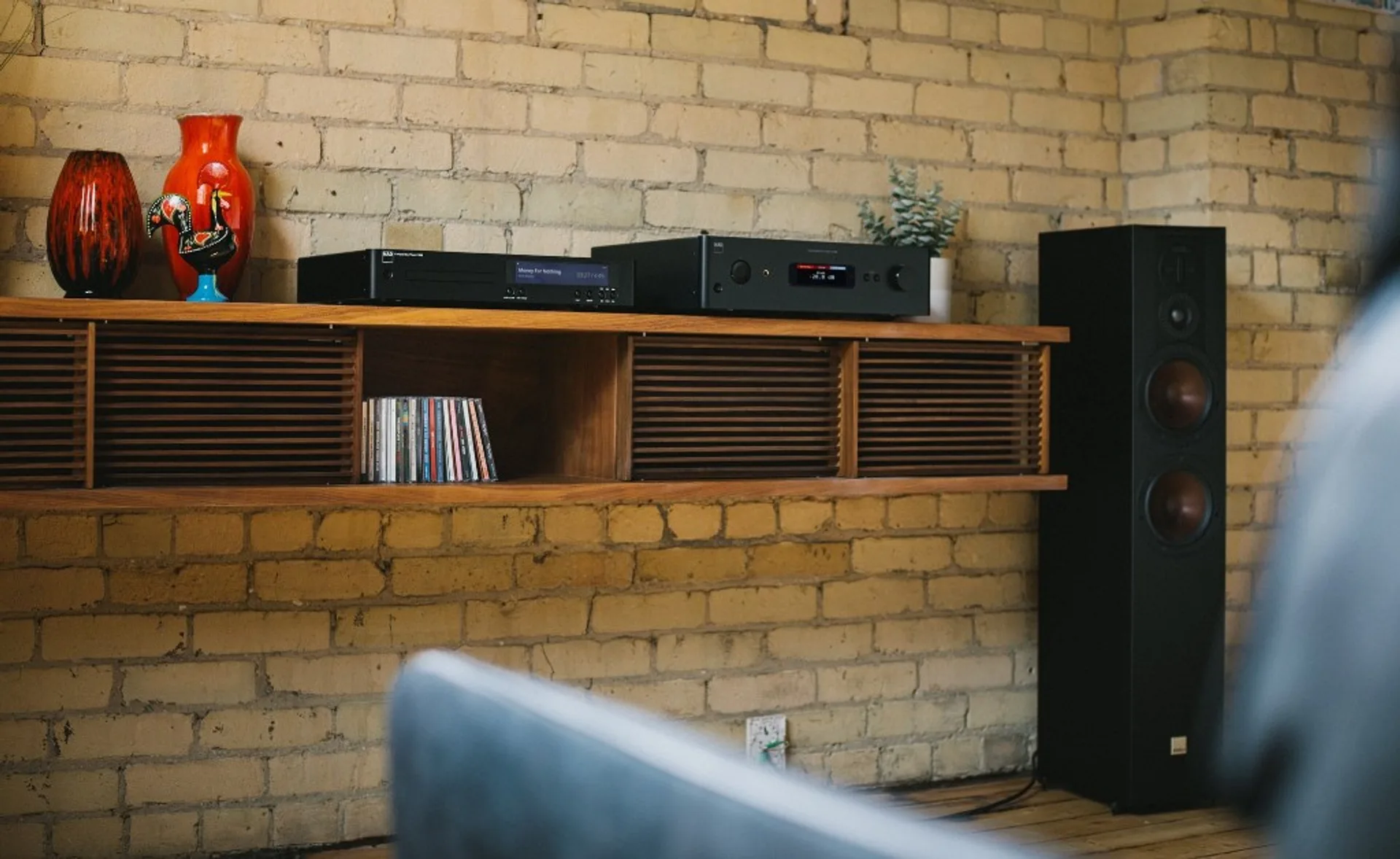
This is component hi-fi territory: separate outputs, balanced path, and digital spit for people who already own a rack of boxes. It does not overlap the battery-powered nostalgia cassette and mini-deck beat. If you are shopping for a desktop CD ripper or all-in-one with capture as the headline, our Fosi Merak intro sketches a different brief. For a network integrated that folds streaming and MM/MC phono into one chassis, see the Onkyo Icon A-50 piece- complementary, not a substitute for a dedicated Red Book transport.
FAQ
Is the C 589 a BluOS streamer?
NAD’s public C 589 page describes a CD player with digital and analogue outputs; it does not list BluOS or network streaming in the feature block quoted here. For streaming-in-one-box, shop NAD’s BluOS-capable components separately.
Can I buy it today from NAD’s site?
The listing carried a coming soon banner at draft time, with cart price shown as a placeholder. Check the same product URL or an authorised dealer for live availability.
Which digital output should I use into an external DAC?
AES/EBU on XLR is often the cleanest choice into matching pro-style converters; coaxial is the usual consumer default. Pick the input your DAC treats as reference and keep cable length sensible either way.
Does this page quote MSRP?
No. NAD’s storefront showed no final consumer price at capture time. Use NAD or your dealer quote at purchase.
Note: Format support beyond standard CD playback (for example CD-R/RW or compressed file discs) is not spelled out in the marketing bullets above; confirm the downloadable manual on NAD’s Software & Downloads tab once the product ships.