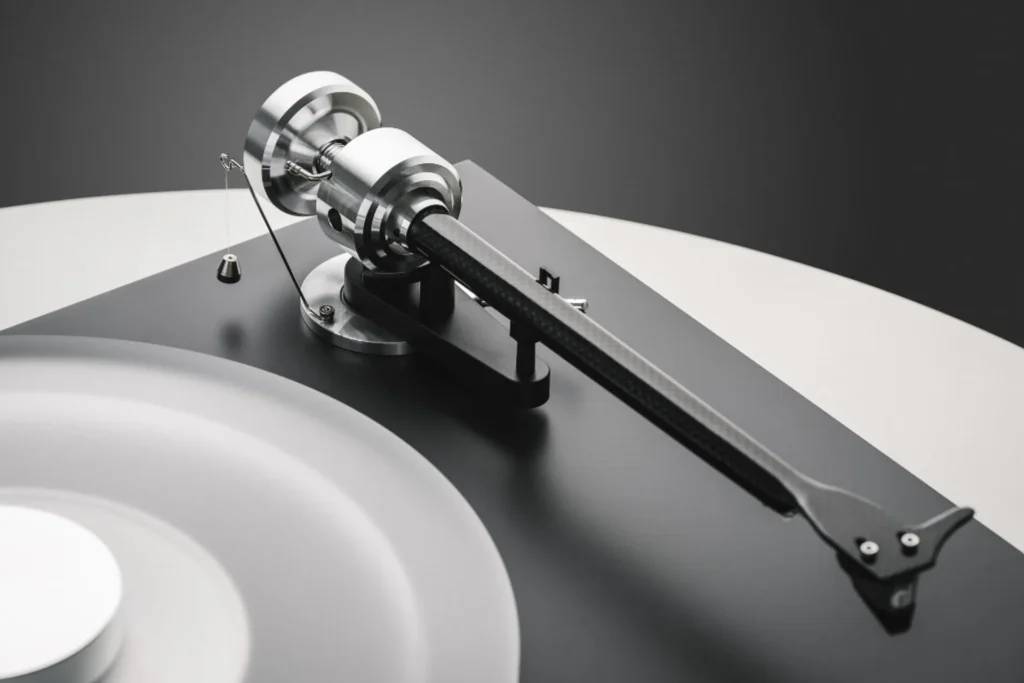
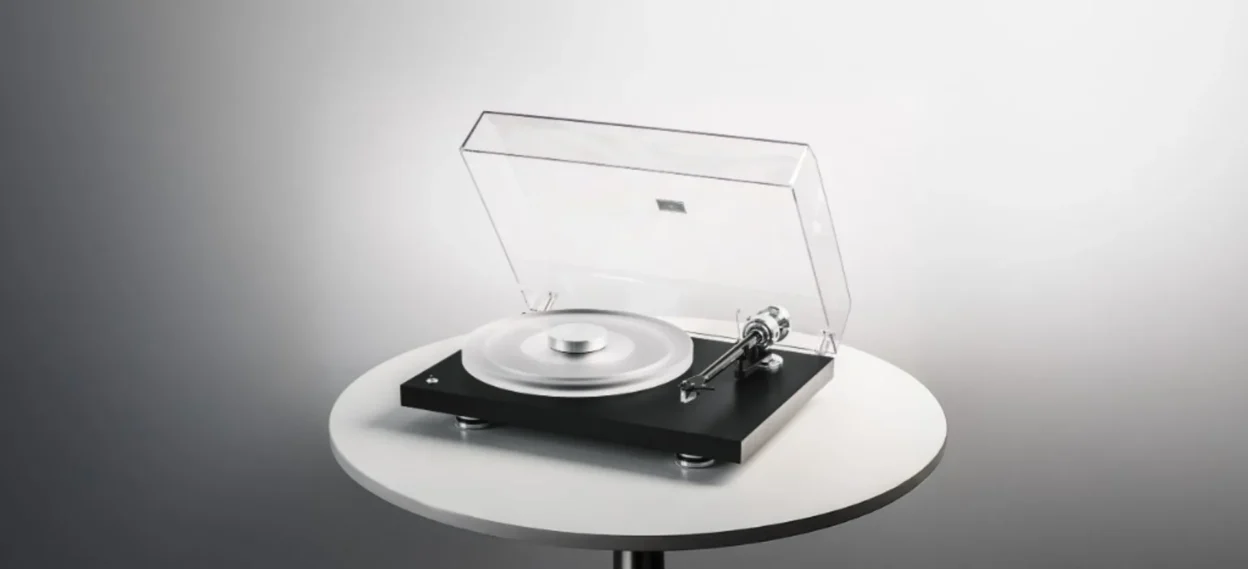
Pro-Ject slots the Debut Reference 10 into its long-running Debut family: still a belt-drive table aimed at serious vinyl listeners, but with a 10-inch carbon-aluminium arm, 300 mm acrylic platter, factory-mounted Pick it PRO B cartridge, and both RCA and mini-XLR outputs for the brand’s True Balanced phono path. I have not had a loaner on the bench yet — this piece is a facts-and-context intro from Pro-Ject’s product page, plus what those choices usually mean in a real system.
Where it sits in the Debut line
The Debut name has been shorthand for “affordable but serious” analogue for decades. The Reference 10 is not an entry-level automatic — it’s closer to a configure-it-right, listen-for-long-sessions deck. Pro-Ject stresses EU manufacturing, a more sophisticated motor power scheme, and a longer arm than typical 9-inch Debut variants, which usually reduces tracking error across the record surface when paired with a matching geometry (our tonearm explainer covers why that matters).
Dealers and regional sites handle price; the official page emphasises selected dealers rather than a single global MSRP. Treat any number you hear as until confirmed at checkout.
Features worth the words
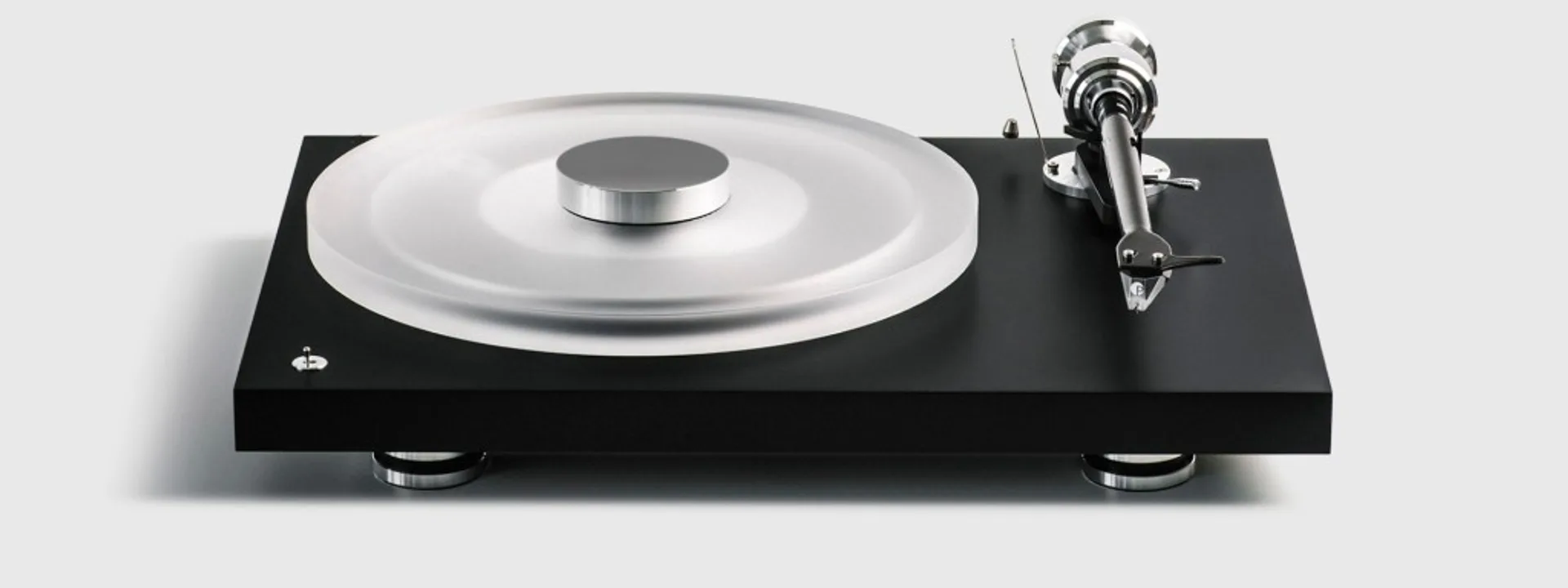
- Platter path: Full-size acrylic platter over a diamond-cut aluminium sub-platter and a bearing described as stainless axle / bronze bushing — the classic recipe for stable rotation with controlled resonance.
- Motor power: A dedicated DC/AC power generator feeds the motor with a clean sine wave; Pro-Ject ties that to speed stability. Speed change is electronic; the top switch covers 33 / 45, with 78 supported via the included round belt (per the spec table).
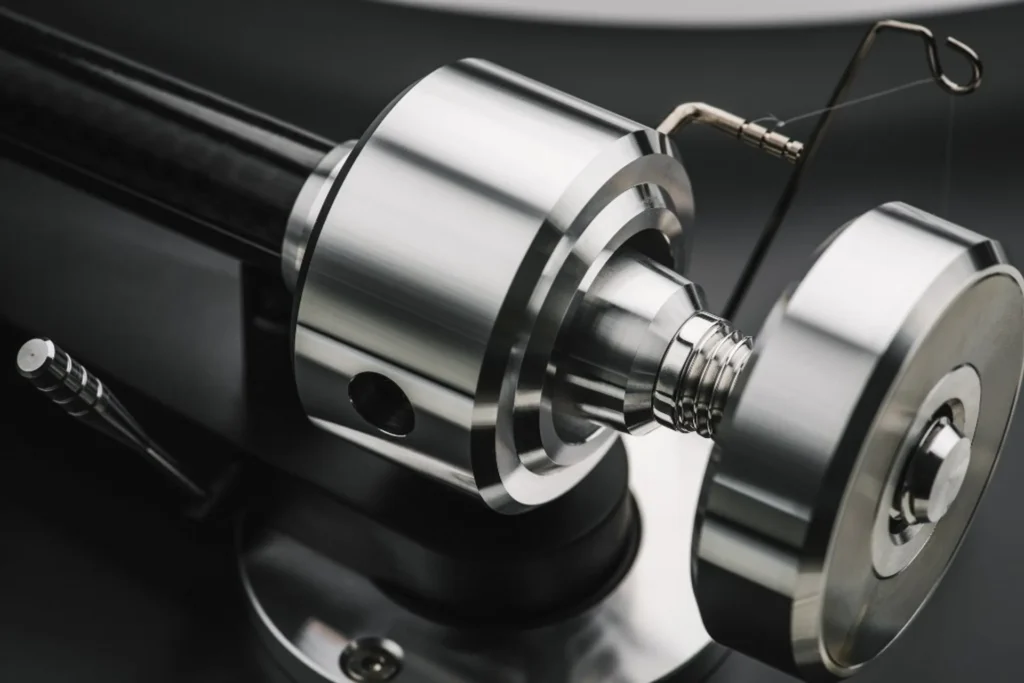
- Arm: 10-inch one-piece carbon-aluminium tube, effective length 254 mm, effective mass about 16.6 g, overhang 16 mm. VTA (arm height) and azimuth are user-adjustable via grub screws — real tweaker territory, not a disposable toy arm.
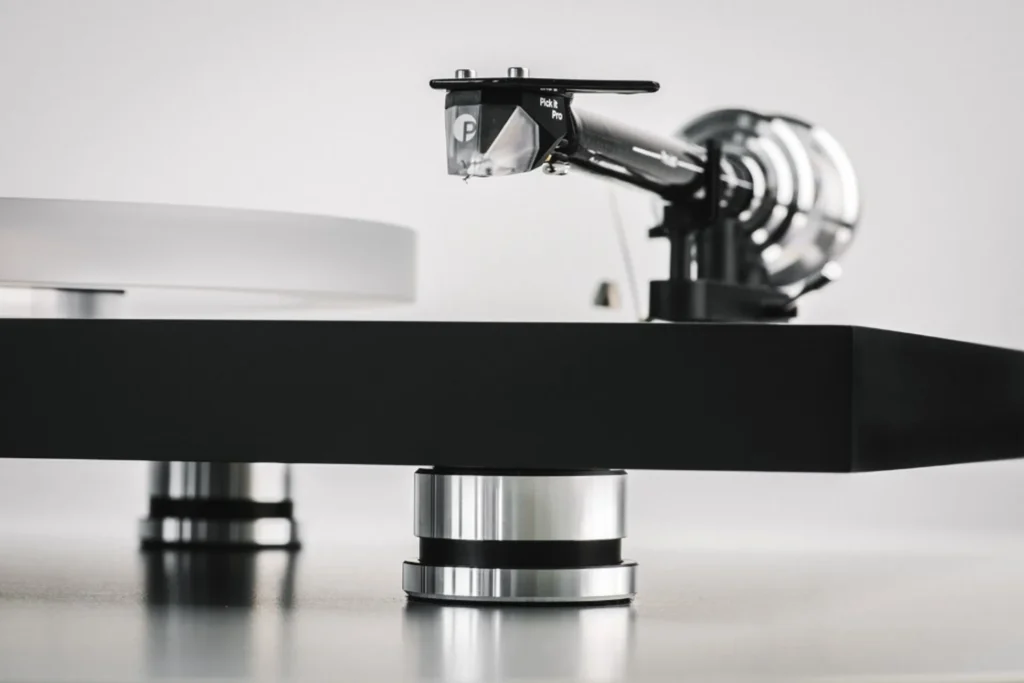
- Cartridge: Pick it PRO B is factory mounted; it is the version built for balanced signal chains when you use the matching cable and phono stage.
- Feet: Three damped aluminium feet, height adjustable, aimed at decoupling the plinth from the shelf.
- In the box: 15 V DC / 0.8 A supply, dust cover, 78 rpm belt, 7″ single adapter, and phono RCA cable (Connect it Phono E).
If you are weighing first table vs. later upgrade, the AT-LP60X is a different product philosophy: fully automatic, lower stake, less setup. The Debut Reference 10 assumes you want to dial alignment and VTA and stay involved.
Published specs (verify before you buy)
Numbers below are copied from Pro-Ject’s spec block as of this draft; units and tolerances are the manufacturer’s.
- Drive: Belt drive, electronic speed control.
- Speeds: 33, 45, (78) — electronic speed change; 78 via alternate belt.
- Platter: 300 mm acrylic.
- Wow & flutter: 33: ±0.16 %; 45: ±0.14 %.
- Speed drift: 33: ±0.4 %; 45: ±0.5 %.
- Signal-to-noise ratio: 68 dB.
- Dimensions (W × H × D): 462 × 145 × 345 mm.
- Weight: 6 kg net.
- Power: 4 W active; 0 W standby (per sheet).
Note: Do not treat this list as a warranty document. If a spec drives your purchase, match it on the current PDF download from Pro-Ject before you pay.
True Balanced output
The deck exposes a mini-XLR socket alongside standard RCA phonos. Pro-Ject markets the ecosystem as True Balanced: a balanced-capable cart, the right cable, and one of their balanced phono stages can lower noise pickup on long runs in difficult rooms. You can still run single-ended RCA into any phono input; balanced is optional upside, not mandatory for the table to function.
If you are new to the playback chain, our vinyl guide walks through why the phono stage and grounding still matter as much as the stylus.
Who it’s for
- Someone stepping up from a plug-and-play deck who wants adjustable arm, better isolation story, and a factory cartridge that can grow into balanced gear.
- A listener who reads wow/flutter sheets and cares about fit and finish (diamond-cut aluminium trim is a visible part of the design language).
- Anyone who accepts dealer-only availability and will confirm price, warranty, and service locally before committing.
I’ll revise the sound impressions section only after I can actually spin records on one; until then, declaring winners on timbre or soundstage would be guesswork.
FAQ
Does the Debut Reference 10 include a cartridge?
Yes — Pick it PRO B is installed at the factory. You still need a phono preamp (or integrated with phono) and proper setup checks.
Do you need a Pro-Ject phono stage?
No for basic RCA use: any competent phono input matches the single-ended path. For True Balanced mini-XLR, Pro-Ject intends you to pair with their balanced phono electronics for the full noise-rejection story.
Does it play 78 rpm records?
Pro-Ject lists 78 among speeds with the supplied round belt and electronic control — use the correct stylus profile for shellac if you actually spin 78s.
Where is it sold?
The official page states available at selected dealers only. Use Pro-Ject’s dealer locator and local pricing; this intro does not quote a street price.