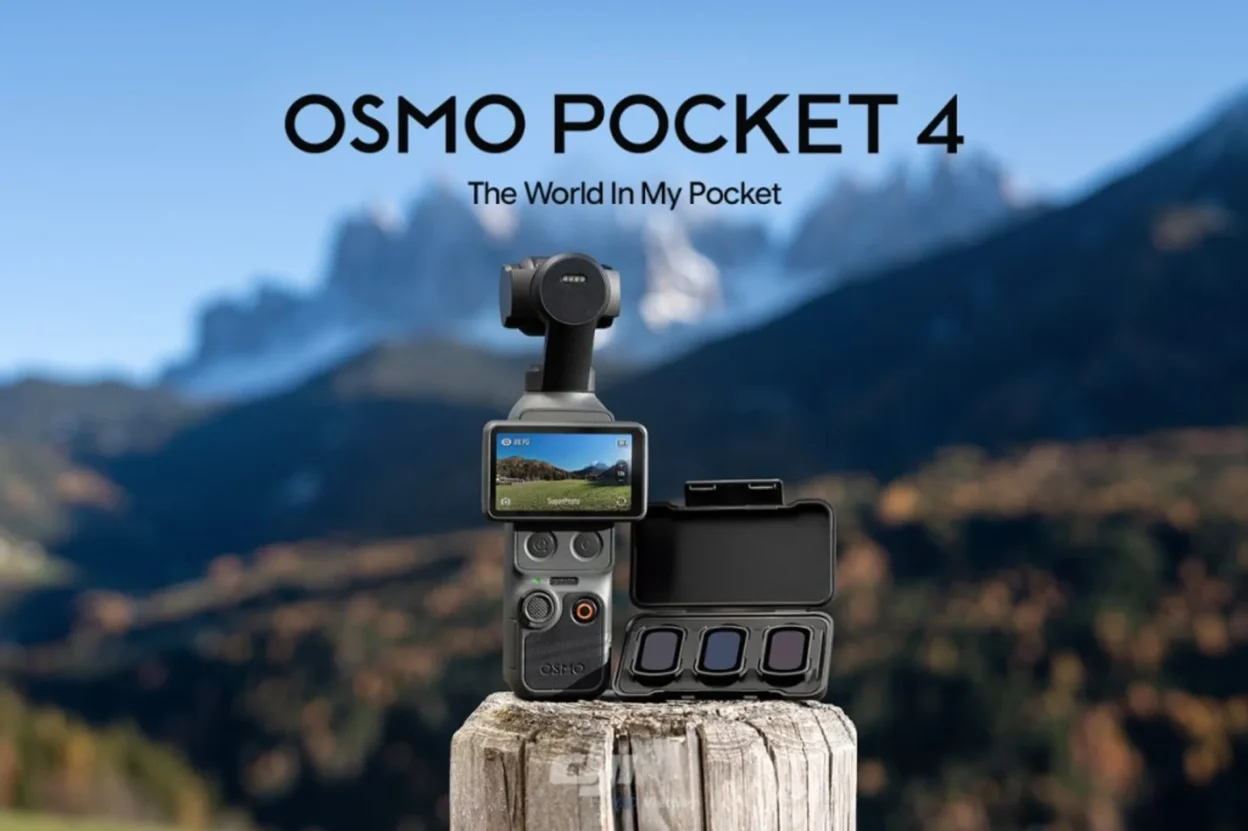
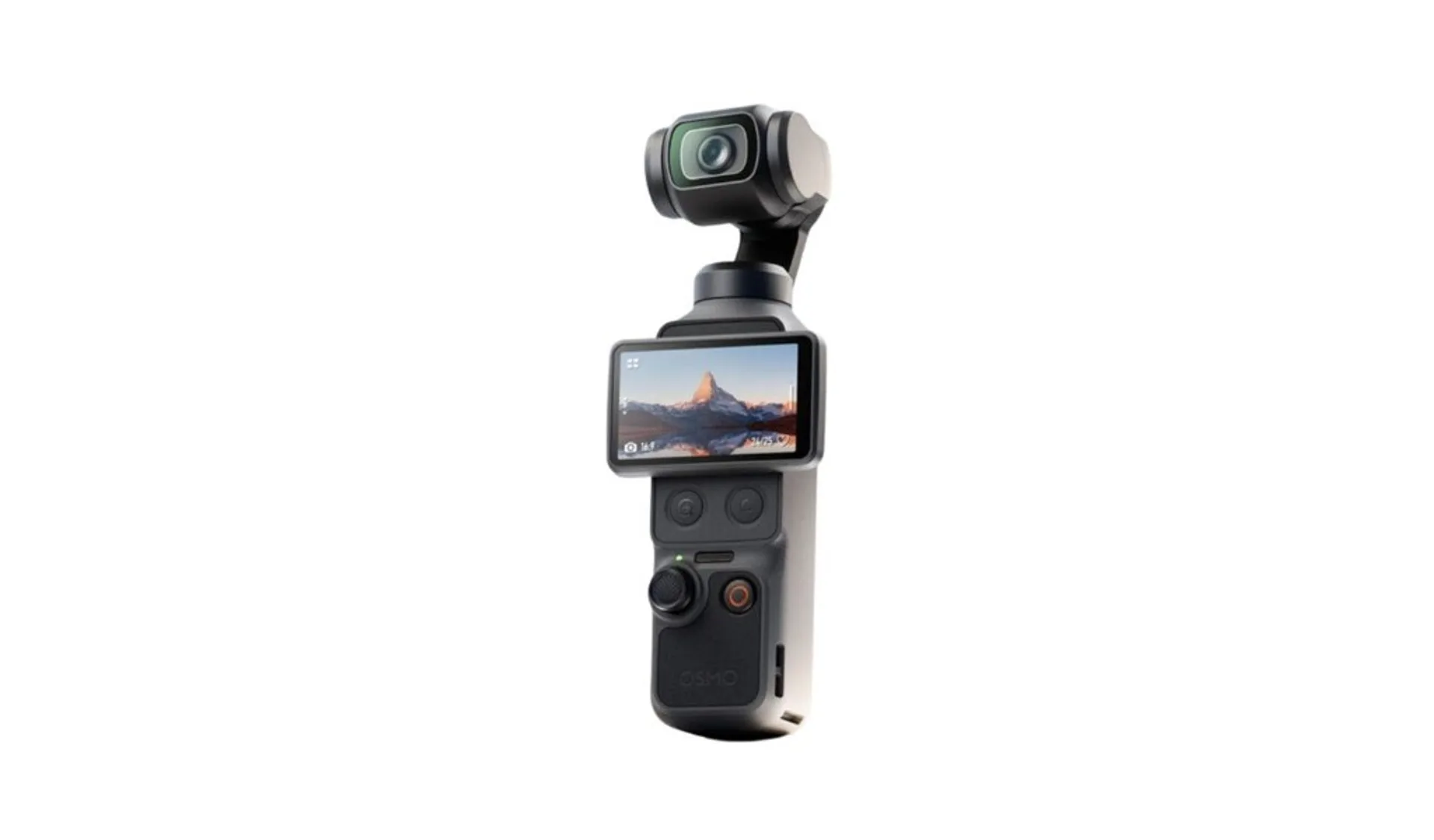
DJI Osmo Pocket 4 is the follow-up to the Osmo Pocket 3 in the same product idea: a phone-sized 3-axis gimbal camera built around a 1-inch CMOS and a 20 mm equivalent f/2.0 lens. On DJI’s published spec sheets, Pocket 4 is not a new sensor class; it is a spec-and-workflow upgrade — higher still resolution, faster slow motion, more internal storage, longer quoted runtime, brighter screen, higher video bitrate, and Wi-Fi 6 (802.11ax) plus Bluetooth 5.4.
Pocket 4 adds 107 GB built-in storage (Pocket 3: none, microSD only). Still photos jump to about 37 MP single shot and 7680×4320 max 16:9 still size versus Pocket 3’s about 9.4 MP and 3840×2160. 4K slow motion on Pocket 4 lists 100/120/200/240 fps; Pocket 3 lists 120 fps at 4K. Max video bitrate rises to 180 Mbps (Pocket 3: 130 Mbps). Quoted operating time under DJI’s lab note (1080p/24fps, 16:9, Wi-Fi off, screen off) is 240 min vs 166 min. Screen spec stays 2.0 in / 556×314 but brightness increases from 700 nits to 1000 nits.
What stays the same (gimbal + lens story)
Both units share the same headline imaging block on paper: 1-inch CMOS, 20 mm equivalent field of view, f/2.0, and 0.2 m to ∞ focus range. Gimbal controllable range and max controllable speed match line-for-line on DJI’s sheets (pan −235° to 58°, tilt −120° to 70°, roll −45° to 45°; 180°/s max speed; ±0.005° angular vibration range).
So the buying question is not “is the sensor bigger?” It is whether the codec, resolution headroom, internal storage, runtime, and high-frame-rate modes justify replacing a Pocket 3 that still meets your output resolution and card workflow.
Spec-by-spec comparison table
Values below are copied from DJI’s published spec pages for Osmo Pocket 3 and Osmo Pocket 4 (regional specs pages use the same technical tables).
| Spec | Osmo Pocket 3 | Osmo Pocket 4 |
|---|---|---|
| Dimensions (L×W×H) | 139.7×42.2×33.5 mm | 144.2×44.4×33.5 mm |
| Weight | 179 g | 190.5 g |
| Touchscreen | 2.0 in, 556×314, 700 nits | 2.0 in, 556×314, 1000 nits |
| Built-in storage | None (microSD up to 1 TB) | 107 GB + microSD up to 1 TB |
| Single-shot still (approx.) | ~9.4 MP | ~37 MP |
| Max image size 16:9 | 3840×2160 | 7680×4320 |
| Max image size 1:1 | 3072×3072 | 6144×6144 |
| ISO (photo / video) | 50–6400 / 50–6400 | 50–12800 / 50–12800 |
| ISO low-light video / slow motion | 50–16000 / 50–6400 | 50–25600 / 50–12800 |
| Normal 4K (16:9) | 3840×2160 @ 24/25/30/48/50/60 fps | 3840×2160 @ 24/25/30/48/50/60 fps |
| Slow motion 4K (16:9) | 3840×2160 @ 120 fps | 3840×2160 @ 100/120/200/240 fps |
| Max video bitrate | 130 Mbps | 180 Mbps |
| Video format (listed) | MP4 (H.264/HEVC) | MP4 (HEVC) |
| Photo format (listed) | JPEG / JPEG+DNG | JPEG / DNG / JPEG+DNG |
| Digital zoom (4K video) | 2× | 4× |
| Battery (energy) | 1300 mAh, 10.01 Wh | 1545 mAh, 11.95 Wh |
| Operating time (DJI test note) | 166 min | 240 min |
| Charge time (DJI lab, 65 W charger) | 16 min to 80%; 32 min to 100% | 18 min to 80%; 32 min to 100% |
| Wi-Fi | 802.11 a/b/g/n/ac | 802.11 a/b/g/n/ac/ax |
| Bluetooth | BLE 5.2, BR/EDR | BLE 5.4, BR/EDR |
Operating time on both spec pages is measured at 25 °C, 1080p/24fps (16:9), Wi-Fi off, screen off; real runtime changes with resolution, gimbal load, wireless, and ambient temperature.
Video, photo, and codec differences that matter in edit
Pocket 3 already covered the vlogging baseline: 4K up to 60 fps in normal mode and 4K/120 in slow motion. Pocket 4 keeps the same normal 4K frame-rate ladder but extends slow motion to 200 fps and 240 fps at 4K, which matters if you slow footage further in post or want crisper motion sampling at high speed.
Still imaging is the larger generational jump on paper: ~37 MP single shots and 8K-class max 16:9 still dimensions versus Pocket 3’s ~9.4 MP ceiling. For hybrid shooters who treat the Pocket line as a B-roll body and sometimes grab printable stills, that gap is meaningful.
Codec line: Pocket 3 explicitly lists H.264 and HEVC. Pocket 4’s sheet lists MP4 (HEVC) only. If your edit machine or proxy workflow still assumes H.264-first ingest, check your NLE and hardware decode support before you assume interchangeability.
Normal recording modes: Pocket 3’s spec page lists a wider set of resolution and aspect ladders (including 2.7K (16:9), multiple 1:1 sizes, and extra 9:16 steps). The Pocket 4 spec page we mirrored lists 4K/1080p (16:9) plus 3K/1080p (9:16) under normal video. If a niche mode matters to your vertical workflow, confirm the full matrix on your regional DJI specs PDF before you buy.
Storage, battery, and charging
107 GB internal on Pocket 4 is the most practical quality-of-life change for people who forget cards or shoot travel days in bursts: you can start recording without fumbling for microSD, then expand with cards up to 1 TB when needed. Pocket 3 remains microSD-only at the same 1 TB ceiling.
Battery energy rises from 10.01 Wh to 11.95 Wh, and DJI’s quoted runtime jumps from 166 to 240 minutes under the same footnoted test. Fast-charge shape is similar (both quote 32 minutes to full with a 65 W class charger; Pocket 4 quotes 18 minutes to 80% versus 16 minutes on Pocket 3 — confirm charger model on DJI pages before you match cables).
Connectivity: Wi-Fi and Bluetooth
Pocket 4 moves Wi-Fi to 802.11ax while Pocket 3 stops at 802.11ac. In real life that mainly affects phone-to-camera transfer and wireless accessory workflows when you are already on a capable router or phone Wi-Fi 6 path. Bluetooth steps from 5.2 to 5.4 on the spec sheet.
Who should buy Pocket 4 vs keep Pocket 3
Lean toward Pocket 4 if you need internal buffer storage, higher still resolution, 4K/200–240 slow motion, higher bitrate, brighter outdoor screen legibility, or longer quoted battery life in the same shooting profile.
Stay on Pocket 3 if your deliverables are already capped at 4K/60 (or below), you rarely use slow motion above 120 fps, you are happy with cards-only storage, and you want the lighter, slightly smaller body. Used and promo pricing on Pocket 3 can make it the better value for pure vlog duty.
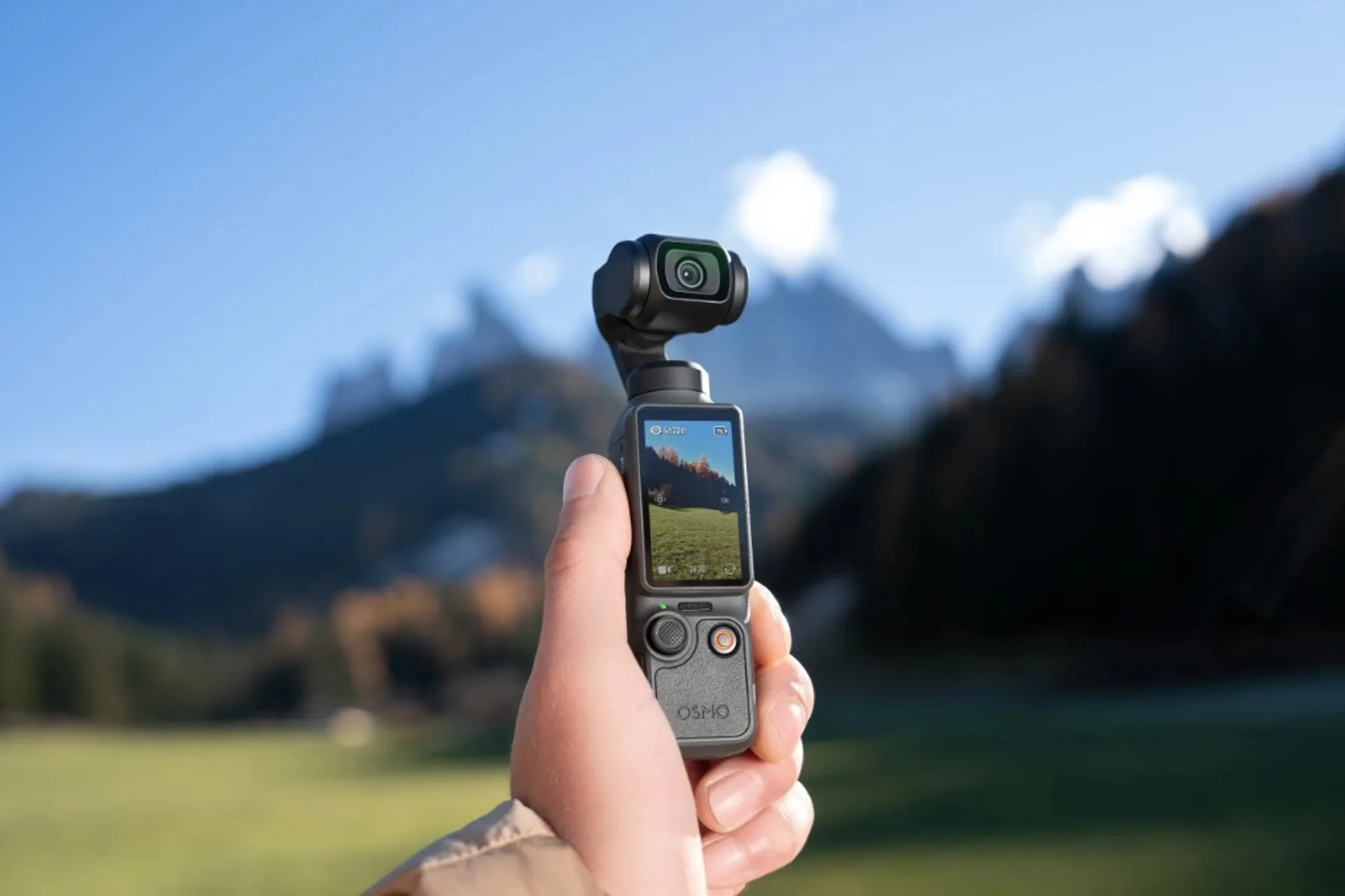
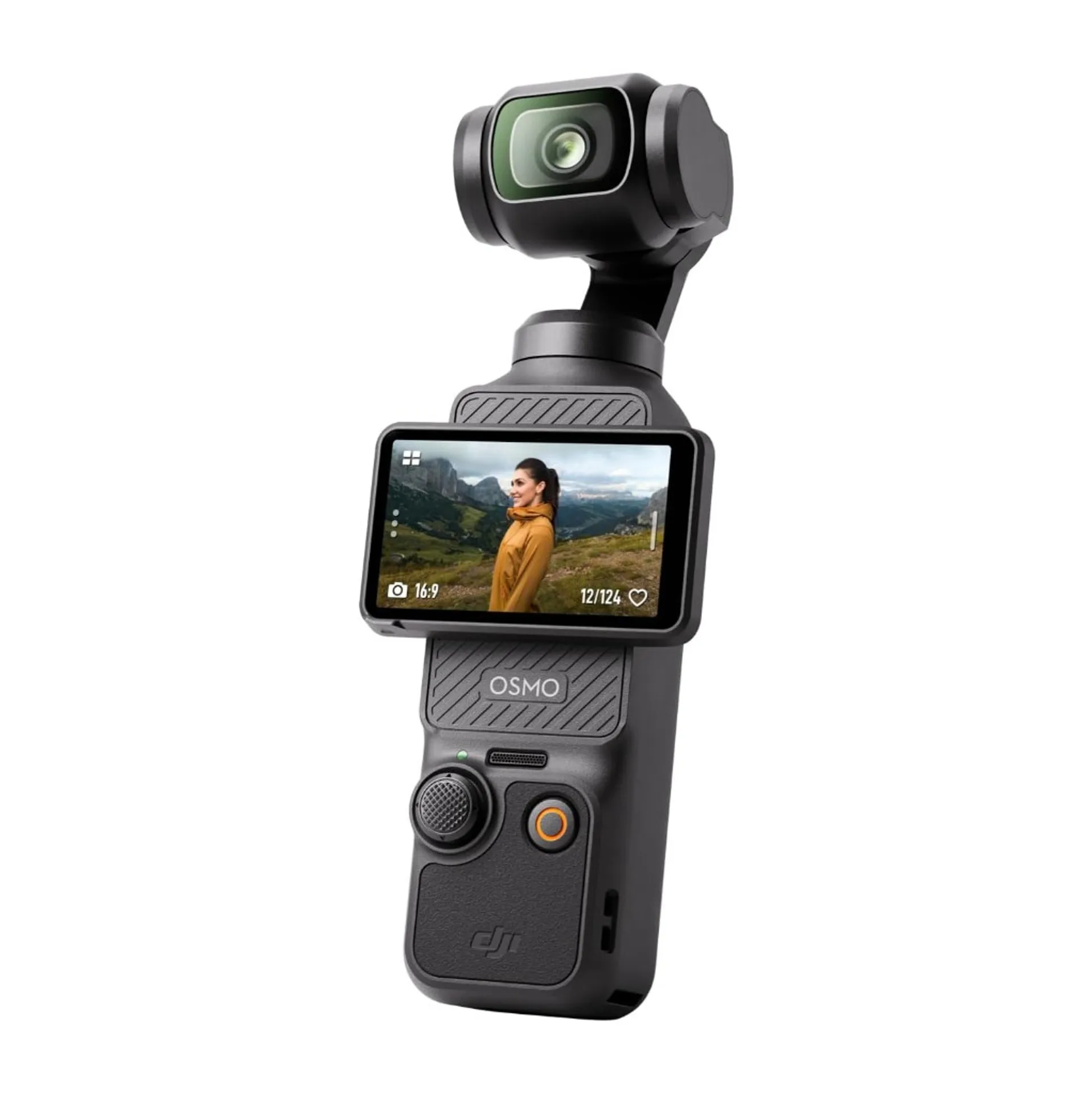
DJI Osmo Pocket 3
Available at Amazon- verify ASIN B0CG19QXWD, seller, bundle (standard vs Creator vs kits), and warranty before checkout.
View on AmazonFAQ
Is the sensor larger on Osmo Pocket 4?
No. Both list a 1-inch CMOS on DJI’s official spec pages.
Does Osmo Pocket 4 have built-in storage?
Yes. DJI lists 107 GB built in, expandable with microSD up to 1 TB. Pocket 3 has no built-in storage in the spec sheet.
What is the slow-motion difference at 4K?
Pocket 3: 4K @ 120 fps. Pocket 4: 4K @ 100/120/200/240 fps in the slow-motion section of DJI’s specs.
Why does your Pocket 4 link use dji.com/ca?
The /global/ URL with query parameters returned 404 when verified. Regional /osmo-pocket-4/specs pages load the same technical table; always open the specs page for your country before purchase.