
- TL;DR – BOYA is a microphone and audio brand from Shenzhen, China, built by Shenzhen Perfect Acoustic Technology Co., Ltd. for content creators, mobile journalists, streamers, and field recordists. The product map runs from the famous BY-M1 lavalier through 2.4 GHz wireless systems (e.g. BOYAMIC, BOYALINK, BOYA mini lines) to on-camera shotguns, USB / studio / conference mics, headphones, mixers, and newer AI-positioned tools. Official copy frames the company around innovation, user-centered design, and global scale (e.g. tens of millions of users, hundreds of R&D staff, thousands of retail doors).
What is BOYA?
BOYA (also styled in product names as BOYA BY-…) is the consumer and prosumer-facing microphone brand of Shenzhen Perfect Acoustic Technology Co., Ltd.- a Shenzhen-based company that, since the brand’s start in 2012, has focused on portable, phone-friendly, and multi-platform audio for people who record voice on cameras, phones, and computers. The official story describes three founders seizing a moment when mobile device adoption and faster networks were expanding the appetite for user-generated and professional-looking video. The mission on the same page is to give global users simple, practical, professional, stylish products so recording feels easy and pleasant.
BOYA is a Shenzhen audio company whose catalog centers on microphones for video and speech – lavalier, 2.4 GHz wireless, on-camera, USB, studio, and conference systems – plus headphones, mixers, accessories, and select AI voice products, all marketed heavily toward creators and everyday recordists who need gear that is easy to power, easy to route, and easy to buy in mainstream channels.
What is BOYA? (brand, legal entity, and audience)
On the official site’s About / Story page, BOYA is introduced as a brand with a vision to enrich life and explore the world through sound, and a mission to stay innovative while being user-centered and excellence-seeking. The legal entity named in the site footer is Shenzhen Perfect Acoustic Technology Co., Ltd., with a registered address in Longgang District, Shenzhen, Guangdong (as shown in the 2026 copyright line on the global site). That context matters for two reasons: it clarifies that BOYA is not a Western legacy mic house in the Shure/Neumann mold; it is a modern, Shenzhen-speed hardware brand that scaled alongside phone cameras, social video, and affordable mirrorless workflows.
The same Story page uses a headline: “Chosen by 30M users worldwide”, paired with 200+ R&D members, 400+ acoustic innovation patents, 150+ countries and regions, and 6,000+ global retail stores- all manufacturer-claimed figures, useful as a scale signal rather than an independent audit.
Who the brand is for, in plain terms: anyone who needs clear speech in video — from a student filming on a phone to a small business doing Zoom and shorts, to working creators who want 2.4 GHz wireless and dual-transmitter kits without jumping straight to the highest pro-only price tier.

History: from 2012 to today
Founding story (2012)
Per the official story, the brand was established in 2012 as global demand for mobile electronics and faster networks was rising. The page frames a small group of sound enthusiasts aiming to lead global audio innovation for content creation, with emphasis on a smooth recording and shooting process so creativity comes through without the gear fighting the user. That is the spine of the BOYA UX promise: simple, practical, stylish tools, not a laboratory-only spec chase.
Selected milestones (manufacturer timeline)
BOYA maintains a Milestones page (as of site structure in 2026) with year-by-year entries. The table below condenses notable beats that explain how the portfolio and credibility were built. Figures are as stated by BOYA on that page.
| Year | Highlight (per BOYA milestones / story) |
|---|---|
| 2012 | BOYA brand established — “以技术探索音频世界” (use technology to explore the audio world). |
| 2013 | BY-M1 launched: described as a first-of-kind mic compatible with both phones and cameras — stated cumulative sales over 10 million on the milestones list. |
| 2013 | BY-WM5: 2.4 GHz wireless with intercom / walkie-talkie-style function (positioned as a global first in that feature mix). |
| 2015 | First in-house acoustics lab; 30+ technology patents in that phase; Best Buy partnership for global retail. |
| 2015–2017 | UHF wireless expansion (BY-WM6, 2015; BY-WM8 dual-channel, 2016; BY-WM4 2.4 GHz dual-channel, 2017). |
| 2018 | Portable receiver for USB-C and Lightning phones; BY-MM1 on-camera mic passes 1 million+ unit sales (per milestones). |
| 2019 | BY-WM3 premium wireless: described as a first charging-case wireless mic in its category; conference “Blobby” mic and other RF-heavy R&D (including high-channel-count UHF scenarios in marketing copy). |
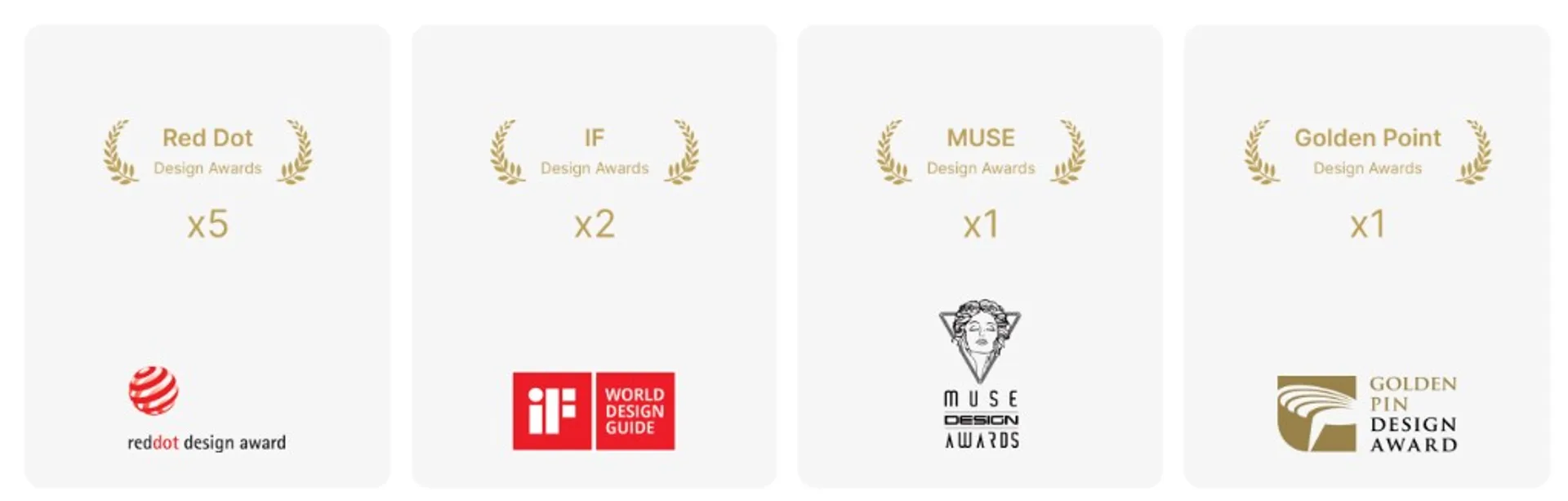
| 2020–2024 | Pro multitrack recorder (e.g. BY-AM6, 2020), revenue milestones, 30M+ product sales in a 2021 entry, and design awards (Red Dot, iF, Golden Pin, and a Muse Gold for BOYAMIC flagship in 2024, per the same list). |
The narrative is consistent: early lavalier scale (BY-M1), then wireless depth (UHF to 2.4 GHz, dual-channel, charging case), then on-camera and conference adjacency, then prosum / pro tools. That sequence mirrors how the addressable market for “decent sound on video” went from a niche to a default expectation for social and work communication.
The BOYA product portfolio (at a glance)
The global boyamic.com navigation (2026) groups products in a way that is useful for SEO entities and readers choosing a first BOYA purchase. This is a structural overview — model names evolve; use the site for the live catalog.
| Category | What you’ll find (examples from site structure) | Typical use |
|---|---|---|
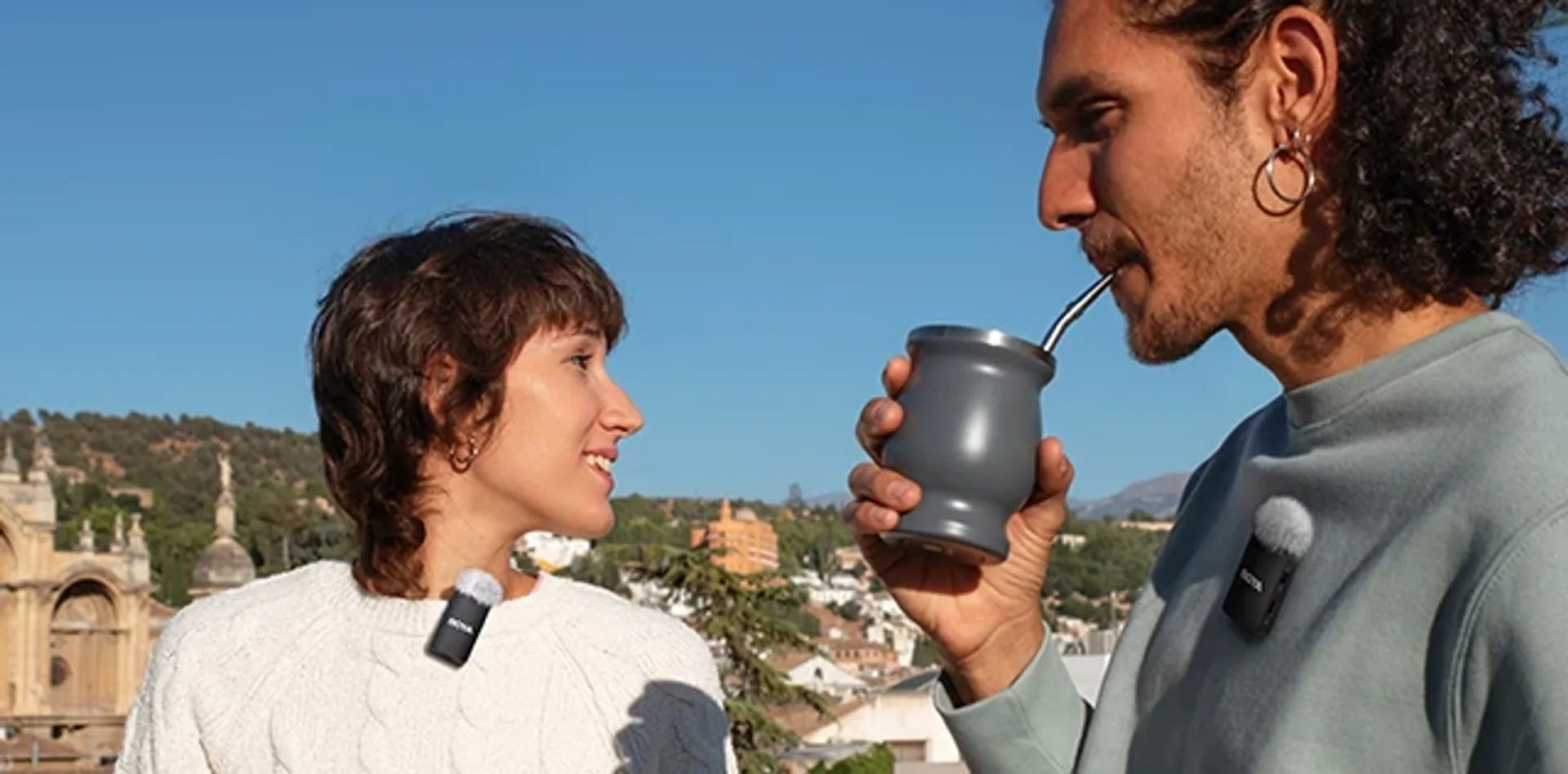
| Wireless mics | Lines such as BOYAMIC 2, BOYA Magic, BOYA mini 2, BOYALINK 3 — “button-sized” or pocket transmitters, often with AI noise or smart features in marketing | Vlogging, talking-head, interviews, mobile run-and-gun |
| Lavalier | BY-M1 and successors — classic clip-on, TRS/TRRS ecosystem | Single-subject voice, phone and DSLR hybrid pipelines |
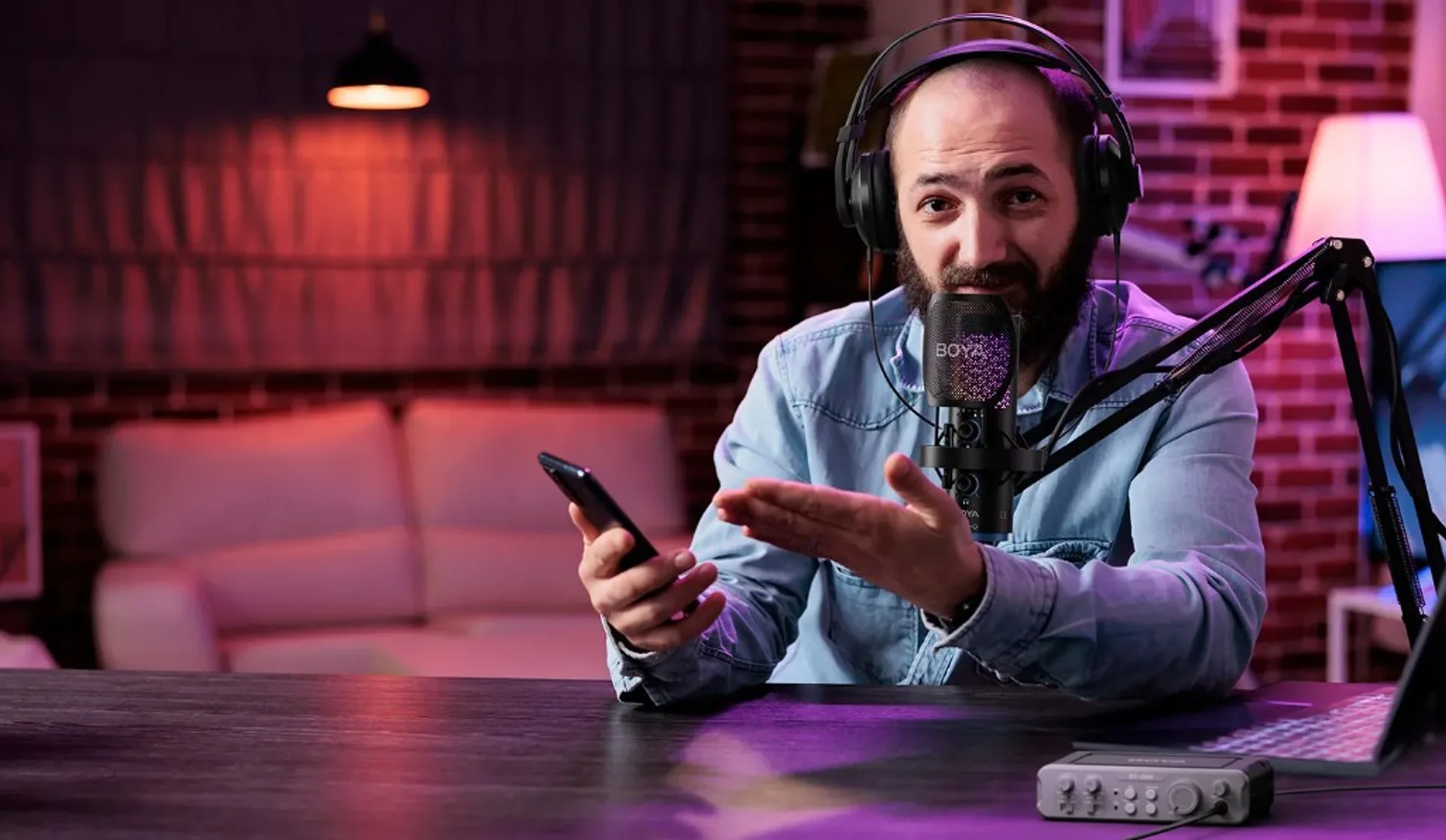
| USB / “Cast” mics | BOYA CastMic family (e.g. P60, S60, G40 in nav) | Desktops, streaming, podcasting, gaming |
| On-camera (shotgun) | BY-MM1, BY-MM1 AI (site bills some models as AI-enhanced) | DSLR, mirrorless, and phone rigs with a cold shoe |
| Studio / pro voice | BY-M1000 Pro, BY-DM500 (XLR or studio-oriented) | Voiceover, home studio, stricter plosive control with stands |
| Conference | Models such as BOYA CM40, BY-GM18 | Tabletop meetings, huddle rooms |
| Headphones, mixers, accessories | BOYA HP3, BY-HP2; BOYA Caster X1, BY-AM4; mic arm and stands | Monitoring, routing, mechanical mounting |
| AI voice / recorder | BOYA Notra (positioned in nav as an AI note taker) — “world’s 1st” style claims in hero copy | Field notes, calls and ambient capture in product marketing |
The homepage also routes “Solutions” by vlogging, live streaming, podcasting, interview, and pro interview a use-case map that lines up with how search intent clusters in real life ( YouTube, TikTok, Reels, Twitch, corporate comms, mobile journalism). That is the ecosystem wrapper the brand uses instead of only listing SKUs in alphabetical order.

Positioning: “mics for creators” in practice
BOYA’s positioning is not “estate-broadcasting heritage since 19XX.” It is: portable, multi-platform, affordable-to-mid mics that keep speech intelligible in video — which is why you see the brand in vlogger gear lists, Amazon bestseller lanes, and classroom kits as often as in niche audio forums. The BY-M1 era established phone + camera compatibility and lavalier simplicity at scale; the 2.4 GHz and dual-TX wave met demand for frame flexibility and less cable salad in modern shoots.
Marketing language on the storefront regularly highlights AI (noise handling, on-device or app-adjacent features) for newer wireless and on-camera models. Treat “AI” in marketing as feature bundling and DSP branding — always confirm behavior on your specific phone, OS, and app before you rely on a workflow.
For E-E-A-T and topical depth: the brand’s patent count, lab investment, and industrial design awards (Red Dot, iF, MUSE, etc., per their milestones) support the claim that this is a serious ODM/brand-scale operation — not a one-off white-label part.
Why BOYA became a household name in creator audio
Here is a sober, source-aware read of why the brand is everywhere, mixing stated company facts with market context (market context is general, not a secret sales leak).
- Accessible price tiers for real outcomes. In many regions BOYA is priced so that a first good mic is a low hundreds or sub-hundred decision, not a multi-thousand studio build. That maps to how people actually buy their first lavalier or 2.4 GHz set for YouTube, teaching, and side businesses.
- Phone-first and hybrid workflows. The 2013 BY-M1 story — one mic that works on phones and cameras — is a textbook answer to a real friction point: beginners do not start with a full XLR path. Easing TRS / TRRS / adapter life made word-of-mouth possible at scale (officially claimed 10M+ units for that line on milestones).
- Right era for video as default communication. Short- and long-form online video, livestream shopping, and remote work video have grown for years. BOYA’s pace of wireless SKUs, charging cases, and compact transmitters matches how creators upgrade from camera-only audio to wearable mics once they outgrow a shotgun or built-in mics.
- Channel presence. 6,000+ retail stores and 150+ countries, if you take the Story page at face value, is a visibility flywheel — people touch the brand in a mall or chain, then see it again online, then trust a purchase. The 2015 Best Buy milestone, if current relationships held, is emblematic of mass retail education.
- R&D throughput. 200+ R&D staff and 400+ patents, per Story, is consistent with a company that ships many models per year and refreshes wireless lines on consumer-electronics cycles.
What BOYA is not, by default. It is not a promise that every model beats every Western flagship in every RF scenario (urban UHF, dense Wi-Fi, or long throw). It is a volume innovator in creator audio that competes on portability, ease, and value as much as on the last 3 dB of self-noise for a lab chart.


Trust, scale, and awards (what the brand claims)
Pull these only as stated on BOYA’s own pages unless you can verify independently for a review or comparison article:
- 30 million users globally (headline on Story).
- 200+ R&D members, 400+ acoustic patent family count, 6,000+ retail points, 150+ country/region presence (Story page graphic).
- Design and innovation awards on a multi-year list — including BOYAMIC and other lines on Red Dot / iF / Muse timelines in Milestones (exact years and product names in their list).
- Community, events, affiliate and influencer programs, and a regional store (check warranty and authenticity verification tools under Support on the site) round out a typical DTC-plus-retail trust stack.
Glossary: terms you’ll see on BOYA listings
- 2.4 GHz — a common ISM band for compact wireless; often simpler licensing than UHF but can be crowded. BOYA has both 2.4 GHz and UHF entries in their history (see Milestones for specific models).
- BY-… — prefix for many SKU names; write BOYA BY-WM4 Pro in full once, then shorten for readability.
- Lavalier (lav) — clip-on microphone, usually omnidirectional in consumer lines; good for one speaker close to the body.
- On-camera / shotgun (in BOYA’s use) — a mic that mounts on a cold shoe and points at the subject; supercardioid appears in “MM1” class marketing (verify per SKU).
- TRRS / TRS — 3.5 mm analog interfaces; TRRS is typical for phone+mic combo jacks; adapters matter for Lightning / USB-C only phones.
- TX / RX — transmitter / receiver in a wireless set; a dual-TX + single-RX kit is standard for two-talent interviews.
- Plug-in power vs 48V phantom — many lavs expect bias / plug-in power from a camera or TRRS path; XLR studio mics may need 48V from an interface. Always read the SKU’s power spec before you buy an adapter.
Frequently asked questions
Is BOYA a “real” audio brand or a copycat?
BOYA is a manufacturer-backed brand (Shenzhen Perfect Acoustic Technology Co., Ltd.) with a long public milestone trail, patent count claims, design awards, and global distribution. Whether a specific model is the best choice for you is a separate question: always judge by self-noise, build, RF performance in your country, and warranty for the SKU in your cart — not the logo alone.
Where is BOYA from, and who owns the company?
The public site names Shenzhen, China as the corporate home and lists investment milestones in the manufacturer timeline. For ownership and corporate structure beyond that, you would use business registries and filings — the consumer site’s Story and Milestones are the safe baseline for a brand guide.
What is BOYA best known for among creators?
In practice, many people meet BOYA first through a lavalier (BY-M1 class) or a 2.4 GHz wireless set with phone-friendly receivers. On-camera shotguns and USB desktop mics are the next most common entry points, depending on whether the user is a vlogger, streamer, or office presenter.
Does BOYA work with iPhone, Android, and pro cameras?
Many BOYA products are explicitly marketed for multi-device use; the 2013 and 2018 milestones (BY-M1 and a USB-C / Lightning portable receiver) show that in the company’s own narrative. Always read the current box contents for Lightning, USB-C, 3.5 mm, or XLR inclusions — phone OS updates and adapter rules change.
How does BOYA compare to RØDE, Hollyland, or Deity?
A fair comparison is per price tier and per scenario (e.g. street RF noise, dual-talent interview, 32-bit float, timecode, etc.). This pillar is not a shootout. When Raw Gear Lab publishes a head-to-head, it should cite measured noise, range tests, and warranty / service in your region. Until then, treat the brand as strong in creator value, not automatically best in every pro metric.