

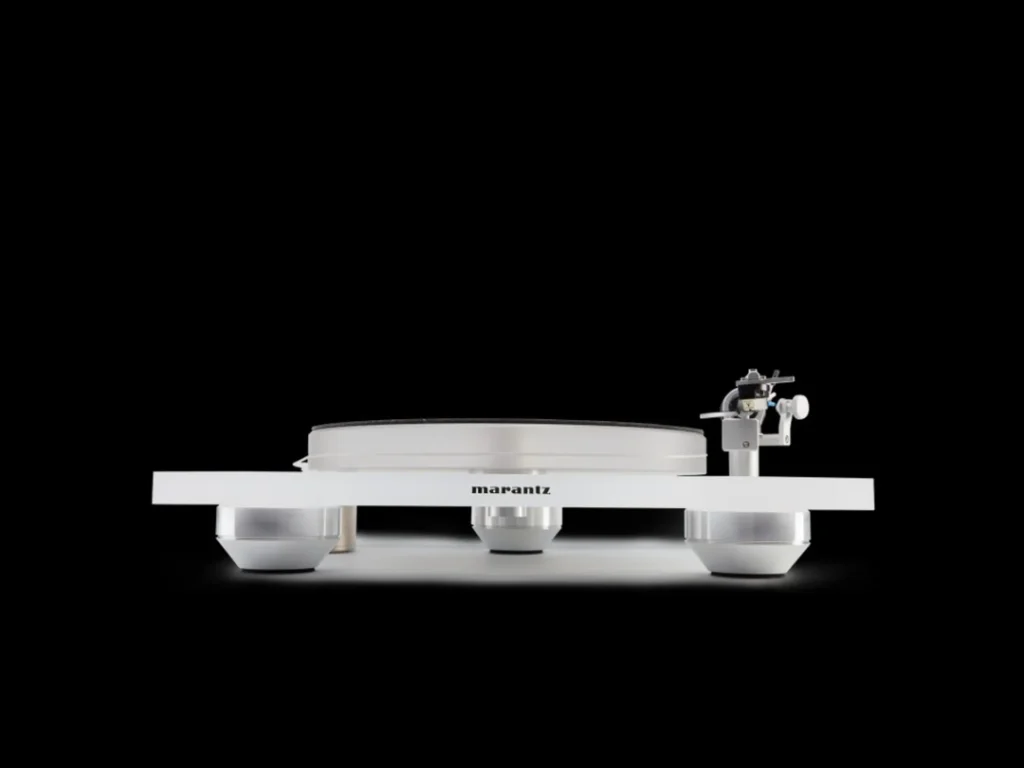
The first time you see a Marantz TT-15S1 in a daylight room, you notice the wrong thing first- not the cantilever, but the volume of light inside the plinth. Marantz builds this Reference belt-drive deck around a high-density acrylic chassis and matching platter in a transparent white finish, then hangs the motor off the slab so it floats instead of screwing vibration straight into the acrylic. Marantz’s US product page lists the deck at USD 3,000 with a factory-mounted Clearaudio Virtuoso MM cartridge manual operation, non-servo AC motor, endless silicone belt, and a five-year warranty on the table (30 days on cartridge and stylus per the same listing). This piece goes deep on why it looks the way it does and what those choices cost you in daily living. I have not spent an evening with a review sample yet; sound claims stay at the level of mechanics and system fit, not a listening verdict.
Frosted mass: why the plinth steals the room
Most turntables announce themselves with a matte plinth and a hinged dust cover you learn to ignore. The TT-15S1 does the opposite: the acrylic block is the story. Marantz leans into continuous frosted surfaces so the chassis and platter read as one ice field interrupted only by the metal tonearm pillar, the spindle stack, and the motor pod sitting slightly apart. In a living room, that reads less like “electronics” and more like furniture that happens to rotate at 33⅓.

There is a reason interior photographers love this class of object. Diffuse acrylic catches window light in layers; edges go soft; the platter looks like it is suspended in the same material as the base instead of bolted on as an afterthought. Marantz’s own marketing calls out hand-selected materials — take that as finish discipline, not a laboratory report. The design bet is simple: if you are spending reference money, the deck should win a staring contest with your sofa.
One material, two jobs
Acrylic here is not a gimmick colorway. Marantz describes a low-resonance, high-density acrylic plinth and platter chosen to damp mechanical chatter before it reaches the stylus. Visually, the payoff is monolithic calm; mechanically, it is mass and lossy stiffness in a shape that still fits a standard credenza depth.
Compare that to MDF wrapped in veneer- perfectly valid engineering, but a different silhouette language. Acrylic makes the TT-15S1 read cold and precise in photographs and warmer in person once skin tones and wood grain bounce through it. If your room is already busy with pattern, this deck is a deliberate pause; if your room is minimal, it becomes the anchor object.
Motor on a leash: floating drive, silicone belt
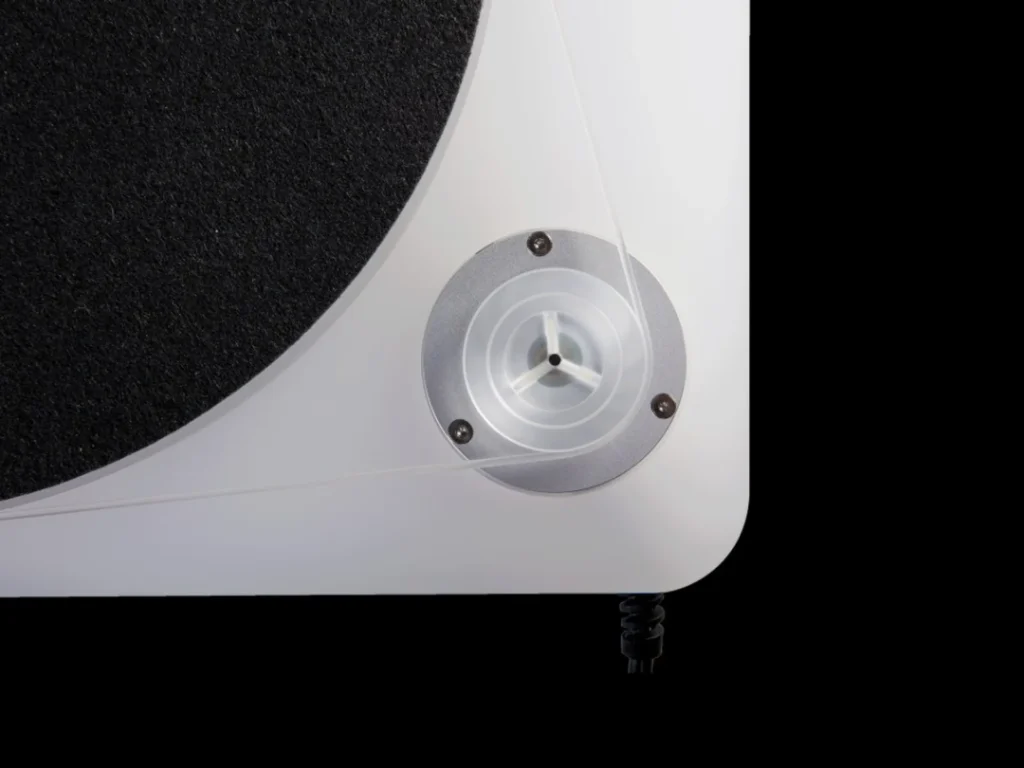
Marantz mounts the precision motor system so it does not hard-couple into the acrylic chassis- their copy calls it floating, aimed at keeping motor buzz from becoming plinth talk. The belt path uses an endless silicone belt for the drive from motor pulley to platter, with non-servo AC motor architecture called out in the spec sheet.
From a design-history angle, separating motor pod and plinth is an old hi-fi trick made visible again: the TT-15S1 refuses to hide the power source inside the same box line as the bearing. That breaks the single-black-box silhouette competitors sometimes chase, but it tells anyone walking past where rotation comes from- useful honesty in a three-thousand-dollar object.
The tonearm as a drawing instrument
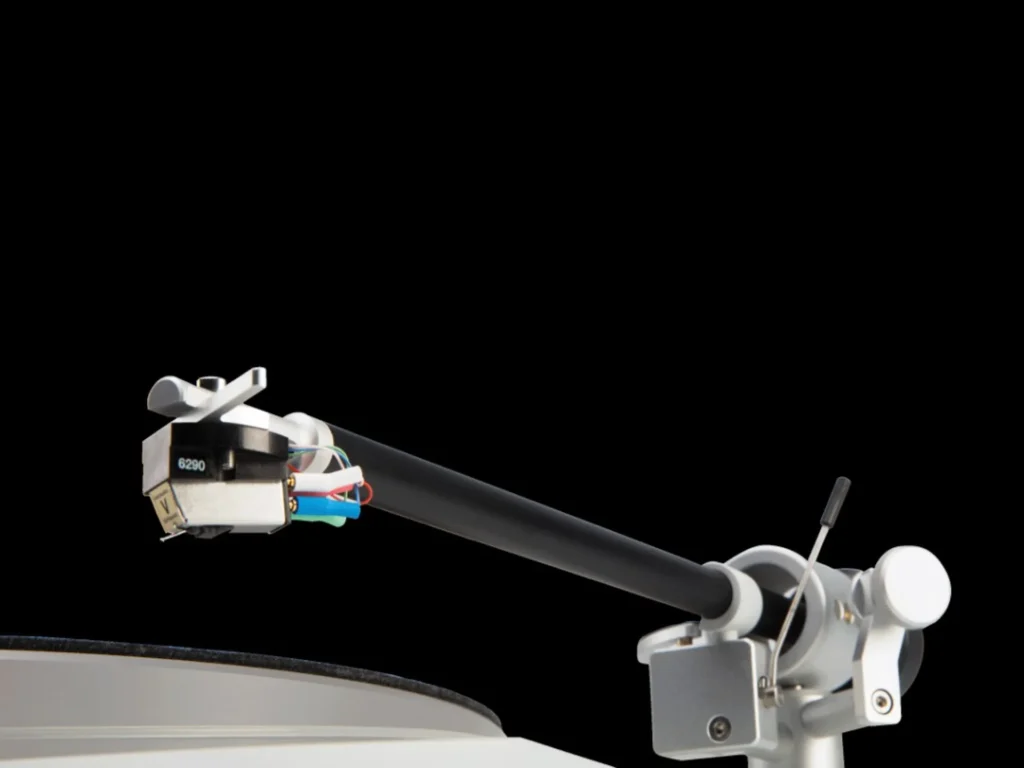
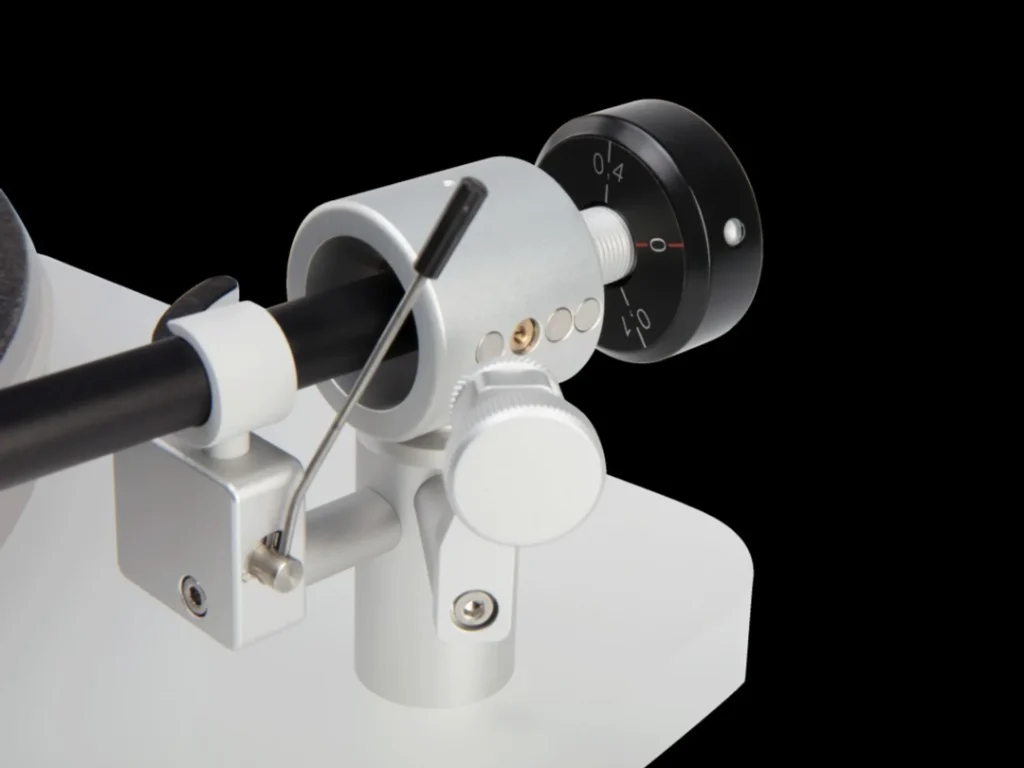
Above the frost line, Marantz fits the Clearaudio Satisfy lineage- a straight, anodized aluminium tube that reads as jewellery against acrylic- high contrast by intent. The product photography on Marantz’s site treats the arm as a vector: it points at the lead-in groove like a compass needle, and the counterweight stack becomes the only dense cylinder on the left side of the deck. Functionally, you are still setting downforce and anti-skate like any manual table; visually, the arm is the human-scale control surface that proves this is not a speaker sculpture.
The bundled Clearaudio Virtuoso MM is both a cost argument and a color-material-finish decision: the factory pairing saves you a mount-and-align anxiety spiral, and the cartridge family is photographed to sit flush with the arm’s metal language. Short warranty window on the stylus versus the table itself is a blunt reminder that the diamond is expendable even when the plinth is not.
Feet, weight, and the missing hood
Marantz fits substantial isolation feet under the plinth- the sort of hardware you expect when a manufacturer still cares about cabinet coupling. Combined with the ~19.6 lb chassis weight (without arm and motor per specs), the table is meant to feel planted, not portable.
What you do not get, conspicuously, is a hinged dust cover in the lifestyle story Marantz shows. That is a design and dust-management trade: the silhouette stays clean for photography and daily use, but cat hair, sunlight, and curious fingers hit the groove unfiltered. If you buy this deck for the look, budget a separate cover strategy — aftermarket acrylic lid, micro-fiber discipline, or accepting that the Virtuoso will see more air than a closeted DJ cart.
Specs that matter for placement
Numbers below are copied from Marantz’s Specifications accordion on the US product page- use them for shelf planning, not as a substitute for setup with a protractor and test record.
- Operation: manual · Speeds: 33⅓ & 45 rpm · Speed variation: ±0.2 %
- Outputs: stereo phono-level RCA from the tonearm cable — Marantz’s downloadable TT-15S1 user guide shows connection to an amplifier’s PHONO input (MM) plus ground; do not plug into a line-only jack without a phono stage.
- Electrical (listed): rated output 3.6 mV at 1 kHz, 5 cm/s; channel separation >30 dB; MM S/N 80 dB
- Dimensions (W × H × D): 16.5 in × 5.4 in × 14.2 in without tonearm
- Weight: 19.6 lb without tonearm and motor
- Platter height: 1.2 in · Finish: transparent white
- Power draw: 5 W
If anything here drifts from the live page, trust the live page.
Rack, credenza, or sculpture pedestal?
The TT-15S1 is shallow enough on paper to live on a media credenza, but the floating motor pod and rear cabling need real depth behind the plinth line. Marantz’s own Pairs Well With module on the product page nudges buyers toward MODEL 30, SACD 30n, and MODEL 40n- same family silhouette, black glass and aluminum language against white frost. You do not have to colour-match, but the industrial design team clearly imagines black Marantz slabs framing a white turntable island.
For contrast in catalogue philosophy, a wood-trim belt drive such as Pro-Ject Debut Reference 10 chases European timber cues; the TT-15S1 chases laboratory frost. Neither is “more hi-fi”- they are different answers to the same question about what you want to see while the record spins.
FAQ
Is the TT-15S1 automatic?
No. Marantz lists manual operation. Cue, return, and speed changes are on you.
Does it include a phono preamp?
No. Marantz’s TT-15S1 user guide (PDF on the product support tab) wires the arm cable to an amplifier’s PHONO input and reminds you to set the amp’s phono EQ to MM for the bundled cartridge. Use a separate phono stage if your integrated only has line inputs. Ignore confusing “line output” wording on some web spec tables—the manual is the tie-break.
Why no dust cover in most photos?
Marantz’s lifestyle imagery leans coverless to protect the clean acrylic line. Practically, that means more dust risk — plan storage and cleaning habits accordingly.
Is USD 3,000 the real street price?
That is the figure shown on Marantz US at this writing. Retail promos and regional VAT move the number; marantz.com and the Amazon listing are the checks that matter.
Note: Marantz is part of Harman; support and warranty flow through normal Marantz channels. Nothing here is sponsored by Marantz beyond standard affiliate retail linkage on the Amazon button above.