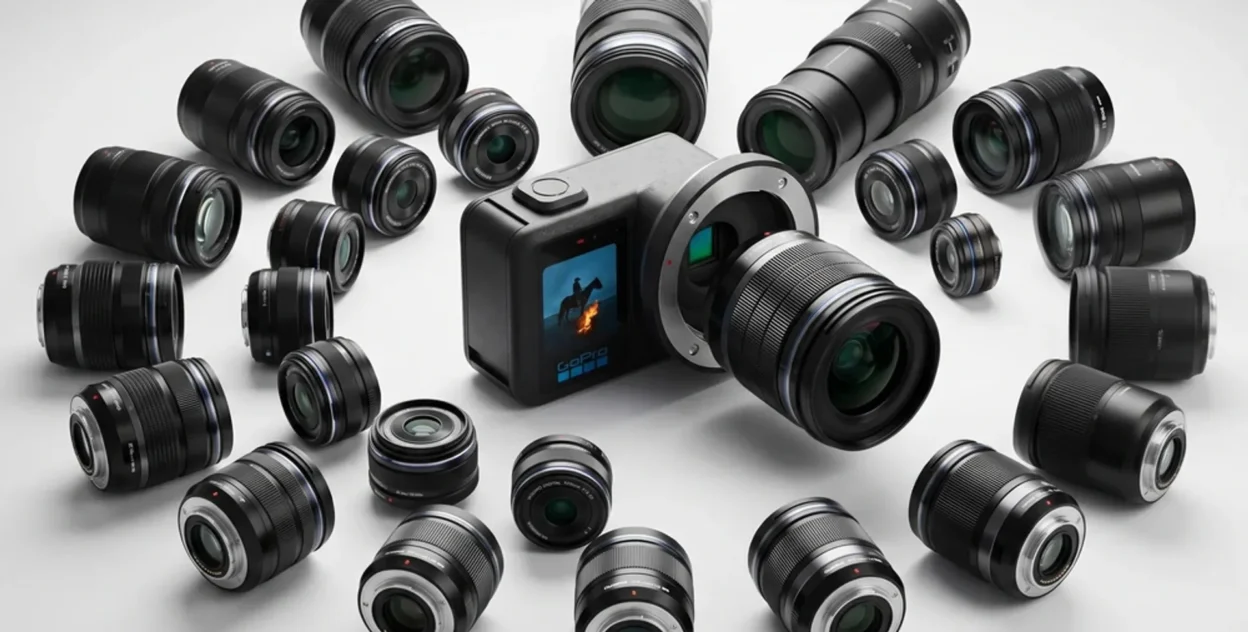
GoPro is launching the Mission 1 family as a three-model line of compact, rugged cameras built around a new 50 MP 1-inch-type sensor and in-house GP3 processor — pitched at creators who want 8K, Open Gate framing, long record times, and (on the flagship variant) an interchangeable Micro Four Thirds lens mount. GoPro’s April 14, 2026 news post sets preorders from May 21 and global on-shelf from May 28 for Mission 1, Mission 1 Pro, and the Mission 1 Pro Grip Edition; Mission 1 Pro ILS and bundled Creator / Ultimate Creator editions are slated for Q3 2026. The company pointed readers to Mission 1 learn-more hub for reservations and signup. Retail pricing was tied to the NAB 2026 booth schedule in the same announcement — check the live storefront before quoting dollars.
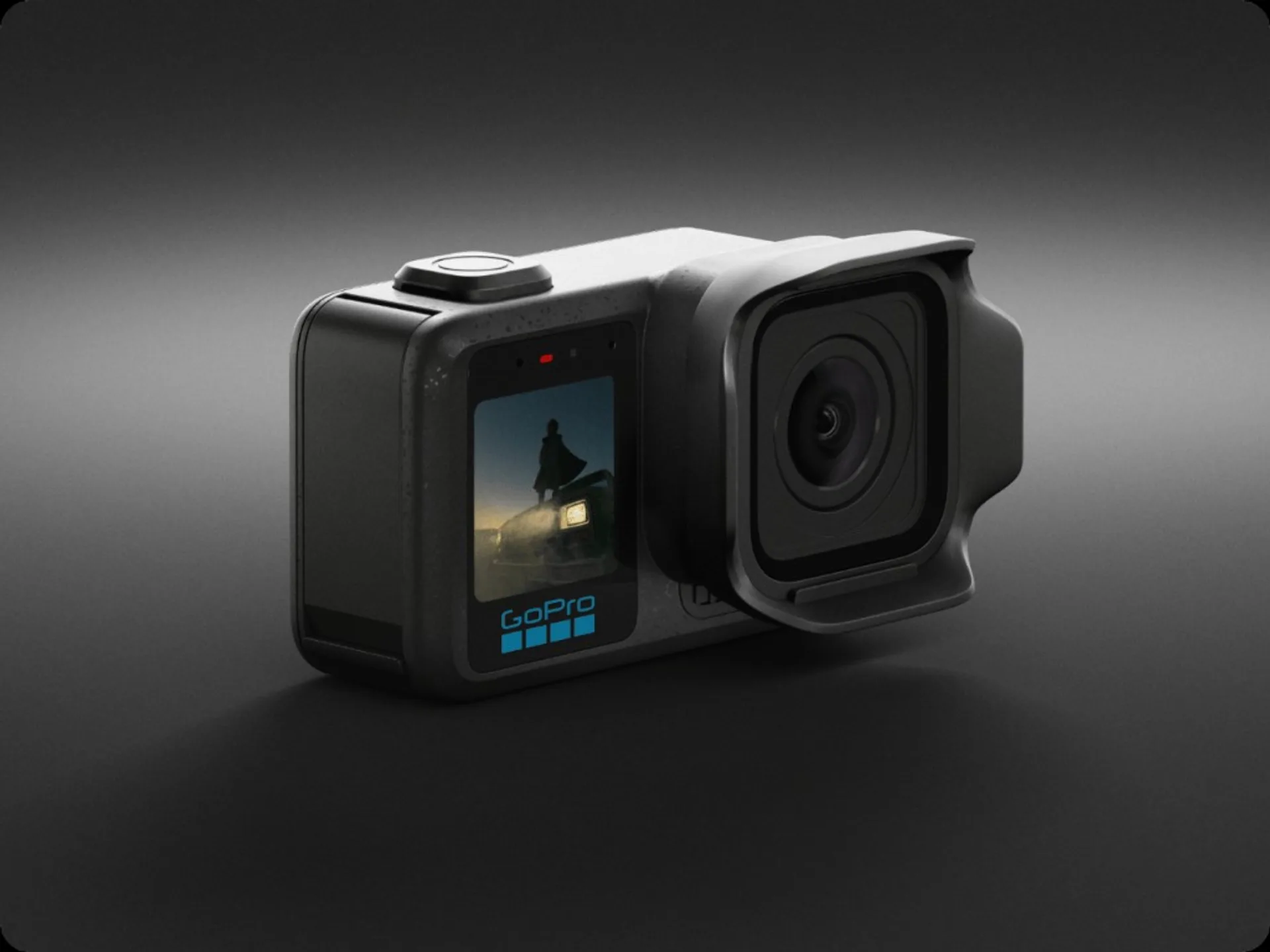
Mission 1 and Mission 1 Pro ship with a fixed GoPro-standard ~14 mm-equivalent wide lens and 159° native field of view (per GoPro). Pro unlocks higher 16:9 frame rates (including 8K60, 4K240, and burst 1080p960) plus 8K30 and 4K120 Open Gate (full 4:3 sensor readout for reframing). Base Mission 1 tops out at 8K30 / 4K120 / 1080p240 in 16:9 and 4K120 Open Gate (no 8K Open Gate on the datasheet GoPro published). Mission 1 Pro ILS keeps the same sensor and GP3 but swaps the fixed optic for an MFT mount for adapted glass; GoPro calls the body weatherproof while the fixed-lens models are rated 66 ft (20 m) waterproof without a dive housing. For a different take on phone-first capture hardware, our Insta360 Snap intro stays in the mobile creator lane.
Three models, one sensor stack
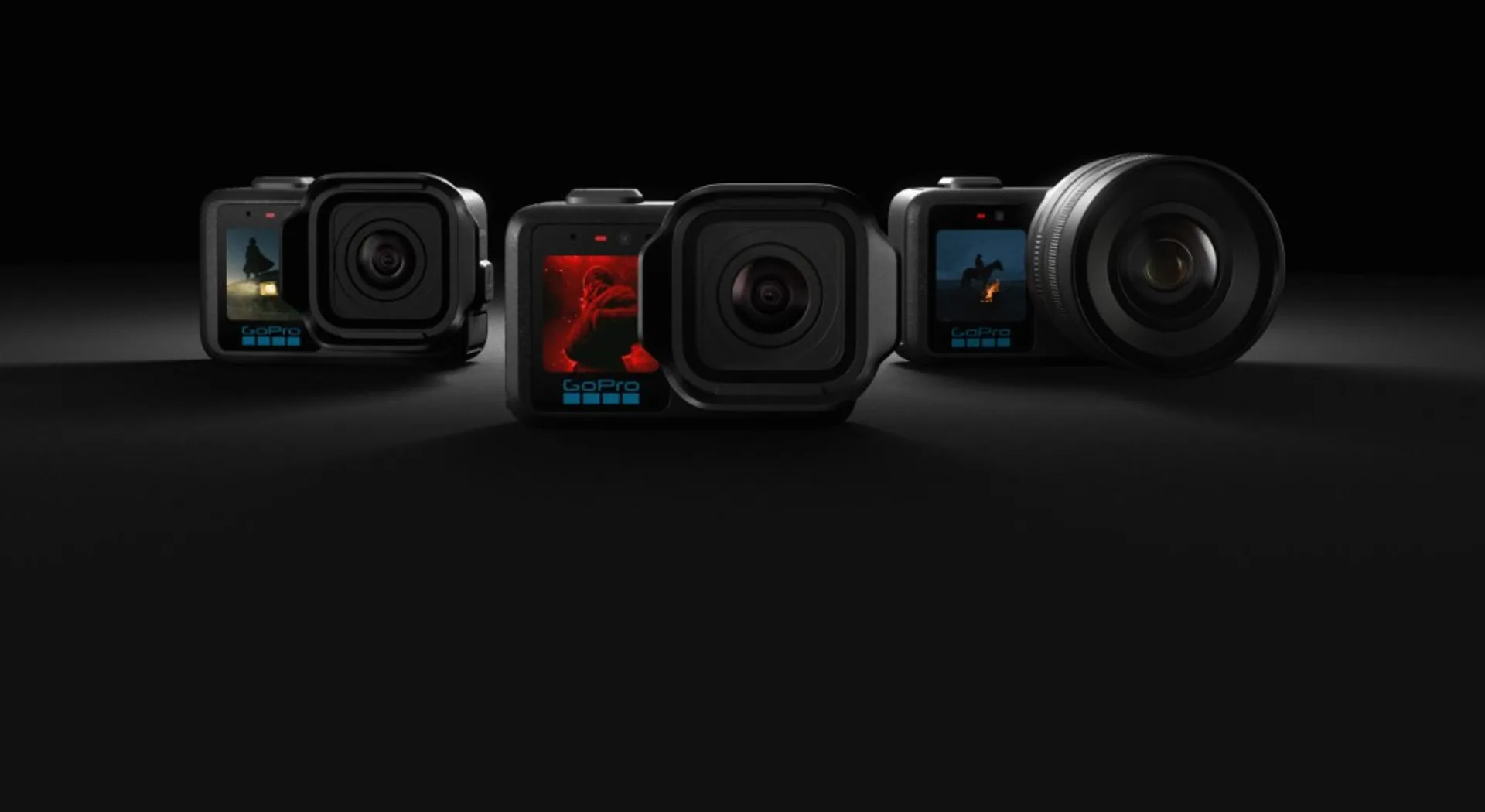
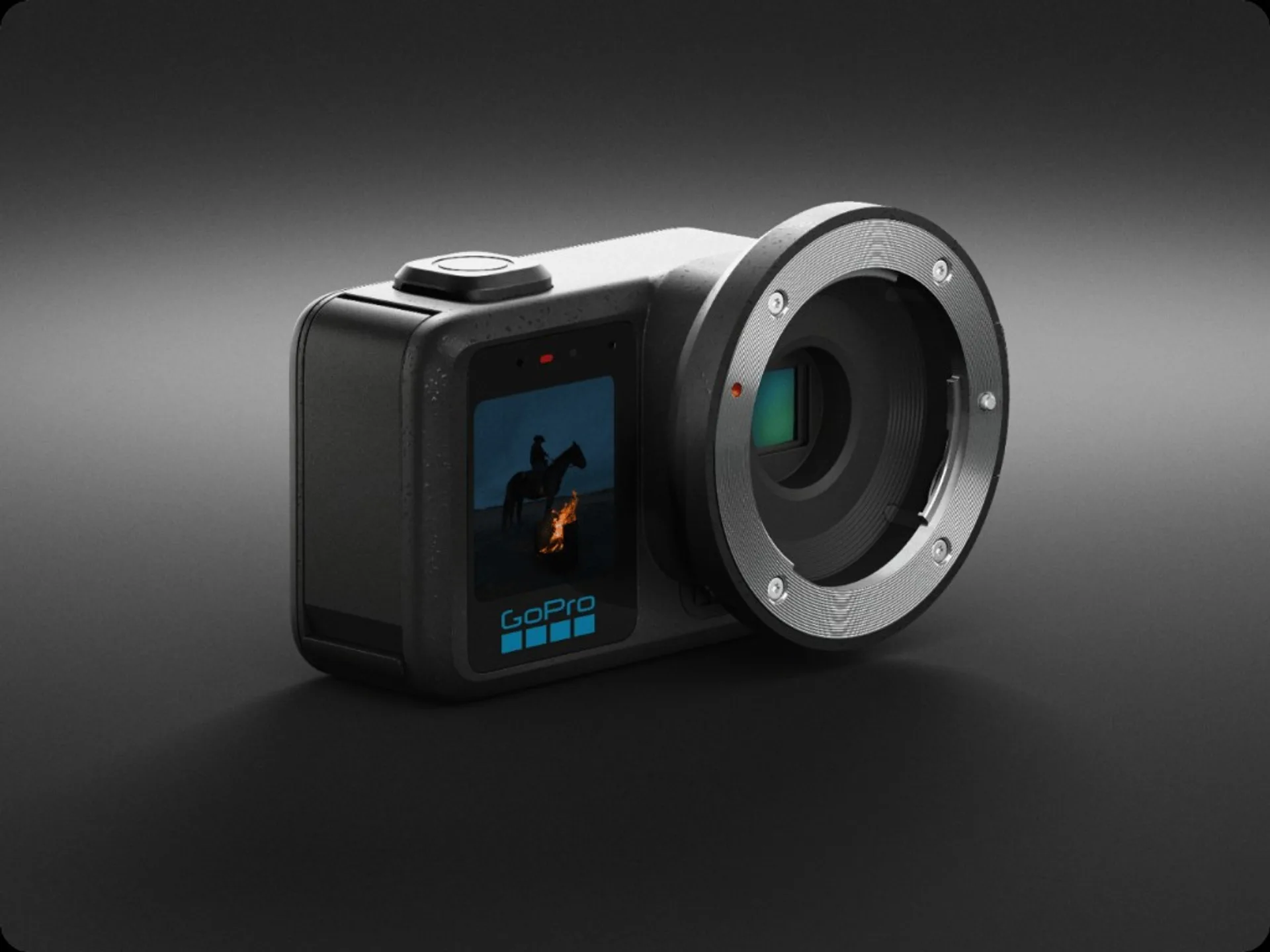
GoPro frames Mission 1 as a split stack: the Pro and base Mission 1 share the sealed action-camera form with a permanent wide lens, while Pro ILS is the mirrorless-style body for people who want lens choice over absolute dunk depth. All three use the same 50 MP 1-inch-class imager and GP3 pipeline GoPro detailed in its news materials.
Sensor, GP3, and Open Gate
On paper, the sensor story is light per pixel and headroom: GoPro cites roughly 14 stops of dynamic range at the sensor, 1.6 µm native pixels, and 3.2 µm “fused” pixels in Quad Bayer mode for low light. The GP3 block is described as a 5 nm-class SoC with an NPU for pixel processing — the practical claim from GoPro is cooler running at aggressive resolutions and longer clips than prior flagships.
Open Gate matters for delivery: a taller 4:3 frame lets you crop to 9:16, 16:9, or 2.39:1 in post without re-shooting. GoPro limits the highest Open Gate modes to Pro and Pro ILS; the entry Mission 1 still gets 4K120 Open Gate but not the 8K Open Gate pair the two flagships advertise.
Video modes and slow motion
GoPro’s published tiering looks like this:
- Mission 1 Pro (fixed lens): up to 8K60 and 4K240 in 16:9; 8K30 and 4K120 Open Gate; burst 1080p960 (about 10 s bursts) plus non-burst 1080p480 / 1440p480 slow motion where listed.
- Mission 1 (fixed lens): 8K30, 4K120, 1080p240 in 16:9; 4K120 Open Gate; additional 4:3 slow-motion modes per the announcement text.
- Mission 1 Pro ILS: same imaging headroom as Pro with the MFT mount instead of the integrated wide lens.
For colour and grading, GoPro lists HLG HDR, 10-bit capture with GP-Log2, and timecode sync for multi-camera shoots, plus a ceiling of about 240 Mbps bitrate when you want heavier files.
Mission 1 Pro ILS and MFT
Pro ILS is the curiosity piece: GoPro is inviting the full Micro Four Thirds catalogue (and adapters) onto a body that still carries the company’s impact and weather sealing story. The press materials emphasize HyperSmooth stabilization with rectilinear prime lenses — a hint that zooms and exotic optics need a closer read of GoPro’s compatibility notes when those ship.
Trade-off is environmental: Mission 1 and Mission 1 Pro are rated to 66 ft (20 m) without an extra housing; Pro ILS is described as weatherproof rather than sharing the same out-of-box dive figure. Plan housings and seals the way you would for any interchangeable system.
Battery, thermals, and waterproofing
GoPro quotes 5+ hours of recording at 1080p30 and 3+ hours at 4K30 on a charge with the new Enduro 2 pack (2150 mAh in the accessory brief). That battery is backward compatible with HERO13 Black, and older HERO13 Enduro cells run in Mission 1 bodies at reduced endurance. Fast charging is part of the story; treat all runtime numbers as lab-adjacent until you match resolution, overlays, and wireless radios to your own shoots.
Audio, bitrate, and I/O
Onboard audio is four microphones with 32-bit float recording to reduce clipping, plus Bluetooth 5.3 wireless paths when paired with compatible accessories. The parallel announcement for the Wireless Mic System calls out 24-bit / 48 kHz transmission, 6.5-hour transmitter runtime, case charging, and roughly 150 m RF range — squarely aimed at run-and-gun crews who outgrow the camera body mics alone.
Body, screen, and capture modes
Hardware touches include a larger OLED rear display (about 14% more area than prior GoPro flagships, per GoPro), taller buttons for glove use, a removable lens hood for flare control on the fixed-lens units, and 13 scene-aware capture modes if you want the camera to automate colour and stabilization profiles. GoPro Labs remains on the table for power users who script custom behaviour.
Stills land at full 50 MP with RAW or a processed SuperPhoto JPEG path; burst stills are quoted up to about 60 fps in the announcement.
Accessories and editions
Beyond the mic, GoPro is stacking Point-and-Shoot Grip, Powered options, a Mission 1 Media Mod with expanded I/O (including micro-HDMI output up to 4K60 per GoPro’s accessory copy), Volta 2 grip, Light Mod 2, M-series ND kits, dual chargers, and a deeper Protective Housing for the fixed-lens bodies (196 ft / 60 m when sealed). Creator bundles combine those pieces for vlog and travel kits; ship windows roll from May through Q3 2026 depending on SKU.
Preorder and ship dates
According to GoPro’s announcement: preorder opens May 21, 2026; Mission 1, Mission 1 Pro, and Mission 1 Pro Grip Edition hit retail May 28, 2026. Mission 1 Pro ILS and the fuller Creator / Ultimate Creator bundles follow in Q3 2026. Reservation promos on the learn-more page (for example bundled grip offers) run while supplies last — read the fine print before you put money down.
FAQ
What is the difference between Mission 1 and Mission 1 Pro?
Same 50 MP sensor and GP3 stack, but Pro unlocks higher 16:9 frame rates (including 8K60 and 4K240), faster slow motion, and 8K30 / 4K120 Open Gate. Base Mission 1 stops at 8K30 / 4K120 / 1080p240 in 16:9 with 4K120 Open Gate only on the tall sensor modes GoPro listed.
What does Mission 1 Pro ILS add?
An interchangeable Micro Four Thirds lens mount and weatherproof construction while keeping the same sensor and processor story as Mission 1 Pro. It ships later — Q3 2026 per GoPro.
When can I buy one?
Preorder from May 21, 2026; first fixed-lens models on shelf May 28, 2026. Sign up for stock alerts on GoPro’s Mission 1 hub.
Where is retail pricing?
GoPro tied public MSRP timing to its NAB 2026 presence. Use the official news post and store pages rather than rumour threads.
Is the Enduro 2 battery new?
Yes — higher capacity (2150 mAh in accessory docs), fast charging, and cross-use with HERO13 Black. Older HERO13 batteries work in Mission 1 cameras with shorter runtimes.
Note: Specifications and kit contents can shift between press assets and final packaging. Before you publish pricing, availability, or legal claims, pull the current PDFs and store copy from GoPro’s Mission 1 announcement and your regional gopro.com storefront.