
Satechi OntheGo Foldable Stand Hub is a simple idea executed in one body: a fold-flat tablet stand plus a USB-C expansion hub you can throw in a bag without carrying two separate accessories. On Satechi’s official product page, the headline spec stack is 4K@60Hz HDMI, 100W USB-C PD passthrough (up to 85W to host), 10Gbps USB-C + USB-A data, UHS-II SD and microSD up to 312 MB/s, and a dedicated 3.5 mm audio jack at $79.99 list.
Price: $79.99 (U.S. store page at time of writing). Dimensions: 11 x 11 x 1.9 cm (4.3 x 4.3 x 0.75 in). Weight: 187.5 g. Host cable length: 17 cm (6.69 in). Video out: HDMI up to 4K@60Hz. Data: USB-C and USB-A up to 10Gbps. Power passthrough: USB-C PD up to 100W input, with up to 85W delivered to host. Cards: SD + microSD UHS-II, up to 312 MB/s. Audio: 3.5 mm I/O.
What this product actually solves
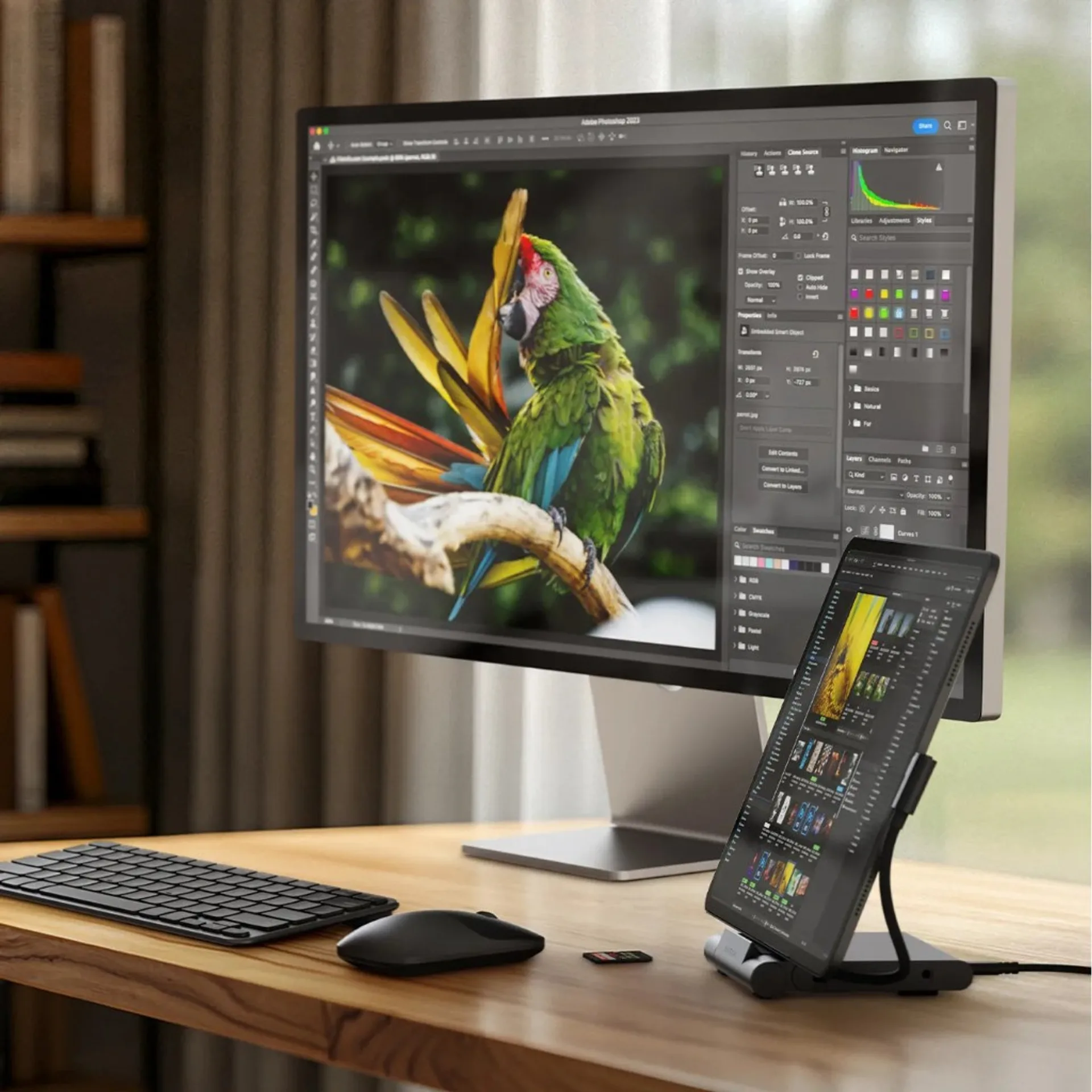
Most tablet desk setups fail in two places: viewing angle and ports. You fix one with a stand, then fix the other with a dongle, and your “portable setup” becomes three loose pieces. Satechi compresses that into one chassis: open it for a workable screen angle, plug one host cable, and you get expansion immediately.
For iPad and USB-C tablet users, that combination is the core pitch. For laptop users, it can still work, but Satechi itself notes several MacBook models are compatible but not the primary design target.
Port layout and real workflow value
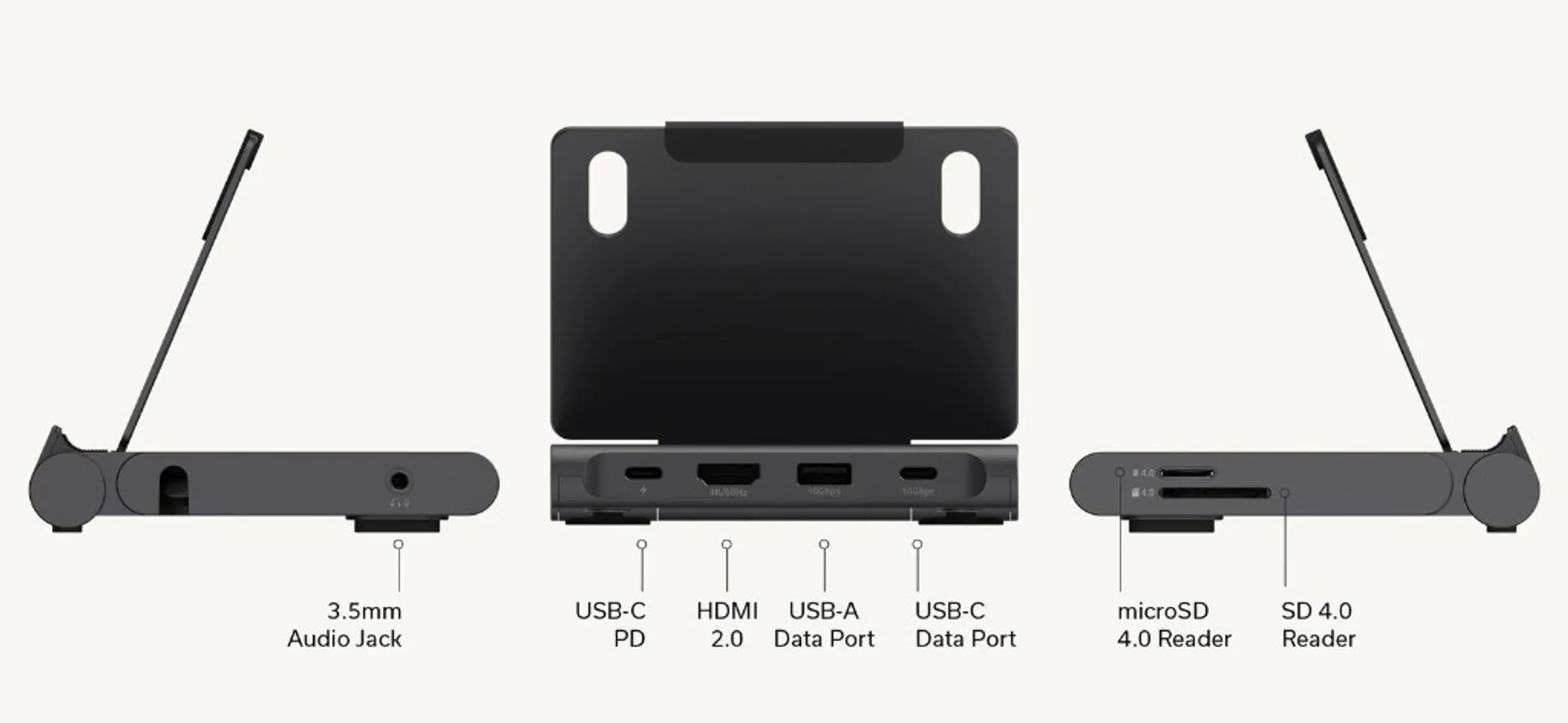
The official port map includes: USB-C PD, USB-C data, USB-A data, HDMI 2.0, SD 4.0, microSD 4.0, and 3.5 mm audio. That is the practical “creator travel” bundle: storage ingest, external display, wired audio, and one high-speed spare data lane.
On paper, the card readers are unusually strong for this size class (UHS-II up to 312 MB/s). In practice, sustained transfer speed will still depend on your card media quality and host implementation, but the ceiling is high enough for real camera ingest and not just occasional file copy.
Power and display caveats worth knowing
100W passthrough does not mean your host always receives 100W. Satechi’s own tech specs state up to 85W to host, which is normal after hub overhead. That is enough for tablets and many laptops under mixed workloads, but high-power laptop bursts can still drain slowly if your charger or cable is weak.
Same for video: HDMI is listed at up to 4K@60Hz, but your host must support the right USB-C display output mode. Satechi explicitly calls out that Windows devices should support Display Output and USB 3.2 Gen 2 (or higher) for full performance expectations.
Foldable design and carry practicality
The best part of this product is mechanical, not electrical: it folds flat and stays physically compact at about 4.3 x 4.3 in. That makes it credible for commuter kits where every accessory has to justify volume and weight.
At 187.5 g, it sits in “light enough to carry daily, heavy enough to feel stable” territory. If you use tablets on flights, coworking desks, or temporary edit stations, this form factor is more useful than most rigid metal hubs that still require a separate stand.
Compatibility: iPad-first, broader USB-C support
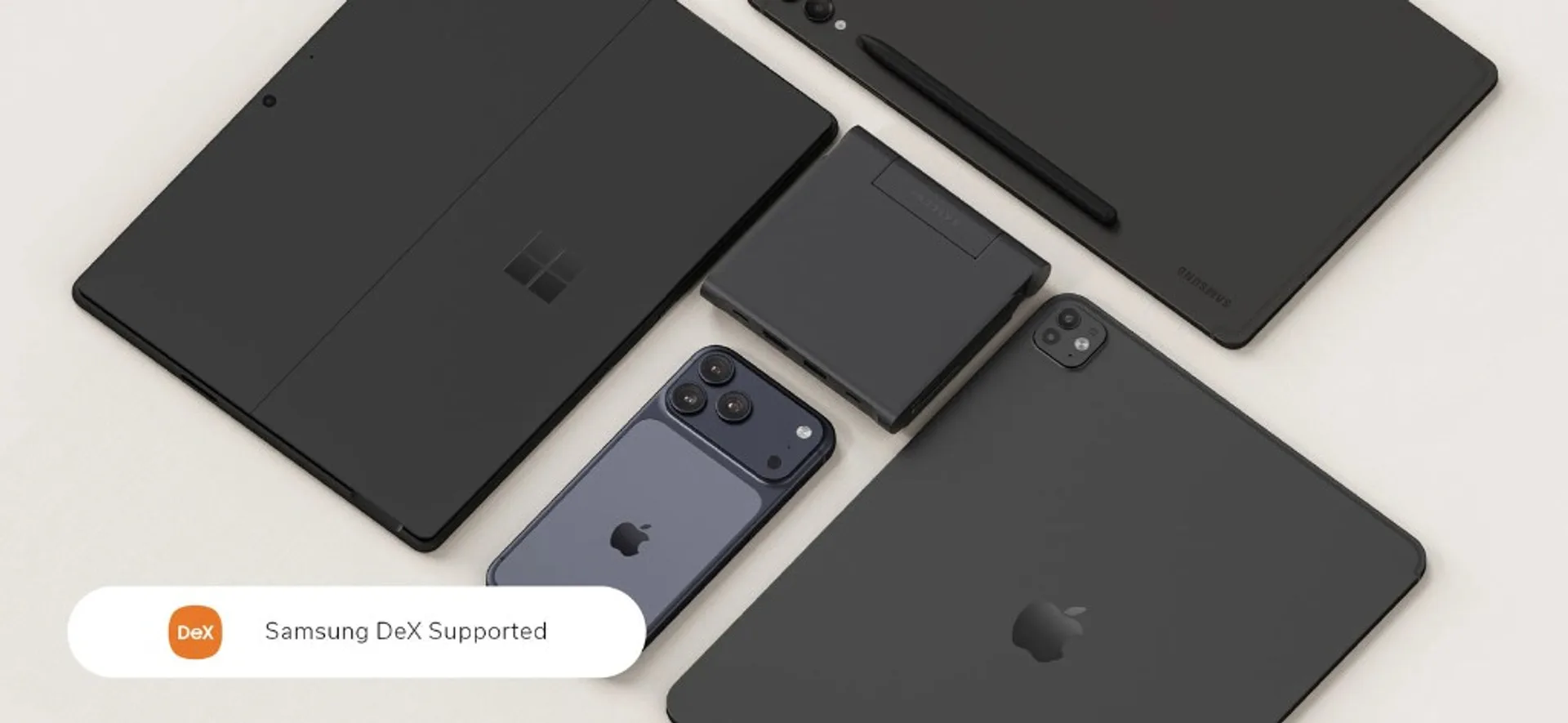
Satechi lists wide compatibility across iPad Pro/Air/mini, recent USB-C iPhones, and multiple Surface devices, while also noting laptop compatibility in a secondary role. This matters because “USB-C compatible” in marketing often hides reduced feature sets; here, the product page is fairly explicit about where full behavior is expected.
If your workflow depends on one specific behavior (for example, external display plus full-speed SSD plus charging), validate that exact combo on your device before committing.
Independent context from T3
T3’s coverage frames the product as an iPad-owner-friendly two-in-one: stand ergonomics plus practical I/O in one travel accessory. Their summary and body focus on exactly what most tablet users care about in real life: not synthetic benchmarks, but whether a single compact accessory can cover display-out, storage ingest, charging, and desk angle in one move.
That external take lines up with Satechi’s own official story. The key purchase question is less “is it powerful?” and more “does this remove enough friction from your daily setup to replace two separate accessories?” For many tablet-first users, the answer is likely yes.

Satechi OntheGo Foldable Stand Hub
Available at Amazon — verify seller, warranty region, and exact Space Black SKU before checkout.
View on AmazonFAQ
Does this hub support 4K at 60Hz?
Satechi lists HDMI output up to 4K@60Hz. Real output depends on host device display support and cable quality.
Can it charge the host while using ports?
Yes. It supports up to 100W USB-C PD input, with up to 85W passed to host per Satechi’s tech specs.
Is this made only for iPad?
It is positioned as tablet-first and broadly compatible with USB-C devices. Satechi notes some MacBooks are compatible but not the primary design target.
How fast are the SD and microSD slots?
Satechi specifies UHS-II support up to 312 MB/s for both SD and microSD readers.
Sources
- Satechi official product page: OntheGo Foldable Stand Hub
- Editorial context: T3 — Satechi’s OnTheGo Foldable Stand Hub
- Affiliate listing: Amazon link