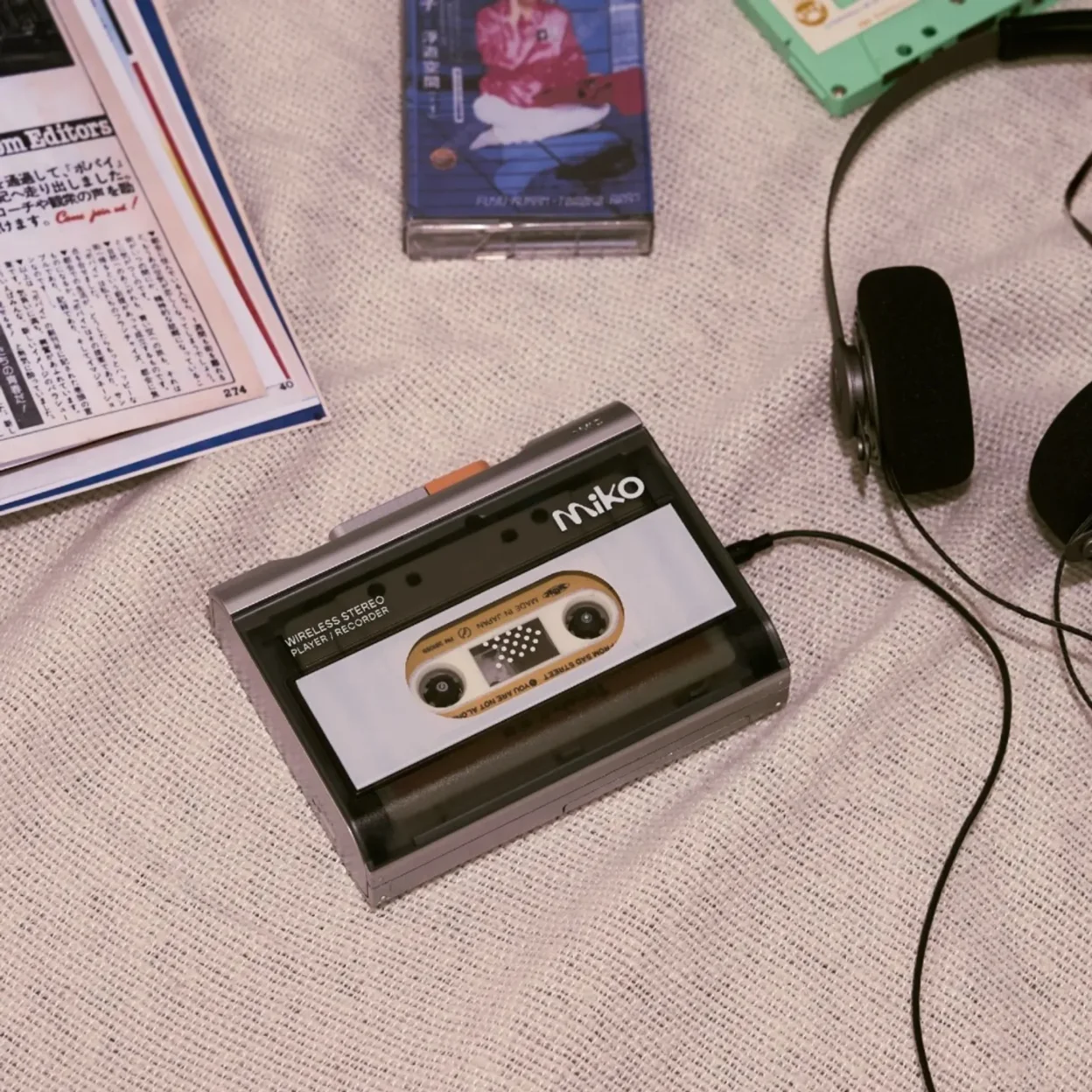
Gadhouse – the Bangkok-rooted brand better known for retro-modern turntables and speakers is shipping its first dedicated cassette player, the Miko. The pitch is familiar from the rest of the catalogue: analog format, loud design, and wireless convenience layered on top. Bluetooth 5.3 sends tape playback to headphones or speakers; USB-C (or, per Gadhouse’s landing copy, connection from an iPhone) can keep it running at home while two AA cells cover true portability. There is also one-touch recording, a built-in microphone, and a 3.5 mm jack for wired listening or line-level capture onto tape. I have not auditioned a review unit yet — this is a straight intro from Gadhouse’s Miko page and the official product listing.
Design & controls
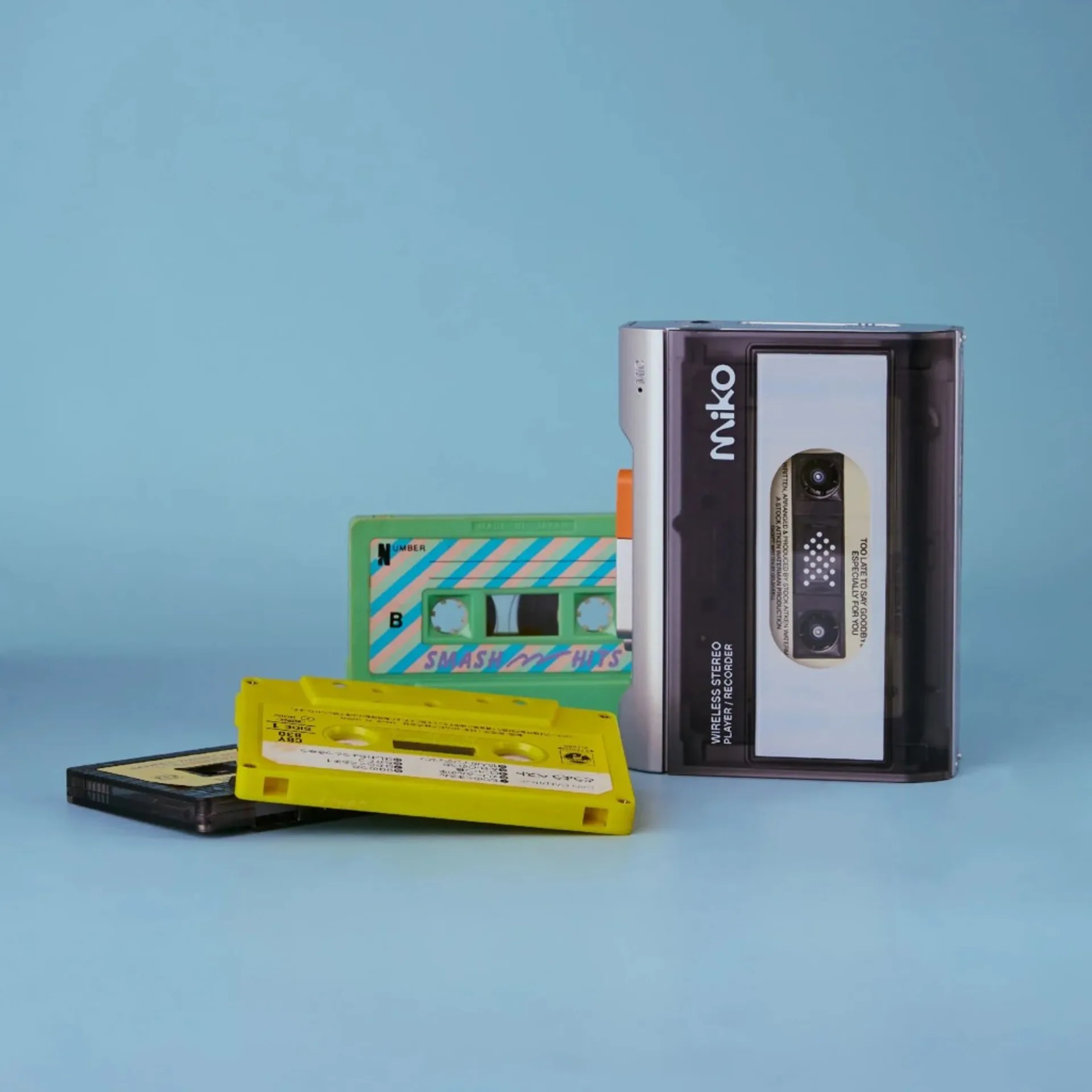
Gadhouse frames Miko around late-80s / early-90s Japanese portable audio- not a beige boombox replica, but the same compact, tactile attitude. Marketing photography shows a clear body so the mechanism stays visible; color comes from Smoke or Mint trim.
Operation is deliberately simple: a five-button layout for everyday transport commands. That matters on a bus or in bed — you should not need an app to hit stop or record.
Bluetooth, analog & recording
Bluetooth 5.3 is the modern layer: pair to wireless headphones or speakers when you do not want a cable snaking out of your pocket. Gadhouse still gives you a 3.5 mm stereo port for wired listening and for feeding external audio onto tape — think radio, mixer, or phone line-out with the right cable.
The deck also advertises one-touch recording plus a built-in microphone for voice notes, field grabs, or the full lo-fi ritual of speaking into a running tape. Expect hiss, wow, and mechanical noise exactly where any cassette loyalist wants them — this is not a stealth studio recorder.
If you live mostly in LP land but share shelf space with tapes, how vinyl playback works is still the best primer on why physical formats behave differently from streaming — cassettes just add magnetic soup and pad wear to the story.
Power: AA vs USB-C
Gadhouse lists two AA batteries for on-the-go use — including the classic Walkman-era quirk where dying cells drag speed and pitch. At home, USB-C keeps the party going without hunting AAs; the site also mentions powering from an iPhone in passing- treat that as verify-with-your-cable-and-iOS version before you rely on it in the field.

Published size & weight
Structured data on Gadhouse’s product page quotes roughly 158 × 160 × 48 mm (W × D × H) and about 195 g — pocketable in a jacket, not invisible in denim.
Price, colors & bundles
The global listing shows USD 99 for the player and stocks both finishes. Gadhouse also promotes partner retail (including Amazon in select regions) on its wider site — if your country skips direct checkout, check the brand’s store locator or Amazon profile for the same SKU.
The Wesley wired headphone bundle is pitched on Gadhouse’s Miko storytelling pages; bundle price moves with promos, so use the configurator on gadhouse.com rather than trusting a screenshot.
FAQ
Is Gadhouse Miko an audiophile deck?
It is a lifestyle portable with Bluetooth and recording tricks, not a Nakamichi-grade transport. Buy it for format fun and design, not lab-grade specs.
Can I use Bluetooth and the 3.5 mm output at the same time?
Gadhouse does not spell out simultaneous routing in the snippet we mirrored — assume one active output path until the manual confirms otherwise.
Does it play Metal tapes or need dolby?
Treat compatibility as standard portable deck unless the manual lists Type IV or Dolby B/C explicitly. When in doubt, read the box leaflet or Gadhouse support.
Where do I buy it?
Start at Gadhouse’s official product page; regional Amazon listings may follow under the same brand account.