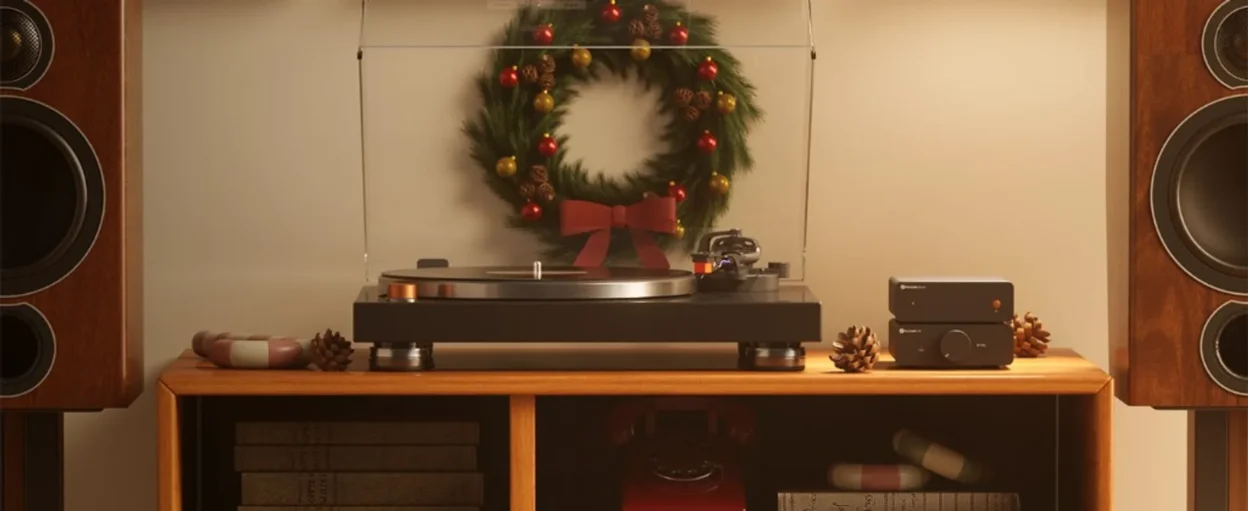
Fosi Audio’s BOX line stacks four phono preamplifiers at different prices, all built around the same practical idea: lift a turntable’s MM (or, on one model, MM + MC) output to a stable line level your powered speakers, integrated amp, or receiver can work with. They are not the same circuit in four boxes. BOX X1 is the minimalist MM-only step-up with headphone tap. BOX X2 adds vacuum tubes and switchable gain. BOX X4 keeps tubes but folds in bass and treble trims plus a stronger headphone stage story. BOX X5 drops tubes entirely for a solid-state, MM/MC design with four gain steps and the cleanest THD figure in the group. Everything below follows Fosi’s published spec tables and feature lists so you can shop without guessing.
What these boxes do (and do not do)
A phono preamp applies RIAA equalisation and enough gain to turn the tiny signal from a cartridge into something that reads like a normal line-level source. All four models here include a grounding post for turntable earth. None of them is a full USB ADC or a Bluetooth transmitter by default — if you need streaming or digitising, that lives elsewhere in the chain.
BOX X5 is the only unit in this set that officially supports moving-coil cartridges on the hardware switch; the others are MM-oriented. If you are unsure what is on your tonearm, start with the manufacturer’s cartridge sheet before you order gain.
Specification comparison
List USD prices are from Fosi’s shop listings at draft time — confirm at checkout (Fosi or Amazon).
| Model | List (typical) | Cartridge | Topology | Inputs | Outputs | Gain / extras | SNR / THD (as listed) | PSU |
|---|---|---|---|---|---|---|---|---|
| BOX X1 | $39.99 | MM | Solid state, metal case | MM RCA + ground | RCA line + 3.5 mm headphone | Fixed curve; power switch; simultaneous RCA + headphone noted on product page | 70 dB SNR · THD ≤ 0.08 % @ 1 kHz / 3 mV | 12 V 1.5 A |
| BOX X2 | $69.99 | MM | Tube stage (user-swappable small tubes) | MM RCA + 3.5 mm AUX + ground | RCA line (to powered speakers / amp) | 39 / 42 / 45 dB gain switch | ≥ 98 dB SNR · THD ≤ 0.1 % | 12 V 1.5 A |
| BOX X4 | $89.99 | MM | Tube stage + tone controls | MM RCA + 3.5 mm AUX + ground | RCA line + 3.5 mm headphone | Bass / treble; volume; headphone spec lists 16 Ω type | ≥ 70 dB SNR · THD ≤ 0.1 % | 12 V 1.5 A |
| BOX X5 | $104.99 (sale; reg. $109.99) | MM + MC | Solid state; OPA1612; swappable DIP8 op-amp socket | MM/MC RCA + ground | RCA line only | 38 / 48 / 56 / 66 dB gain; MM/MC toggle | ≥ 92 dB SNR · THD ≤ 0.009 % | 16 V 1 A (supplied adapter) |
Fosi BOX X1
BOX X1 is the line’s footprint and budget anchor: about 161 g in an aluminium shell roughly 3.94 × 0.98 × 2.17 in. Fosi rates maximum line output at 2 V peak-to-peak into 10 kΩ enough philosophy for most powered monitors if you manage level at the speaker. The headline trick is dual output: run RCA to powered speakers while someone listens on 3.5 mm, which Fosi says can operate at the same time. That is handy on a desk; it also means you should still treat downstream gain as your responsibility so nothing gets surprised by hot levels.
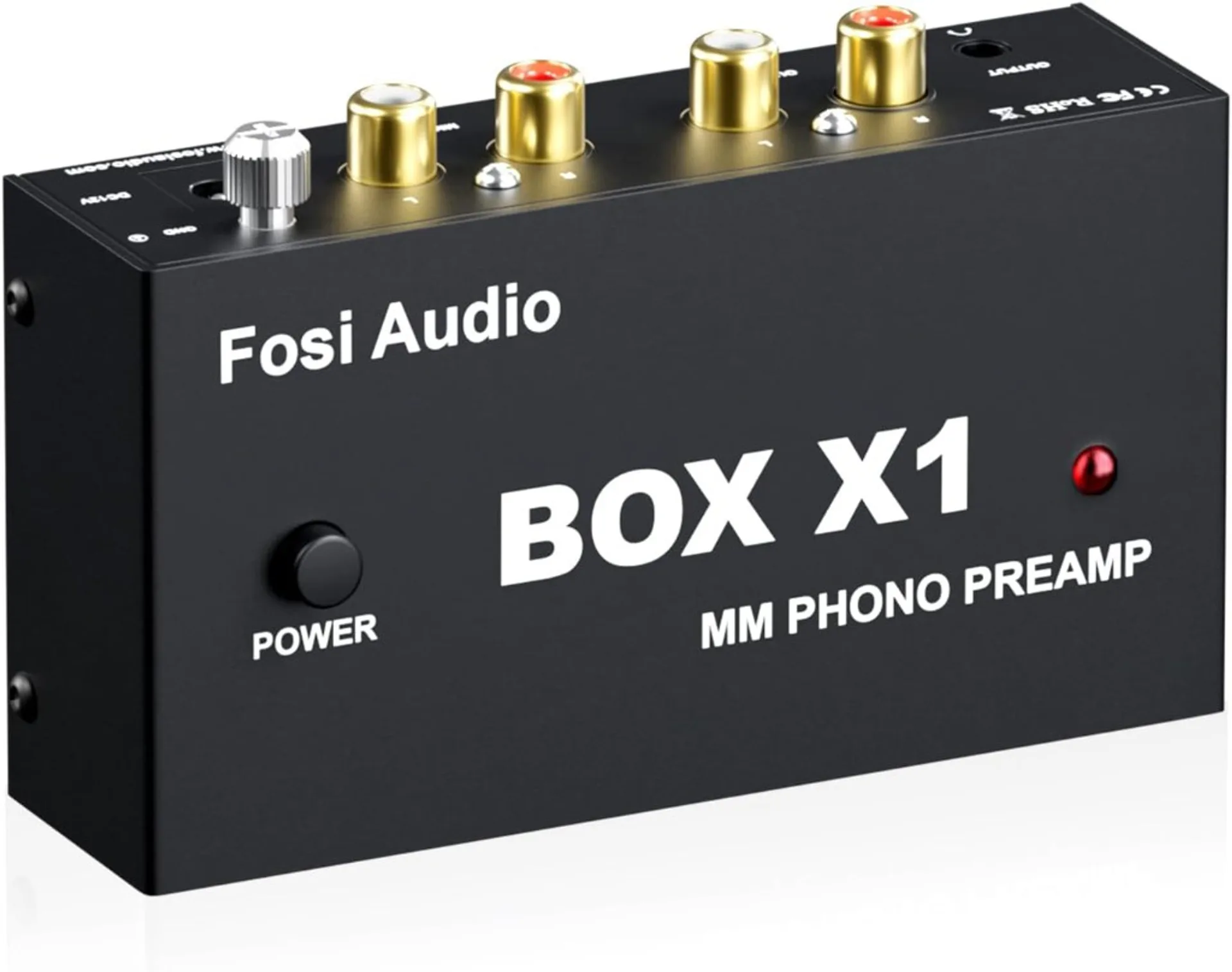
In the box: preamp, 12 V 1.5 A adapter, manual. No tubes to roll, no tone controls the sound is whatever your MM cartridge and partnering gear bring.
Fosi BOX X2
BOX X2 is the first step into Fosi’s tube-shaped house sound: two small bottles (compatible types listed on Fosi’s page include 6K4, 6J1, GE5654, 6AK5, and similar) ahead of the phono gain block. You get a three-position gain switch at 39, 42, or 45 dB to match output from common MM carts, plus a 3.5 mm AUX input so the box can double as a simple line preamp path when you are not spinning vinyl.
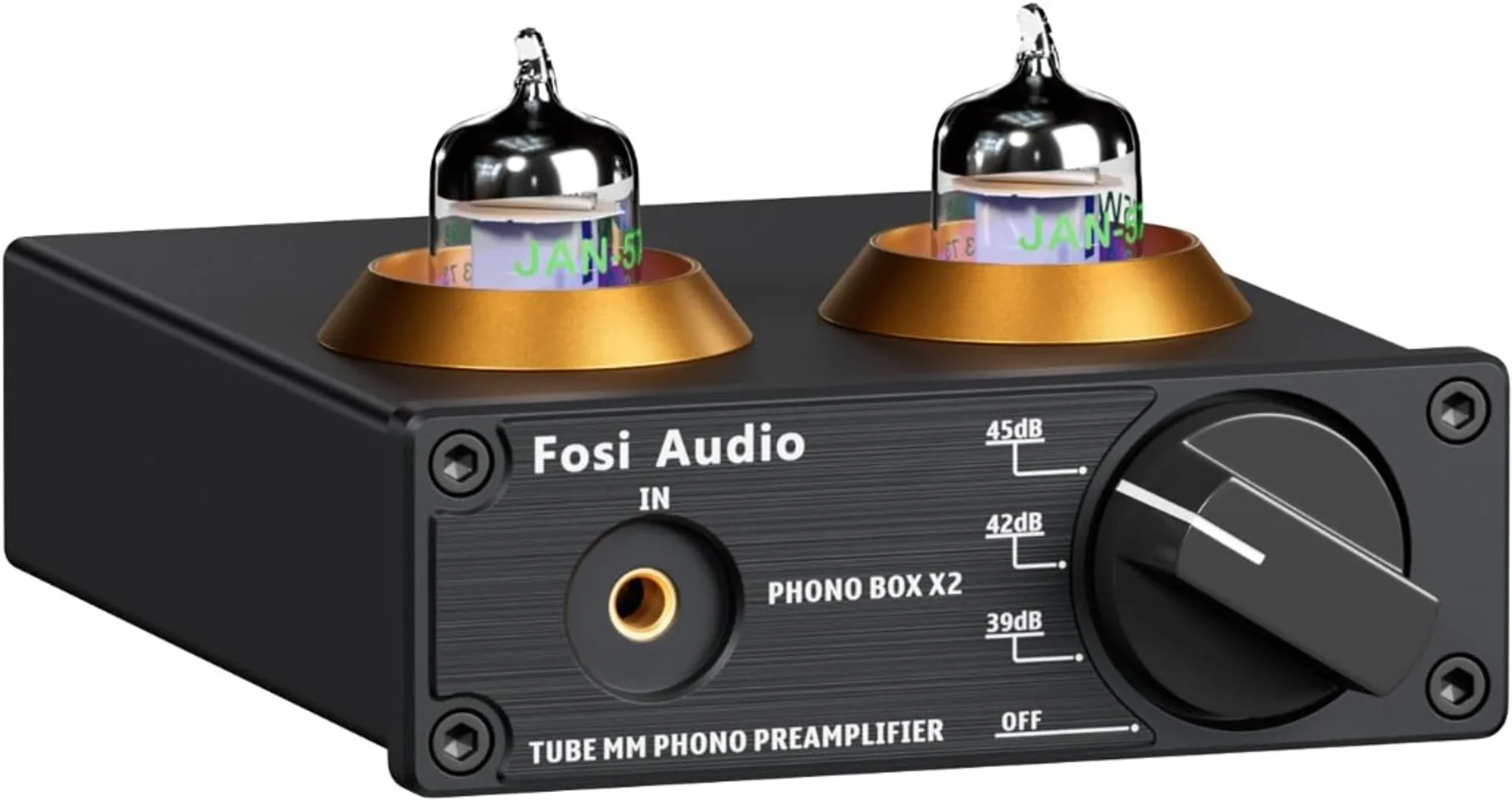
Outputs are RCA line only toward powered speakers or an amplifier — no headphone jack here. Fosi bundles an RCA cable alongside the adapter and tubes. SNR is quoted higher than X1 or X4 on the product card; take that as a lab-style figure, not a promise about your ground loop environment.
Fosi BOX X4
BOX X4 is what you buy when you want tubes and tone shaping: Fosi ships it with JAN 5654W valves in the photos and allows rolling within the same family of small-signal types. Inputs cover MM plus 3.5 mm AUX; outputs are RCA plus a 3.5 mm headphone output with a volume control up front alongside bass and treble knobs. That makes X4 the most “hi-fi receiver minus the receiver” personality in this comparison useful if your room or desk needs a little EQ after the RIAA curve.
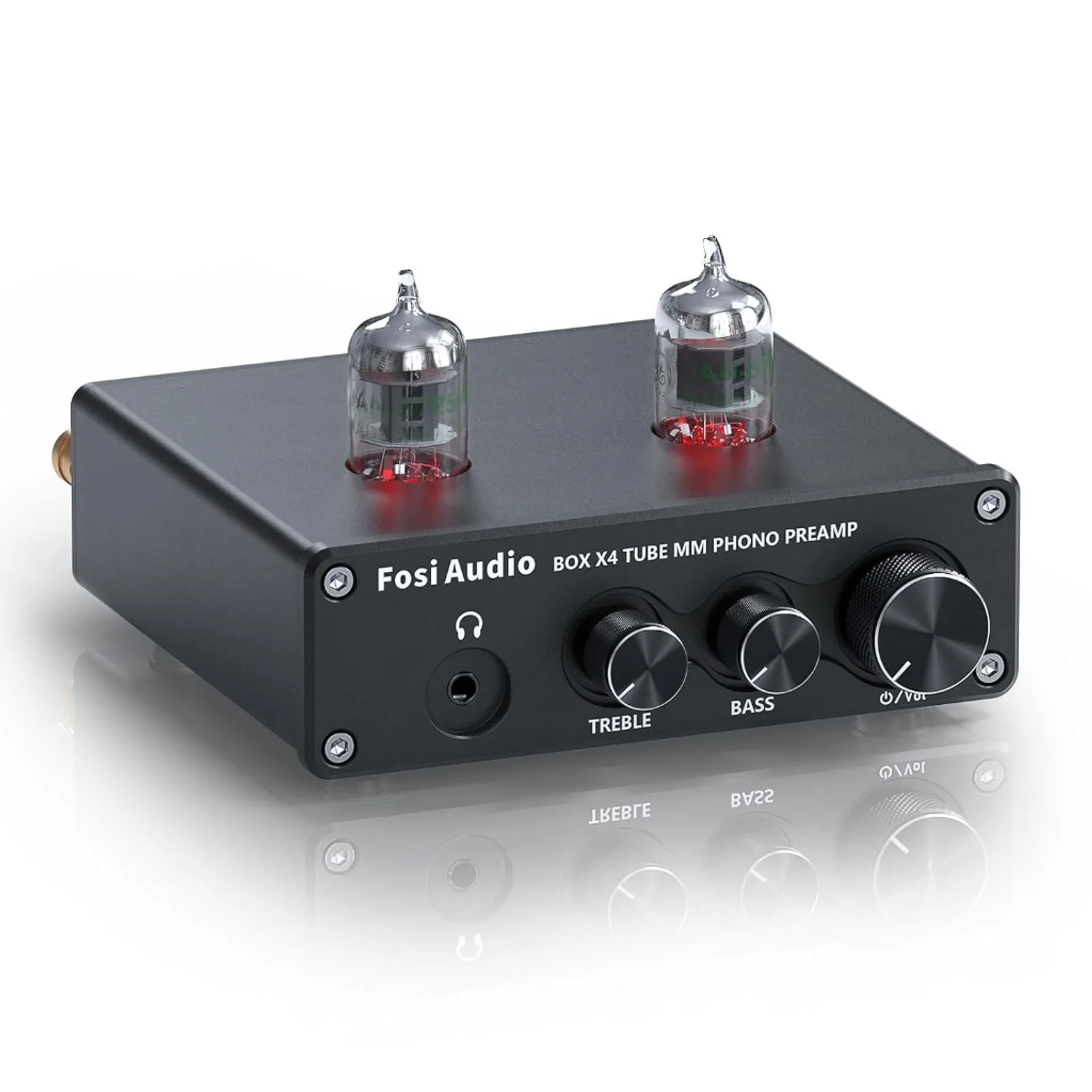
Electrical headline from the spec block: 650 mV output level reference at 1 kHz on Fosi’s table, 12 V 1.5 A supply, same ≤ 0.1 % THD class as X2 but with the flexibility of separate bass/treble trims.
Fosi BOX X5
BOX X5 is the serious-student option in this four-pack: no tubes, instead OPA1612 and boutique passive parts Fosi likes to name in marketing (polyester film caps, 0.1 % film resistors, gold-plated RCAs). The chassis is aluminium, slightly deeper than X1–X4 at roughly 4.1 × 6.5 × 1.4 in. A hardware switch selects MM or MC, and a four-step gain control runs 38 / 48 / 56 / 66 dB so you can line up output with both high- and low-output carts.
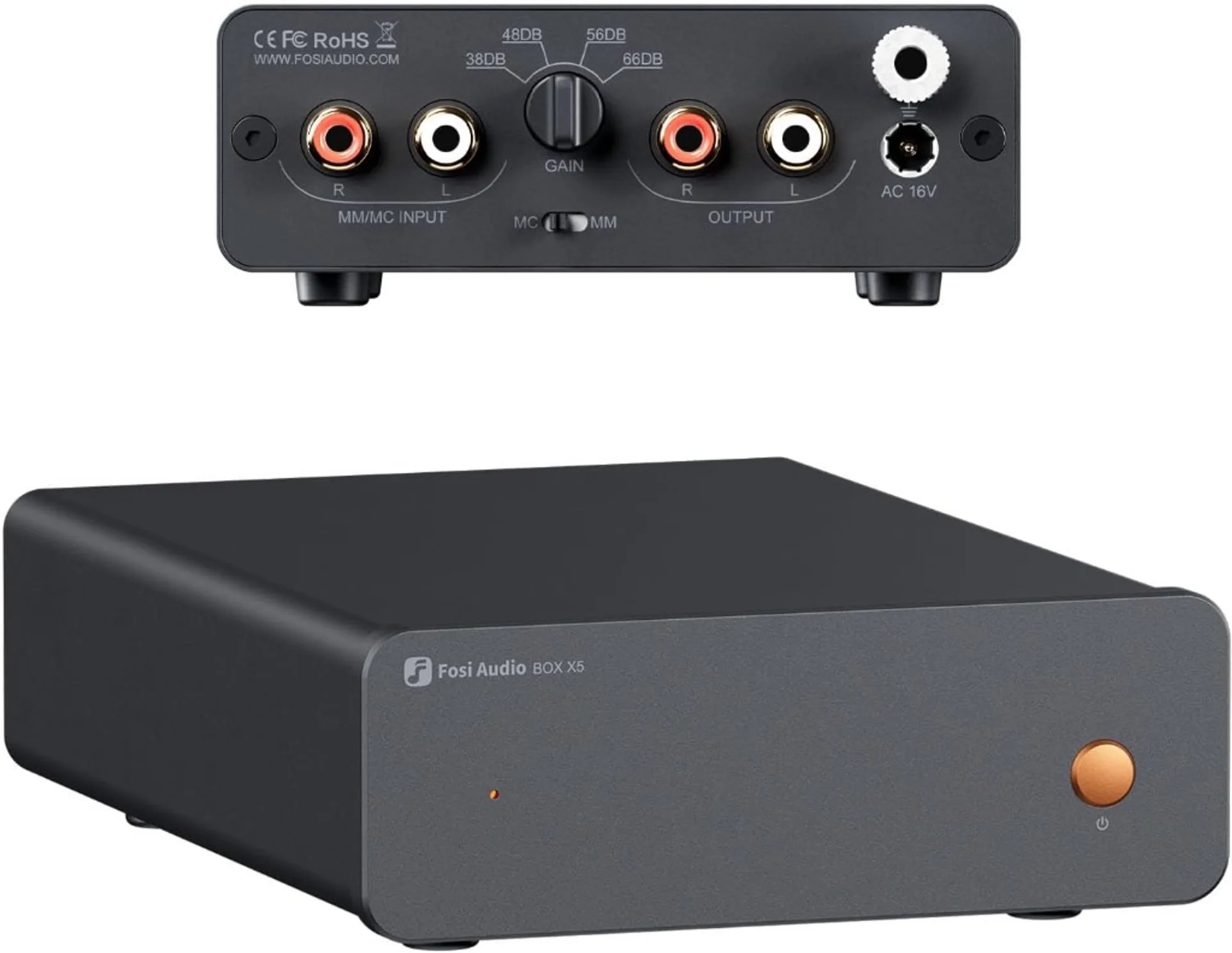
Fosi explicitly warns in their FAQ that X5 is not a general line preamp — gain is too high for arbitrary line sources. There is no headphone output. A DIP8 socket invites op-amp rolling for owners who treat that as part of the hobby. Power is a 16 V / 1 A wall supply, not the 12 V brick the other three share.
For turn-on discipline with sensitive gear, Fosi’s own X5 FAQ recommends powering turntable first, then X5, then the power amplifier, and reversing that order on shutdown to reduce thumps.
Which one should you buy?
- Choose BOX X1 when you only need a quiet MM stage with headphone monitoring or a second-room vinyl corner and you want the smallest cash outlay.
- Choose BOX X2 when tube rolling and gain flexibility matter more than tone knobs, and you are fine with RCA-only output to powered speakers or an amp.
- Choose BOX X4 when you want the same tube fun as X2 but with bass/treble correction and a headphone tap for late-night listening without firing the main monitors.
- Choose BOX X5 when you have or plan MC, need cleaner on-paper distortion, or want a solid-state stage you can tweak later via op-amp swaps and you do not need integrated headphone drive from the same box.
FAQ
Which Fosi phono preamp is best for a moving-magnet only turntable?
Any of the four works for MM. Pick X1 for simplicity and headphones, X2 or X4 for tube tone shaping, X5 if you want the highest listed SNR/THD figures and might upgrade carts later.
Which model supports moving-coil cartridges?
Only BOX X5 lists MM and MC with a dedicated switch and gain steps up to 66 dB.
Can I use BOX X5 as a normal line preamp for my DAC?
Fosi says no: phono gain is too high for typical line sources. Use X5 on the turntable path only.
Do BOX X2 and X4 sound the same because they both use tubes?
They share a family idea but differ in features: X4 adds bass/treble, headphone output, and a different front-panel layout. Tube types and circuit details also diverge; treat them as different products.
Why does BOX X2 list higher SNR than BOX X4?
Manufacturers often quote different measurement conditions per SKU. Use SNR as a loose ranking unless both sheets publish identical test notes.
Note: Amazon links are provided for convenience; prices and bundled accessories can differ from Fosi’s direct store. Always confirm MM vs MC, gain, and warranty on the listing you actually buy.