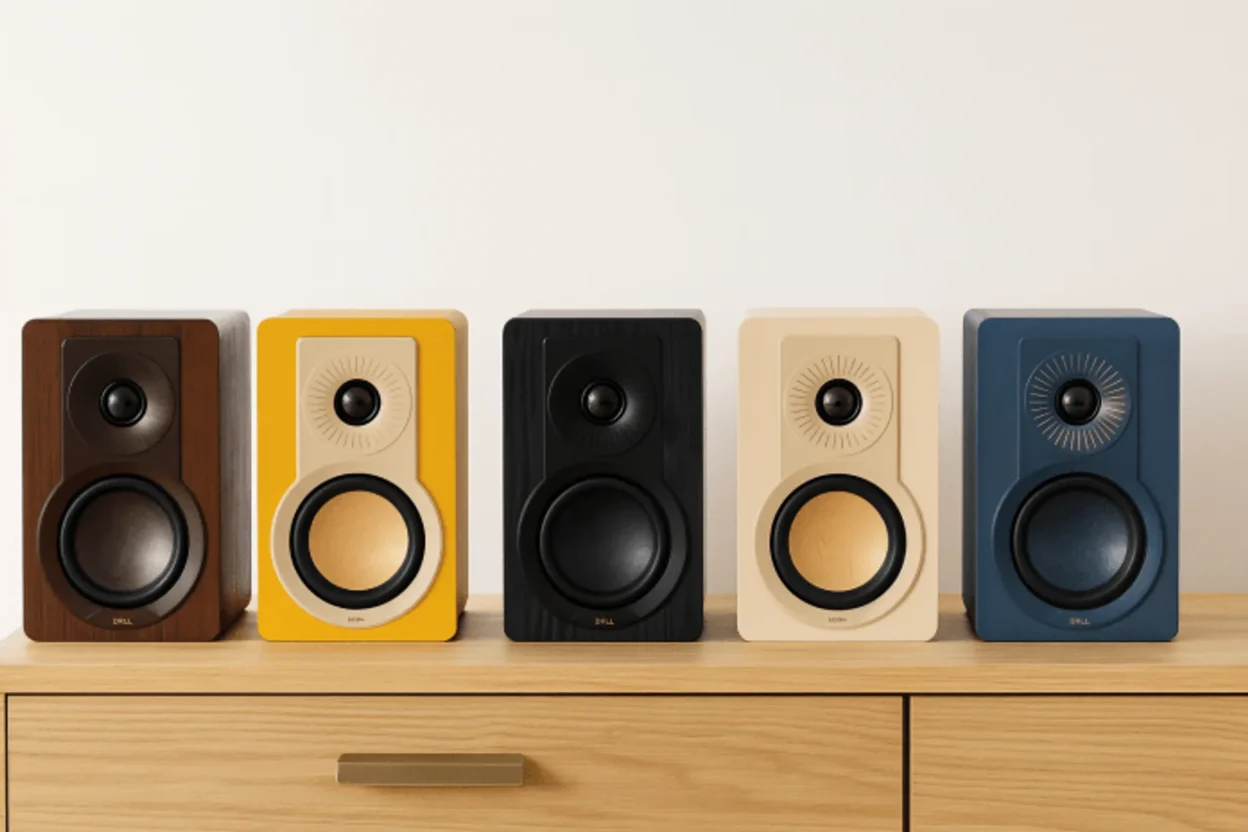
DALI KUPID is a compact two-way passive bookshelf loudspeaker aimed at desks, shelves, and tight living rooms where full-size floorstanders are not an option. DALI’s product page positions KUPID as a colourful, easy-to-place design that still leans on the Danish brand’s usual talking points: wide dispersion, low-loss mid/bass motor, and a soft-dome treble section voiced for long listening sessions rather than showroom sparkle alone. The enclosure is bass reflex with a dual-flare port treatment (DALI’s wording) behind the cabinet, and the box ships with wall-mount hardware for buyers who want the pair off the furniture entirely.
Drivers, crossover, and port
DALI publishes a straightforward driver complement for KUPID: a single 4½-inch low-loss bass/midrange unit using a paper and wood-fibre cone, plus a 26 mm soft-dome tweeter with a woven-fabric diaphragm. The crossover point is listed at 2,100 Hz in a conventional two-way electrical layout, and the acoustic package is described as using custom-designed crossover networks to keep hand-off between drivers even.
Low-frequency extension is handled by a rear-firing bass-reflex system. DALI’s marketing copy stresses a dual-flare port geometry aimed at reducing turbulence compared with a simple tube — a sensible detail for a small box that will often live close to a wall, where boundary gain and port airflow matter more than they do on a wide-open stand in the middle of a room.
On the numbers DALI prints today, expect 63 Hz to 25,000 Hz within ±3 dB, 83 dB sensitivity at the standard 2.83 V / 1 m stimulus, 4 Ω nominal impedance, a 40–120 W amplifier recommendation, and 103 dB peak SPL capability- enough headroom for small-room listening if the amplifier is comfortable with a moderately demanding load.
Cabinet, finishes, and dimensions
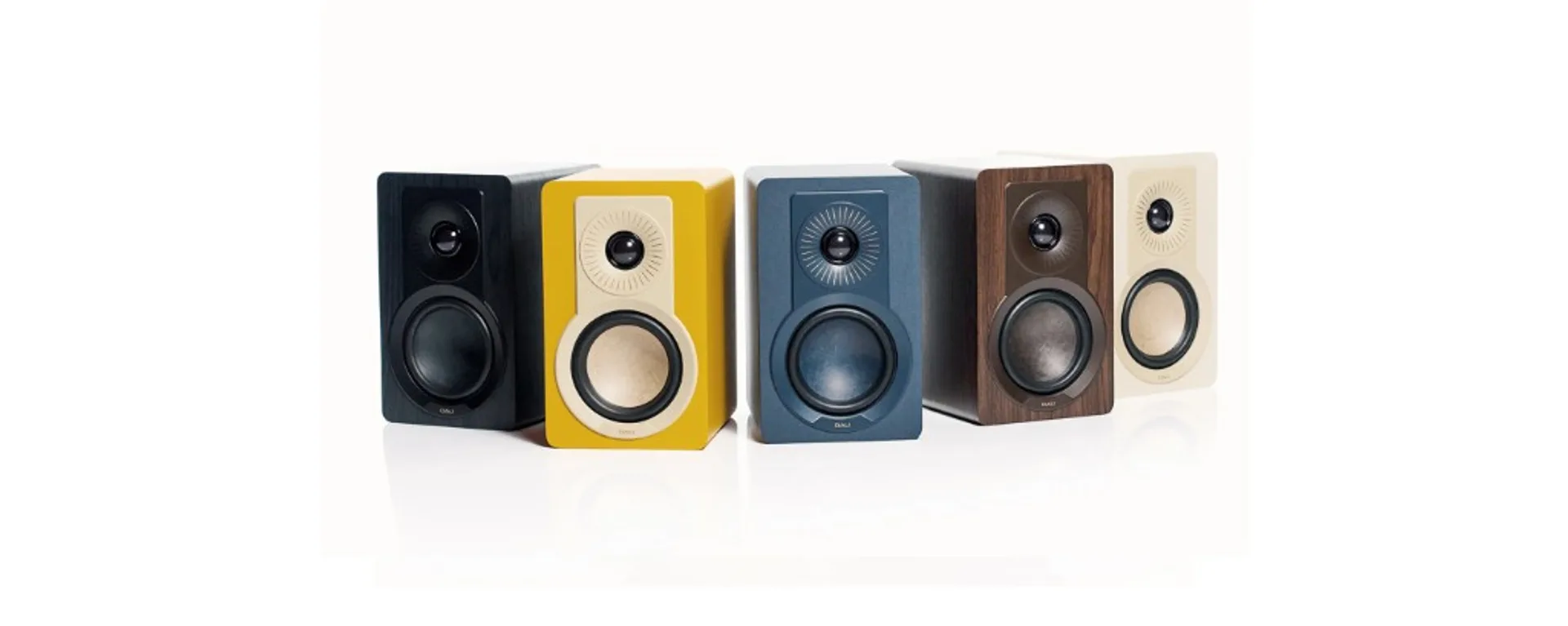
KUPID is deliberately styled as a lifestyle-friendly object: rounded edges, compact footprint, and a finish palette that reads louder than classic Scandinavian blonde-ash defaults. DALI’s own finish list for the model includes Black Ash, Dark Walnut, Caramel White, Golden Yellow, and Chilly Blue on the specification sheet mirrored across major markets; vinyl wraps are called out explicitly for some colours.
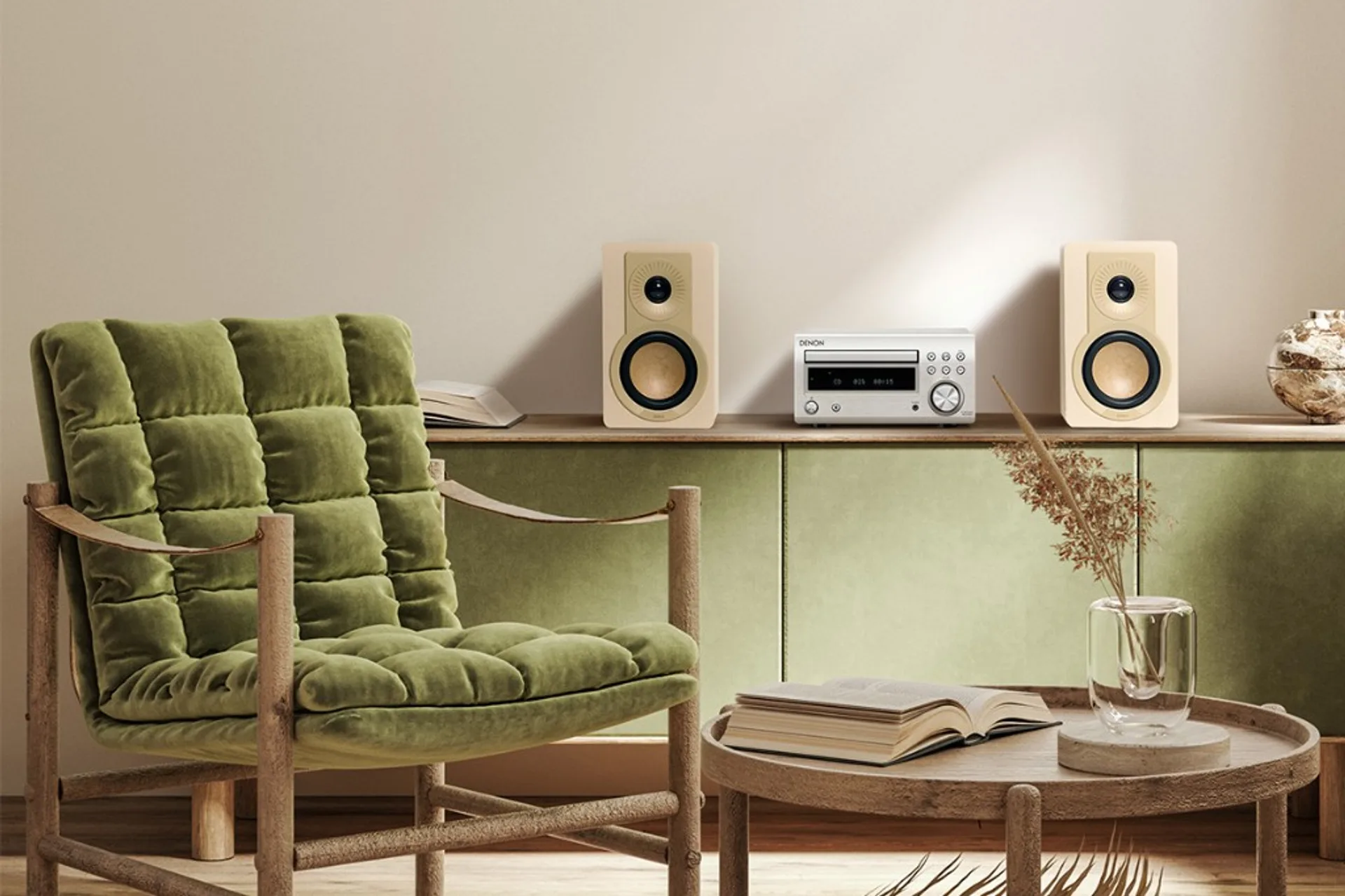
Published cabinet dimensions on DALI’s specification summary are approximately 245 × 150 × 198 mm (H × W × D), with each speaker weighing about 2.9 kg including the grille — light enough to wall-mount with the supplied brackets but still large enough to need proper mechanical anchors into stud or solid masonry rather than plaster alone.
Connectivity is single-wire only (no bi-wire links) via one pair of binding posts on the rear, which matches the product’s entry-premium positioning and keeps cable dressing simple when the speakers hug a wall.
Placement and amplifier pairing
With 83 dB sensitivity and a 4 Ω label, KUPID is not the laziest load on the market. DALI’s 40–120 W guidance implies a reasonably stout integrated amplifier or receiver with a solid 4 Ω current delivery will behave more predictably than an ultra-compact chip amp at party levels. For vinyl-first rigs, pairing with a sensible phono stage and a compact integrated is the obvious path; if you are still building a front-end, our tonearm geometry primer stays relevant long after the speaker boxes are unboxed.
Because the port fires rearward, toe-in, distance from the front wall, and shelf depth all change bass shape quickly. Plan on a few evenings of small adjustments rather than locking the cabinets flush against drywall on day one and blaming the crossover.
Where KUPID fits in the line
DALI frames KUPID as a way to carry house voicing into spaces where larger RUBIKORE, EPICON, or MENUET-class cabinets would dominate visually. The official page draws a straight line to decades of DALI Sound Design Principles and even highlights third-party praise badges in the footer carousel — useful social proof if you are cross-shopping against other European compact two-ways.
Buyers stepping up from soundbars or plastic PC speakers should still plan for stands or dense shelves; compliance charts never replace mechanical isolation from desk buzz. If you want the underlying architecture decision spelled out first, read Active vs passive speakers: which is right for you. If you want a wider tour of how Danish brands split active versus passive ranges before you commit, our Dynaudio home-audio line explainer offers a parallel map, even though the products do not compete one-for-one on price.
FAQ
What is DALI KUPID?
KUPID is DALI’s compact two-way passive bookshelf loudspeaker with a 4½-inch mid/bass driver, 26 mm soft-dome tweeter, and rear dual-flare bass-reflex loading, sold in pairs with grilles and wall-mount brackets.
What amplifier power does DALI recommend?
DALI lists 40–120 W recommended amplifier power. With 4 Ω impedance and 83 dB sensitivity, choose an amp that is stable into four-ohm loads if you listen loud.
Can I wall-mount DALI KUPID?
Yes. DALI includes wall brackets and mounting screws in the carton; follow the manual for weight limits, stud spacing, and cable relief so the binding posts are not stressed.
Which finishes are available?
DALI’s published finish list includes Black Ash, Dark Walnut, Caramel White, Golden Yellow, and Chilly Blue, with several colours specified as vinyl wraps. Availability can differ by region, so confirm with your dealer before ordering a specific colour.
How big is each KUPID speaker?
DALI’s specification summary quotes roughly 245 × 150 × 198 mm (H×W×D) and about 2.9 kg per speaker including the grille. If DALI revises the PDF, defer to the latest download on your regional DALI site.
Note: Retail pricing moves with currency and promotion cycles. Anchor any purchase decision to an authorised DALI dealer invoice and the warranty region printed on that paperwork, not to forum screenshots.