Marshall Acton IV and Stanmore IV are the brand’s new fourth-generation home Bluetooth speakers — same Gen IV toolkit, two room sizes. Both get a redesigned bass port, waveguided tweeters, Bluetooth 5.3 with Auracast, codecs including LDAC and LC3, AUX + RCA for vinyl and legacy kit, and a path into Heddon multi-speaker setups. On the U.S. store, Acton IV lists at $329.99; Stanmore IV at $429.99. Pick by room size, not by feature FOMO.
What Gen 4 changes in Marshall home speakers
Marshall’s plugged-in home line still ladders by size: Acton for desks and smaller rooms, Stanmore for living rooms, Woburn when you want the big statement box. Gen IV is not a redesign for redesign’s sake — Marshall is aligning both Acton and Stanmore around the same modern stack: better dispersion claims, wall-friendlier bass tuning, current Bluetooth codecs, analogue inputs that include RCA, and multi-speaker sync via Auracast with the Heddon hub.
If you already own Acton III or Stanmore III and the room sounds fine, there is no forced upgrade. Gen IV is for buyers who want vinyl-friendly RCA, LDAC/LC3 on Bluetooth, and a cleaner path into whole-home Marshall setups without leaving the amp-on-a-shelf identity.
Acton IV vs Stanmore IV
Feature parity is high. The useful differences are cabinet size, woofer diameter, quoted SPL, and price. Amp wattage on paper is identical: 60 W Class D for the woofer and 2×25 W for the tweeters on both models.
| Feature | Acton IV | Stanmore IV |
|---|---|---|
| Best for | Desk, bedroom, small room | Living room / open plan |
| Woofer | 4 in | 5 in |
| Tweeters | 2 × 0.75 in with waveguides | 2 × 0.75 in with waveguides |
| Amplifiers | 60 W + 2 × 25 W Class D | 60 W + 2 × 25 W Class D |
| Max SPL | 95 dB @ 1 m | 97 dB @ 1 m |
| Frequency range | 37–38,000 Hz | 36–38,000 Hz |
| Dimensions (W × H × D) | 171 × 150 × 260 mm | 350 × 203 × 185 mm |
| Weight | 2.65 kg | 3.99 kg |
| Bluetooth / codecs | 5.3 Auracast; SBC, AAC, LDAC, LC3 | 5.3 Auracast; SBC, AAC, LDAC, LC3 |
| Wired inputs | AUX + RCA | AUX + RCA |
| U.S. list (check live) | $329.99 | $429.99 |
Acton IV: the compact home box
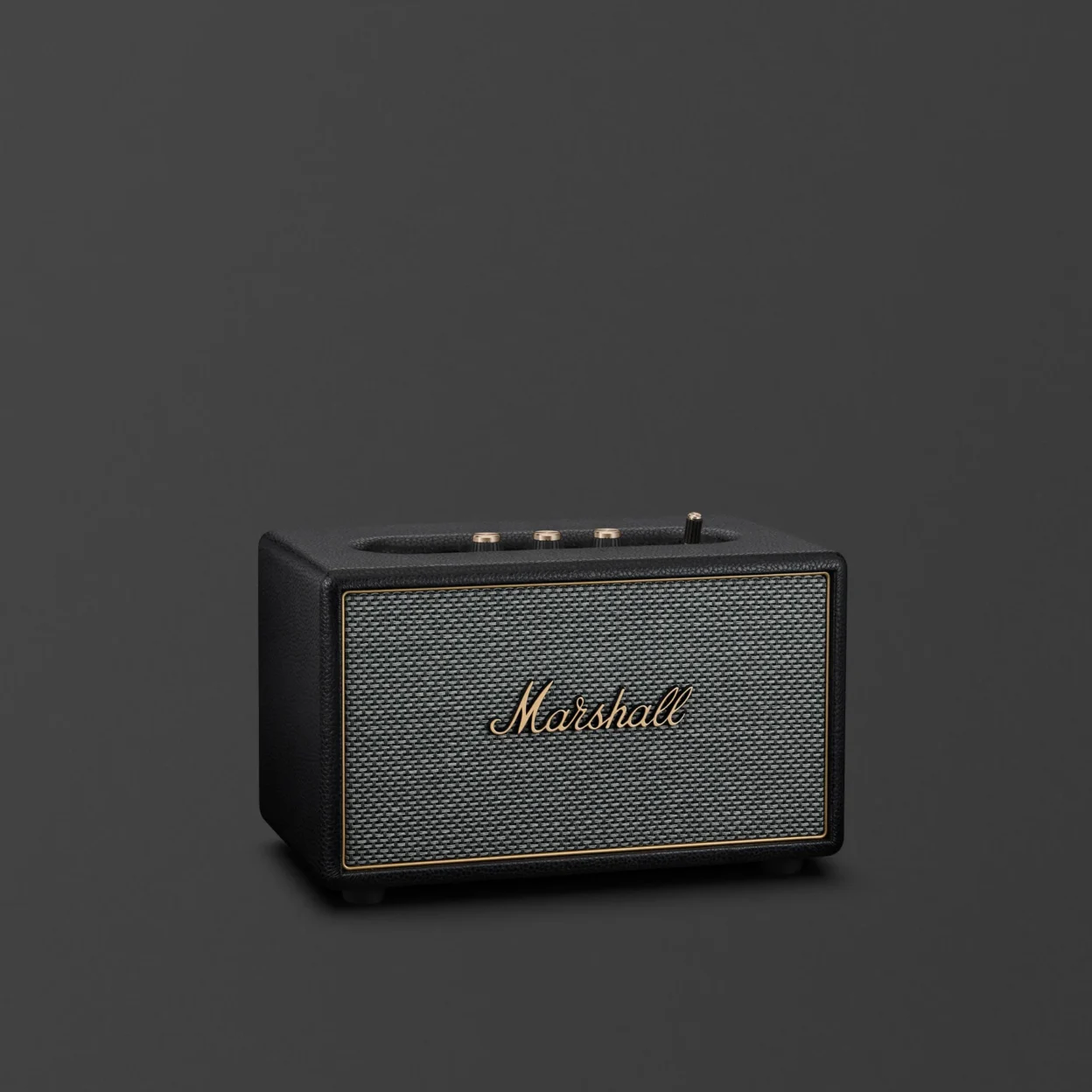
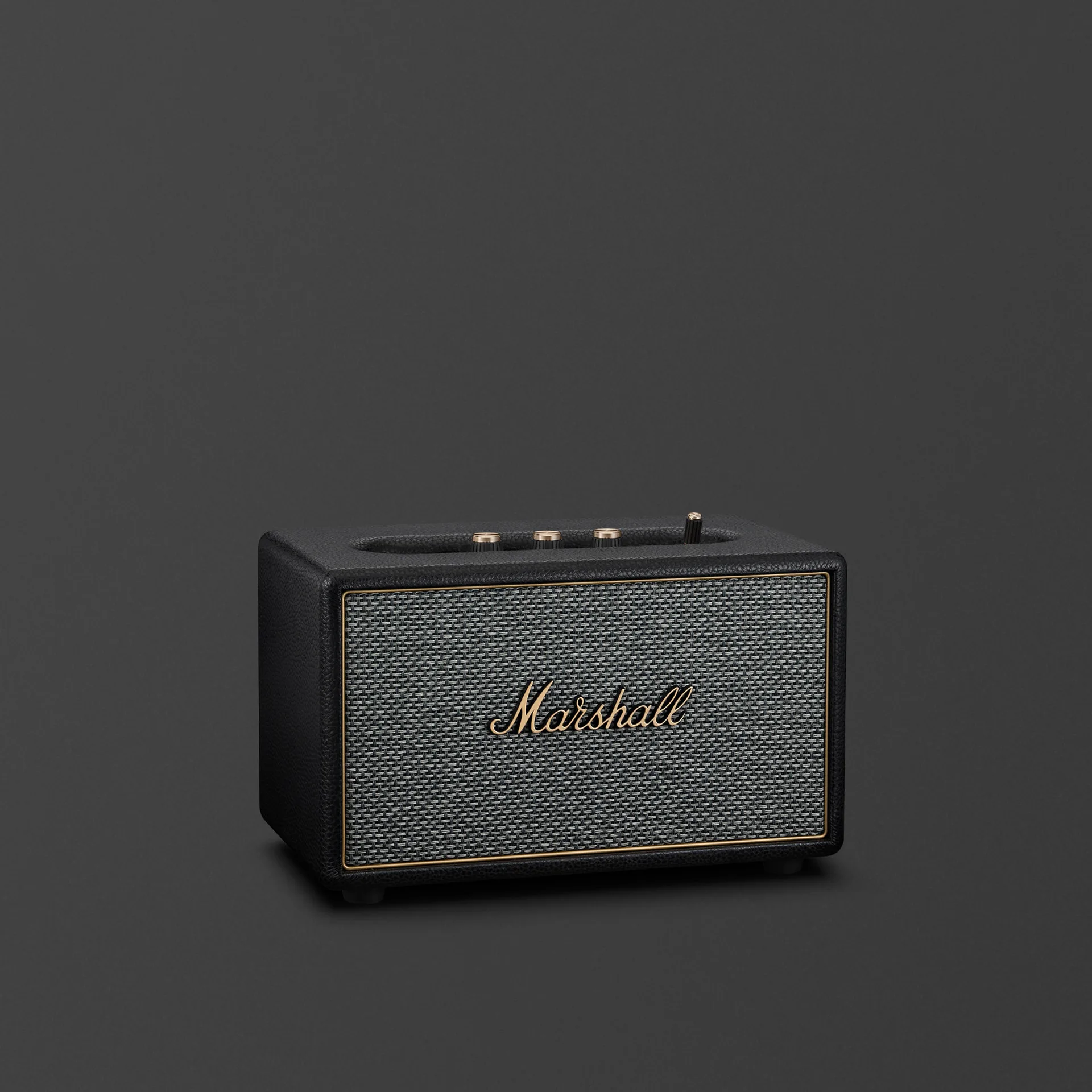
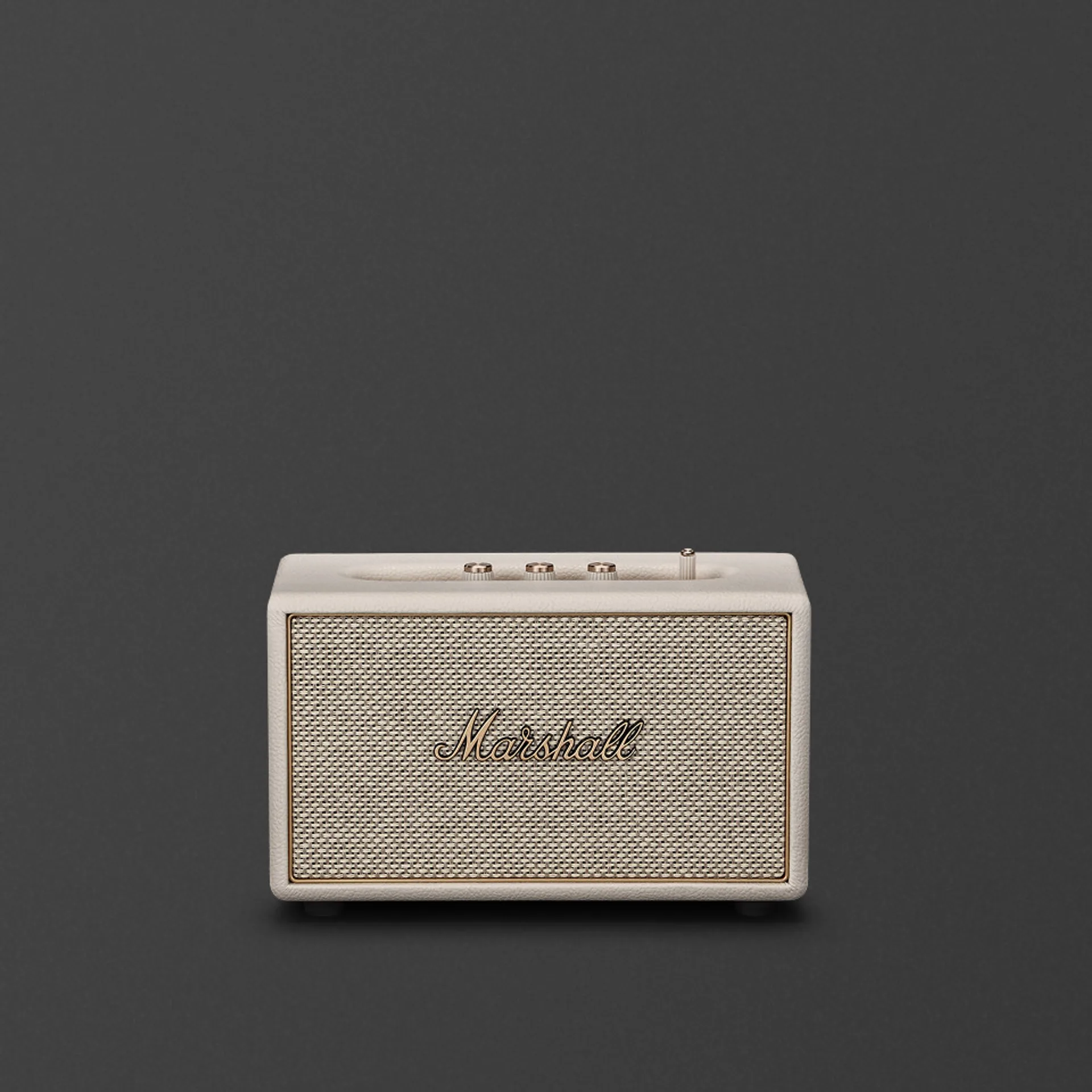
Acton IV stays under 3 kg and about 17 cm wide — small enough for a desk or bedroom shelf, loud enough for a studio apartment if you are not hosting a party. Marshall quotes 95 dB SPL @ 1 m and a 4-inch woofer in a bass-reflex cabinet with the Gen IV port redesign for cleaner low end and easier flush placement against a wall.
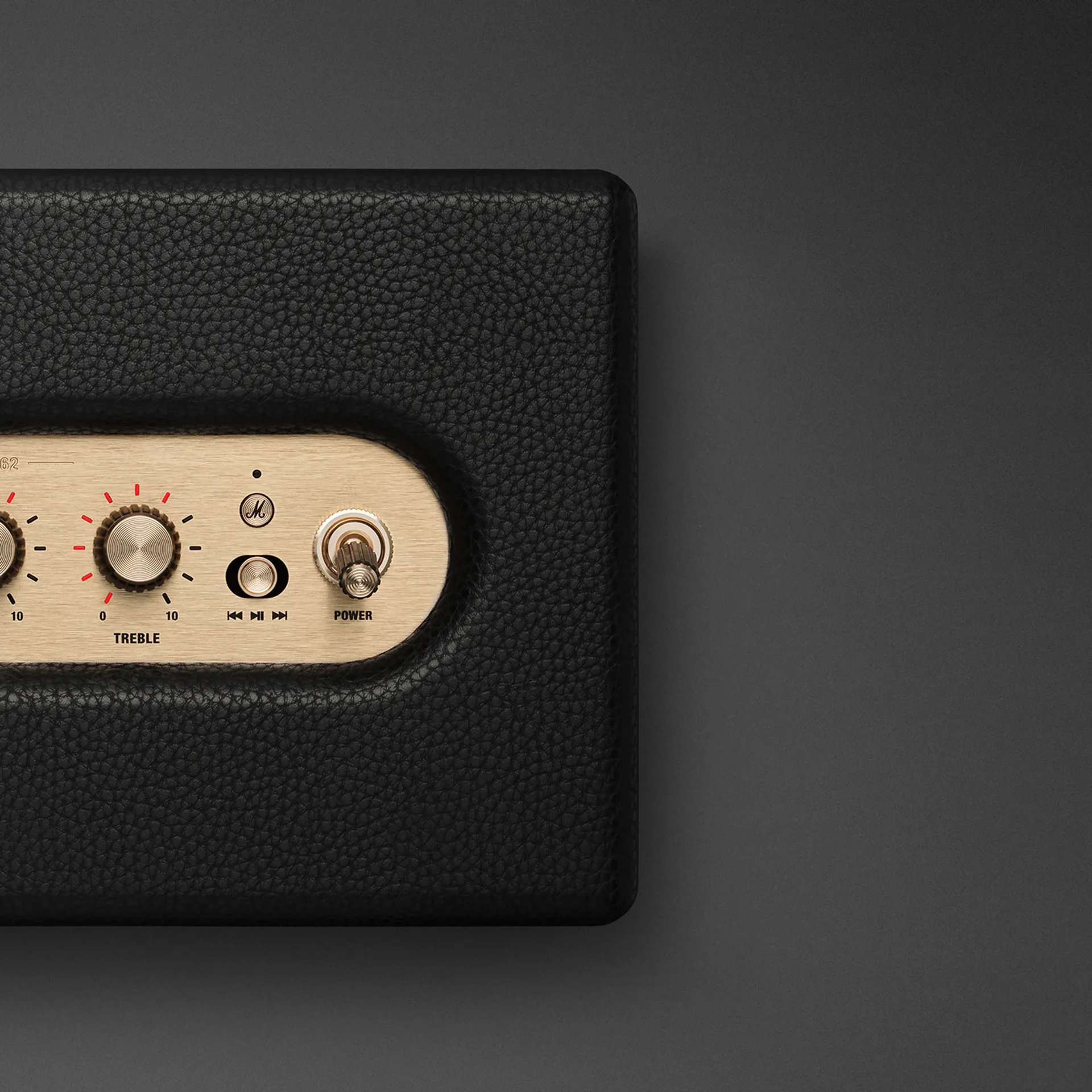
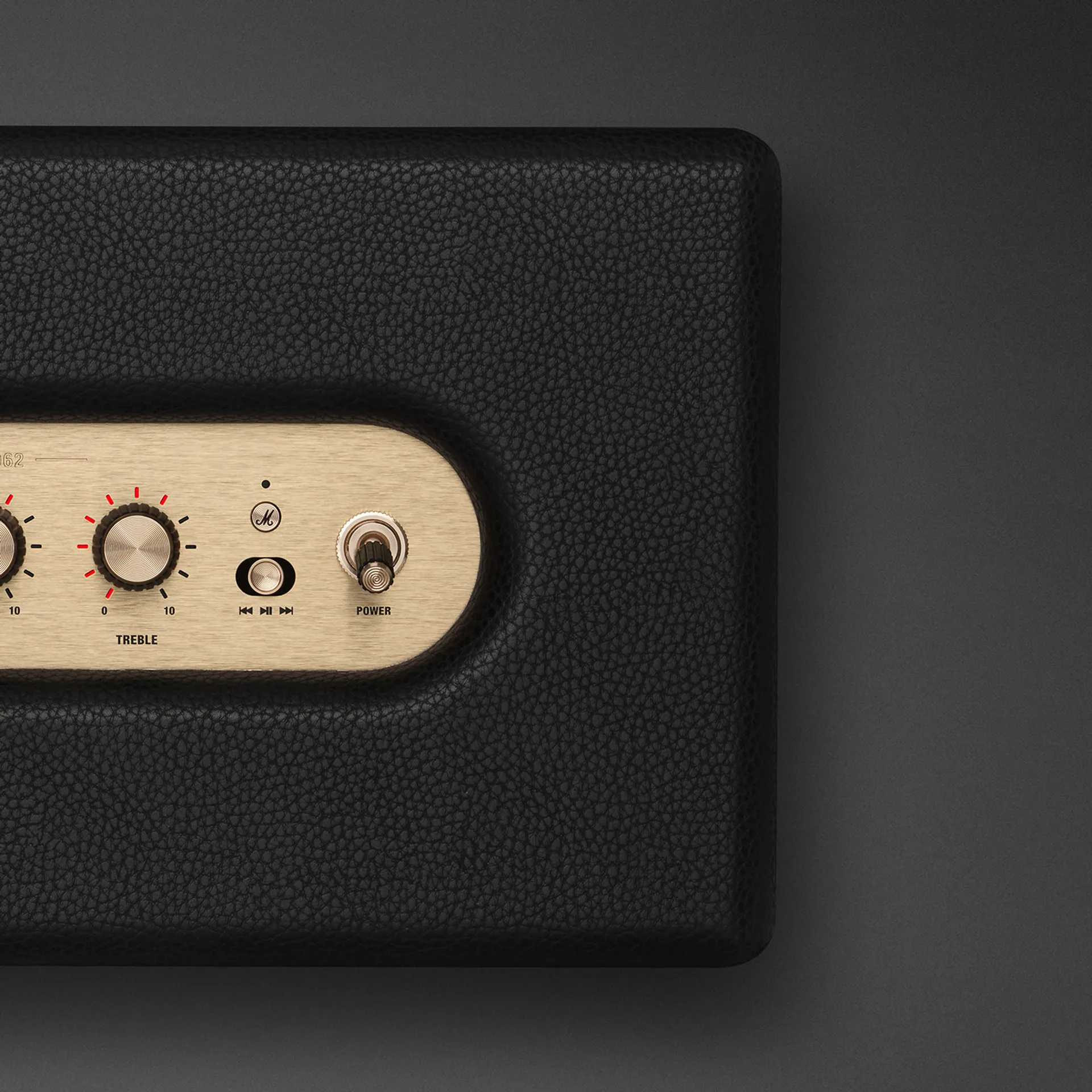
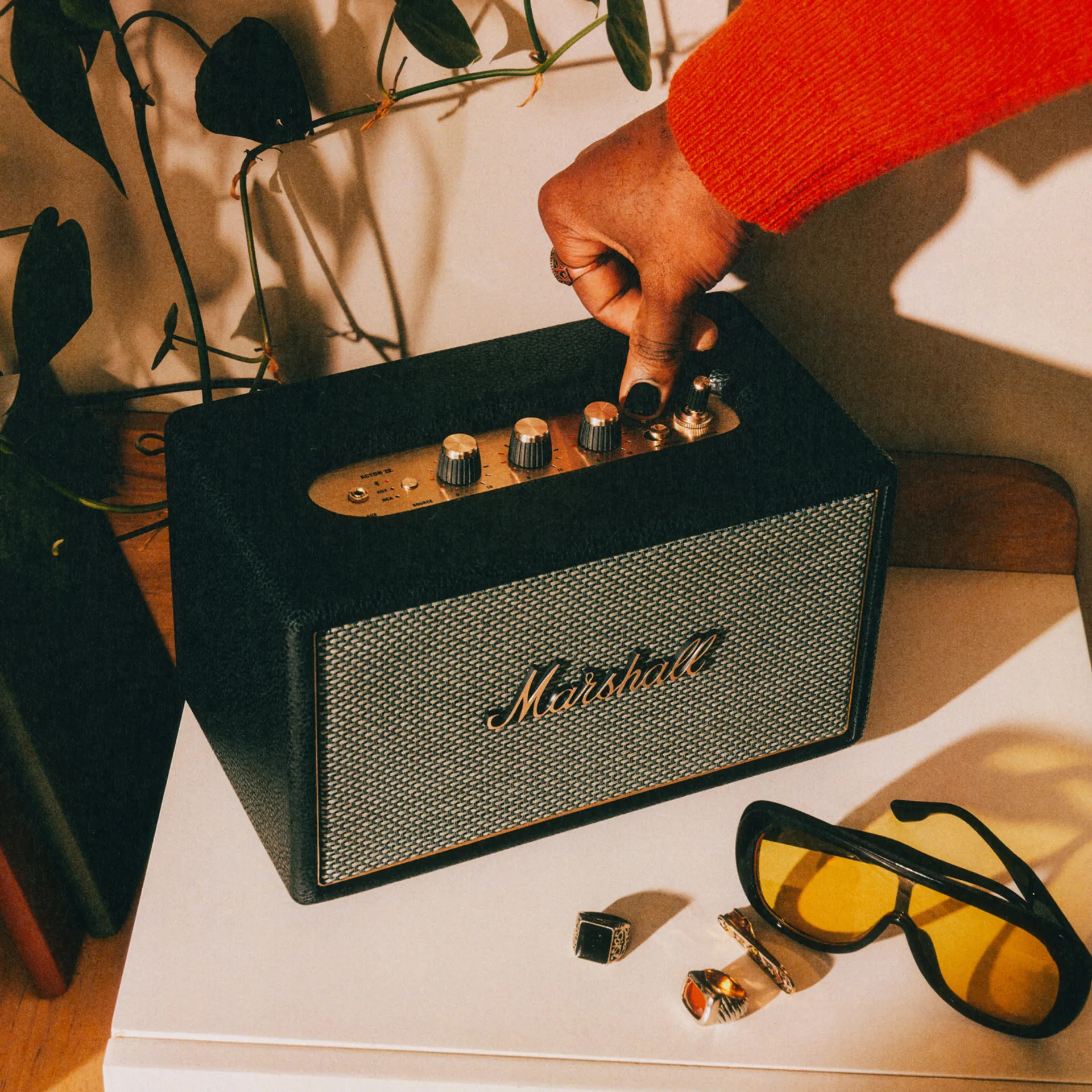
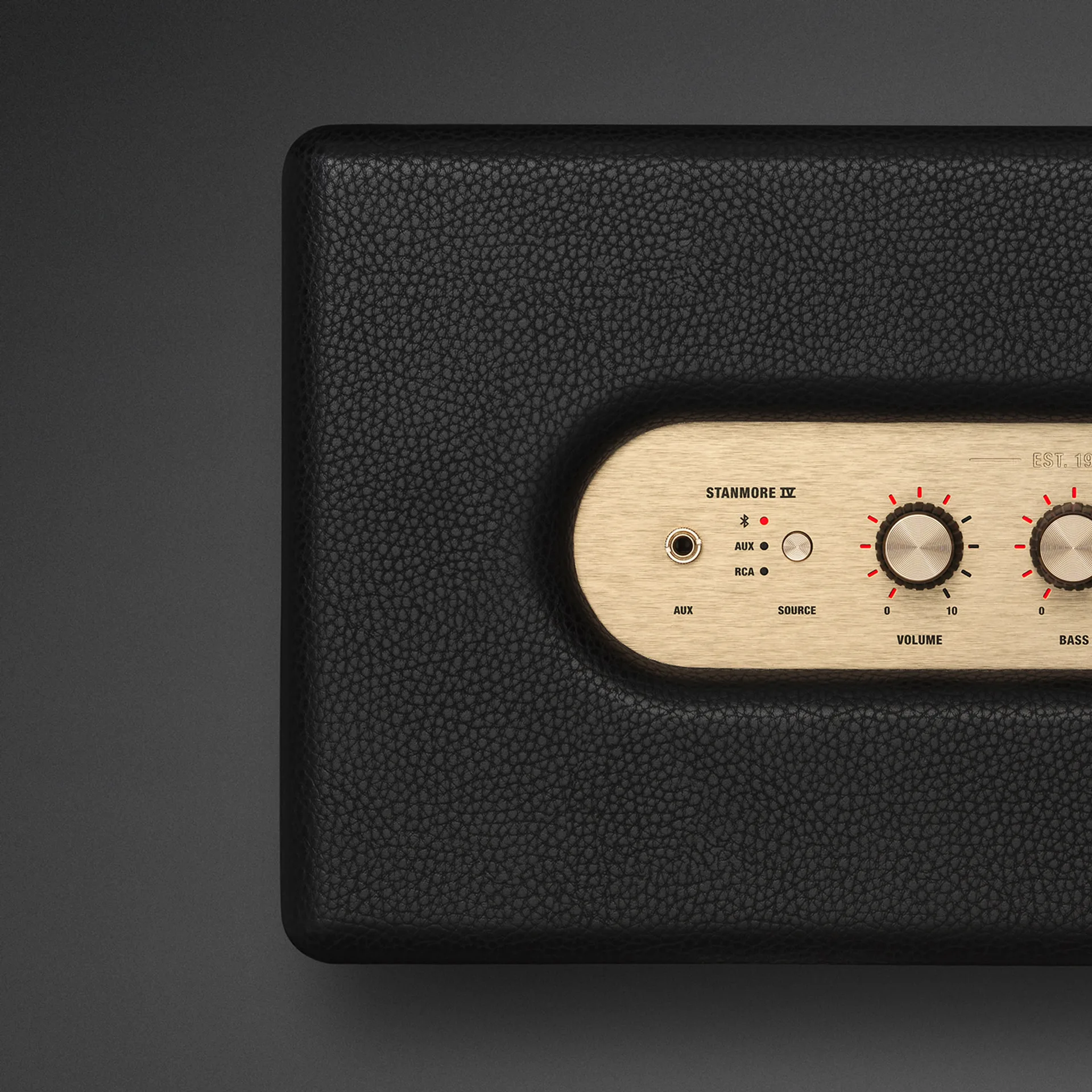
Controls stay hardware-first: brass volume / bass / treble knobs, media jog, source button, customisable M-button (EQ presets or Spotify Tap), and the signature power toggle. Finishes: Black and Cream.

Stanmore IV: living-room scale
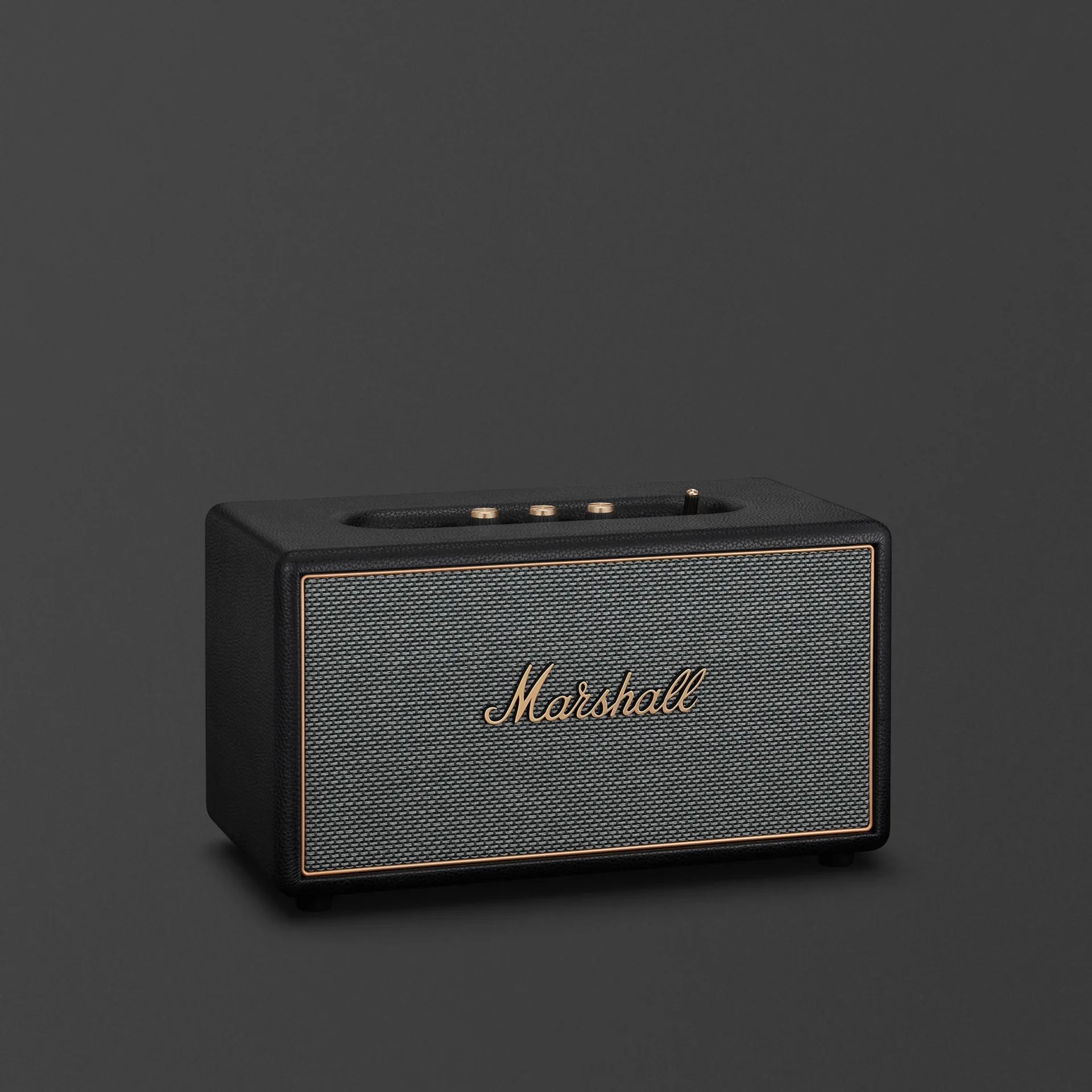
Stanmore IV is the default living-room Marshall: roughly 35 cm wide, just under 4 kg, with a 5-inch woofer and a quoted 97 dB SPL @ 1 m. It uses the same Class D amp ratings as Acton IV; the larger woofer and wider cabinet are the real differentiators on paper.
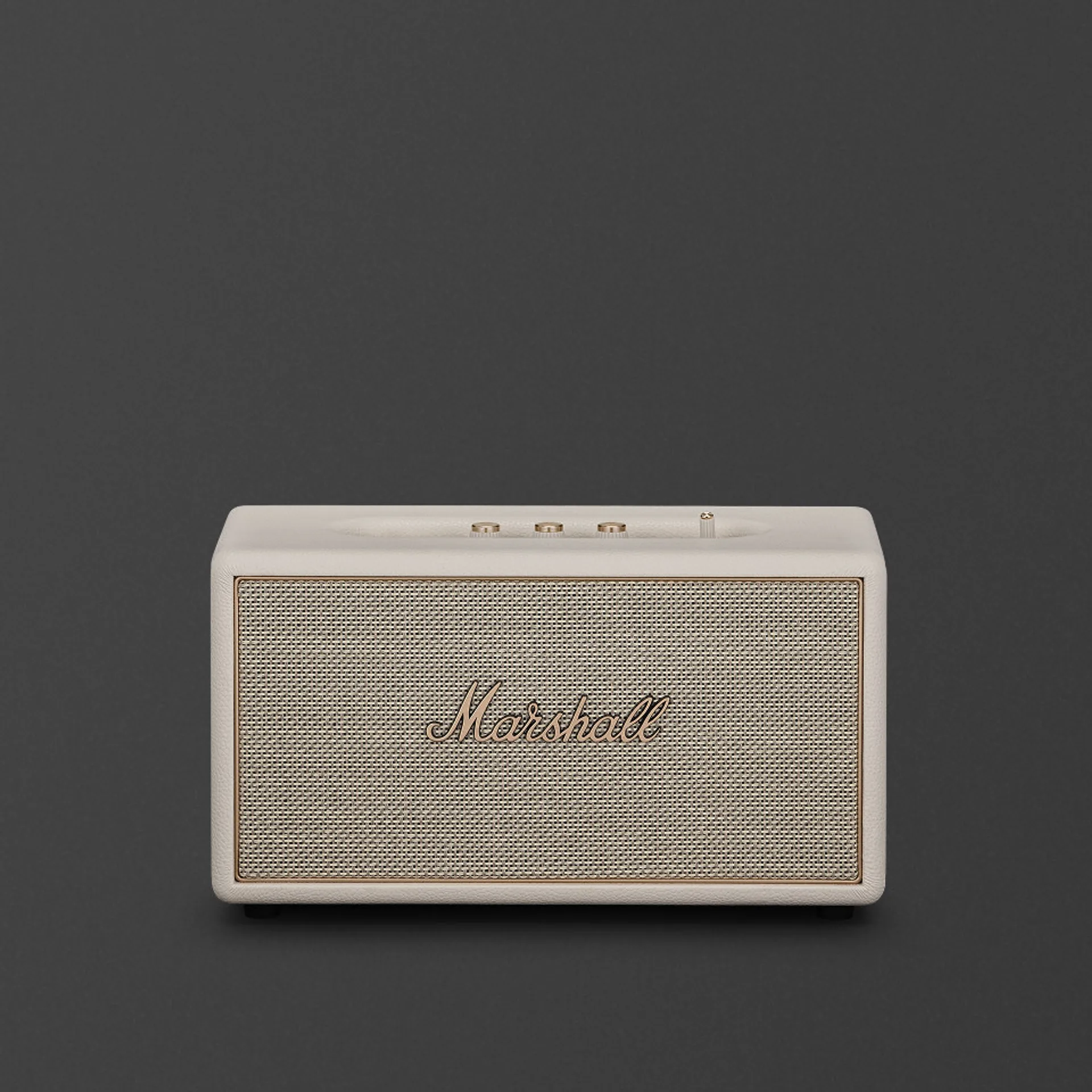
Same tactile control language, same Black / Cream finishes, same repairable knobs / feet / grille story. If Acton feels polite for your space, Stanmore is the Gen IV step up before Woburn money.

Sound, Dynamic Loudness, and placement
Marshall’s Gen IV acoustic pitch is shared. Improved tweeters and waveguides are meant to throw a wider stereo image across the room. The redesigned bass-reflex port aims for cleaner, tighter low end at higher volumes and better behaviour when the speaker sits flush against a wall. Dynamic Loudness reshapes tonal balance as volume changes so quiet night listening and louder sessions do not feel like two different EQ curves.
Treat the SPL and frequency figures as manufacturer ceilings under Marshall’s test conditions. They are useful for comparing Acton IV to Stanmore IV, not as outdoor party guarantees. For portable / higher-SPL Marshall options, start from the lineup guide.
Bluetooth, Auracast, AUX, and RCA
Both speakers run Bluetooth 5.3 with multipoint and Auracast, plus codecs SBC, AAC, LDAC, and LC3. Open-space range is quoted at 10 m / 32.8 ft.
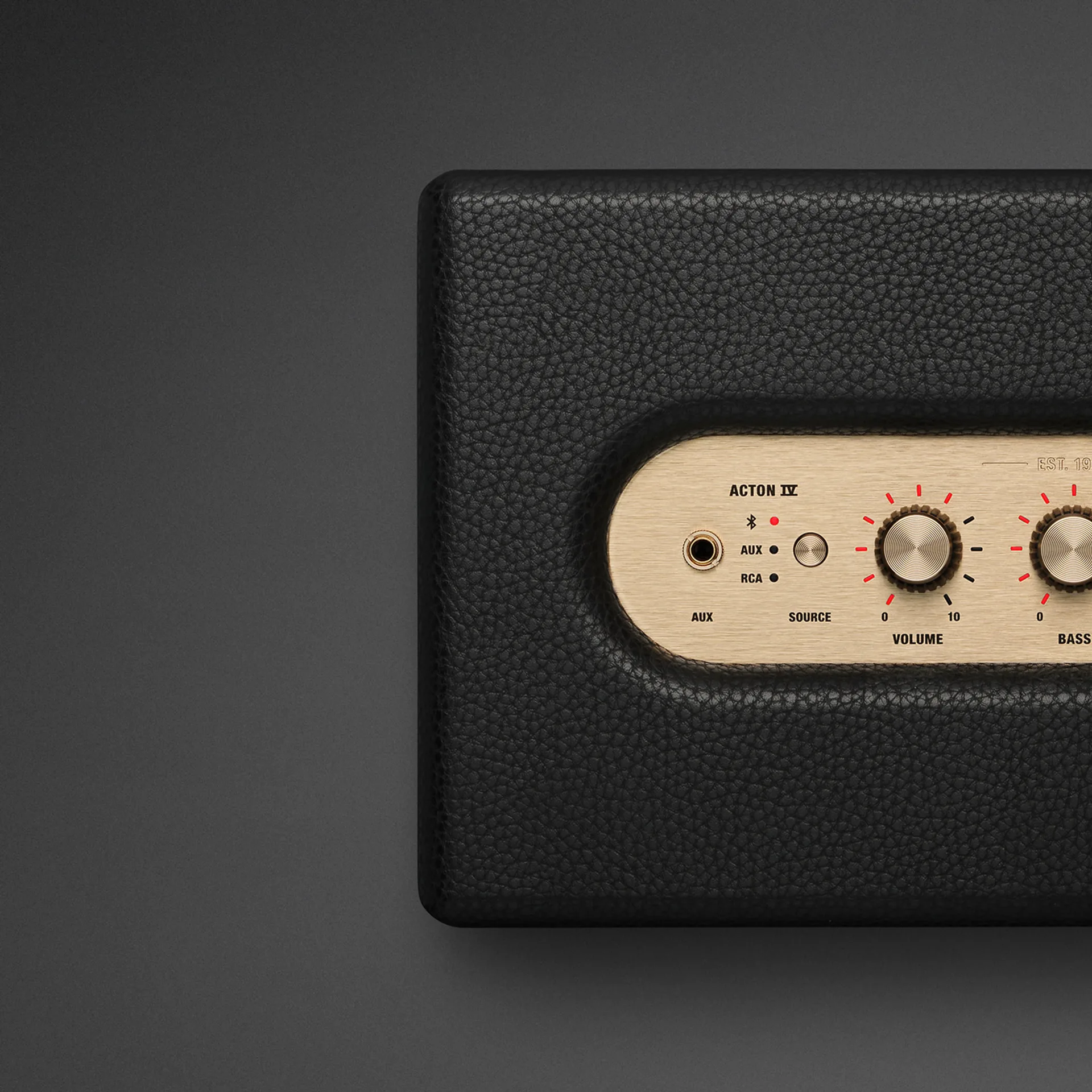
Wired I/O is a real Gen IV upgrade for the Acton slot: both models include 3.5 mm AUX and RCA. Vinyl players need a phono preamp unless the turntable has one built in. Brass top panels show Bluetooth / AUX / RCA source LEDs so you can see which path is live without opening the app.
Heddon multi-room and the Marshall app
Both Acton IV and Stanmore IV are Auracast receivers. Marshall’s intended whole-home path uses the Heddon Wi-Fi music hub as broadcaster: put Heddon in setup mode, long-press the speaker’s M-button, and it joins the sync group. Compatible phones can also feed Auracast broadcasts via the Marshall app or native OS tools where supported.
In the Marshall app, both speakers get EQ. Acton IV is pitched with room calibration; Stanmore IV with placement compensation — useful when the box sits against a wall, in a corner, or on an open console. Details on the hub: our Heddon intro.

Repairability and materials
Marshall lists both models as repairable, with user-replaceable knobs, feet, and grille on marshall.com, plus authorised repair paths that vary by market. Both cabinets use FSC 100%-certified wood (FSC™ C225755) for the wood portion. Recycled content by weight (excluding accessories and packaging): 13% on Acton IV, 16% on Stanmore IV.
Spec table
| Spec | Acton IV | Stanmore IV |
|---|---|---|
| Drivers | 1 × 4 in woofer; 2 × 0.75 in tweeters | 1 × 5 in woofer; 2 × 0.75 in tweeters |
| Amplification | 60 W + 2 × 25 W Class D | 60 W + 2 × 25 W Class D |
| Frequency range | 37–38,000 Hz | 36–38,000 Hz |
| Max SPL | 95 dB @ 1 m | 97 dB @ 1 m |
| Cabinet | Bass-reflex | Bass-reflex |
| Bluetooth | 5.3, multipoint, Auracast | 5.3, multipoint, Auracast |
| Codecs | SBC, AAC, LDAC, LC3 | SBC, AAC, LDAC, LC3 |
| Wired I/O | 3.5 mm AUX; RCA | 3.5 mm AUX; RCA |
| App | Marshall app (EQ, room calibration) | Marshall app (EQ, placement compensation) |
| Dimensions (W × H × D) | 171 × 150 × 260 mm | 350 × 203 × 185 mm |
| Weight | 2.65 kg | 3.99 kg |
| Recycled content | 13% by weight | 16% by weight |
| Colorways | Black; Cream | Black; Cream |
| U.S. price | $329.99 (verify live) | $429.99 (verify live) |
| In the box | Speaker, mains lead, quick start, legal/safety | Speaker, mains lead, quick start, legal/safety |
Who should buy which
Choose Acton IV if…
- You want a compact Marshall home speaker for a desk, bedroom, or small living room.
- You need RCA + AUX without paying Stanmore money.
- You plan to grow into Heddon / Auracast later and want the smaller first box.
Choose Stanmore IV if…
- You want one Marshall box for a medium / living-room space and Acton feels undersized.
- You want the larger 5-inch woofer and slightly higher quoted SPL in the same Gen IV feature set.
- You still want tactile knobs and vinyl-friendly RCA without jumping to Woburn.
You can wait if…
- Your Acton III / Stanmore III still covers Bluetooth + room size at a better sale price.
- You need battery portability — these are mains-powered home speakers.
- You need confirmed regional pricing or the occasional “two home speakers + free Heddon” bundle on marshall.com.
FAQ
What is the difference between Marshall Acton IV and Stanmore IV?
Same Gen IV feature set. Acton IV is smaller and cheaper (4 in woofer, 95 dB, $329.99). Stanmore IV is the living-room step (5 in woofer, 97 dB, $429.99). Buy by room size.
Can I connect a turntable to Acton IV or Stanmore IV?
Yes on both. Each has an RCA input. Vinyl players need a phono preamp unless the turntable already includes one.
Do Acton IV and Stanmore IV work with Heddon?
Yes. Both are Auracast receivers. With Heddon in setup mode, long-press the speaker’s M-button to join a multi-speaker broadcast.
Are these speakers battery powered?
No. Acton IV and Stanmore IV are mains-powered home speakers (100–240 V). For portable Marshall options, look at Stockwell, Emberton, Kilburn, or the Bromley party line.
What codecs do Acton IV and Stanmore IV support?
Marshall lists SBC, AAC, LDAC, and LC3 on both, over Bluetooth 5.3 with multipoint and Auracast.
Sources
- Marshall: Acton IV product page: marshall.com/acton-iv
- Marshall: Stanmore IV product page: marshall.com/stanmore-iv
- Marshall: Heddon multi-room hub: marshall.com/heddon