1854- The retail brand Americans file under Timex grew out of Connecticut clockmaking — Waterbury brass, mass production, and the idea that a watch did not have to live behind a jeweler’s velvet rope. Today’s catalogue is still mostly quartz and digital workhorses with the occasional mechanical reissue, plus steady fashion and character collabs.
Origins and corporate scale
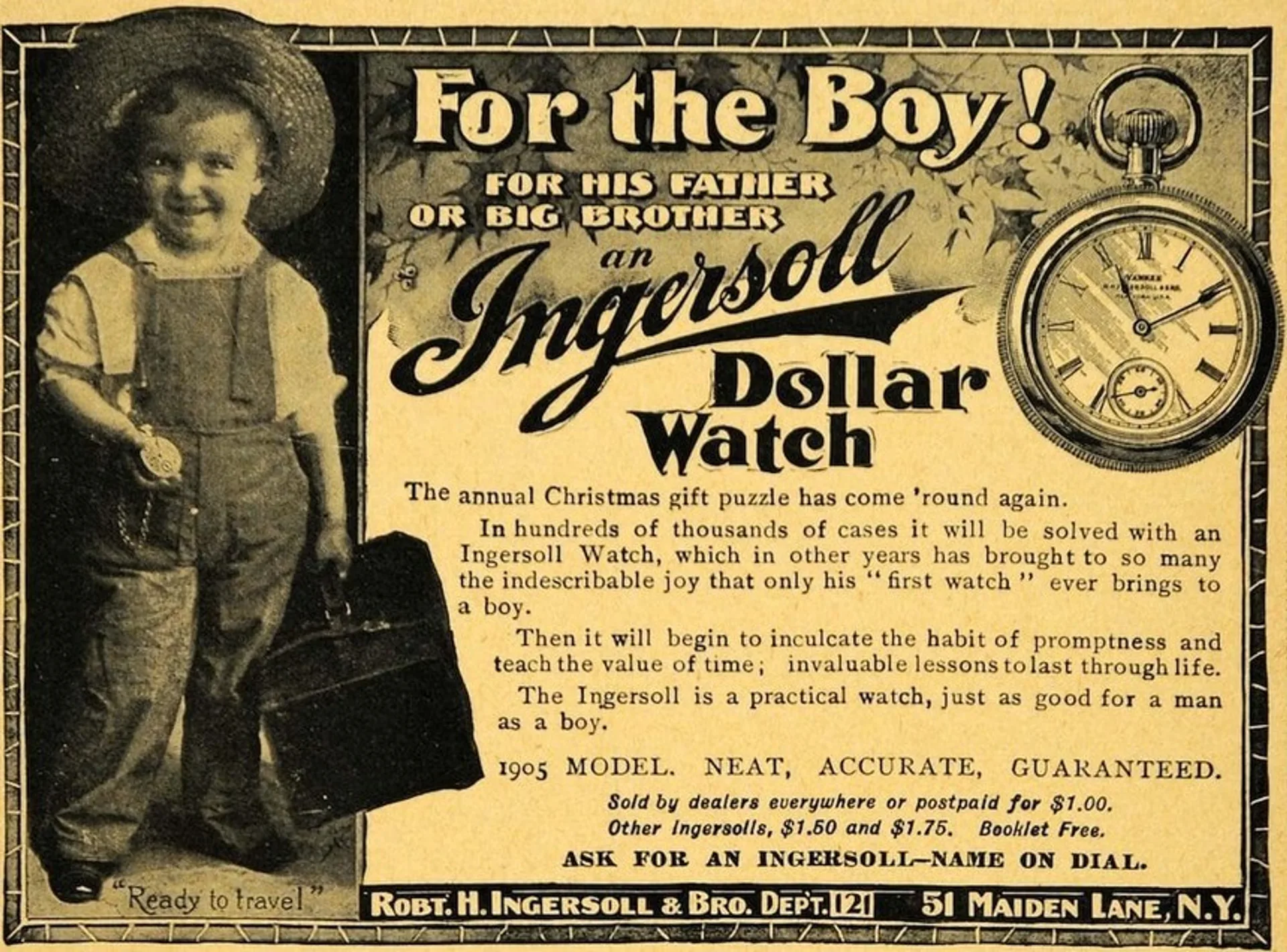
Timex’s public narrative anchors the consumer brand in 1854 and the Waterbury Clock Company- European-influenced craft routed through American factory logic. Timex Group’s legacy copy adds a concrete retail-history beat: by 1901, the Yankee pocket watch sat at a one-dollar price talk-track aimed at mass ownership, not salon exclusivity. The later consumer name Timex itself is mid-century branding on that same mass channel not a separate Swiss atelier imported under a new marquee.
Scale language belongs to the group, not the logo alone: Timex Group states it has produced more than two billion watches across its portfolio of brands, with 27 facilities and 120+ distributors in its global network. That is a manufacturing footprint story — it does not mean every SKU shares the same case factory or movement supplier, and it does not turn a Weekender into a Geneva Seal exercise.
From Waterbury to Timex Group USA
The retail word Timex is young compared with the brass valley it came from. Waterbury Clock Company dates to 1854; the business was later incorporated in its own right (public records point to 1857 as the formal company line). Through the Ingersoll era, Waterbury became the factory backbone for dollar-pocket-watch volume — the same “Yankee” price story Timex Group still cites on its legacy page.
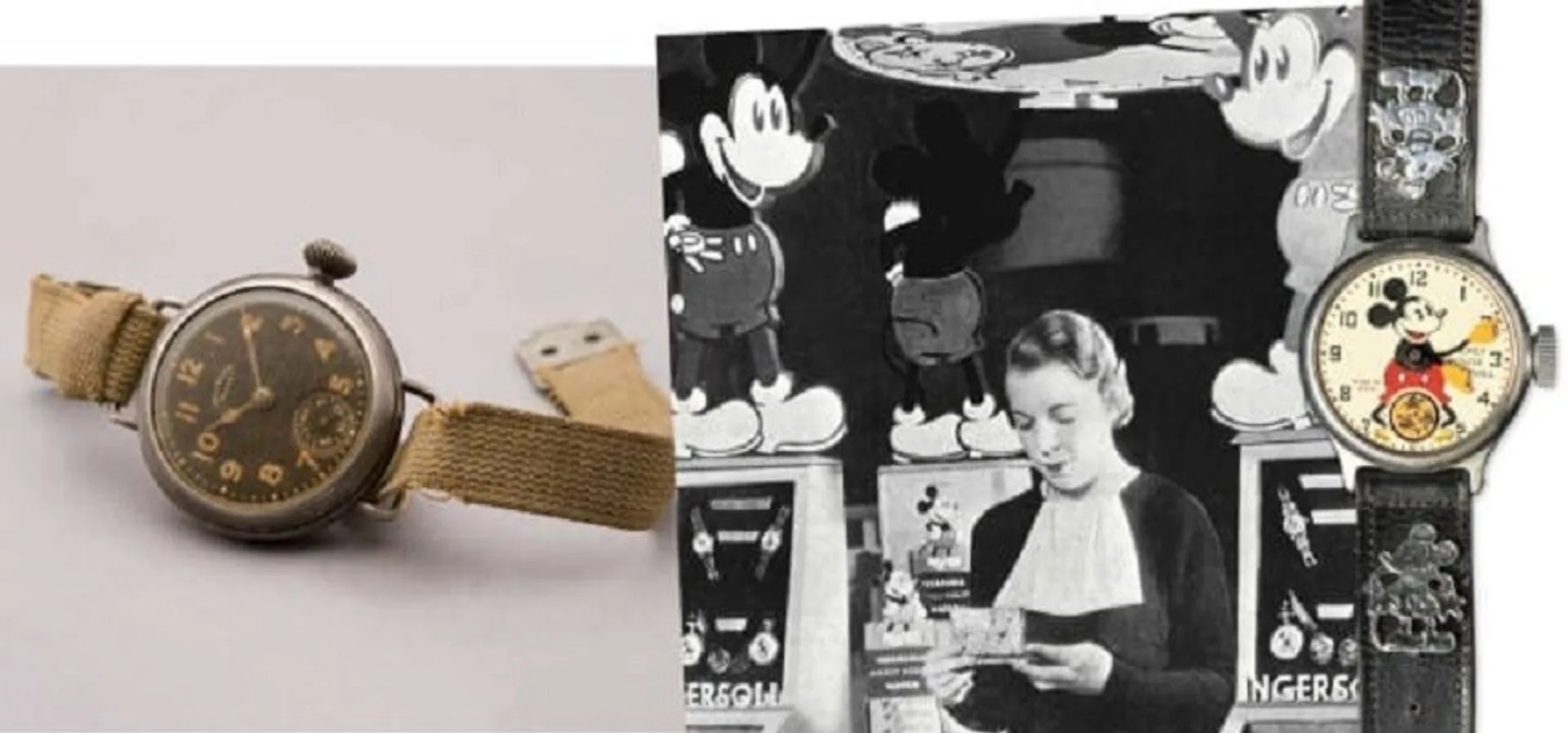
World War I accelerated wrist wear: modified small pocket cases gained fixed bars, three-o’clock crowns, and low-light legibility for people who needed both hands free — a utilitarian pattern that still describes much of the catalogue. The Mickey Mouse licence under Ingersoll in the 1930s was another mass-market hinge: character dials as retail events, not salon exclusivity.
During World War II, Waterbury’s engineering pivot included precision fuses and defence timers; shareholders voted the company into United States Time Corporation in 1944. Post-war management bet the same tooling discipline could yield a civilian watch that was cheap, accurate, and hard to kill. The alloy Armalloy stood in for traditional jewel bearings in key designs- a cost and durability trade that annoyed purists but matched the mass channel.
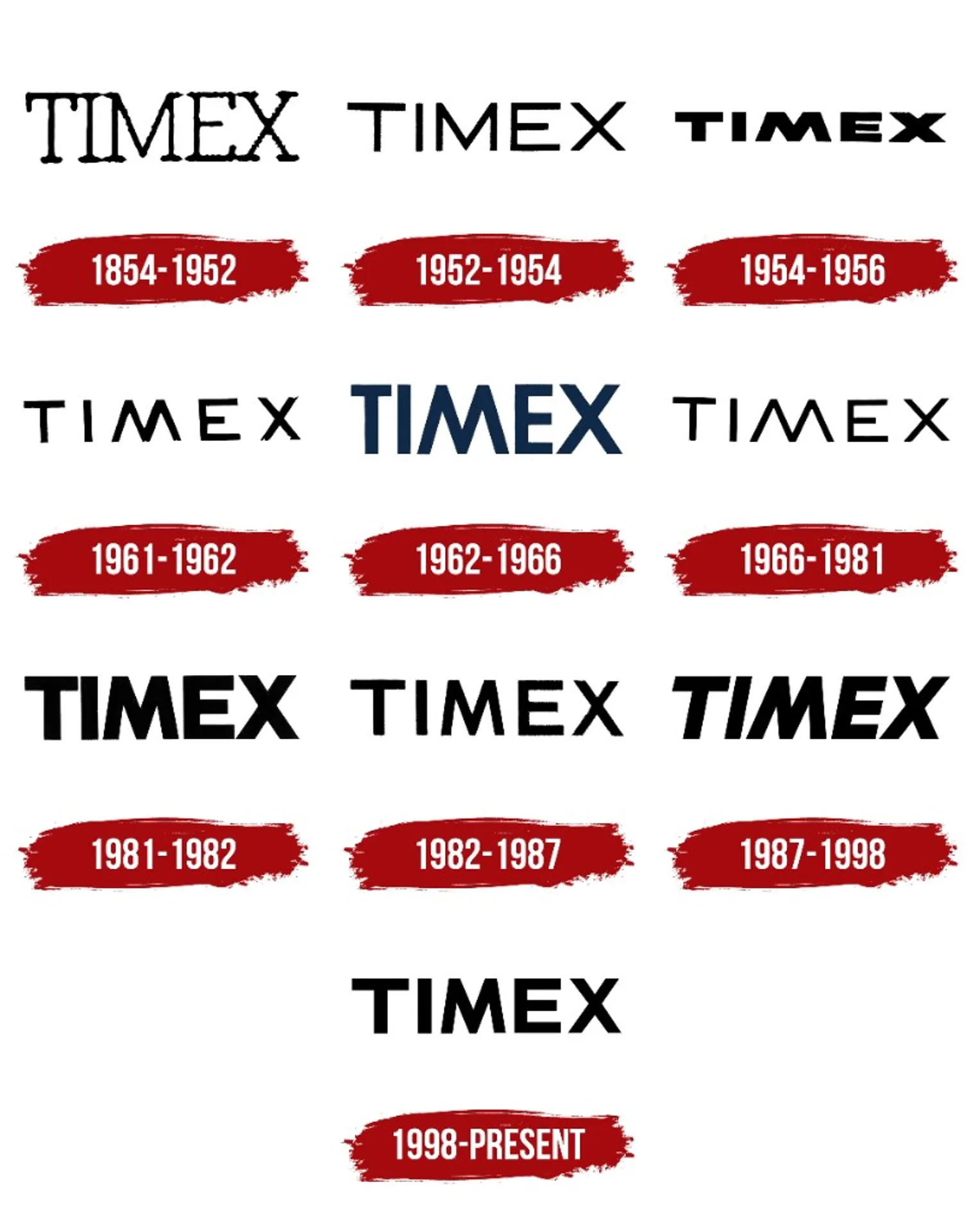
The Timex trademark hit volume retail in 1950 (with small trial batches sometimes traced to the mid-1940s). John Cameron Swayze torture tests on live television turned “It takes a licking and keeps on ticking” into household copy; by the early 1960s, Timex was reportedly moving roughly one in three watches sold in the United States — a market-share story that explains why the brand still reads as default American quartz.
The 1970s–1980s shock from Asian mechanicals and Japanese quartz forced brutal consolidation: mechanical plants obsoleted, headcount collapsed, Disney licences lapsed, and sideline bets (home computers, broader consumer goods) mostly wound down. The answer that actually stuck was quartz and digital sport: Ironman in 1986, tied to triathlon sponsorship, became the post-mechanical hit the brand still leans on in sport-watch search.
INDIGLO landed in the 1992 holiday season; contemporary news coverage tied renewed interest to real-world low-light rescues during the 1993 World Trade Center bombing — useful context for why the feature became synonymous with the brand, even though today’s buyer should still judge battery draw and panel aging on the SKU they own.
Late-century line extensions worth remembering when you decode eBay listings: Timex Data Link (screen-to-watch data with Microsoft-era software), Expedition as the rugged outdoor label from 1997, and pager-era experiments that aged fast. After 2008, the U.S. operating company sat under Timex Group B.V. as Timex Group USA, Inc. — same Connecticut roots, Dutch holding-company umbrella, and the multi-brand reality (fashion licences, studio design) that competes with the core Timex logo for shelf space.
What the brand optimises for
Timex’s US About page is explicit about the trade: quality and reliability at prices that leave money in your pocket. Translation for buyers: you are in a value quartz and digital band with occasional mechanical charm pieces, not a ladder of complications aimed at auction houses.
The same page leans into emotional simplicity (“Make Time Yours”) the way every heritage brand now talks about mindfulness. Strip the moodboard and the product logic stays: readable dials, battery-powered convenience, outdoor and sport-adjacent SKUs, and archive reissues that borrow mid-century silhouettes without borrowing mid-century service economics.
INDIGLO and night readability
INDIGLO® is Timex’s branded electroluminescent backlight — press a button, the whole dial or LCD panel glows for low-light checks. Timex’s house blog traces development to early-1990s releases after the Ironman wave proved people would pay for sport features that actually solved a daily annoyance: reading the time in the dark without a flashlight. Retail timing for the backlight often clusters around the 1992 holiday season; the feature then picked up wider cultural recognition through news-cycle stories about dark-stairwell evacuations in 1993 a rare moment when broadcast news and word-of-mouth retail lined up on the same complication.
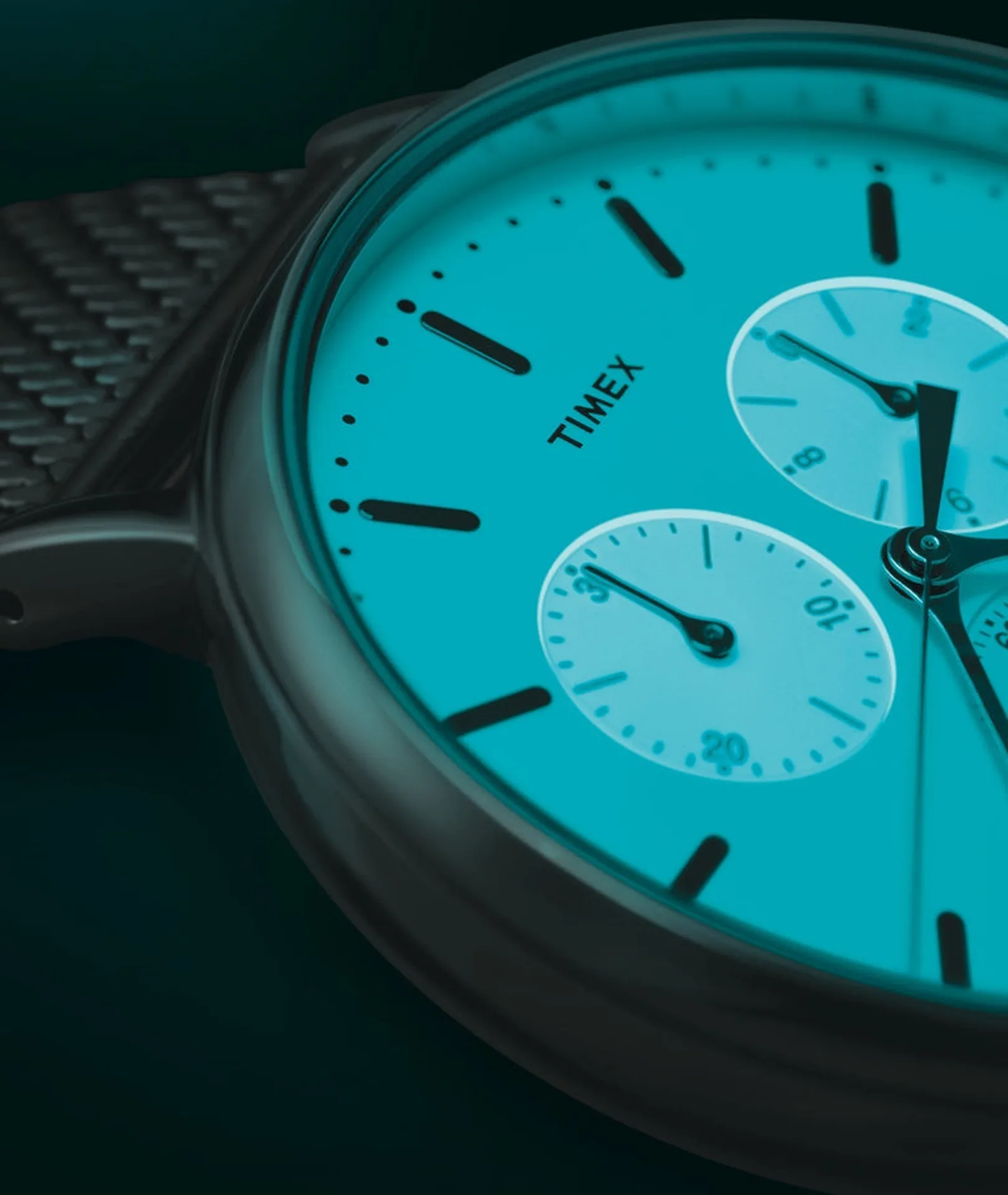
Why it still matters in SEO and in stores: for many North American buyers, INDIGLO is the Timex tell the way a red crown is a tell for another brand. It is not lume paint chemistry; it is an on-demand light panel. Battery draw and panel aging are real; so is the fact that competitors standardized their own EL or LED solutions later. Timex still owns the wordmark recognition.
Major product families
Timex’s About page names several pillars outright — useful as a navigation map before you fall into infinite filter grids:
- Expedition- field-adjacent, outdoor marketing, compass / tide / temp variants exist at higher complexity tiers.
- Weekender- simple three-hand quartz with NATO-friendly lug style; the name signals weekend casual, not desk-diver specs.
- Ironman- digital sport chronographs tied to the triathlon line heritage; buttons, segments, and lap memory are the product.
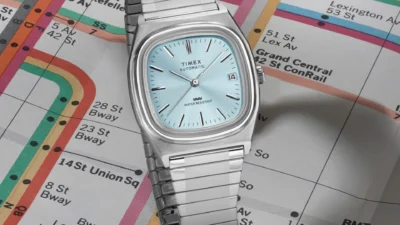
- Q- quartz reissue language tied to 1970s styling; often the gateway “colorful Timex” pick.
- Marlin- dress-adjacent mechanical and hand-wind reissues with mid-century case language; read water resistance and crystal type per listing.
- Easy Reader- high-contrast dial type aimed at legibility-first buyers.
- Digital T80 line- compact retro LCD; frequent collab host (see internal link in the short-version block above).
None of these families magically share the same WR rating, lug width, or lug-to-lug SKU discipline beats family marketing every time.
Design direction and collabs
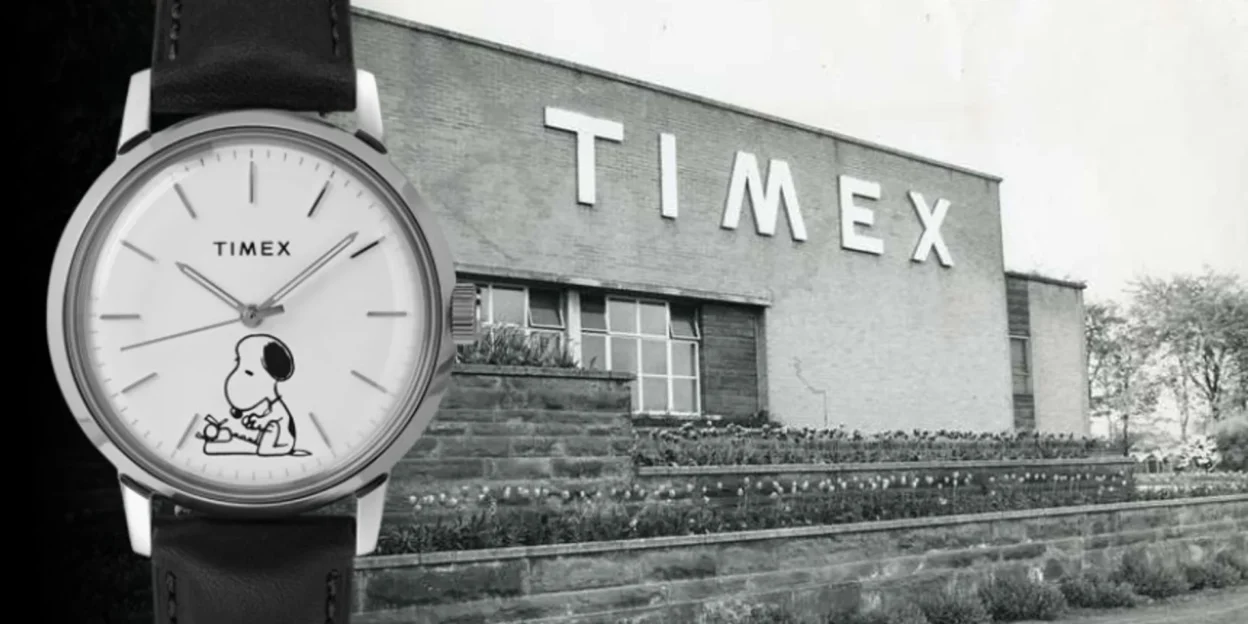
Timex highlights Giorgio Galli as design director in Milan for over two decades, framing a split brain: American catalogue breadth with European studio shaping on select lines. Collabs and archive reissues get a dedicated section on the consumer About page — Peanuts, NASA-adjacent Q models, and other pop-culture hooks rotate through seasonally.
For SEO clusters, collabs are high-variance traffic: spikes when a drop ships, decay when inventory clears. The durable URLs are still the family hubs (Expedition, Marlin) unless you run a time-limited news template.
ReWound and stated sustainability targets
Timex markets Timex ReWound as a circular watch program aimed at keeping hardware on wrists and out of landfills. The About page also states 800,000+ ocean plastic bottles reflowed into watch parts and publishes headline climate targets: 50% greenhouse gas reduction by 2030 and net zero by 2050, with a linked sustainability report.
Treat those figures as brand-reported programme metrics, not third-party audited scores in this guide, unless you add external verification in a separate methodology piece.
How to shop the line without getting lost
Start from job: night-shift legibility (INDIGLO + high contrast), wet-field use (check screw-down and WR on the exact SKU), desk dress (Marlin and slim quartz dress pieces), or beat-it digital (Ironman, T80). Then filter by case size and lug-to-lug — Timex runs everything from compact digitals to oversized pilot homages.
Compare on strap quality, mineral vs acrylic, movement stated per page, and warranty text for your country. Timex wins a lot of carts on price and clarity; it does not promise Swiss-service nostalgia on every reference.
FAQ
Is Timex an American company?
The brand story and corporate legacy are rooted in American Connecticut clockmaking (1854). Retail operations today are global; use Timex Group’s corporate materials for legal-entity detail if the piece requires it.
Where does the name Timex come from?
It is mid-century American marketing on the Waterbury / U.S. Time corporate line, not a separate founder surname. A common telling blends Time (the magazine) and Kleenex (the tissue brand) after industrialist Thomas Olsen reshaped the company; treat that story as folk etymology — the useful buyer fact is the 1950s mass-market launch of the Timex trademark on watches.
What does “It takes a licking and keeps on ticking” mean?
It was the 1960s television torture-test slogan for Timex durability demos — dishwashers, jackhammers, swimmers, and other staged abuse — voiced by newsman John Cameron Swayze. It is marketing, not a water-resistance guarantee; always read the WR rating on the exact reference you buy.
What is INDIGLO?
Timex’s trademarked electroluminescent backlight for whole-dial or whole-screen illumination on demand. See Timex’s INDIGLO history post for the product narrative.
What is the difference between Expedition and Weekender?
Expedition skews outdoor utility (compass / alt / tide families at various price bands). Weekender skews simple casual quartz on straps you swap for color. Compare WR, crystal, and case size on the two SKUs you are actually buying — the names are not a spec sheet.
Does Timex still sell mechanical watches?
Yes — the Marlin line and other reissues carry mechanical and hand-wind options alongside dominant quartz. Confirm movement type and service expectations on each product page.
Is Timex a “luxury” brand?
Not in the Swiss haute sense. Timex positions on accessibility, durability, and design collaborations at mass-market price tiers. Some collabs climb in price; that is still not the same supply chain or finishing bar as independent haute marques.