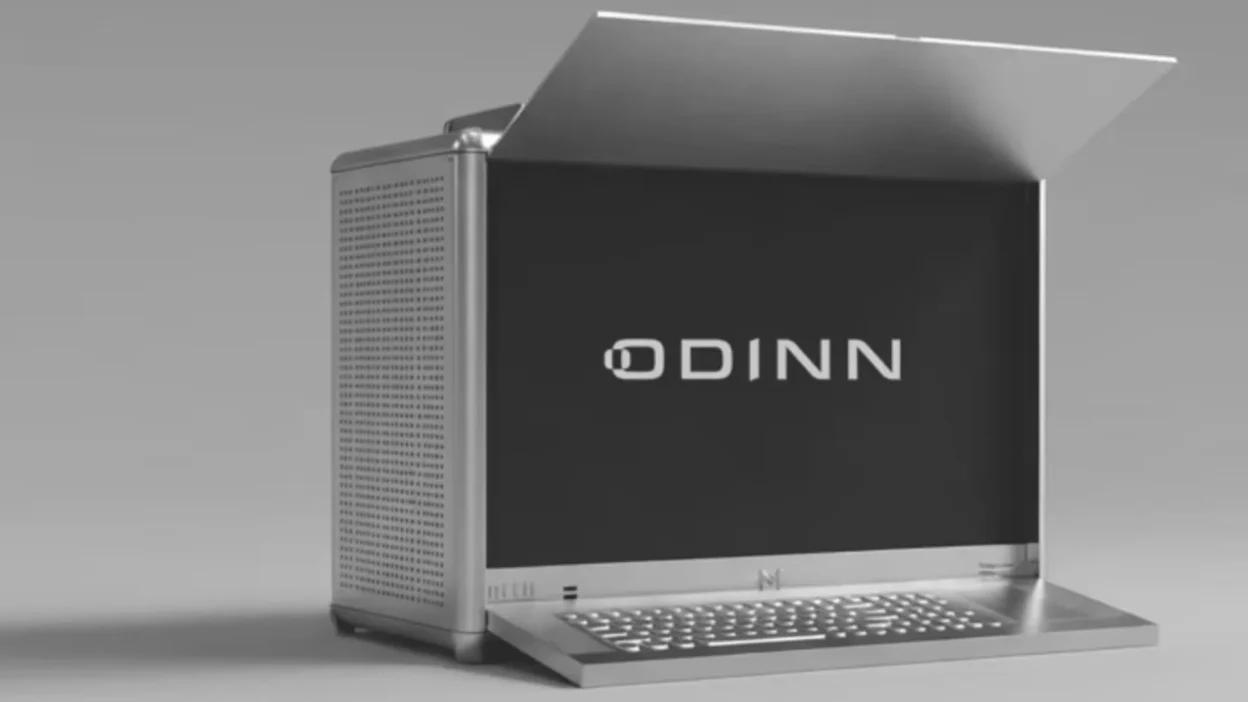
When you hear AI data center, you picture acres of racks and a power bill that could fund a small town. Odinn – founded in 2023 – wants you to picture something else: concentrated compute you can theoretically wheel out of the building. The Omnia, shown at CES 2026, is a standalone box with a keyboard, a 23.8-inch 4K panel, and enough silicon to make a hyperscaler blush. It also weighs 77 pounds, so “portable” is doing real work.
What it is
The Omnia is Odinn’s bet that some buyers need supercomputer-class AI and general compute without signing a colocation lease. The chassis integrates server-grade hardware, a built-in display, and a keyboard so the machine can operate as a fully standalone unit – less “luggable workstation,” more “mini rack that forgot it was supposed to stay in the cage.”
At 77 lb, it is dramatically lighter than an actual row of AI servers. It is also dramatically heavier than any laptop you would willingly carry through an airport twice in one day. Odinn isn’t selling pocket AI; it’s selling mobility relative to a data hall.
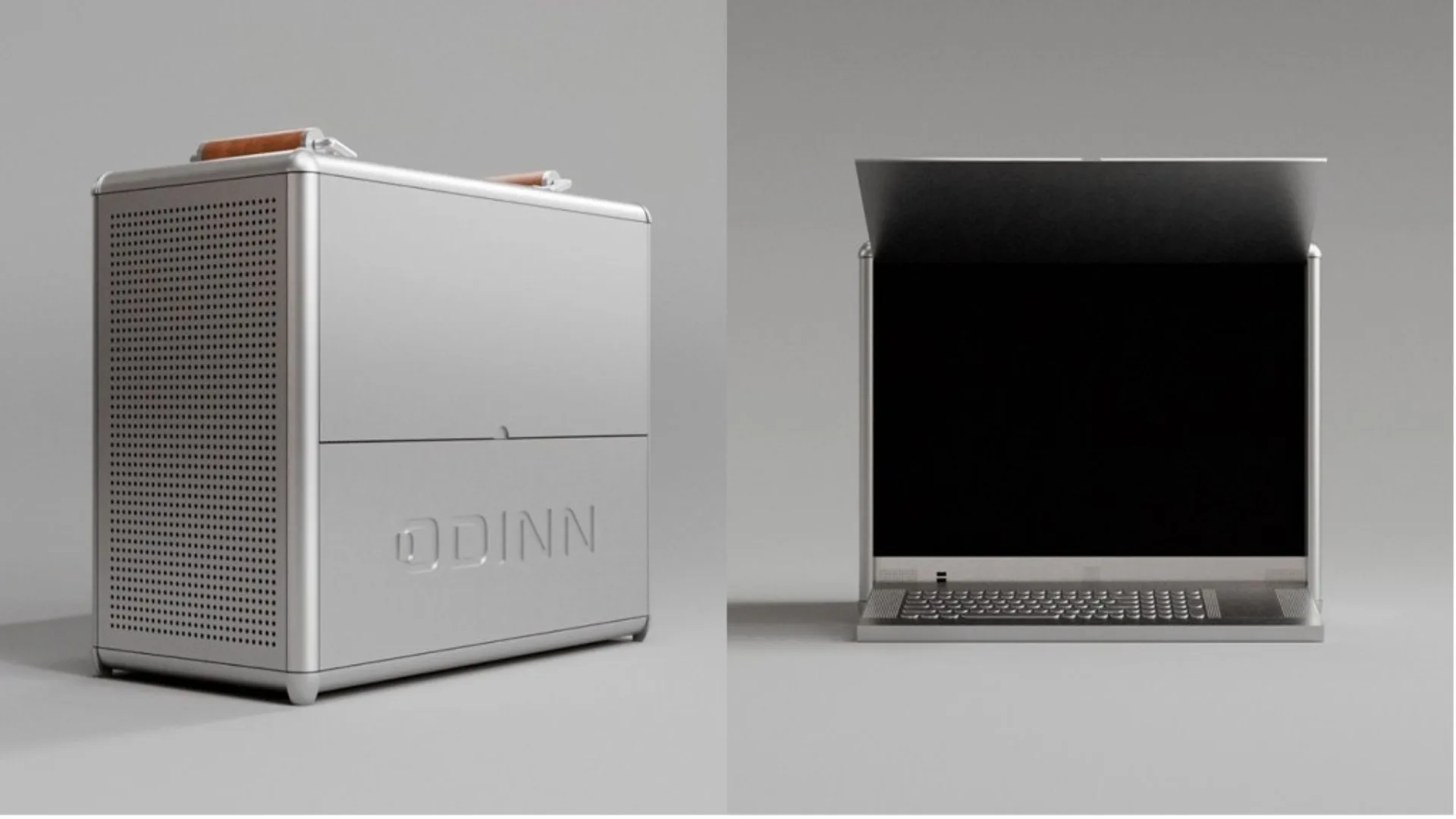
Concentrated compute vs. the warehouse
Odinn frames the idea as Concentrated Compute: pack as much throughput as regulations and thermodynamics allow into a single enclosure, then let customers move that footprint between sites, sets, labs, or secure rooms – wherever dragging a Digital Realty-scale footprint isn’t the assignment.
Giant facilities will keep anchoring the cloud AI build-out. The Omnia is aimed at the edge case where offline, air-gapped, or latency-hostile work needs serious parallel muscle without renting someone else’s racks.
The four Omnia flavors
Odinn plans four configurations. The company has not published a full hardware matrix per SKU, but the positioning is clear:
- Omnia AI – Standalone and offline AI processing.
- Omnia Creator – Heavy visual production for teams that need huge power on location.
- Omnia Search – Ultra-fast search and indexing without leaning on remote servers.
- Omnia X – The full-fat variant that does everything the others promise, then keeps going.
Until Odinn breaks out GPU counts, core counts, and memory per trim, treat the lineup as workload branding on top of a shared hardware platform.
Specs: Epyc, H200 NVL, and a petabyte of NVMe
Odinn says the Omnia can ship with one or two AMD Epyc 9965 processors – 192 cores each, up to 384 CPU cores in a dual-socket max configuration. On the GPU side, it targets up to four NVIDIA H200 NVL accelerators with 141 GB of VRAM each.
If you prioritize redundancy, the ceiling changes: Odinn describes a fault-tolerant layout capped at 320 CPU cores and two H200 NVL cards – trading peak density for survivability.
Specs Odinn indicates as consistent across configurations include 6 TB of ECC DDR5 system memory, a 1 PB NVMe SSD (yes, petabyte-class onboard flash), a 400 Gbps network interface, and the 23.8-inch 4K display plus keyboard integrated into the unit.
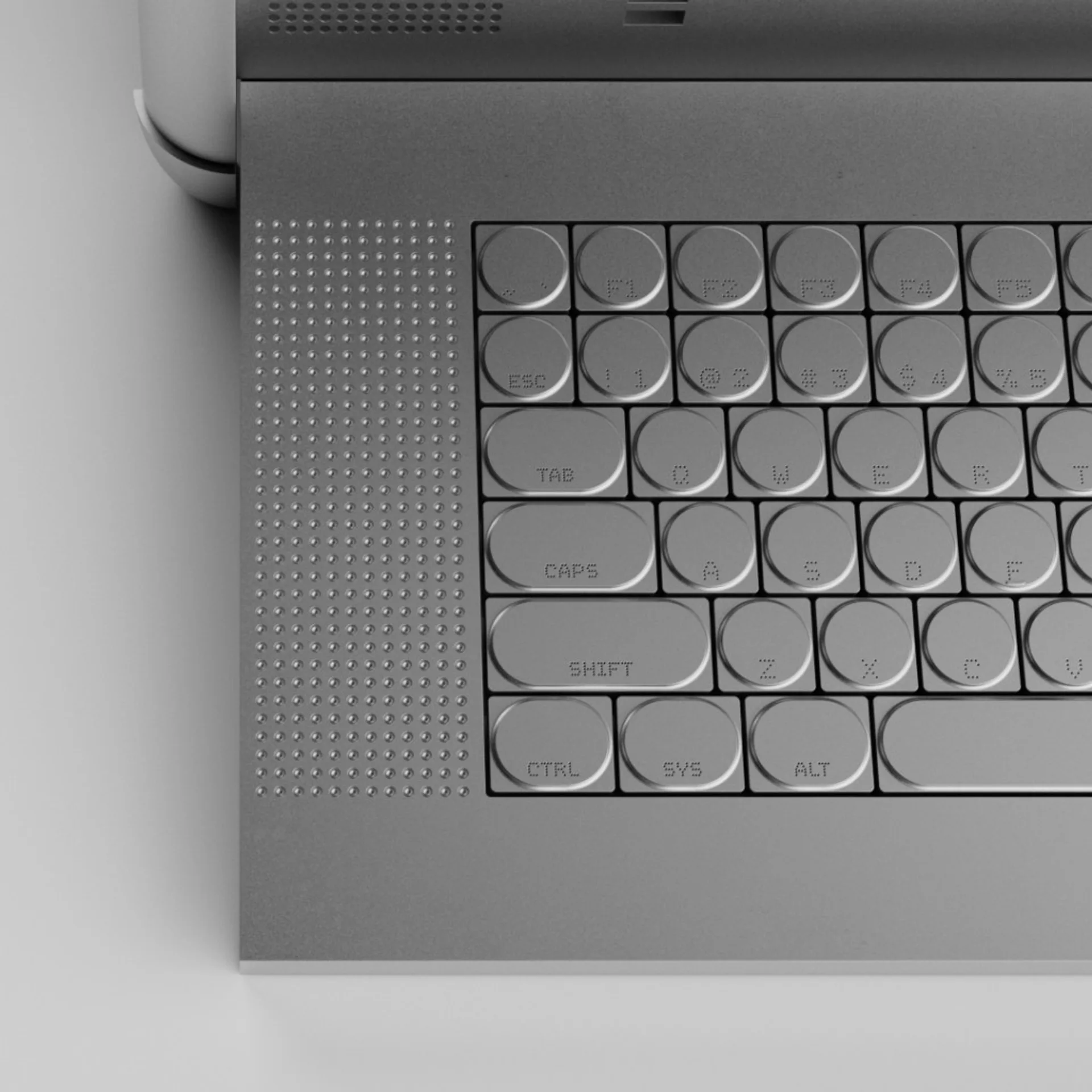
Power, cooling, and the fine print
The Omnia draws from a redundant, 80 Plus Platinum-rated power supply. It also relies on a built-in cooling system sized for sustained server-class load. Odinn has not published deep dives on either subsystem yet – expect enterprise-grade bulk when final documentation lands.
Until those details ship, the honest read is: this is not a quiet living-room PC. It’s a portable compute cluster with a screen bolted on, and it will behave like one.
Who it’s for (and what it costs)
This is gear for defense-adjacent labs, high-end VFX teams on location, research groups that cannot send data to the public cloud, and enterprises that would rather write one enormous check than negotiate rack space mid-project.
Odinn has not announced official pricing or a ship date. TechRadar notes that industry analysts have floated expectations of $500,000 USD or more based on the component stack – which sounds absurd until you price four H200-class GPUs, multi-socket Epyc, and a petabyte of NVMe a la carte.
Raw Gear Lab take: The Omnia is the rare product where “portable” and “half-million-dollar computer” coexist without contradiction. It’s a statement box about where AI hardware is willing to live – and a reminder that “edge” doesn’t always mean Raspberry Pi. If you need this, you already know. If you’re shopping for a weekend LAN rig, keep walking; your back will thank you.
The short version
Pricing and availability
Odinn has not opened orders or confirmed MSRP. Watch Odinn’s official site and CES follow-up materials for configuration sheets, PSU and cooling specs, and warranty terms. Until then, treat pricing chatter as analyst estimates, not a sticker on the box.