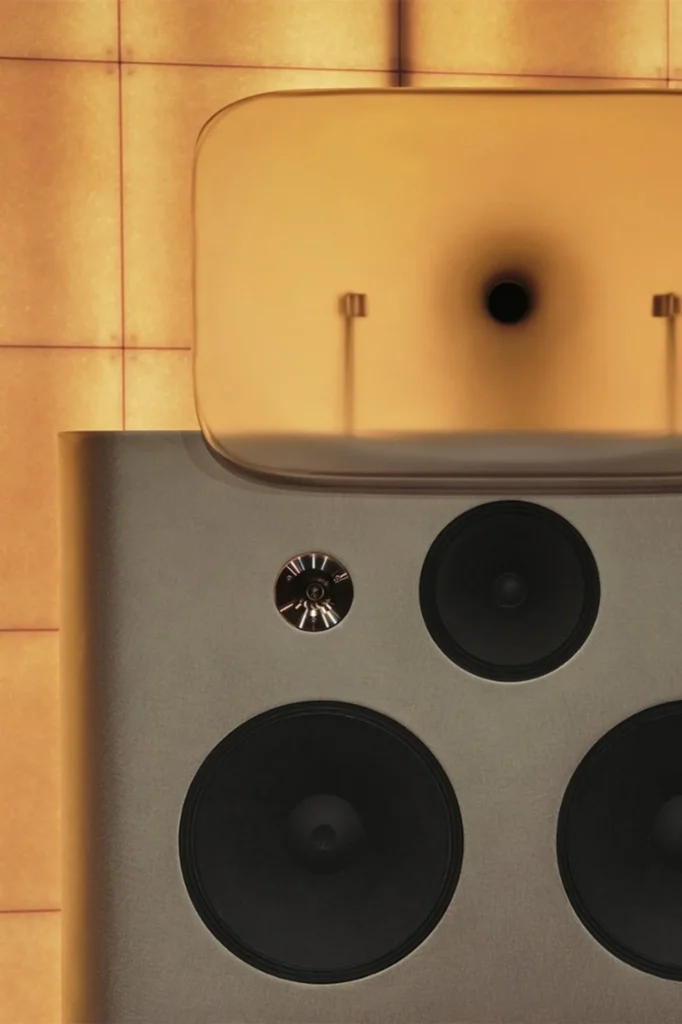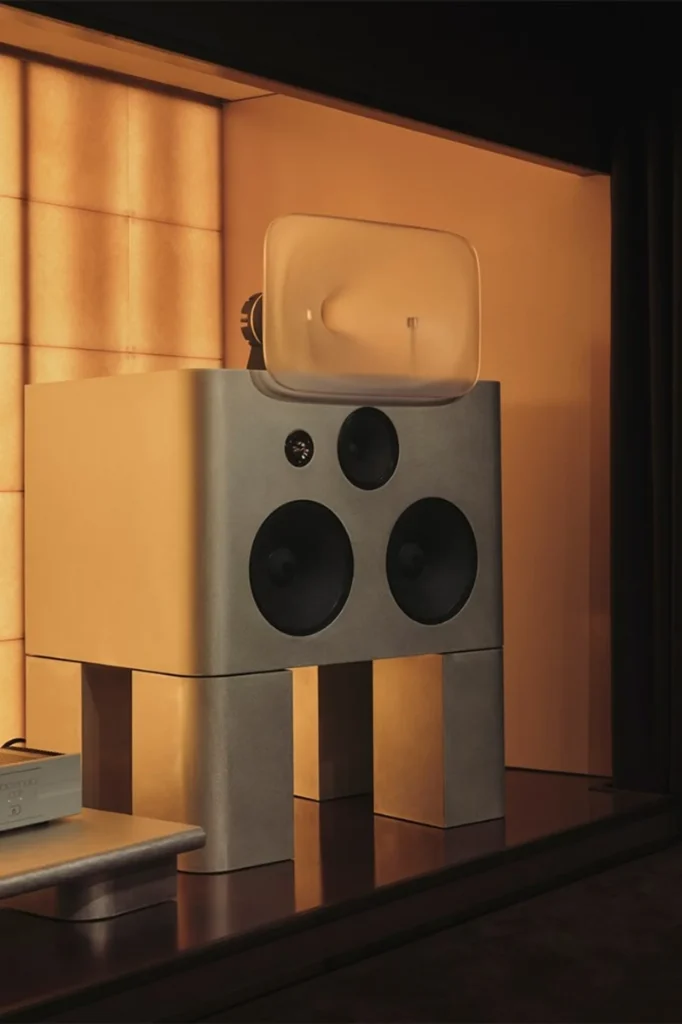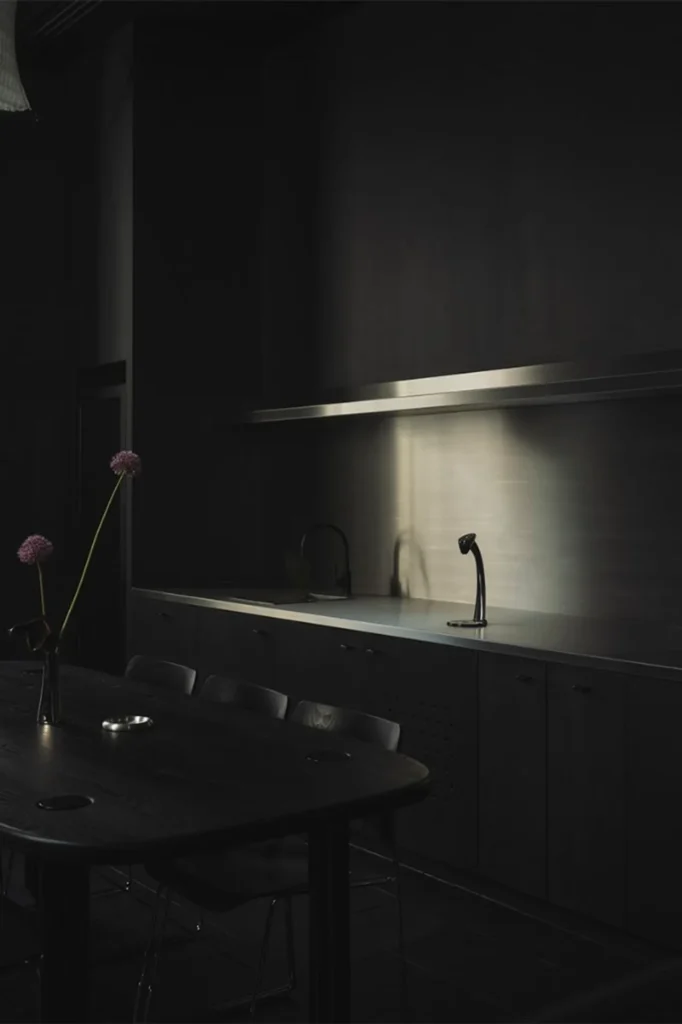

Spotify just opened a Listening Lounge in London – next to its HQ – built to treat sound as the main event. Interiors by CAKE Architecture, a one-off rig by Friendly Pressure, and enough aluminum and resin to make the room feel closer to a temple than a lobby. This is brand theatre – but the craft is real.
What the space is for
The Spotify Listening Lounge is a physical bet on intentional listening – the idea that you sit, shut up, and let a record (or stream) have the room. Spotify framed it as a place where every decision – acoustically tuned walls, color, furniture height – serves that goal instead of filling dead square footage beside the office.
It’s not a retail store. It’s a listening room with a logo on the lease – and a brief that sounds suspiciously like what serious hi-fi people have been saying for decades: environment matters as much as drivers.
The Friendly Pressure sound system
The visual and sonic anchor is an altar-inspired installation flanking a console by London designer Eddie Olin. On either side sit colossal speakers by Friendly Pressure: aluminum bodies, resin horns up top, and a total system weight in the ballpark of half a tonne – call it ~500 kg if you think in metric, or a serious forklift conversation if you think in liability.
Founder Shivas Howard-Brown leaned into parts that barely exist in consumer gear anymore. The copy points to magnet drivers in the lineage of gear used to master iconic albums cut at Abbey Road across the 1960s, ’70s, and ’80s – heritage as flex, but also a statement that carnival stacks and shed-built rigs belong in the same ambition bracket as polished listening rooms.
“Growing up in and around recording studios exposed me to a whole heritage of craft. Sound systems built in sheds, speakers designed for Carnival stacks – these have always had the same ambition as anything you’d find in a high-end listening room. This new space is my attempt to make that argument.”
Shivas Howard-Brown, Friendly Pressure
Work kicked off in May 2025, with Howard-Brown and CAKE Architecture in lockstep so the rig and the shell weren’t fighting each other.
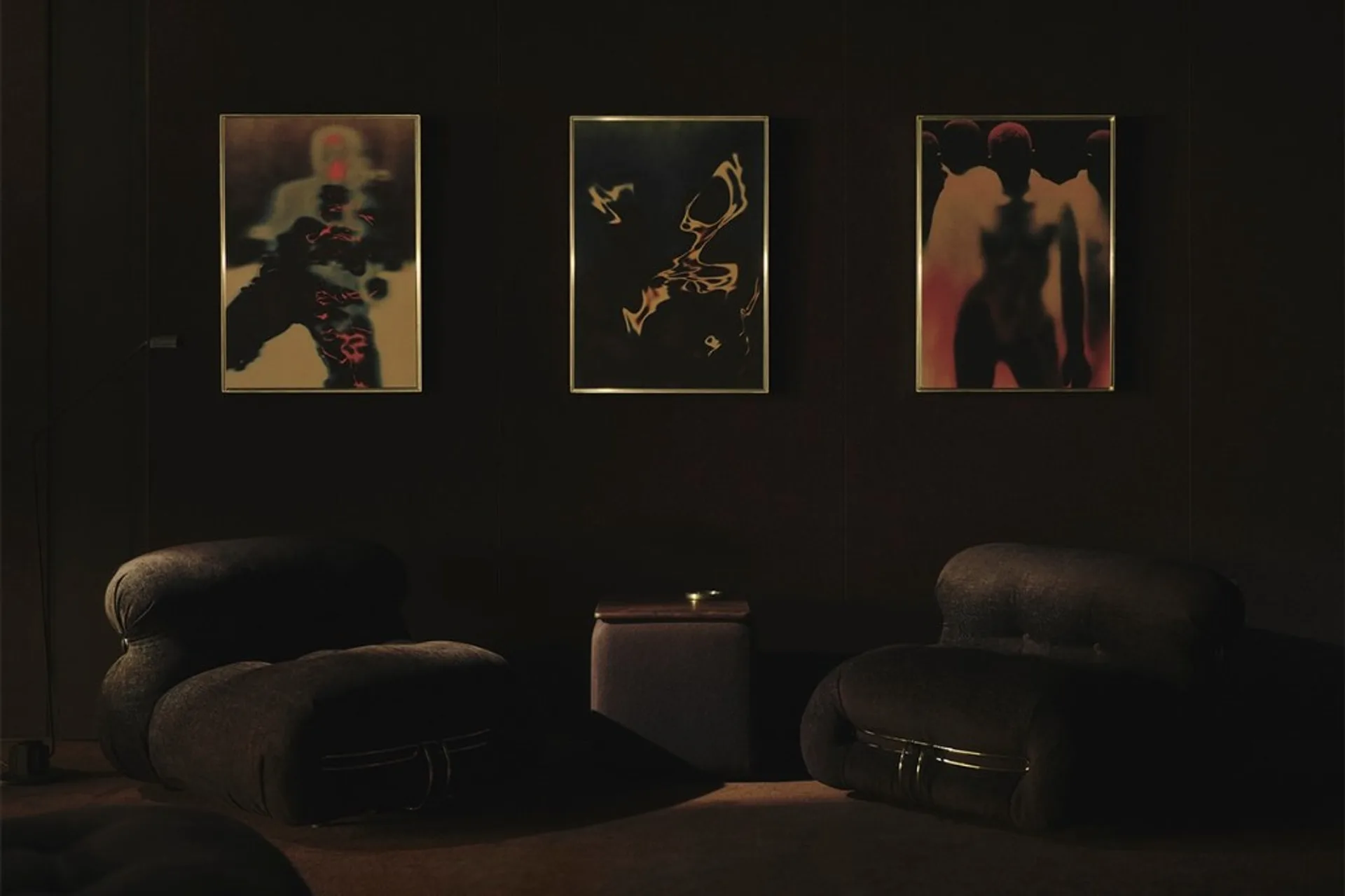
CAKE Architecture: room as instrument
Hugh Scott Moncrieff at CAKE described the brief as treating the room itself as an instrument – not wallpaper acoustics, but pattern and material choices meant to strip interference so the speakers aren’t doing hero work against a sloppy box.
“Every surface pattern and material choice was a functional decision to eliminate interference, ensuring that the craftsmanship of the speakers is matched by the precision of the architecture surrounding them.”
Hugh Scott Moncrieff, CAKE Architecture
Seating went just as deliberate: Cassina Soriana armchairs – low, loungey, and set at a height meant to keep ears where the designers want them. It’s the kind of detail you notice when you stop treating furniture as fill and start treating it as part of the stereo chain.
What happens there next
With build-out finished, Spotify is lining up year-round programming: smaller rooms, closer proximity to artists, and a nod to fans who want something quieter than an arena feed. The company also ties the room to its lossless story – a physical stage for a format it was slow to ship but now wants in the conversation.
The honest take
Raw Gear Lab: You can’t A/B this against your home rig from a browser. What matters is whether Spotify keeps using the space for actual listening or lets it become a backdrop for influencer loops. The ingredients – serious builder, architecture studio that thinks in function, heritage driver talk – suggest someone in the building cares.
If you’re in London and get an invite, bring ears, not just a phone. And if you’re stuck elsewhere, the same lesson applies: room, seat height, and output still beat a new pair of earbuds for meaningful upgrades. Spotify just spent flagship money to say that out loud.
The short version