The Marshall Kilburn III packs amp-stage cosmetics- grille, brass, bass and treble knobs into a 2.8 kg portable with a three-driver stereo stack and 50+ hours of quoted battery. Numbers and features here match Marshall’s U.S. product page (embedded spec data and marketing copy, checked March 2026). Most reviews stop at “it looks cool”; this one weighs industrial design choices against real listening habits whether you stream guitar-heavy playlists, bass-first electronic, dynamic jazz, or hours of podcasts because the Kilburn’s split woofer / full-range layout and Dynamic Loudness circuit are meant to keep all of that listenable without constant app diving.
Kilburn III at a glance
| Spec | Marshall Kilburn III (official) |
|---|---|
| Drivers | One 4″ woofer; two 2″ full-range speakers |
| Amplification | 30 W Class D (woofer) + 2 × 10 W Class D (full-range) — 50 W total |
| Frequency range | 45 Hz – 20 kHz (manufacturer stated) |
| Playtime | 50+ hours portable |
| Quick charge | 20 minutes charge → 8 hours playtime with 30 W USB-C PD charger |
| Full recharge | 3 hours to full with 30 W USB-C PD |
| Water / dust | IP54 — limited dust ingress; water splashes from any direction (per Marshall FAQ) |
| Dimensions | 273 × 150 × 169 mm |
| Weight | 2.8 kg / 6.17 lb |
| Bluetooth | Bluetooth 5.3; range quoted 10 m / 32.8 ft; multipoint; Auracast |
| Codecs | SBC, LC3, MPEG-2 AAC |
| Wired | 3.5 mm aux |
| Extra I/O | USB charging bank for phones (per Marshall feature copy) |
Smaller Marshall portables: Marshall Emberton II vs Emberton III. Brand primer: What Is Marshall?
Design & build
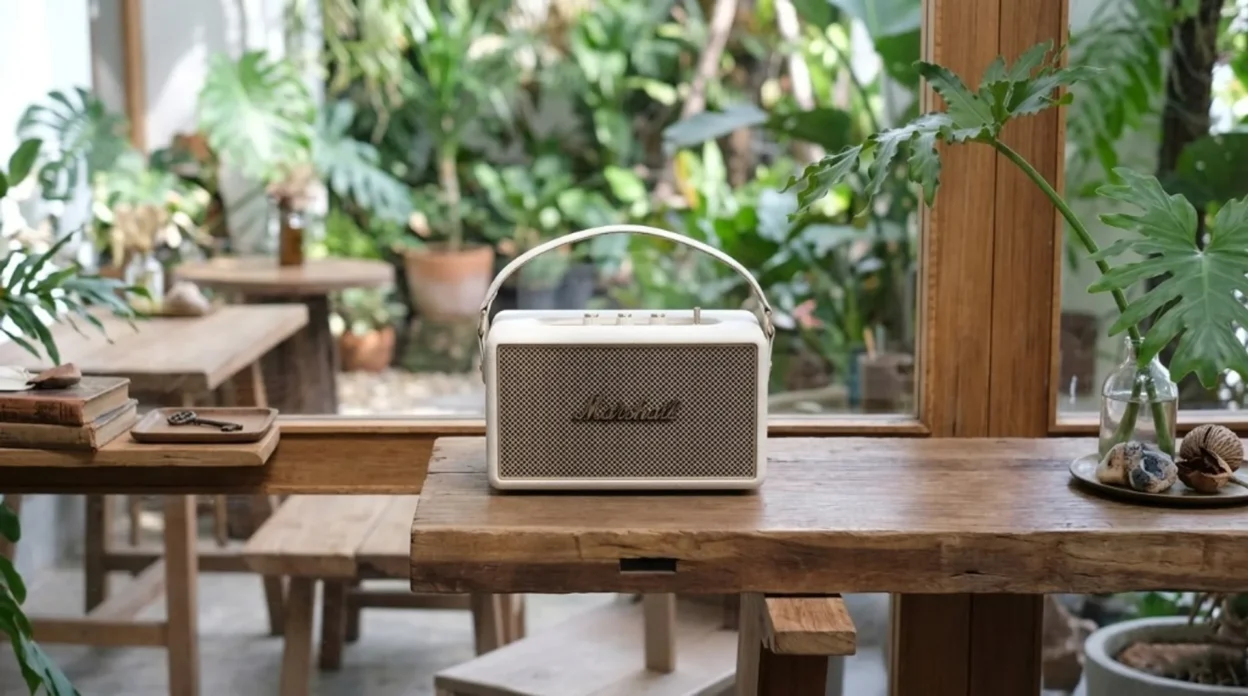
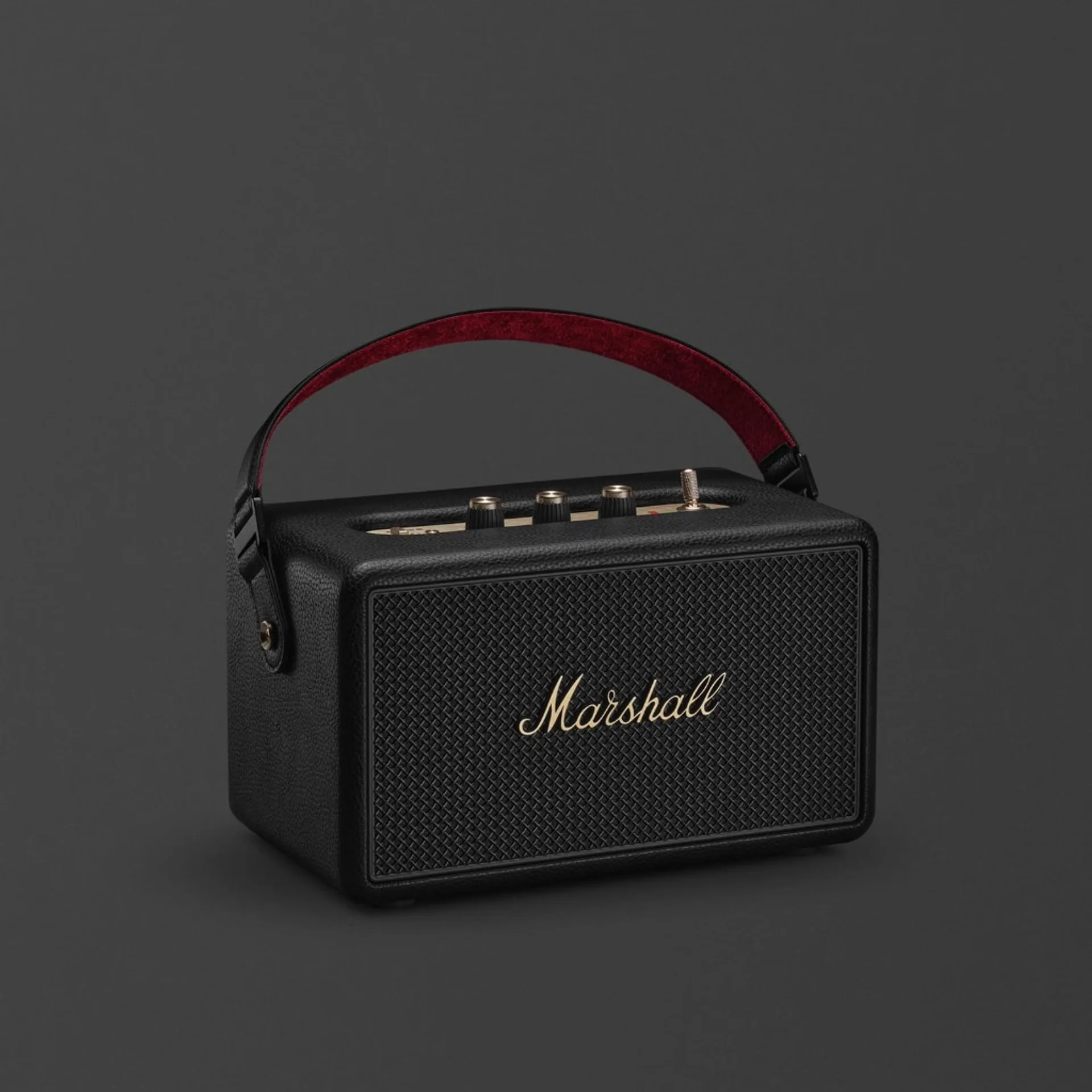
Kilburn III reads as mini amp stack: vertical brick, woven grille, script logo, knurled knobs. Finishes include black and brass with a leather strap — practical for shelf-to-patio moves, though 2.8 kg is felt on long walks. Next to plastic cylinders, the object feels intentionally collectible: something you leave on a desk as room decor that still earns its keep when guests arrive.
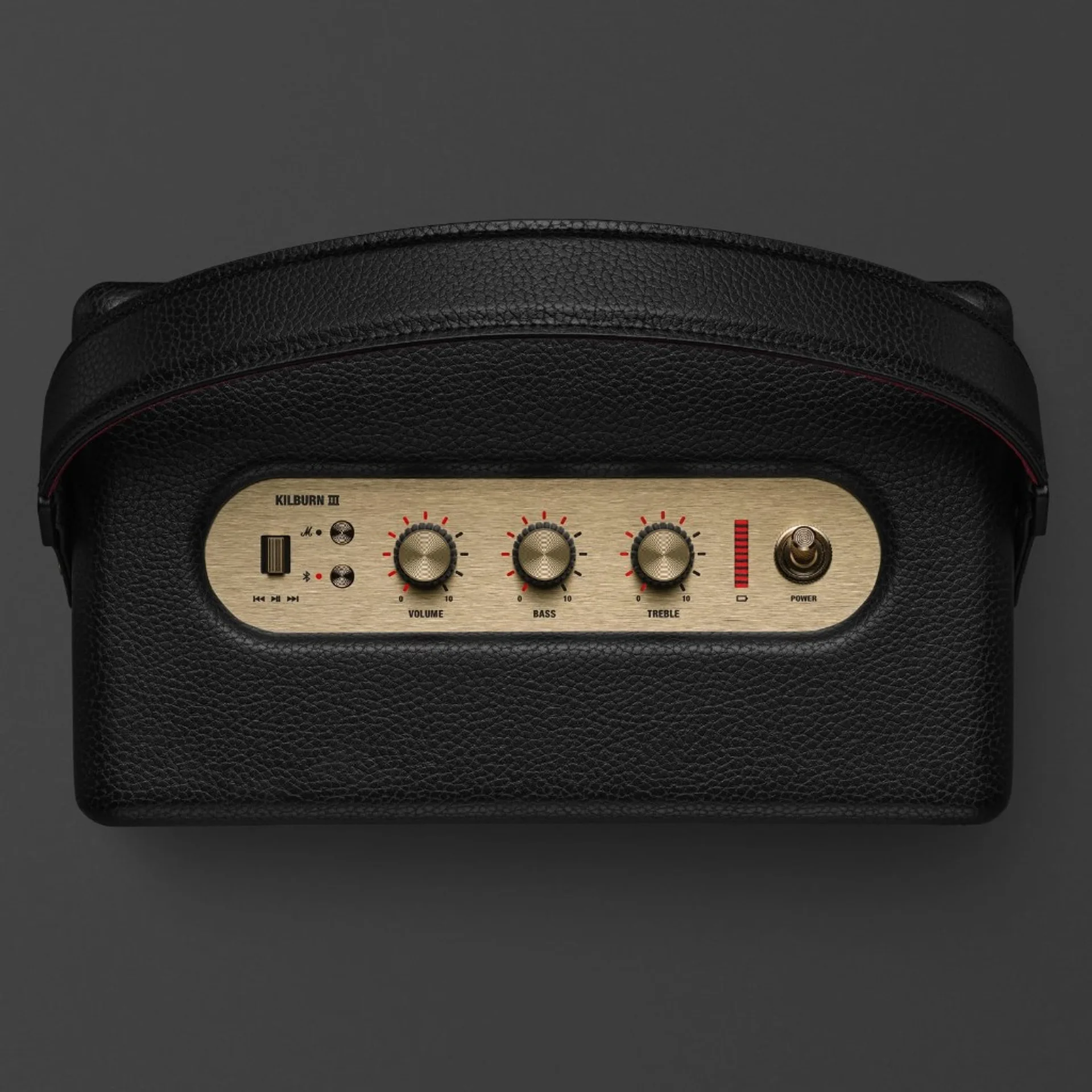
The top panel lists bass, treble, volume, on/off, media jog, M-button, and Bluetooth — ideal if you want tone tweaks without opening an app. That matters when someone hands you the aux cable at a cookout or you are cooking with wet hands: muscle memory beats menus.
IP54 means limited dust and splashes, not IP67 dunking. Pool or river duty belongs to sealed smaller models like Emberton. Marshall also cites authorised repair and spare parts for longevity — a quiet differentiator if you are tired of sealed disposable portables.
Sound quality & genre handling
Acoustically, Kilburn III is stereo in one box: 4″ woofer plus two 2″ full-range drivers, each with Class D power (50 W total). True Stereophonic is Marshall’s label for 360° coverage with no dead zone behind the unit; Dynamic Loudness keeps bass, mids, and treble balanced as you ride the volume knob — useful when a queue jumps from classic rock to loud modern masters.
Rock / guitar music: The woofer + small full-range split keeps guitars and snare present while the treble knob tames harsh streaming highs. Voicing stays Marshall-forward, not studio-flat — rewarding distorted rhythm tracks and live albums where midrange energy carries the emotion.
Electronic & hip-hop: The woofer channel adds chest-level kick in a room; sub-bass under Marshall’s 45 Hz claim will not match a subwoofer, but EDM and trap feel substantial. Add bass if a master is thin. For four-on-the-floor house, the speaker’s job is groove and impact at sane SPL, not club sub pressure.
Jazz, acoustic, vocals: At low volume, Dynamic Loudness is meant to preserve body in bass and air in vocals without cranking the knob. Solo piano and brushed drums benefit when small systems usually sound threadbare after dark. For audiophile neutrality, look elsewhere; here you get musical colour shaped by two knobs.
Podcasts & dialogue: Clear mids/highs aid consonants; reduce treble if a show is bright. Bluetooth latency for video varies by phone — test your device or use aux. The Marshall Bluetooth app is optional but helps OTA updates and presets.
Battery life & charging
Marshall quotes 50+ hours — real use shrinks with volume and cold. 20 minutes on a 30 W USB-C PD charger yields 8 hours playtime; full charge about 3 hours with that adapter. The USB charging bank can top up a phone in a pinch.
Connectivity
Bluetooth 5.3, multipoint (two devices), and Auracast (forward-looking broadcast audio). Codecs: SBC, LC3, AAC. 3.5 mm aux for wired sources and lower latency.
Kilburn III vs Emberton III
Emberton III (~0.67 kg, IP67) wins bags and pools. Kilburn III (2.8 kg, IP54) wins room fill, stereo spread, and knob EQ. More on compacts: Emberton II vs III.
Kilburn III vs JBL Xtreme 3
Xtreme 3 skews IP67 party tank and JBL’s ecosystem; Kilburn skews Marshall design, hardware tone controls, and long quoted runtime. Pick on weather needs and brand taste, not a spec race.
Who should buy the Marshall Kilburn III?
Buy for mid-size room fill, amp aesthetics, knob EQ, and genre-hopping playlists in homes or covered outdoor spots. Skip for ultraportable or IP67 abuse; skip if you need voice-assistant smart speakers.
Verdict
Kilburn III is Marshall’s style-led middleweight: credible stereo from one cabinet, long quoted battery, modern Bluetooth, and honest IP54 limits. The selling point is not raw specs alone but hardware you want on the shelf and sound that stays fun across rock, electronic, jazz, and speech once the knobs are in play.
FAQ
Is the Marshall Kilburn III waterproof?
No — Marshall rates it IP54, meaning limited dust protection and resistance to water splashes. It is not marketed for submersion. For pool or river use, consider IP67 models such as Emberton III on Marshall’s lineup.
How long does the Kilburn III battery last?
Marshall quotes 50+ hours of portable playtime. Loud outdoor listening and cold weather reduce real-world results. A 30 W USB-C PD charger enables the stated 3-hour full recharge and 20-minute quick top-up for 8 hours of playback.
What is True Stereophonic on Kilburn III?
Marshall’s term for multi-directional stereo from a single speaker, aiming for 360° coverage without a single “dead” zone behind the cabinet — implemented with stereo driver layout, tuning, and wide-band drivers per the product FAQ.
Does Kilburn III support Bluetooth multipoint?
Yes — Marshall’s product data lists Bluetooth multipoint connectivity alongside Bluetooth 5.3 and Auracast.
Can I use Kilburn III wired?
Yes. Marshall specifies a 3.5 mm aux input for analogue sources (turntable preamp, interface, or legacy player) with appropriate output levels.
Is the Kilburn III the same as the Emberton for sound?
No. Emberton is a compact sealed design for maximum portability; Kilburn uses a larger woofer and separate full-range pair for more physical bass and wider stereo imaging in a room. They share Marshall branding and app support, not acoustic architecture.