A vinyl record is a flat rotating disc carrying a spiral groove modulated with analog audio. A stylus rides that groove; a cartridge turns mechanical motion into an electrical signal; a phono preamplifier applies RIAA equalization so what you hear matches what was cut at the mastering lathe. Everything else- collecting, pressing quality, ritual- builds on that physics. This guide explains what a record is, where it came from, how it is manufactured, and how playback actually works, without pretending the format beats digital on every score.
What is a vinyl record? (plain definition)
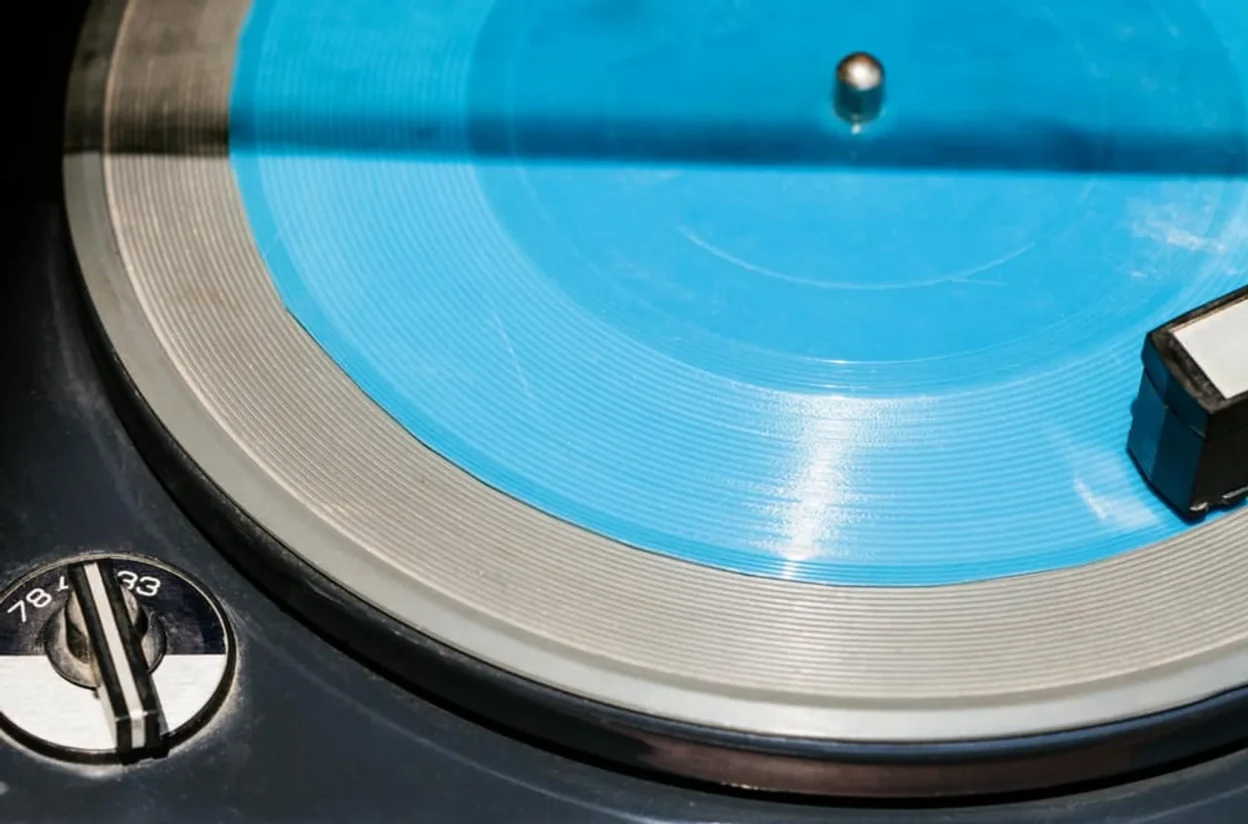
In engineering terms, a consumer vinyl record is a lateral- or stereo-modulated spiral groove pressed or cut into a thermoplastic disc. The groove walls move a diamond or sapphire stylus as the platter rotates at a constant speed; the cartridge converts that vibration into voltage. No digits in the groove — only geometry.
In everyday language, “vinyl” means the black disc people put on a turntable, especially the LP (long-playing album) format. Collectors may say “wax” or “records”; they usually mean the same object family.
A short history: cylinders to LPs
Thomas Edison’s phonograph (1877) proved mechanical recording and playback on cylinders. Emile Berliner pursued flat rotating discs instead — easier to store and, with replication from a master, suited to mass distribution. The U.S. Patent Office issued Berliner Patent 372,786 for gramophone-related claims on November 8, 1887 (see Library of Congress patent document). The Smithsonian and Library of Congress Berliner collection document how disc playback became a commercial rival to cylinders.
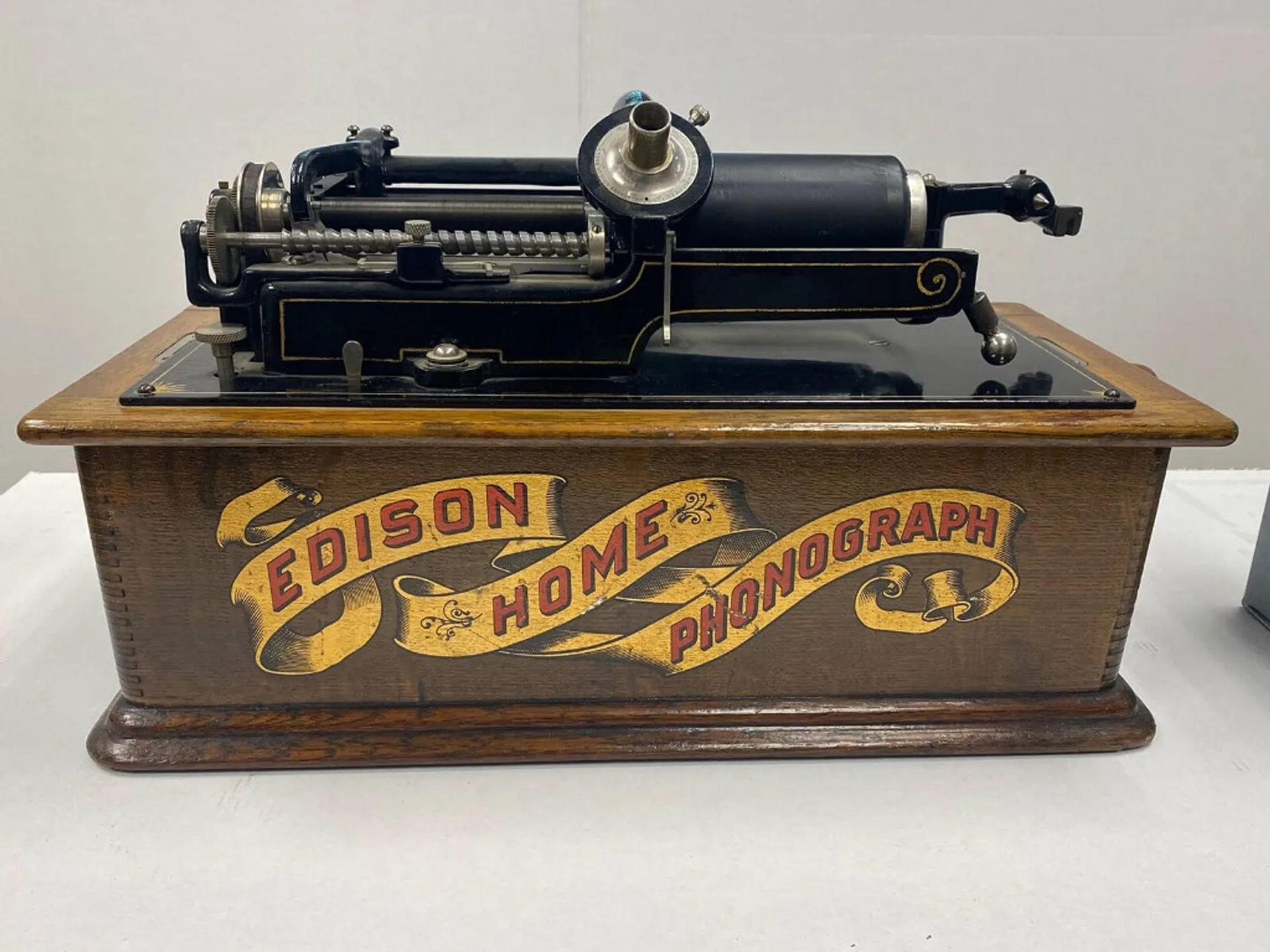
Early discs used materials such as hard rubber and then shellac compounds (not PVC). The roughly 78 rpm era (speed was not perfectly standardized across labels early on) dominated until the late 1940s. Those grooves are wider than modern microgroove LPs; playback requires a different stylus profile.
Columbia Records introduced the microgroove long-playing record at 33⅓ rpm in 1948, with a public demonstration widely reported for June 21, 1948 in New York. The format extended playing time per side dramatically versus 78s. The Library of Congress “Now See Hear” blog discusses early Columbia LPs in historical context. RCA Victor responded with the 7-inch 45 rpm single, introduced in 1949 — a format that became the backbone of jukeboxes and hit singles.
Stereophonic LPs, using two channels encoded in one groove, reached the consumer market in the late 1950s. The industry coalesced on the Westrex-style 45°/45° modulation (each channel modulates along an axis 45° from vertical). The Audio Engineering Society historical notes summarize stereo disk development.
PVC “vinyl” pressings became the norm for consumer discs in the postwar period; the word vinyl in hobbyist speech refers to that plastic base, even though earlier discs were not vinyl at all.
What records are made of
Today’s mainstream pressings are predominantly polyvinyl chloride (PVC) with additives (plasticizers, stabilizers, pigments). Black records are typically carbon black for appearance and some UV stability. Colored vinyl swaps or supplements pigments; some collectors argue colored stock sounds different, but variance is often swamped by mastering, plating, and pressing plant quality.
Shellac 78s are brittle and heavier; they predate the vinyl LP era. Do not play historical shellac with a modern LP stylus meant for microgroove — wrong radius and tracking force damages both disc and stylus.
How a record is made (lacquer to pressing)
Commercial vinyl production follows the same broad outline it has for decades (details vary by plant):
- Mastering: An engineer prepares the audio for vinyl (bass summing, sibilance control, sequencing, spacing). A cutting lathe carves a modulated spiral into a lacquer (or, in some workflows, a DMM copper disc).
- Metalwork: The lacquer is metalized and electroformed to create a father/mother/stamper family (terminology varies; some plants use one-step processes). The stamper is the durable negative used in the press.
- Pressing: PVC biscuits are heated and squeezed between stampers under pressure. The label is often pressed in simultaneously. The disc cools and is trimmed.
- Quality control: Visual inspection, weight checks, and sometimes test plays.
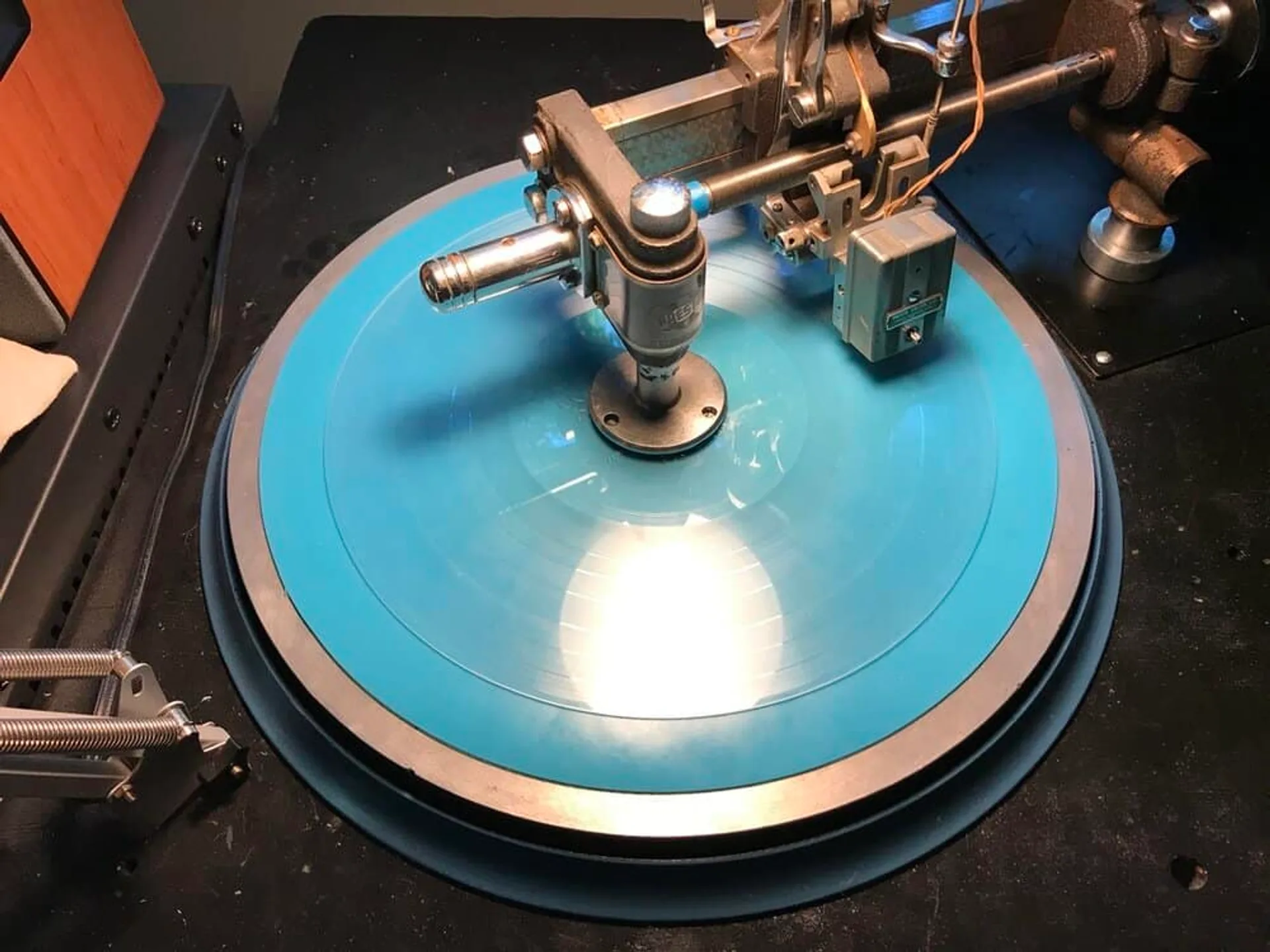
Audiophile reissues may advertise half-speed mastering, 180-gram weight, or specific pressing plants. Weight alone does not guarantee sound quality — the cut and plating matter more.
The groove: mono, stereo, and what the stylus sees
A mono microgroove modulates side-to-side (lateral) motion. A stereo groove encodes two channels as combinations of lateral and vertical motion via the 45°/45° scheme: each channel’s signal moves the cutting stylus along one diagonal axis; on playback, the cartridge generates two voltages from one tip.
The stylus profile (conical, elliptical, line contact, etc.) changes how much of the groove wall it contacts. Narrower contact can retrieve more high-frequency detail but is less forgiving of worn grooves or setup error. Vertical tracking angle, azimuth, overhang, and tracking force exist because the groove is a mechanical system — small errors become distortion or uneven channel balance.
Speeds and formats: 33⅓, 45, 78, LP, EP, single
| Speed | Typical diameter | Common role |
|---|---|---|
| 33⅓ rpm | 12″ (also 10″ historically) | LP albums; ~20–25+ minutes per side depending on cut level and groove spacing |
| 45 rpm | 7″ (12″ singles or EPs also) | Singles; shorter sides, wider groove pitch possible; some albums issued at 45 on multiple 12″ discs for sound quality |
| 78 rpm | 10″ / 12″ (varies) | Historical shellac era; not interchangeable with LP stylus and gain settings |
An EP (extended play) usually carries more music than a two-song single but less than a full LP — the term is not rigidly standardized across decades and labels, so always check speed and diameter on the sleeve.
The playback chain: turntable to speakers
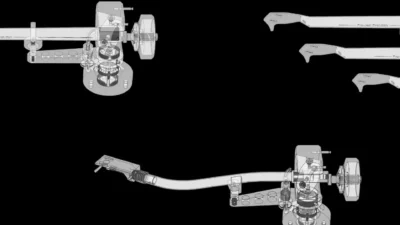
- Turntable: Rotates the disc at a stable speed (direct drive, belt drive, or idler — each has tradeoffs in noise and maintenance).
- Tonearm & cartridge: Holds the stylus at the correct geometry; cartridge outputs a low-level signal.
- Phono preamplifier: Applies gain and RIAA equalization.
- Preamplifier / integrated amp / powered speakers: Line-level processing and volume.
- Power amplifier & speakers (or headphones).
USB turntables digitize after the phono stage; their quality depends on the same mechanical setup as analog-only decks.
RIAA equalization (why it exists)
On the lacquer, bass is reduced and treble is boosted (pre-emphasis). On playback, the phono stage reverses that curve (de-emphasis). The result is a flat frequency response for the listener while the groove carries a spectrally shaped signal.
Why bother? Narrower grooves (more time per side), less excessive low-frequency excursion (which can make adjacent grooves collide), and masking of some surface noise in the highs after de-emphasis. The Recording Industry Association of America (RIAA) standardized this curve for the U.S. industry in the 1950s; it became the de facto global convention for stereo LPs. Technical summaries appear in Wikipedia’s RIAA equalization article and in engineering references such as Stereophile’s long-form RIAA feature (secondary commentary with diagrams).
If you plug a turntable into a line input without RIAA correction, the sound will be thin bass and shrill treble — the wrong curve.
Care, storage, and common damage
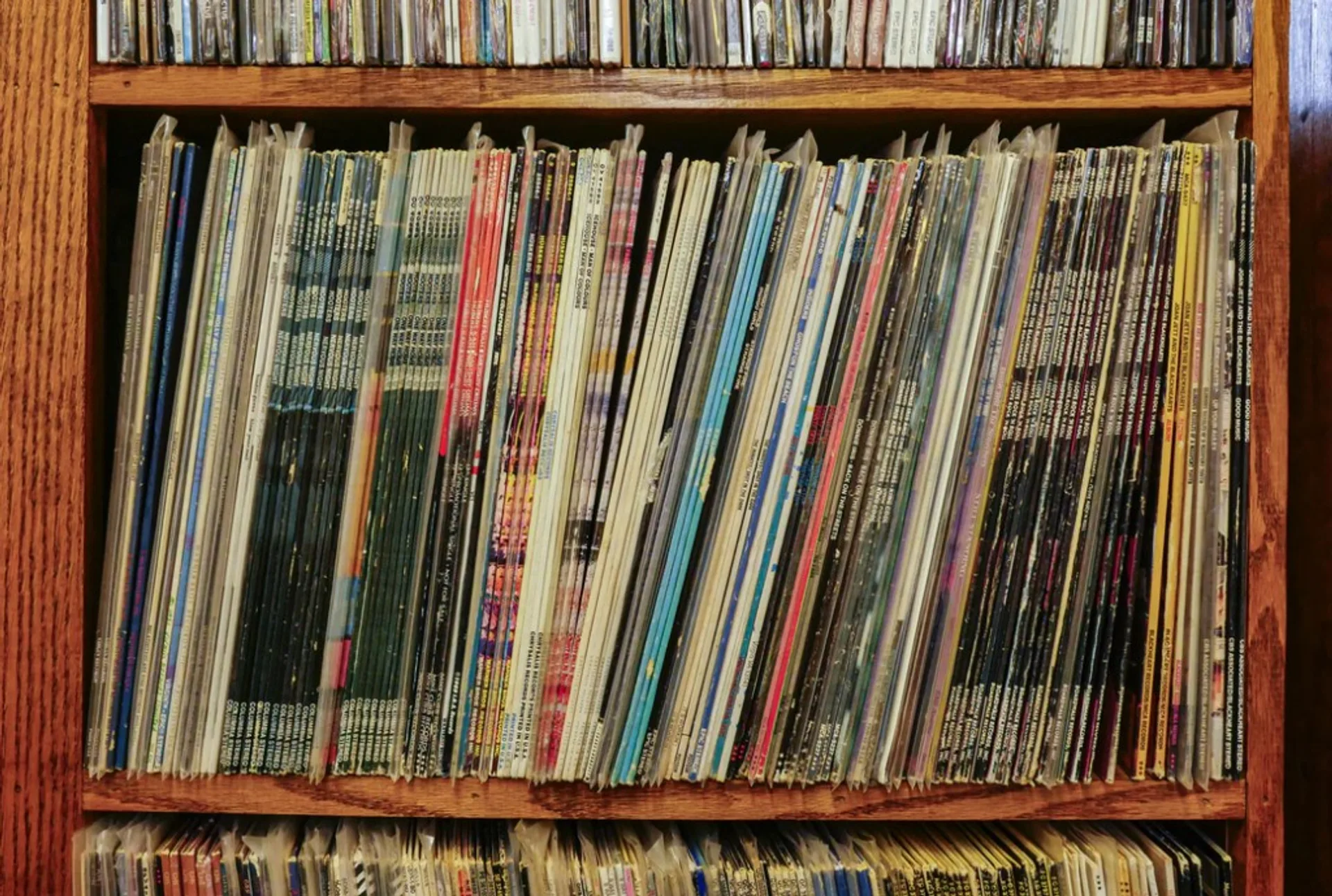
- Vertical storage (records upright, not stacked flat) reduces warping risk.
- Heat warps PVC; keep records out of attics and hot cars.
- Inner sleeves: Paper can scuff; high-density polyethylene or rice-paper inners are gentler. Outer sleeves protect jackets.
- Cleaning: Dry brush before play; deeper cleaning uses safe fluids and machines (vacuum or ultrasonic) — follow manufacturer guidance so labels and adhesives survive.
- Static: Dry climates build static; carbon-fiber brushes and humidification help.
- Wear: Repeated plays with excessive force, misaligned cartridges, or DJ back-cueing wears grooves. Worn records sound dull and noisy.

Vinyl vs digital: what is true, what is myth
True: Vinyl is a continuous-time mechanical playback system. CD and PCM files are sampled and quantized. Both can sound excellent; neither is philosophically “purer” in every way.
True: Vinyl adds surface noise, wow and flutter from the drive, inner-groove distortion (geometry gets tougher at smaller radius), and channel separation limits far below good digital.
Myth (oversimplified): “Vinyl is warmer.” Often what people call warmth is rolled highs, harmonic distortion from cartridges and tubes, or mastering differences between LP and streaming masters. Same mastering chain, level-matched blind tests rarely favor one medium every time.
Market note: Trade groups such as IFPI publish annual reports on global recorded music revenue; physical formats including vinyl remain a tracked category alongside streaming. Exact shares move year to year — check the current report rather than trusting forum statistics.
The honest take (Raw Gear Lab)
A vinyl record is not magic. It is a beautiful, fragile, mechanical medium that forces you to listen actively and maintain gear. If you love jacket art, liner notes, and one album per side as a pacing device, vinyl earns its shelf space. If you want silent backgrounds and perfect repeatability, digital wins on measurement. The smart move is to stop arguing and buy the master you like on the format that fits your room and patience.
Related: Spotify Exclusive Mode on Windows (bit-perfect path) →
FAQ
What is a vinyl record in simple terms?
It is a plastic disc with a spiral groove cut into it. The groove’s shape stores sound. A needle (stylus) traces the groove while the disc spins, and electronics turn that motion into music.
What is the difference between vinyl and an LP?
Vinyl names the material (PVC-based stock). LP (long-playing record) names a format: usually a 12-inch disc at 33⅓ rpm with microgrooves. All LPs discussed today are vinyl; not all vinyl records are LPs (e.g. 7-inch 45s).
Why do records spin at 33⅓ and 45 rpm?
They are industry standards chosen for sound quality, groove spacing, and playing time. 33⅓ was tied to Columbia’s LP launch; 45 was RCA’s single format. Turntables are built to those speeds so records are interchangeable.
What is RIAA on a turntable?
It is equalization, not a brand. The phono stage applies the RIAA curve so the signal from the cartridge matches the way the disc was cut. Without it, tonal balance is wrong.
Can you play a vinyl record without a turntable?
Not in any practical sense for full-quality playback. You need rotation at the correct speed and a stylus in the groove. “Vinyl converters” are still turntables with electronics attached.
How long does a vinyl record side last?
Typical LP sides run about 18–22+ minutes at 33⅓ rpm, depending on how loud and bass-heavy the cut is. Longer sides require narrower grooves and lower level; extreme lengths can compromise headroom.
What is a 180-gram vinyl record?
A pressing made from a heavier biscuit of vinyl. It can feel more substantial and may warp slightly less easily when stored well, but it does not automatically sound better than a well-pressed standard-weight disc.
Are vinyl records better than CDs or streaming?
Not objectively. Vinyl has higher noise and more mechanical variables. Many people prefer vinyl for ritual, artwork, and mastering choices, not because the groove beats PCM on a spec sheet.
Who invented the vinyl record?
No single person “invented” the modern LP. Emile Berliner pioneered the flat disc gramophone in the 1880s. Columbia introduced the microgroove LP in 1948. PVC pressings evolved with the industry.
What is the difference between mono and stereo vinyl?
Mono uses lateral groove modulation. Stereo encodes two channels in one groove using the 45°/45° system. A mono cartridge or mono switch can reduce noise on mono pressings; stereo cartridges play both types.
Can a worn record be fixed?
Groove wear is permanent. Cleaning can remove clicks from dirt; it cannot restore erased wall detail. Some archivists use optical or laser playback for preservation, which is outside normal home hi-fi.
Is new vinyl as good as old vinyl?
It depends on the master source, cutting engineer, and pressing plant. Some new pressings are excellent; some are digital masters pressed to vinyl with no special advantage. Age alone does not determine quality.