

Marshall sells a lot of Bluetooth speakers – pocketable cubes, battery portables with straps, party towers with lights, and amp-shaped bookshelf Bluetooth speakers that never leave the shelf. The comparison table below lists the full current lineup on Marshall’s U.S. store (specs and MSRP from the manufacturer). After the table, we single out the models that fit most buyers and walk through who should buy what.
Quick comparison: full Marshall Bluetooth speaker lineup (U.S.)
This is the complete model matrix for Marshall’s current consumer Bluetooth speakers on Marshall.com (U.S.) at research time. Tables are split by how you power them so columns stay wide enough to scan. Each model has a short spec row plus one detail line for charging, pricing notes, and role in the range. Home Stanmore III and Woburn III use RCA and 3.5 mm (no optical) per Marshall.Connections lists wireless extras and physical inputs. Scroll sideways on small screens.
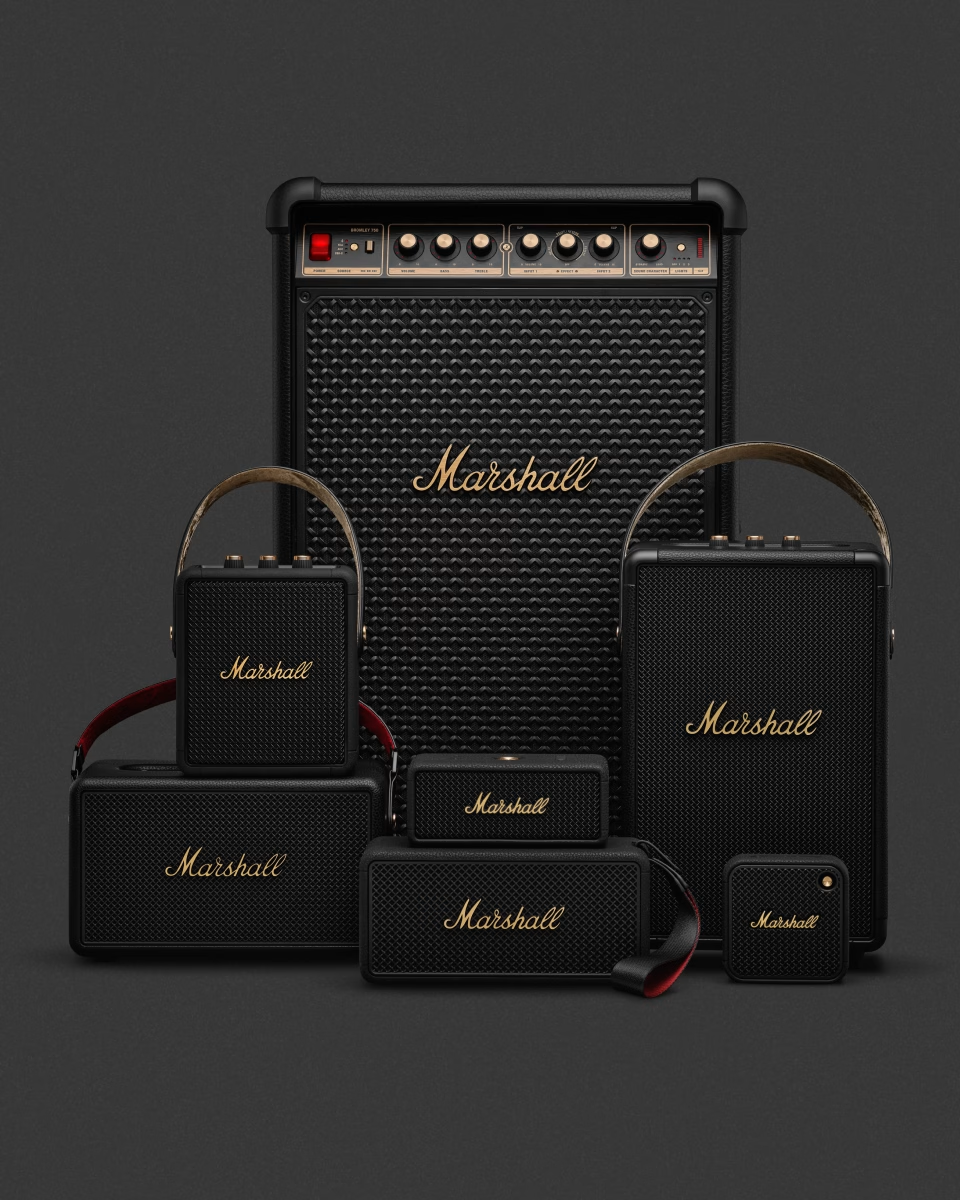
Portable (battery)
| Model | Playtime / power | Weather | Connections | MSRP |
|---|---|---|---|---|
| Willen II | 17+ h portable | IP67 | Bluetooth multipoint · Marshall app · LE Audio-ready | $89.99 |
| Sale price on Marshall.com; list $129.99. Quick charge ~20 min → ~5.5 h play. Mono; strap; built-in mic for calls. | ||||
| Stockwell II | 20+ h portable | IPX4 | Bluetooth only (no Marshall app) | $149.99 |
| Often discounted from list $229.99. Budget stereo portable; splash resistance only. | ||||
| Emberton III | 32+ h portable | IP67 | Bluetooth multipoint · Marshall app · LE Audio-ready | $179.99 |
| Full charge ~2 h; ~20 min quick charge → ~6 h. Compact stereo; our small-bag pick in the guide below. | ||||
| Middleton II | 30+ h · USB charge-out | IP67 | Bluetooth · Marshall app | $329.99 |
| Mid-size stereo between Emberton and Kilburn; phone charging from the speaker. | ||||
| Kilburn III | 50+ h · USB charge-out | IP54 | Bluetooth · Marshall app | $379.99 |
| Our best overall portable below – strap, long runtime, stereo. | ||||
| Tufton | 20+ h portable | IPX2 | Bluetooth (aptX) · no app | $479.99 |
| Largest classic-format battery box; 3-way drivers; least water rating here. | ||||
Home (AC / mains)
| Model | Power | Weather | Connections | MSRP |
|---|---|---|---|---|
| Acton III | AC mains | Indoor | Bluetooth 5.2 · Marshall app · 3.5 mm in | $299.99 |
| Smallest Home Line III – no RCA (Marshall FAQ). Turntable only via preamp → 3.5 mm if you adapt. | ||||
| Stanmore III | AC mains | Indoor | Bluetooth 5.2 · Marshall app · RCA · 3.5 mm | $399.99 |
| No built-in phono – line-level RCA from turntable preamp or deck with built-in preamp. | ||||
| Woburn III | AC mains | Indoor | Bluetooth 5.2 · Marshall app · RCA · 3.5 mm · HDMI | $599.99 |
| Flagship home + TV; Night Mode; same line-level turntable rule as Stanmore. | ||||
Party (Bromley)
| Model | Playtime / power | Weather | Connections & extras | MSRP |
|---|---|---|---|---|
| Bromley 450 | 40+ h · swappable LFP · AC OK | IP55 | BT 5.3 Auracast · mic & instrument · lights (3 presets) · handle | $799.99 |
| ~3.5 h battery charge; mic not included. Max 100 dB @ 1 m (Marshall FAQ). No wheels – outdoor-tilt party box vs 750. | ||||
| Bromley 750 | 40+ h · swappable · AC OK | IP54 | BT 5.3 Auracast · mic · instrument · turntable · lights · wheels · sound character · tripod mount | $1,299.99 |
| Max 127 dB @ 1 m. Runtime varies with volume, lights, EQ. Retractable handle + wheels. | ||||
Marshall confirms Acton III has no RCA; Stanmore III and Woburn III do. Only Woburn III in Home Line III adds HDMI. Bromley 450 is IP55 with a handle; Bromley 750 is IP54 with wheels – Marshall’s FAQ positions 450 as the more outdoor-tilted, smaller, cheaper party box.
How we evaluated Marshall Bluetooth speakers
We leaned on first-party specs from Marshall’s U.S. product and support pages so we are not inventing driver counts or battery claims. In addition:- Portability vs mains power – Do you need a handle, IP rating, and hours off-grid, or a speaker that lives on one shelf forever?
- Sound quality for the size class – Home boxes get bigger woofers and more amplifier watts; portables trade absolute output for weight.
- Connectivity – Bluetooth-only vs RCA / 3.5 mm / HDMI for turntables, TVs, and older sources.
- Build and weather – IP67 (Willen II, Emberton III, Middleton II) vs IP54 (Kilburn III, Bromley 750) vs IP55 (Bromley 450) vs splash/drip (Stockwell II IPX4, Tufton IPX2) splits pool bags from patio parties.
- App and updates – Current portables and Home Line III models work with the Marshall Bluetooth app for EQ, placement correction (home models), and firmware; Stockwell II and Tufton do not, per Marshall.
Best overall – Marshall Kilburn III
Kilburn III is the Marshall portable speaker that still feels like a party piece: stereo True Stereophonic tuning, a carry strap, and battery life that Marshall rates at 50+ hours – enough that your playlist may quit before the cells do.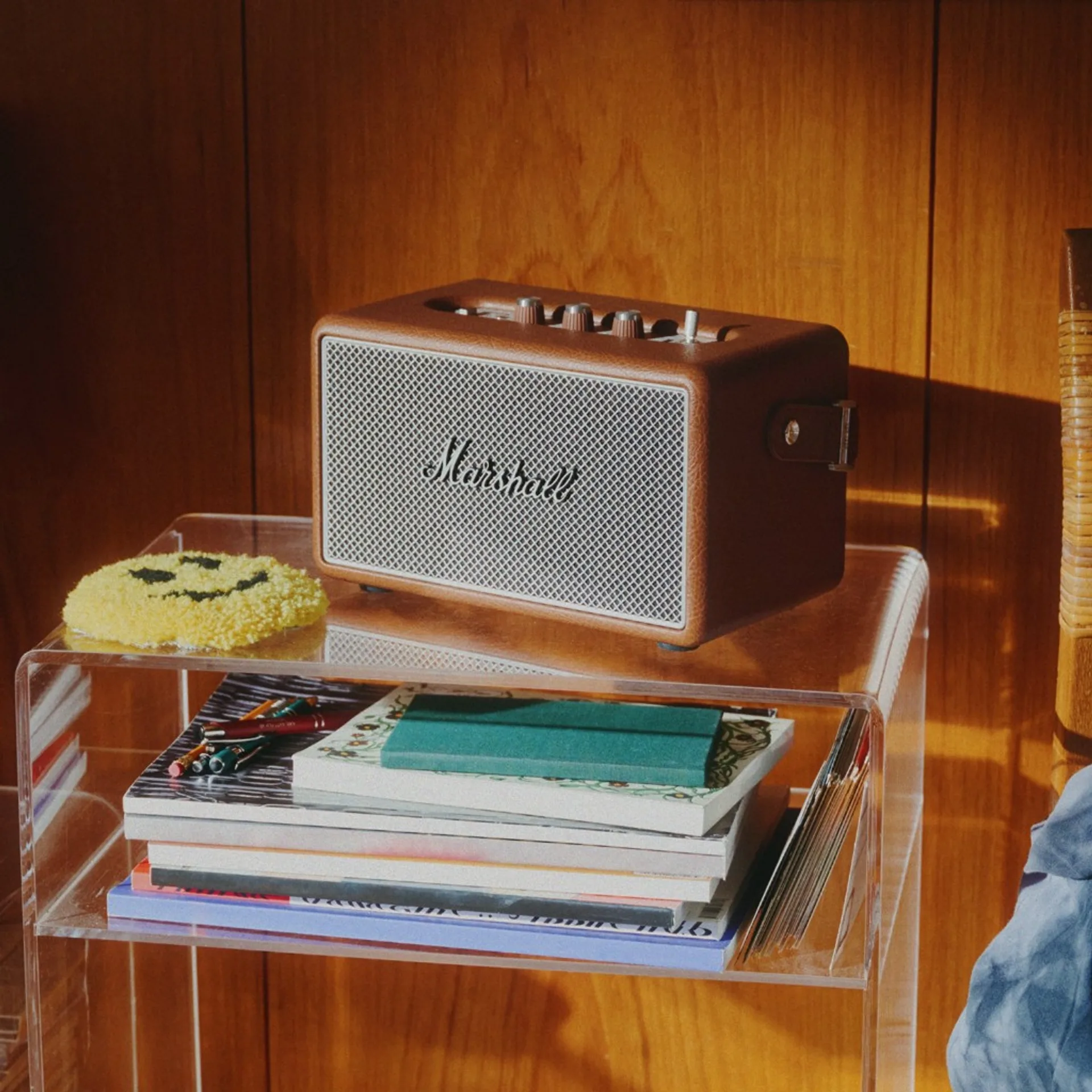
Who it’s for
You want one Marshall portable speaker that can leave the house, survive splashes and dust at IP54, and still fill a living room when you bring it back inside. You are not diving it into a pool – that is Emberton III territory.Sound quality
Marshall markets 360° stereo with no blind spots – wide-band drivers and updated tuning versus older Kilburn generations. Dynamic Loudness adjusts bass, mids, and treble as you ride the volume knob so loud listening does not turn to mush.Build and design
Dimensions per Marshall support: 273 x 150 x 169 mm. The industrial vibe matches the rest of the range – metal grille, amp-style controls, guitar-adjacent strap. IP54 means limited dust ingress and splash resistance from any direction – not submersion.Battery and extras
Beyond the headline 50+ hours, Marshall adds a USB charging bank output so the speaker can top up a phone in the field – a practical touch for festivals and travel.Connectivity and app
Bluetooth streaming plus top-panel controls; Marshall recommends the Marshall Bluetooth app for updates and features such as Listen to Broadcast (beta) where available. The product page does not list Bluetooth multipoint the way Emberton III does – do not assume two-source pairing here without checking your firmware notes.Pros and cons
- Pros: Class-leading quoted battery; true portable stereo; splash and dust resistance; phone charging.
- Cons: Heavier and pricier than Emberton III; IP54 is weaker than Emberton III’s IP67 for real water abuse.
Verdict
For most people who say they want a Marshall Bluetooth speaker and mean “one good box for everything,” Kilburn III is the rational flagship. See our full Kilburn III review when you want a deeper listen.Best compact – Marshall Emberton III
Emberton III is the pocket-rocket Marshall Emberton line update: more bass than the prior generation, 32+ hours of quoted playtime, and IP67 dust and waterproofing – Marshall says submersion up to 1 m for 30 minutes is within spec.
Who it’s for
Backpacks, hotel rooms, beach duty where IP67 matters, and anyone who wants multipoint (Marshall lists Bluetooth multipoint connectivity: Yes on support). If you only need a smaller mono cube and a lower price, see Willen II in the comparison table. If you need a strap and living-room volume, step up to Kilburn III or consider Middleton II in the middle tier.Sound quality
Marshall describes more low-end and a wider soundstage than Emberton II, with Dynamic Loudness keeping balance across volume steps. True Stereophonic is still the marketing spine – a multi-directional stereo image from a small enclosure. For a marshall emberton speaker search, this is the current reference model.Portability
No handle like Kilburn – it is a grab-and-go brick. The trade is minimum carry bulk and maximum weather confidence in the Marshall portable range.Battery life
32+ hours quoted; ~2 hours to full charge; 20 minutes on the charger buys about 6 hours of play per Marshall’s quick-charge claim.Pros and cons
- Pros: IP67; long battery; multipoint; built-in mic for calls; LE Audio-ready hardware; Marshall app support.
- Cons: Less absolute output than Kilburn III or any mains home model; MSRP $179.99 – no longer a sub-$150 impulse buy.
Verdict
Best compact Marshall Bluetooth speaker for harsh environments and long weekends. Deep dive: our full Emberton III review.Best shelf / desktop – Marshall Stanmore III
Stanmore III is the middle child of Marshall’s Home Line III – big enough to mean it on a desk or bookcase, small enough to fit where a full Woburn III will not. Marshall lists Bluetooth 5.2, RCA input, and 3.5 mm input – there is no optical input on the U.S. product page, and no built-in phono stage.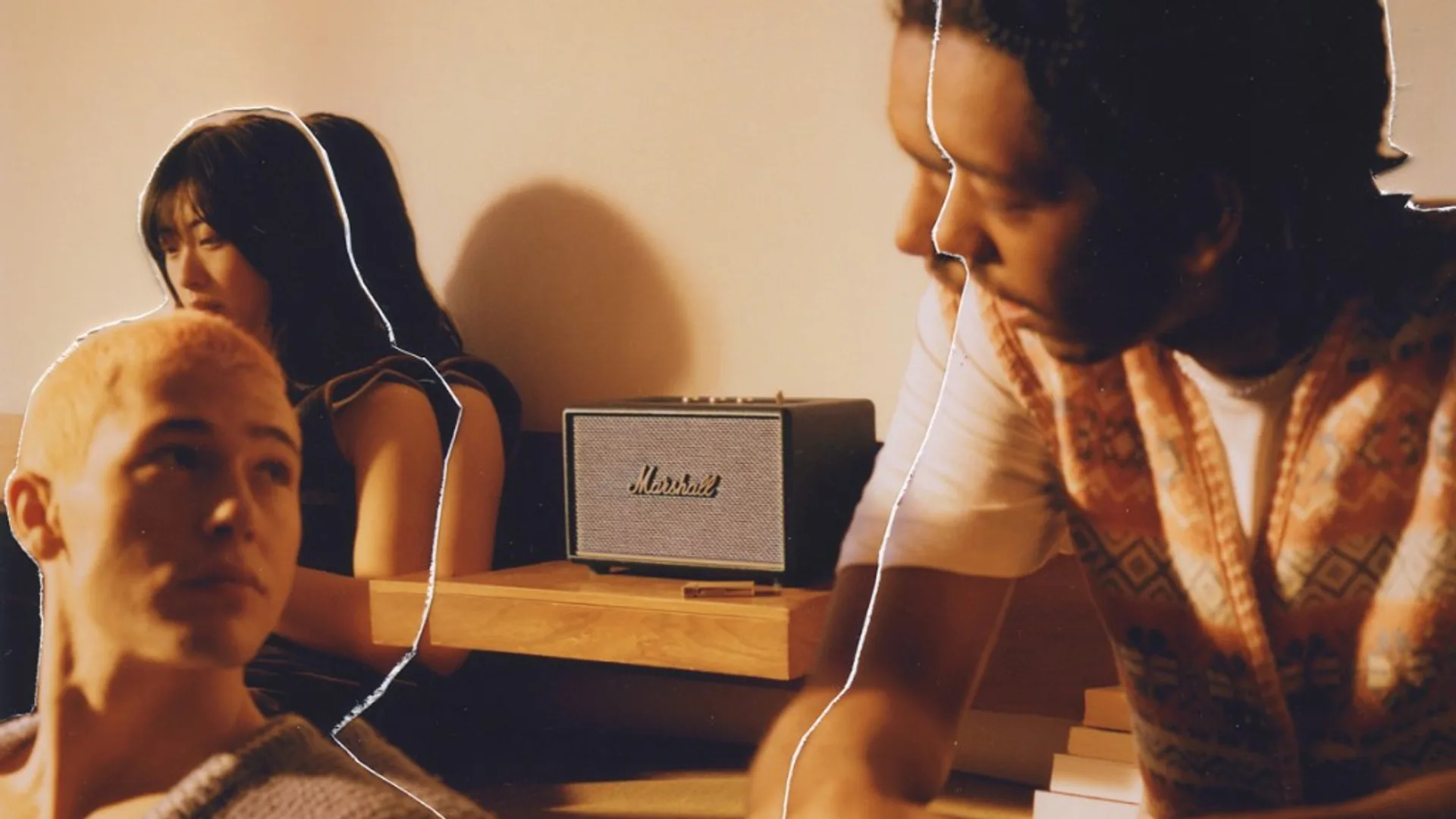
Who it’s for
Anyone who wants a single mains-powered bookshelf Bluetooth speaker with analog wired inputs and the Marshall faceplate aesthetic. It stays put – this is not a portable Bluetooth speaker play.Sound quality
Generation III adds outward-angled tweeters and new waveguides for a wider stereo image. Amplification per Marshall: one 50 W Class D for the woofer and two 15 W Class D for the tweeters. You get separate bass and treble knobs on top plus app EQ.Connectivity and turntables
Important: You cannot wire a turntable cartridge straight in. You need a line-level signal – either a turntable with a built-in phono preamp or a standalone phono stage – then run RCA into the Stanmore. That setup is what most living-room listeners actually use, and it pairs cleanly with this box. Marshall also notes Home III speakers are standalone only – no stereo pairing two units.Design and materials
Dimensions: 350 x 203 x 188 mm. Marshall highlights PVC-free construction with 70% recycled plastic and vegan materials across the home line.Pros and cons
- Pros: RCA and 3.5 mm flexibility; strong app support with placement correction; classic look; sensible size for apartments.
- Cons: No HDMI for TV (that is Woburn III); no phono built-in; not the right tool if you need battery power.
Verdict
The default mains Marshall for desks and medium rooms when you want wired sources without jumping to the flagship. More detail: our Stanmore III review.Best for large rooms – Marshall Woburn III
Woburn III is Marshall’s largest consumer Bluetooth box in this family: 400 x 317 x 203 mm and the heaviest amplifier budget of the three home models. If your problem is open-plan space or TV audio that does not sound like a soundbar in a tube, this is the spec sheet answer.
Who it’s for
Large living rooms, listeners who do not want a separate sub on the floor, and anyone who will use the HDMI port for TV – Marshall documents volume follow with the TV remote and a Night Mode that reins in sudden loud peaks while lifting dialogue.Sound quality
Marshall rates one 90 W Class D amplifier for the woofer, two 15 W for mids, and two 15 W for tweeters – a three-way active layout inside the classic grille. Expect more physical bass extension than Stanmore III simply from driver surface and cabinet volume.Design and footprint
Same design language as the rest of Home III – brass knobs, script logo, wide soundstage tuning – but plan furniture depth; this is a full statement piece, not a monitor wedge.Pros and cons
- Pros: HDMI for TV; RCA and 3.5 mm; highest headroom in the lineup; Night Mode for late viewing.
- Cons: $599.99 MSRP; size and weight; overkill for a small office.
Verdict
The no-apologies Marshall when volume and TV integration matter. Turntable users still need line-level RCA – same rule as Stanmore III.Honorable mentions – Stockwell II and Tufton
Stockwell II uses three Class D amps across a subwoofer and front and rear tweeters with True Stereophonic tuning, 20+ hours battery, and IPX4 splash resistance. Dimensions 180 x 161 x 70 mm. Marshall states it is not supported by Marshall branded apps – buy it for the sound and strap, not for app EQ. USB-C can charge external devices. MSRP on site showed $149.99 against a $229.99 strikethrough at research time – verify live pricing.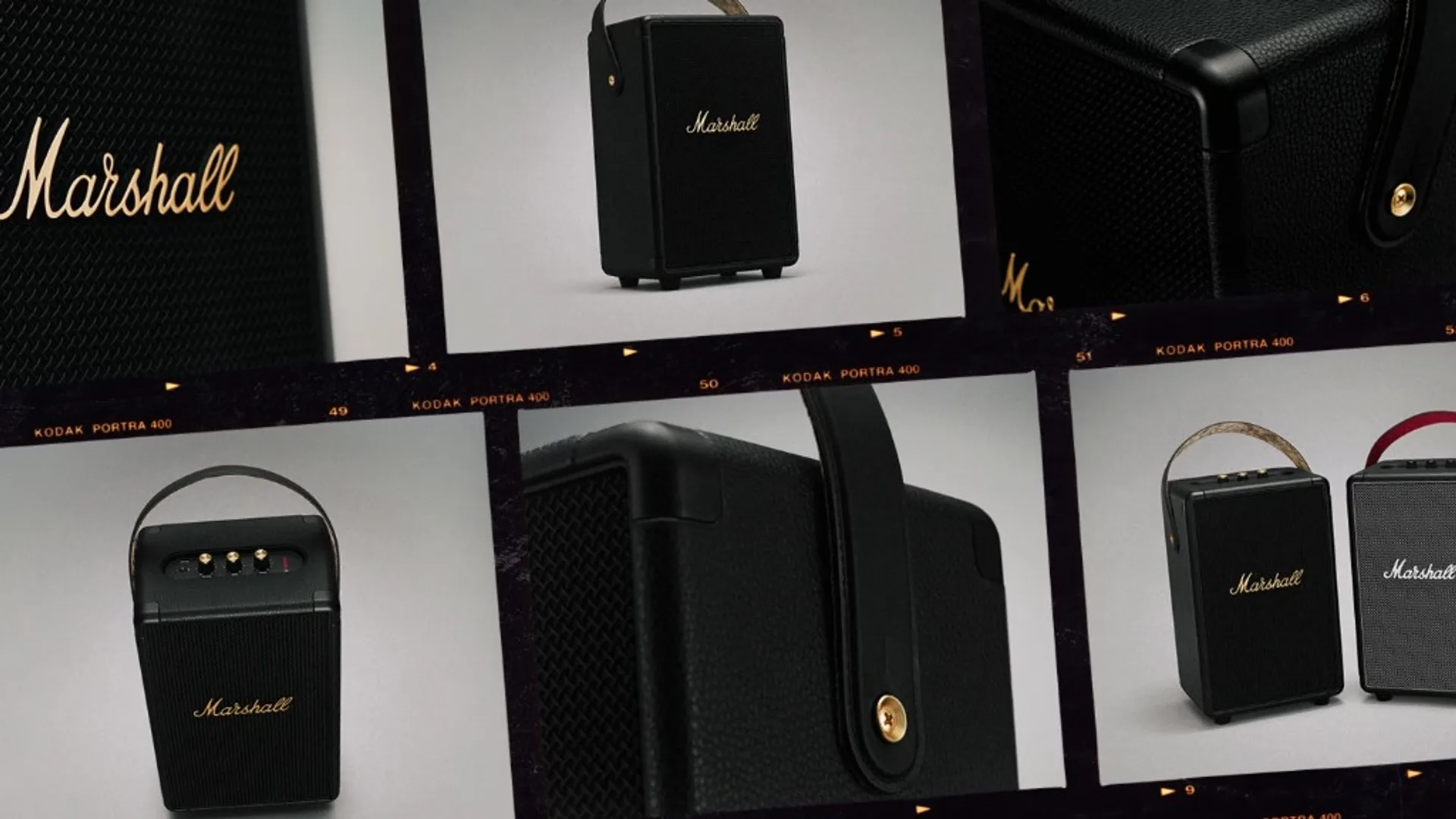 Tufton is Marshall’s largest portable in the classic line – a three-way system with front-firing drivers and an extra rear mid-range driver, 20+ hours playtime, and only IPX2 drip resistance. Marshall’s FAQ confirms aptX Bluetooth support on Tufton. It is the boom box option when Kilburn III is not enough speaker but you still need a battery.
How to choose the right Marshall Bluetooth speaker
- Does it need to leave the house on battery? Tiniest budget → Willen II (mono, IP67). Compact stereo → Emberton III. Mid-size stereo → Middleton II. Long runtime strap speaker → Kilburn III. Boom-box scale → Tufton. Block party → Bromley 450 or Bromley 750 (see table for IP, wheels, SPL).
- Will it live on one shelf forever? Small room → Acton III (3.5 mm only). Medium room → Stanmore III (RCA + 3.5 mm). Large room or TV → Woburn III (adds HDMI).
- Do you have a turntable? Stanmore III or Woburn III – line-level RCA after your own phono stage or deck preamp. Bromley 750 also lists turntable input (party EQ – not a studio monitor). Acton III has no RCA – 3.5 mm from a preamp output only.
- How tough is the environment? Full dunk / dust → Willen II, Emberton III, Middleton II (IP67). Splashes → Kilburn III (IP54), Bromley 750 (IP54), Stockwell II (IPX4). Outdoor party tilt → Bromley 450 (IP55). Mostly dry → Tufton (IPX2).
- Budget ladder (MSRP, U.S., from table) Willen II → Stockwell II → Emberton III → Acton III → Middleton II → Kilburn III → Stanmore III → Tufton → Woburn III → Bromley 450 → Bromley 750 – verify live pricing.


[…] Lineup table and MSRP ladder: Best Marshall Bluetooth Speakers → […]