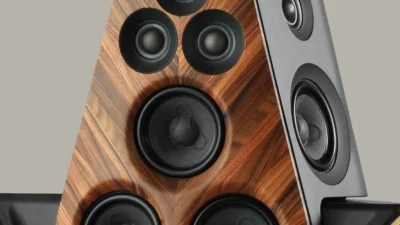

What is Marshall?
Marshall is a British audio brand founded in 1962, best known for its guitar amplifiers – the stacks that defined the sound of rock music for over six decades. Today Marshall also makes Bluetooth speakers, headphones, and earbuds for everyday consumers, while keeping its guitar amp heritage at the core of the brand.
The brand is headquartered in Bletchley, Milton Keynes, UK and sold in over 80 countries. In North America, Marshall products are widely available at Guitar Center, Sweetwater, Best Buy, Amazon, and direct from Marshall.com.
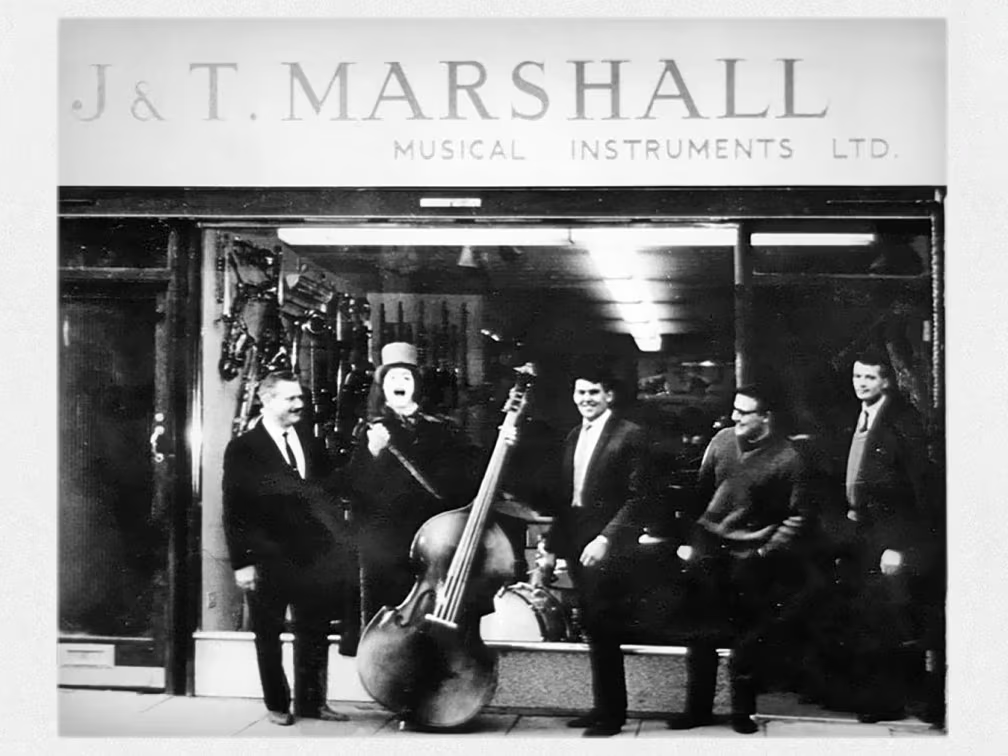
A brief history of Marshall
Marshall’s story starts with a drum teacher and music store owner named Jim Marshall. In 1962, frustrated that American amplifiers – the standard of the time – were expensive to import and hard to repair in Britain, Jim Marshall and engineer Ken Bran built their first amplifier in the back of a Hanwell, London music shop.
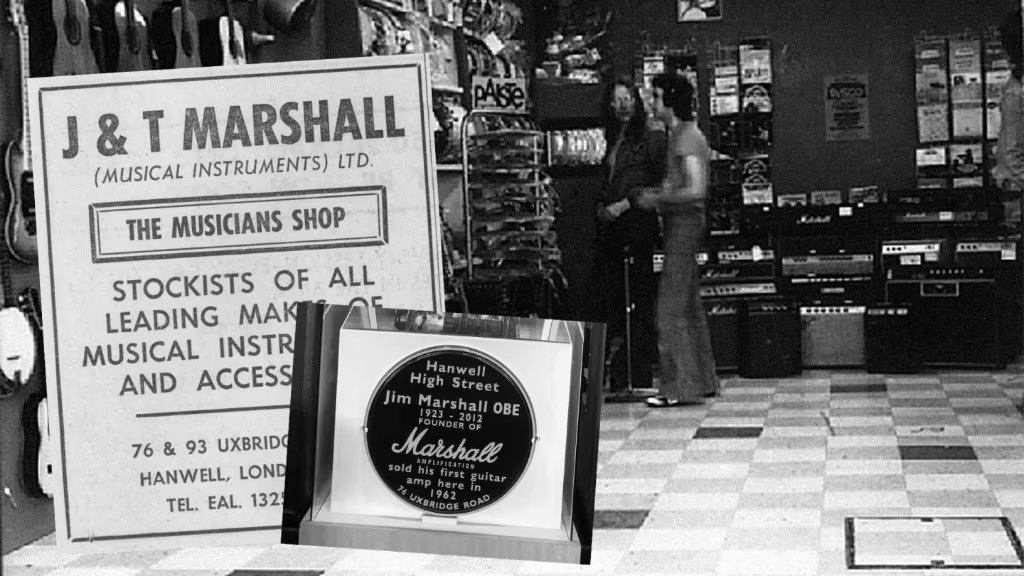
1962 – The first Marshall amp
The original Marshall JTM45 was modeled closely after the Fender Bassman but pushed harder and voiced differently. Pete Townshend of The Who was one of the first to order it. The result was louder, more aggressive, and better suited to the playing styles emerging in British rock.
1966 – The Marshall Stack
Guitarist Ritchie Blackmore and bassist John Entwistle requested a single amp capable of louder output. Marshall responded by stacking two 4×12 speaker cabinets with a 100-watt amp head on top. The full stack – still one of the most recognizable setups in live music – was born. Jimi Hendrix, Eric Clapton, and Jimmy Page all used Marshall stacks to define their sounds.
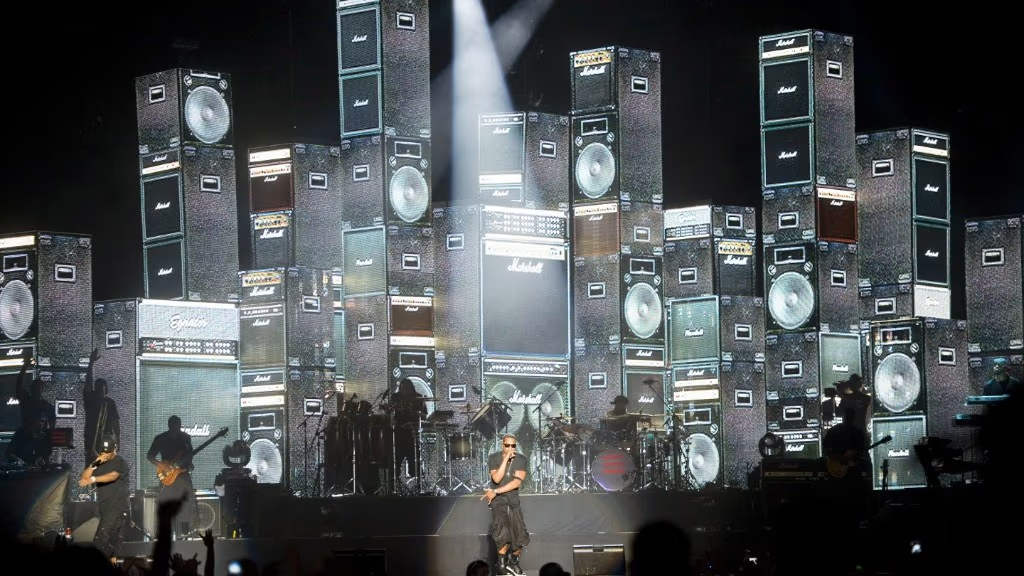
1966–1990s – Becoming the standard
Marshall amps became the default choice across rock, blues, and metal. The JCM 800 (1981) and JCM 900 (1990) solidified the brand’s role in arenas and studios. By the late 1980s, the Marshall logo – white lettering on a black script badge – was ubiquitous on stages worldwide.
2010s – The lifestyle pivot
From around 2010, Marshall stepped formally into consumer audio – headphones first, then home and portable Bluetooth speakers – and carved out a clear position with products that wore the same DNA as the amps: black leather, metal hardware, white script badge, forward, warm sound. The consumer business is now a full second pillar, not a licensing afterthought. For how that lineup maps to real use cases, see lifestyle audio: home, portable, and Emberton below.
2020s – ANC, earbuds, and what came next
Marshall layered in active noise cancellation on over-ears and true wireless (e.g. Monitor and Motif families), refined portable lines for longer battery and tougher weather sealing, and kept updating home speakers for modern connectivity. The company remains privately held; Jim Marshall passed in 2012, and the brand continues under leadership committed to the values he set.
The full Marshall product lineup
Marshall operates across three distinct markets with products that share an aesthetic but serve very different buyers.
| Category | Key Models | Who It’s For |
|---|---|---|
| Guitar Amplifiers | DSL series, JVM series, Origin series, JCM reissues, Studio Vintage, MG series | Guitarists – beginner to professional |
| Bluetooth Speakers & Home Audio | Home lines (e.g. Hanwell, Stanmore, Woburn families), portables (e.g. Kilburn, Stockwell, Emberton) – generations evolve; see Marshall.com | Listeners who want amp-era looks in the living room or on the go |
| Headphones | Major IV, Monitor II ANC, Motif ANC earbuds | Everyday listeners who value Marshall’s aesthetic |
| Acoustic Amplifiers | AS50D, AS100D | Acoustic guitarists and singer-songwriters |
| Effects Pedals | Bluesbreaker, Guvnor (vintage reissues) | Collectors, vintage-tone guitarists |
Marshall guitar amplifiers: the core of the brand
For guitarists, Marshall means one thing: volume, warmth, and crunch. The brand’s amplifier lineup is broad, covering everything from a bedroom practice amp to a 200-watt touring head.
DSL Series – the current workhorse
The DSL (Dual Super Lead) series is Marshall’s most popular current line. It covers everything from the 1-watt DSL1CR (bedroom practice) to the 100-watt DSL100H (touring). The DSL40CR – a 40-watt combo with two channels – is the most commonly recommended starting point for gigging guitarists who want classic Marshall tones with modern convenience like built-in reverb and an effects loop.
- DSL1CR – 1W, 8″ speaker, bedroom/home studio use
- DSL20CR – 20W, switchable to 10W, 12″ Celestion speaker
- DSL40CR – 40W, switchable to 20W, two channels, reverb, effects loop
- DSL100H – 100W head, for pairing with a cabinet
JVM Series – the most versatile Marshall
The JVM (Jim Marshall Vintage) series is Marshall’s most channel-flexible line, offering two or four channels each with three modes (Clean, Crunch, OD). The JVM410H (100W head) is common in professional touring rigs that need a single amp to cover clean jazz, blues crunch, and high-gain rhythm without compromising.
Origin Series – pure vintage character
The Origin line delivers a single-channel, all-valve sound inspired by the original 1960s Plexi amps. No digital effects, no modeling – just a clean-to-crunch sweep controlled by the guitar’s own volume knob. The Origin 20C (20W combo) and Origin 50C (50W combo) are popular among blues and classic rock players who want that responsive, touch-sensitive tone.
Studio Vintage (SV) – Plexi tone at manageable volume
The SV20H and SV20C are 20-watt versions of the classic Super Lead. They can be switched down to 5 watts for home use, making high-gain Plexi tones accessible without needing a stadium.
JCM 800 – the amp that defined 1980s rock
The original JCM 800 2203 is Marshall’s most iconic modern amp. Slash, Angus Young, and countless metal and hard rock players built careers around its aggressive, mid-forward overdrive. Marshall currently offers reissues of several JCM 800 circuits for players who want the original character with modern reliability.
MG Series – the budget starting point
The MG (Mainstream Guitar) series uses solid-state circuits, making it more affordable, lighter, and lower-maintenance than valve amps. The MG15 and MG30 are common first amps. They don’t have the dynamic feel of valve amps, but they’re practical for learning at home.
The lifestyle pivot: Marshall at home and on the move
From 2010 onward, Marshall moved deliberately into mainstream consumer audio – not as a gimmick but as a parallel business. Headphones, plug-in home speakers, and battery-powered portables all share the same brand language the stacks made famous. Model names and generations change; the story below is the arc Marshall has been telling for fifteen years.
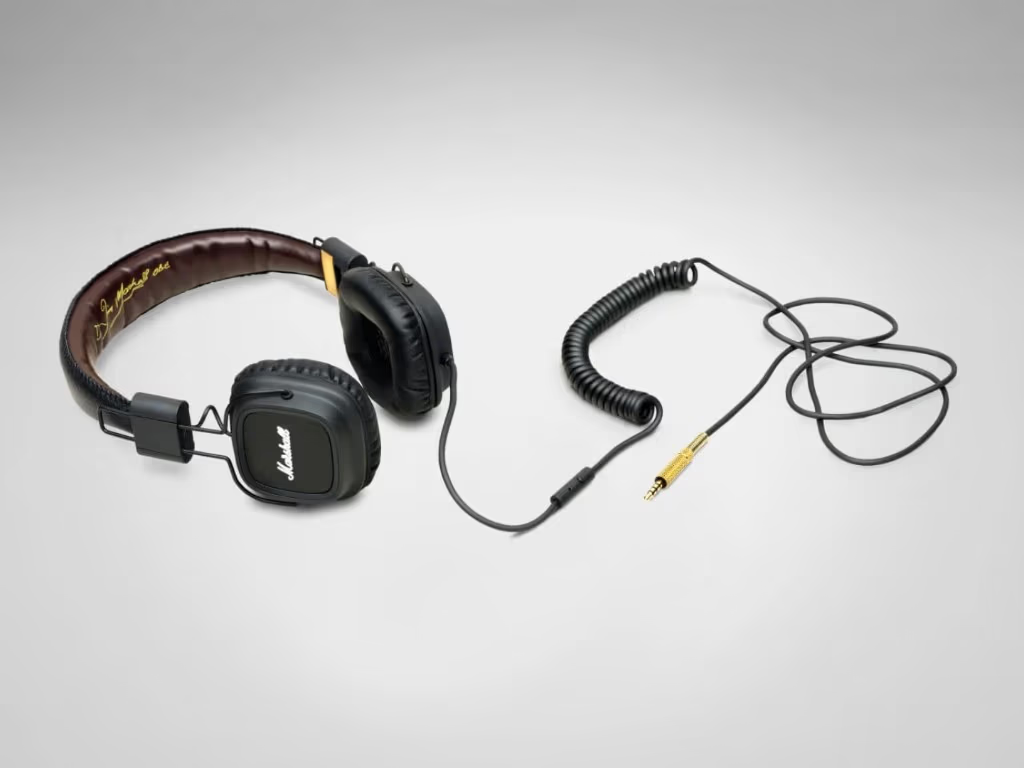
Marshall Major headphones – the first step off the stage
The Major line was the opening move: folding on-ear design, black leather, metal hinges, white script logo on the cups. It read as much like streetwear as hi-fi and quickly became a reference point for music-obsessed style – the proof that Marshall could sell identity, not just guitar tone.
Home speakers: Hanwell, Stanmore, Woburn, and the living-room amp
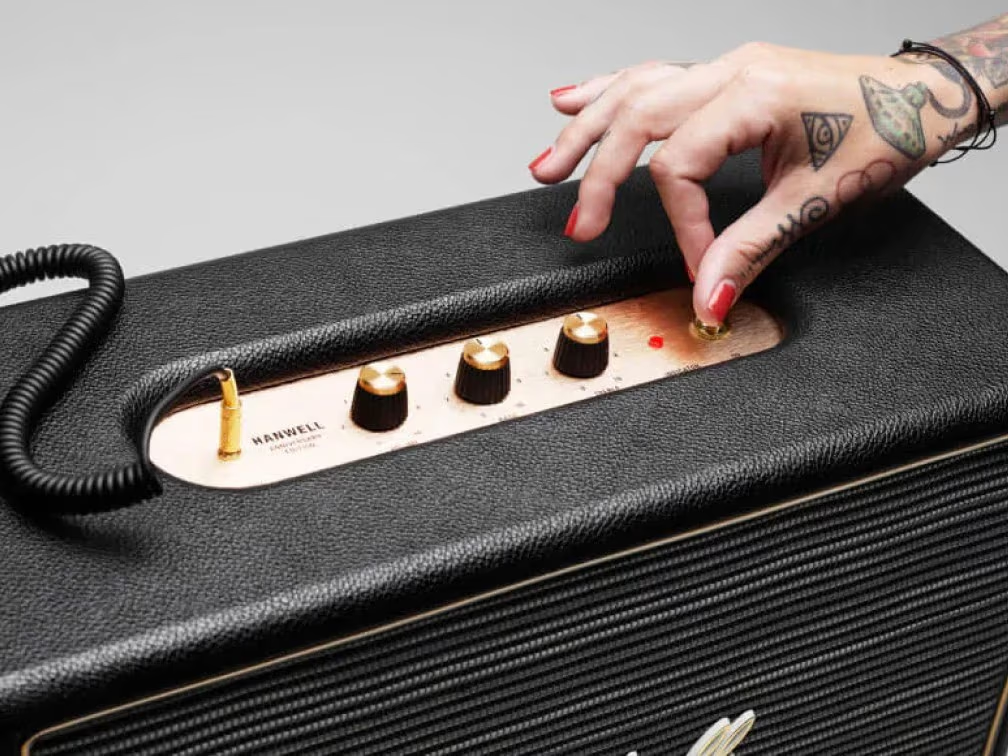
Marshall developed plug-in home speakers – lines such as Hanwell, Stanmore, and Woburn (and successors in the same design family) – to park Marshall sound next to the sofa instead of the mic stand. The brief was explicit: keep the classic amp silhouette – grille cloth, control hardware, proportions that echo a combo – while wiring in modern wireless (Bluetooth, and often optical or RCA so a turntable or TV can slot in). Larger cabinets mean more low-end and headroom; the flagship-tier boxes are built to fill open rooms, not just a desk.
Portable Bluetooth: Kilburn, Stockwell, and the grab-and-go tier
Kilburn and Stockwell (and the models that followed them) pushed serious output, long battery life, and, in current generations, water resistance so the same attitude works indoors, on a patio, or in a hotel room. Expect straps or handles, stereo imaging where the chassis allows, and tuning that favors warmth and presence over neutrality. Always check the spec sheet for the exact generation you’re buying.
Noise-cancelling headphones
Marshall kept iterating into active noise cancellation (ANC) – over-ears and true wireless aimed at flights, commutes, and open offices where blocking the room matters as much as the EQ curve. That sits alongside the Major lineage rather than replacing it: style-first on-ears on one side, isolation-first flagships on the other.
Marshall Emberton: small box, wide stage
The Emberton family is Marshall’s compact Bluetooth answer: small enough to disappear in a bag, but voiced and processed to feel bigger than the dimensions. Marshall markets True Stereophonic on these models – processing meant to widen the image so sound wraps around you more like a room fill than a single point source. Combined with tight industrial design and bass that punches above the enclosure size, Emberton became a global breakout for the brand among people who never touched a guitar amp in their lives.
Bottom line: Marshall’s speaker and portable business is organized around three ideas – home units that look like amps, portables that survive real life, and pocket-class boxes (Emberton and kin) that trade specs lists for character. For current SKUs, Marshall.com stays authoritative.
Marshall headphones: style and sound for everyday listeners
The line started with the on-ear Major as Marshall’s first lifestyle play (see the lifestyle section above). Today’s range is still smaller than the speaker catalog but sticks to the same cues: dark finishes, metal where it counts, and the white script on the cups.
Major IV – the on-ear flagship
The Major IV is the current evolution of that original idea: up to 80 hours of battery in its class, fold-flat hardware, Bluetooth, and the same warm, bass-forward tuning. It still takes a 3.5mm cable when you want zero latency or dead battery insurance.
Monitor II ANC – over-ear with noise cancellation
The Monitor II ANC is Marshall’s premium over-ear option with active noise cancellation. It targets frequent travelers and office users who want Marshall’s visual character alongside noise-blocking capability.
Motif ANC – the earbuds
The Motif ANC true wireless earbuds include active noise cancellation and a transparency mode. They’re compact, include wireless charging, and are positioned against mid-range competitors from Sony, Jabra, and Sennheiser.
Who should buy Marshall – and who should look elsewhere
Marshall is a strong fit if you:
- Play electric guitar and want proven, reliable amp tones from beginner to professional level.
- Want a Bluetooth speaker that looks as good as it sounds – and don’t mind paying a premium for the aesthetic.
- Value warm, bass-forward sound over clinical accuracy.
- Want a speaker or headphone that fits a rock or vintage music sensibility.
Marshall may not be the right choice if you:
- Want the flattest, most accurate sound reproduction – Marshall tends to color sound with warmth and added low-end.
- Are shopping purely on price – comparable raw audio performance is available for less from competitors like Anker, UE, or JBL in the portable speaker category.
- Need the widest app ecosystem – Marshall’s app is functional but limited compared to Sonos or Bose.
- Play bass guitar – Marshall makes some bass amps but is not the primary choice in that category.
Frequently asked questions
What is Marshall known for?
Marshall is known primarily for its guitar amplifiers, which have been used by major rock artists – Jimi Hendrix, Eric Clapton, Slash, Angus Young – since the 1960s. The brand has since expanded into Bluetooth speakers and headphones, but guitar amps remain its heritage product and biggest claim to audio credibility.
Are Marshall Bluetooth speakers worth the money?
Marshall Bluetooth speakers are priced at a premium compared to competitors with similar raw specs. The premium pays for design quality (solid build, distinctive aesthetic) and warm sound tuning. If you value looks as much as sound, they’re worth it. If you want the best sound per dollar, JBL and UE offer competitive options at lower prices.
What is the best Marshall amplifier for beginners?
For beginners, the Marshall MG15 or MG30 are the most practical starting points – affordable, low-maintenance solid-state amps. For players ready to invest more, the DSL20CR offers all-valve tone in a giggable package that won’t feel limiting as you improve.
Is Marshall a British brand?
Yes. Marshall was founded in London in 1962 by Jim Marshall and has been headquartered in the UK (currently Bletchley, Milton Keynes) ever since. While its products are manufactured globally, the brand, design, and engineering are British.
What is the difference between Marshall’s speaker lines?
Marshall groups consumer audio into a few buckets: home plug-in speakers (think Stanmore / Woburn-style amp-shaped boxes for shelves and living rooms), larger portables such as Kilburn and Stockwell lines (battery, handles, outdoor-friendly options on newer gens), ultra-compact portables like Emberton (small footprint, wide-staged tuning), plus headphones from Major-style on-ears through ANC over-ears and earbuds. Names and generations rotate – Marshall.com is definitive. Home boxes usually outgun portables at a given price because they use bigger drivers and aren’t limited by battery weight.
Do Marshall headphones sound as good as they look?
Marshall headphones offer above-average sound for their price, with a warm, bass-forward signature that suits rock, pop, and hip-hop. They’re not reference-quality for studio work or classical listening. For pure audio performance, Sony and Sennheiser offer stronger competition at similar price points – but neither matches Marshall’s visual appeal.
Who founded Marshall?
Jim Marshall founded the company in 1962 in London, alongside engineer Ken Bran and apprentice Dudley Craven. Jim Marshall passed away in 2012 at age 88. The company continues to operate under the Marshall name with the same design and engineering philosophy he established.